

The Emergence of Civilizational Consciousness in Indian Politics
 Rati Agnihotri · 06/19/2026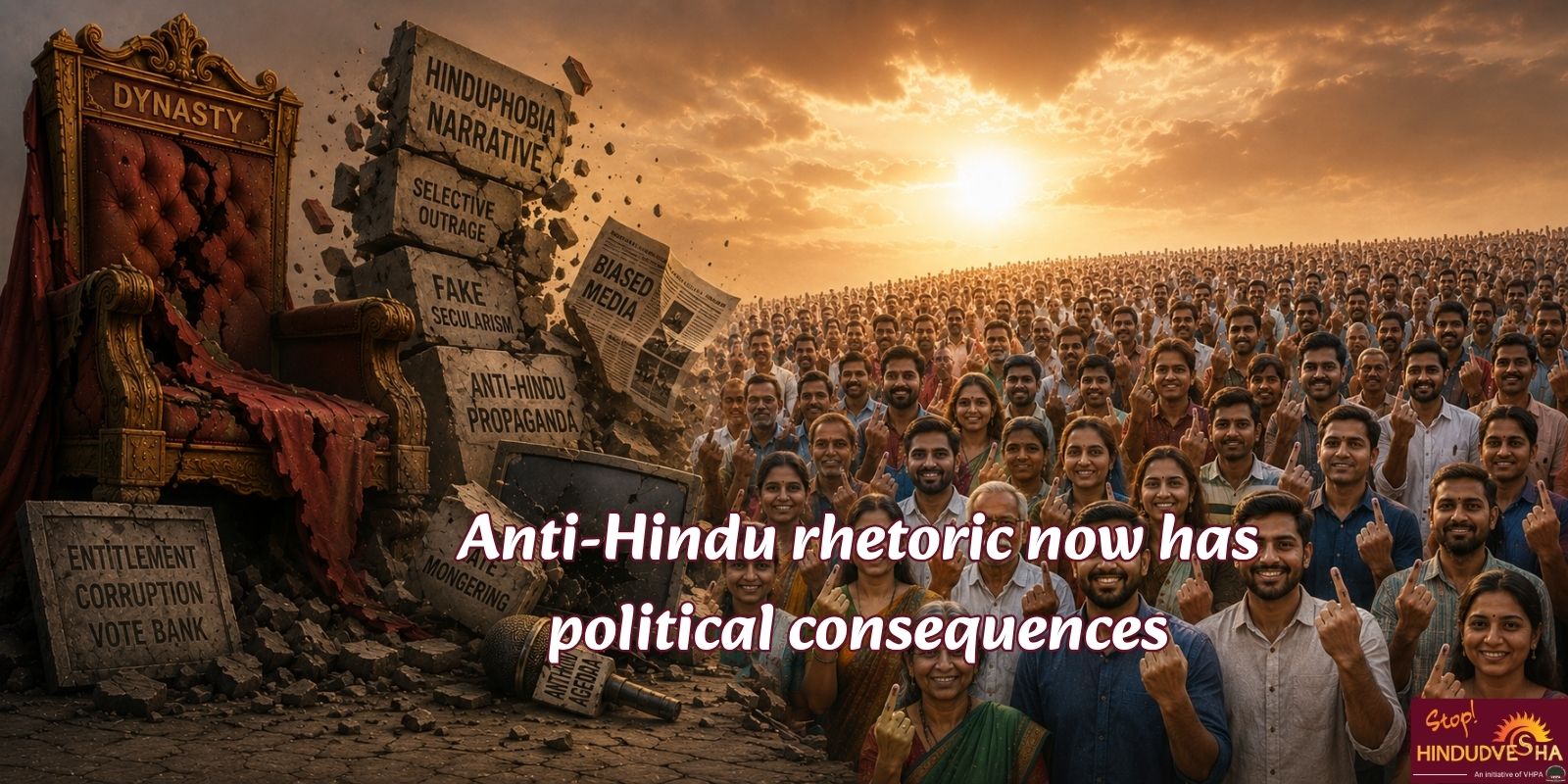
Summary
Recent elections in India reveal a profound transformation in the country’s political discourse. For decades, Indian politics was shaped by minority appeasement, dynastic rule, caste arithmetic, and ideological frameworks that often marginalized explicitly Hindu concerns. That equation is now shifting rapidly. Growing frustration over anti-Hindu violence, illegal immigration, demographic change, radical Islamist networks, and hostility toward Sanatan Dharma has accelerated Hindu political consolidation across multiple regions. Voters are increasingly prioritizing identity, heritage, cultural continuity, and national security over traditional vote-bank politics and ideological loyalties. The decline of communist influence, backlash against anti-Hindu rhetoric, and rejection of entrenched dynastic politics together signal the emergence of a new political era shaped by civilizational consciousness and a more assertive Hindu electorate.
Minority appeasement and identity-based vote-bank politics long dominated India’s political discourse. From state control over Hindu temples to the extraordinary powers granted to Waqf boards, governance frameworks steadily eroded Hindu institutional rights in the name of secularism and electoral expediency. Political strategy, meanwhile, revolved around narrow social coalitions and demographic calculations rather than broader questions of cultural continuity and national identity. Within this framework, explicitly Hindu concerns were often treated as politically illegitimate or socially suspect.
For decades, Hindu voting behavior was interpreted almost entirely through the lenses of welfare, local patronage, and sectional political alignments, not civilizational identity. Large-scale political consolidation around issues affecting Hindu society was virtually absent from mainstream political analysis.
That equation has changed dramatically in recent years. Large sections of Hindu society have grown increasingly frustrated with minority appeasement policies pursued at their expense, the normalization of anti-Hindu rhetoric, and the steady expansion of radical Islamist influence in parts of the country. Concerns over illegal immigration, demographic change, communal violence, and temple encroachments have pushed heritage issues into the center of political discourse. Ordinary Hindus are no longer passive spectators; they are asserting their concerns through the ballot box with growing confidence.
This transformation is now visibly reshaping electoral outcomes. Recent election outcomes in several Indian states reflect this broader civilizational reawakening and its growing influence on India’s electoral landscape. Border states such as Assam and West Bengal have seen political consolidation around issues like illegal immigration, demographic change, and communal violence, while southern states like Kerala and Tamil Nadu have witnessed growing backlash against leftist and corrupt dynastic rule perceived as hostile toward Hindu traditions and Sanatan Dharma.
The End of Hindu Political Passivity
A series of incidents in recent years has revealed a troubling pattern of hostility toward Hindu festivals in India, suggesting that these are not random events but part of a broader and more systemic phenomenon. From the disruption of celebrations to vandalism and even physical violence, the repeated targeting of Hindu communities by radical Islamist elements has emerged as a matter of growing concern across the country. [1]
Between March 16 and March 22, 2026, at least 57 incidents targeting Hindus were reported across multiple regions. From temple vandalism to conversion rackets and mob violence, the sheer scale of such cases raises serious questions about the safety and security of Hindus in their ancestral homeland. [2]
From the exodus of Kashmiri Pandits in the 1990s to more recent episodes such as the 2020 Delhi riots, Hindus have repeatedly faced extremist violence in India. Yet years of colonial and left-liberal conditioning had instilled such deep hesitation within sections of the Hindu community that even collectively raising concerns about anti-Hindu violence was often seen as undermining secularism itself. This one-sided interpretation of secularism contributed to the community’s political marginalization and reluctance to assert its grievances openly.
Recent state election outcomes suggested a growing political backlash among Hindu voters against what many viewed as persistent indifference toward anti-Hindu violence. This sentiment was especially pronounced in parts of eastern India, where recurring incidents of attacks, intimidation, and communal unrest in increasingly radicalized Islamist enclaves had, for many locals, become an alarming and familiar reality over the years.
Among the most chilling episodes was the 2024 Sandeshkhali violence, which for many came to symbolize a breakdown of law and public order in parts of West Bengal. Residents described an atmosphere of fear in which politically connected strongmen allegedly operated with near-total impunity while residents remained intimidated into silence. Numerous Hindu women accused local operatives of systematic sexual exploitation and coercion as the state machinery was seen as either unwilling or unable to act decisively. In interviews with multiple news outlets, several women alleged that they were taken from their homes at night to local party offices, sexually assaulted by gang members, and threatened with severe retaliation against their families if they resisted or later spoke out. [3] [4]
From the horrors of Sandeshkhali violence to the April 2025 Murshidabad riots, in which media reports alleged that Hindu homes were selectively marked before being attacked, bombed, or set ablaze [5], many Hindus in West Bengal increasingly came to view unchecked illegal immigration and demographic shifts as an existential political and security issue. The fear was felt most acutely among poorer Hindu communities living in districts already undergoing rapid demographic change.
For years, many Hindus remained hesitant to openly raise such concerns, fearing social ostracism, political retaliation, or accusations of being “Hindutva-vadis,” “supremacists,” or “anti-minority.” But the rise of social media has sharply weakened the monopoly of traditional narrative gatekeepers. Videos, eyewitness testimonies, and local reporting now circulate directly within the public sphere, often bypassing mainstream media filters. Combined with a broader Hindu civilizational reawakening and recurring reports of anti-Hindu violence in neighboring Bangladesh, this has significantly reshaped political consciousness among sections of the Hindu electorate.
The electoral victories of two women — either themselves survivors of sexual violence or closely connected to victims of brutal crimes — were widely seen by supporters as emblematic of a shifting political mood. [6] For many voters, these victories reflected a growing willingness to politically reward victims, survivors, and voices associated with Hindu suffering and resistance, while punishing those perceived as indifferent to anti-Hindu violence.
Illegal Immigration and the New Electoral Consensus
Illegal immigration and demographic change have become increasingly central to political discourse in India, particularly in border states such as Assam and West Bengal, which have long faced large-scale infiltration from Bangladesh. In recent years, the issue has evolved into a major electoral concern, driven by fears over cultural and identity erosion, changing demographic balances, rising communal tensions, and the potential expansion of radical Islamist networks.
As large swathes of states such as Uttarakhand, Himachal Pradesh, Assam, and West Bengal undergo rapid demographic change, Hindu voters have increasingly consolidated around concerns tied to identity, security, and social stability. In Assam, growing public debate over what has been termed “demographic jihad” has centered on the long-term impact of illegal infiltration and demographic transformation, with attention frequently drawn to the rise of the Muslim population in the state from 14% in 1951 to nearly 40% by 2025. [7] [8]
The decision of voters in Assam to return the same government — widely regarded for its hardline stance on illegal immigration and demographic change — to power for a third consecutive term, despite the strong anti-incumbency trends that often shape Indian elections, reflected the growing importance of these issues in the public mind. The state government was broadly perceived as taking firm steps to control infiltration and address rapid demographic transformation, and the electoral mandate suggested strong public support for policies framed around civilizational identity and national security concerns. [9]
The issue has been even more politically charged in West Bengal, where the state government has faced persistent allegations of encouraging illegal immigration from Bangladesh for electoral consolidation. [10] The rapid growth of radicalized Islamist pockets, reports of Hindu temple closures [11], recurring incidents of targeted anti-Hindu violence in certain districts, and what many perceived as governmental indifference have all significantly shaped voter sentiment in the state.
These developments have accelerated Hindu political consolidation, with voters increasingly demanding visible action on issues tied to security, identity, and demographic change rather than symbolic rhetoric alone.
In West Bengal, this has translated into growing public demand for concrete administrative measures not only to curb future illegal immigration but also to identify and deport undocumented infiltrators back to Bangladesh. [12] [13]
Concepts such as “love jihad,” “corporate jihad,” and “womb jihad” have increasingly moved from the margins of Hindu discourse into mainstream political debate as concerns over radical Islamist networks continue to grow. Many now view the systematic targeting of Hindu girls and vulnerable communities, alongside efforts to build parallel economic ecosystems, as interconnected strategies with long-term demographic and cultural consequences. As awareness of these issues has expanded through social media, local reporting, and public testimony, voters have begun demanding far more than symbolic political rhetoric. Concerns over illegal immigration, demographic change, and organized radicalization are now deeply intertwined in the public mind, further accelerating Hindu political consolidation across several regions of India.
Most significantly, changing voting patterns indicate that ordinary Hindus are increasingly recognizing the connections between illegal immigration, demographic jihad, womb jihad, and broader questions of national security and sovereignty. Numerous documented cases involving radical Islamist networks have reinforced the perception that these are not isolated incidents, but interconnected strategies with long-term societal consequences. India’s evolving political discourse, therefore, reflects a growing willingness among voters to confront these issues directly and cast their ballots accordingly, rejecting the reductionist “Hindutva” label often used by sections of the left-liberal media to dismiss such concerns.
Political Cost of Mocking Hindu Traditions
Earlier analyses by StopHinduDvesha argued that India’s political discourse had normalized a deeply institutionalized form of Hinduphobia. The combination of minority appeasement politics and the perceived political passivity of Hindus allowed many politicians to disparage Sanatan Dharma with little fear of electoral consequences. [14]
Recent election results in parts of southern India suggest that this long-standing political equation may now be shifting.
For decades, the southern Indian state of Tamil Nadu has been a stronghold of Dravidian politics, an ideological movement rooted in regional identity politics that has often expressed open hostility toward Hindu traditions, symbols, and institutions. In September 2023, a senior leader of the ruling DMK publicly called for the “eradication” of Sanatan Dharma, comparing it to diseases such as dengue, malaria, and COVID-19. The contradiction was striking: a region profoundly shaped by ancient Vedic, temple, and Bhakti traditions continued to electorally empower parties that openly mocked or attacked the very dharmic heritage from which those traditions emerged. [15]
That political pattern now appears to be weakening. The DMK’s crushing defeat in recent elections was widely interpreted as a public backlash against repeated attacks on Hindu identity. Equally striking was the rapid rise of TVK, a newly founded party that quickly emerged as a dominant electoral force despite lacking any entrenched political machinery or dynastic backing. [16]
These seismic shifts in India’s political landscape signal a broader transformation in India’s political culture. Dynasty politics and entrenched patronage networks no longer command automatic loyalty. Voters are increasingly rejecting parties associated with corruption, family control, and contempt for Hindu traditions, while showing greater openness toward new political platforms, leadership, and identity concerns.
India’s electoral discourse is therefore undergoing a fundamental shift. Civilizational identity, cultural continuity, governance, and security concerns are increasingly shaping voter behavior, replacing the narrow identity arithmetic and dynastic loyalties that dominated much of post-independence politics.
Decline of Communist Politics
Beyond regional political shifts and Hindu consolidation, the recent elections also revealed a deeper ideological realignment across India. Perhaps the clearest manifestation of this shift is the rapid decline of communism within India’s political landscape.
The decisive defeat of the Marxist-led Left Democratic Front (LDF) in the southern Indian state of Kerala has effectively dismantled the last major stronghold of organized communist rule in the country. For the first time since 1977, no Indian state is governed by a communist party. Kerala had long remained the Left’s final bastion of political influence, but that era now appears to be ending. The victory of the United Democratic Front (UDF), widely viewed as a center-right coalition, signaled a clear rejection of left-wing politics by Kerala’s voters. [17]
The rise of civilizational consciousness among ordinary Indians has played a major role in the Left’s decline. From promoting violent revolutionary movements such as Naxalism to advancing narratives widely perceived as hostile toward Hindu Dharma, tradition, and national heritage, the Left long exercised disproportionate influence over India’s academic, cultural, and intellectual institutions. While left-liberal influence persists in sections of the media, academia, and civil society, the collapse of institutional left-wing politics marks a major political realignment.
This shift suggests that voters across ideological and regional lines are increasingly moving away from leftist politics, creating greater space for issues tied to heritage, identity, cultural continuity, and national consciousness within India’s mainstream political discourse.
How India’s Political Landscape Is Being Rewritten
India’s ongoing cultural and civilizational resurgence is closely intertwined with concerns over sovereignty and national security.
The decisive mandates seen in states such as Assam and West Bengal go far beyond economic development, job creation, and infrastructure. While safeguarding Hindu cultural identity is undoubtedly a major factor, it is not the only one. India’s civilizational ethos — rooted in harmony, tolerance, and the Dharmic principle of Vasudhaiva Kutumbakam (“One World, One Family”) — stands in direct conflict with the threats posed by illegal infiltration from Bangladesh and the spread of radical Islamist terror networks linked to global jihadist movements.
As radical Islamist networks, transnational ideological movements, and sections of the global activist ecosystem increasingly converge around narratives hostile to India’s cultural identity and national cohesion, the growing awareness of the average Indian voter has emerged as a powerful democratic counterforce.
India’s political discourse is no longer shaped solely by economics, sectional calculations, or dynastic loyalty. Questions of identity, heritage, security, and cultural continuity now sit at the center of India’s democratic discourse, and voters are increasingly treating them as non-negotiable.
Citations
[1] Hindu Identity Under Siege: Global Assault on Festivals and Temples; https://stophindudvesha.org/hindu-festivals-and-temples-under-siege-a-systemic-global-assault-on-hindu-identity/
[2] Hindu Hate Watch Weekly Tracker: 57 Cases of Targeted Attacks; https://organiser.org/2026/04/20/349479/bharat/hindu-hate-watch-a-weekly-tracker-57-incidents-expose-relentless-targeting-of-hindus-across-bharat-and-beyond/
[3] Message of Sandeshkhali; https://organiser.org/2024/02/24/223515/bharat/sandeshkhali-horror-hindu-women-on-target-across-west-bengal-2/
[4] The horrors of Sandeshkhali violence and the apathetic silence of woke intellectuals; https://hindupost.in/crime/the-horrors-of-sandeshkhali-violence-and-the-apathetic-silence-of-woke-intellectuals/#
[5] Murshidabad riots: Hindu homes were marked with black ink in advance, reveals NMF News report; https://www.opindia.com/2025/04/hindu-homes-marked-with-black-ink-bombed-set-on-fire-murshidabad-nmf-news-expose-details/
[6] Kalita, Ratna & Rekha: How a domestic worker, a rape survivor, and a victim’s mother are rewriting women’s politics in Bengal | India News | Zee News; https://zeenews.india.com/india/kalita-ratna-rekha-how-a-domestic-worker-a-rape-survivor-and-a-victim-s-mother-are-rewriting-women-s-politics-in-bengal-3044919.html
[7] Sambhal’s Demographic Shift: A Civilizational Time Bomb; https://stophindudvesha.org/sambhals-demographic-shift-a-civilizational-time-bomb-for-bharat/#_ftn22
[8] Many states suffering from ‘demographic invasion’ by illegal infiltrators: Assam CM | Hindustan Times; https://www.hindustantimes.com/cities/others/many-states-suffering-from-demographic-invasion-by-illegal-infiltrators-assamcm-101722481854857.html
[9] Verdict 2026: BJP’s Sweep in Assam and West Bengal Signals New Strategy for Securing India’s Eastern Border; https://openthemagazine.com/politics/verdict-2026-with-victories-in-assam-and-bengal-bjp-can-finally-fix-indias-vulnerable-eastern-border
[10] ‘Red Carpet Welcome’: Amit Shah targets Mamata government over illegal immigrants; blames ‘dense forests’ for border lapses | India News- The Times of India; https://timesofindia.indiatimes.com/india/red-carpet-welcome-amit-shah-targets-mamata-government-over-illegal-immigrants-blames-dense-forests-for-border-lapses/articleshow/124666373.cms
[11] But WHY? Durga temple in Asansol, closed for several years, reopens after BJP defeats Mamata Banerjee, wins West Bengal; https://www.india.com/news/india/but-why-durga-temple-in-asansol-closed-for-several-years-reopens-after-bjp-defeats-mamata-banerjee-wins-west-bengal-8403367/
[12] India presses Bangladesh to send back illegal migrants; https://www.newindianexpress.com/nation/2026/May/08/india-presses-bangladesh-to-send-back-illegal-migrants
[13] India Bangladesh Relations: India seeks Dhaka’s help to send back illegal Bangladeshis: MEA | India News – The Times of India; https://timesofindia.indiatimes.com/india/india-seeks-dhakas-help-to-send-back-illegal-bangladeshis-mea/articleshow/130932314.cms
[14] Hinduphobia: Politics of Anti-Hindu Rhetoric; https://stophindudvesha.org/hinduphobia-as-playbook-turning-anti-hindu-rhetoric-into-political-capital/
[15] Hinduphobia: Politics of Anti-Hindu Rhetoric; https://stophindudvesha.org/hinduphobia-as-playbook-turning-anti-hindu-rhetoric-into-political-capital/
[16] Tamil Nadu Election Results 2026 Highlights: Tamil Nadu Casts Vijay As Hero With 107 Seats. Next Stop: Alliance Talks; https://www.ndtv.com/india-news/tamil-nadu-election-results-2026-live-updates-vote-counting-results-vijay-tvk-mk-stalin-dmk-aiadmk-bjp-perambur-tiruchi-east-kolkathur-mylapore-11442281
[17] With Left losing Kerala, India has no communist government for the first time since 1977: trajectory of the decline | Explained News – The Indian Express; https://indianexpress.com/article/explained/explained-politics/communist-kerala-west-bengal-tripura-decline-history-10671962/

Donate to HINDUDVESHA
Our Mission is to explore and expose Hindudvesha through research analysis, education and response.
SUPPORT US