

The Missing Voice: Why Hindu Suffering Rarely Makes Headlines
 Rati Agnihotri · 09/30/2025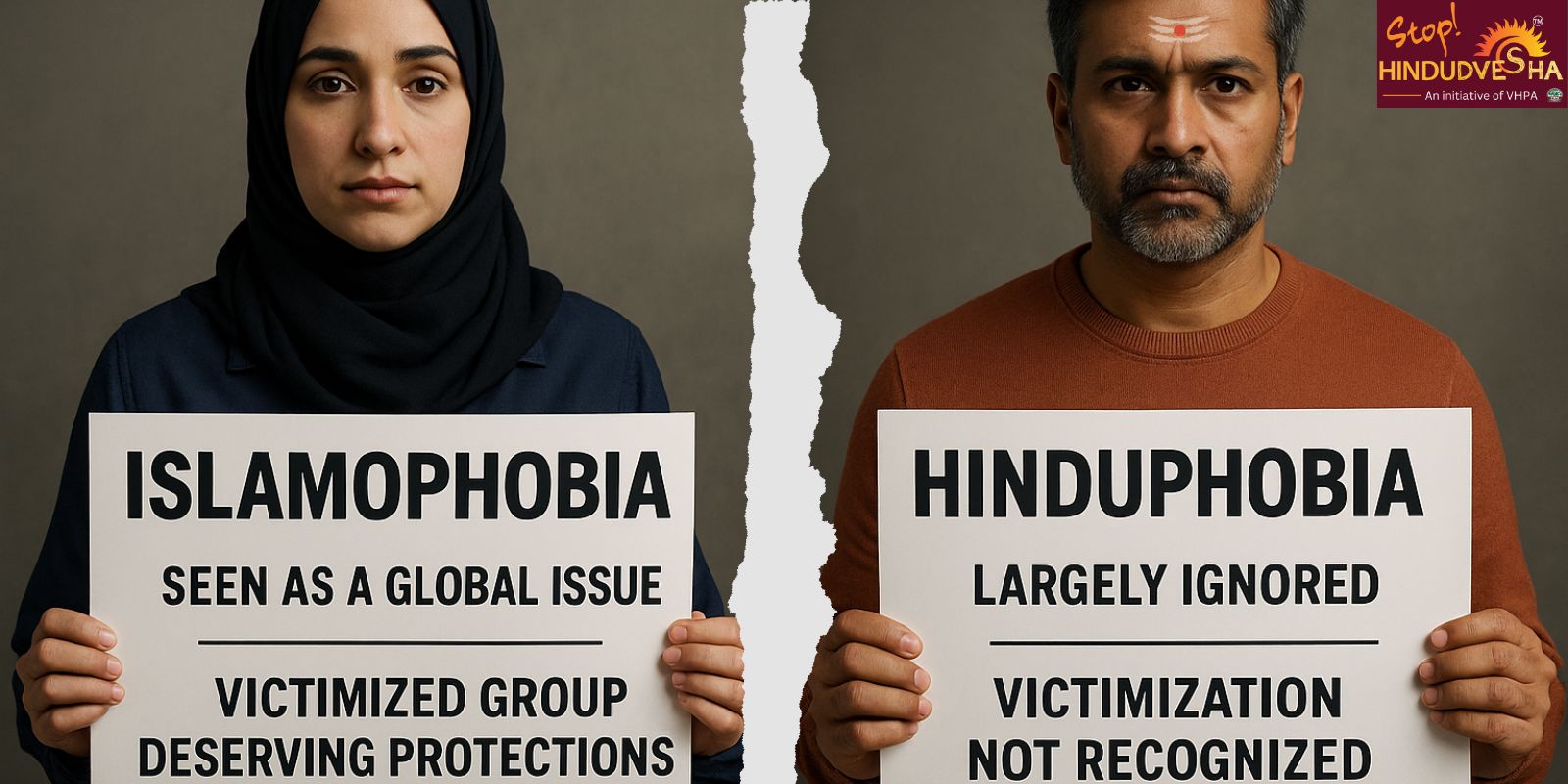
- Hollywood and global cultural elites mobilize for Gaza but remain silent on Hindu suffering, from Pahalgam and 26/11 to Bangladesh pogroms and anti-Hindu hate crimes in the West.
- Islamists and left-liberals relentlessly amplify their causes until they dominate media, arts, and academia, while Hindus lack the machinery to project even their most legitimate concerns.
- Elite Western universities frame Hindu concerns as “fundamentalist” or “anti-minority,” reinforcing stereotypes that feed into media and cultural portrayals, making Hindu issues invisible or delegitimized.
- Hindu billionaires often fund elite institutions that propagate Hinduphobia, while neglecting to build intellectual and cultural infrastructure that could project Hindu narratives globally.
- Hindus must learn from Islamist strategies—forge alliances (especially with Jews), invest in cultural institutions, mobilize youth, and build narrative ecosystems to ensure Hindu voices are heard on the global stage.
A recent open letter from Film Workers for Palestine gathered over 4,000 signatures from the global film fraternity, pledging to boycott Israeli institutions accused of “genocide and apartheid against Palestinians.” Among the signatories were celebrated directors like Ava DuVernay, Jonathan Glazer, Asif Kapadia, Joshua Oppenheimer, and Boots Riley, along with stars such as Emma Stone, Andrew Garfield, Olivia Colman, Josh O’Connor, and Cynthia Nixon.
Since the escalation of the Israel-Gaza conflict, Hollywood has embraced the Gaza cause with unprecedented fervor. Pro-Palestine activism has become a marker of cultural currency in the entertainment world, with concerts, open letters, and social media campaigns turning into performative rituals of “woke” solidarity. A search for “celebrities supporting Gaza” yields a star-studded list—Bella Hadid, Dua Lipa, Angelina Jolie, Natalie Portman, Billie Eilish, Mark Ruffalo, and many others.[1] [2]
Now, contrast this overwhelming celebrity mobilization with the silence on Hindu suffering. The Pahalgam terror attacks, the 26/11 Mumbai massacre, the ongoing anti-Hindu pogroms in Bangladesh, targeted killings and political violence in West Bengal, and the sharp rise in anti-Hindu hate crimes in the West have failed to elicit even a murmur from the global film industry. Forget about Hollywood A-listers; even Bollywood celebrities are quicker to lament the plight of Gaza than to speak up for the lives, dignity, and rights of Hindus.
This alarming disparity points to a bitter truth: Islamists and left-liberal ecosystems have perfected the machinery of narrative. They relentlessly amplify their causes until even extremist violence is whitewashed as resistance, while their cultural allies in Hollywood and beyond lend glamour and legitimacy. Hindus, by contrast, have yet to master the art of narrative-building. Despite having genuine grievances rooted in survival, safety, and cultural preservation, the community remains voiceless on the global stage. This silence is not accidental; it stems from the deeper structural disadvantage Hindus face in academia and cultural institutions.
What follows is a closer look at the Hindu community’s inability to project its concerns effectively and its weakness in the arena of narrative-building.
Hindus Unable to Influence Cultural Narratives
In Snakes in the Ganga: Breaking India 2.0, Rajiv Malhotra and Vijaya Viswanathan expose the funding mechanisms of elite Western universities, particularly their social sciences and humanities departments. They argue that much of the scholarship produced by these institutions is essentially Hinduphobic. Their observations, backed by detailed evidence, help explain why the Hindu community has been unable to influence global cultural narratives.
Elite Western academia functions as a trendsetter for the creative industries, arts, and literature. Issues amplified by these departments are soon echoed in film, music, and publishing, backed by generous funding. A clear example is the widespread support for Gaza in the creative industries—its prominence in popular culture directly reflects the exposure it receives in social sciences and humanities research at places like Harvard.
By contrast, Hindu concerns are almost invisible in concerts, art exhibitions, literature festivals, or cultural showcases. The institutions that define the cultural agenda are already steeped in Hinduphobia, and this is where the marginalization of Hindu issues begins. Making matters worse, the Hindu community has largely failed to package its concerns in ways that resonate with the “progressive” framing that dominates cultural discourse, leading to even deeper marginalization.
The problem is compounded by how Hindu concerns are portrayed academically. When Hindu issues are raised, they are quickly reframed as “Hindutvavadi,” “fundamentalist,” or “anti-minority.” Left-liberals and Islamists use these labels to delegitimize Hindu perspectives, pushing the community into a defensive corner. Even Hindu celebrities rarely speak out on such matters, leaving global cultural spaces dominated by voices hostile to Hindu concerns.
Adding to this challenge is the way funding in Indian arts and culture is often used to reinforce anti-Hindu narratives. Malhotra and Viswanathan cite the example of Hindu billionaire Lakshmi Mittal’s funding of Harvard’s Mittal Institute and its Visiting Artist program. They highlight how some grants under this initiative have supported ideologically driven artist-activists such as dancer Mallika Sarabhai and vocalist T. M. Krishna. The program has also emphasized performances like qawwali while inserting divisive themes of “caste” and “Brahmanical patriarchy” into artistic presentations.[3]
In stark contrast, Islamists have built robust alliances across civil society to advance their agendas. They collaborate with intellectuals, artists, writers, and filmmakers, leveraging long-term mechanisms of influence. Their toolkit includes aggressive tactics such as public shaming, trolling, and organized boycotts to silence opposition.
The Boycott, Divestment, Sanctions (BDS) movement[4] is a telling example. Radical Islamists, in partnership with left-liberals, have turned Israel-bashing into a global academic and cultural industry. The BDS campaign uses PR, propaganda, and institutional pressure to boycott Israeli businesses and individuals.
In India, self-styled woke intellectuals with Hindu-sounding names openly endorse BDS[5], and left-liberal media outlets brand any criticism of these positions as “Hindutva propaganda.” [6] BDS networks have also allied with the anti-Hindu “caste politics ecosystem,” [7] exploiting internal Hindu fault lines and magnifying them within their ideological framework. This leaves Hindus in a uniquely vulnerable position. While Islamists and their allies exploit identity politics to amplify their concerns, Hindus lack comparable mechanisms to advance their own.
What the Hindu community needs is a collective front that mirrors the organizational capacity of movements like BDS. A Hindu equivalent could channel support for Hindu issues while simultaneously challenging the funding structures that sustain anti-Hindu narratives. Crucially, such an initiative could be strengthened through alliances with the Jewish community, which has also suffered from radical Islamist targeting. The Jewish community is not only resourceful and influential but also sympathetic to Hindu concerns. A joint platform modeled on BDS, but focused on countering anti-Hindu bias, is both viable and necessary.
There is already a foundation for Hindu-Jewish solidarity. Both communities have experienced persecution and misrepresentation, and both value civilizational continuity. Expanding these ties into coordinated efforts to influence creative industries and cultural institutions could be an essential step forward. By pooling resources, expertise, and networks, Hindus and Jews together could disrupt the dominance of anti-Hindu narratives in academia and popular culture.
In essence, Hindus must learn from the methods of their opponents. Building sustainable collectives that apply pressure on businesses, cultural institutions, think tanks, and media organizations is critical. At the same time, Hindus must invest in creating a consolidated network of funding to support research on Hindu issues and ensure the Hindu perspective is represented in the arts and social sciences.
Insiders’ Apathy – The Curious Case of Hindu Billionaires
In Snakes in the Ganga: Breaking India 2.0, Rajiv Malhotra and Vijaya Viswanathan highlight a troubling paradox: Hindu billionaires such as Anand Mahindra, Lakshmi Mittal, and Ajay Piramal donate generously to elite Western universities like Harvard, yet this philanthropy seldom results in a more balanced or even moderately sympathetic understanding of Hindu issues. Lack of due diligence means their donations often reinforce Hinduphobic narratives.
The book also shows how this funding acts as a pipeline for “Harvard-imported” ideologies. Woke frameworks incubated in Western academia are being reintroduced to India through initiatives sponsored by Indian business houses. Over time, these ideas shape the arts, humanities, and social sciences in Indian universities, deepening an academic climate that often turns against Hindu traditions.
This is especially striking when contrasted with the other philanthropic work of these billionaires. They support temple construction, maintain gaushalas, sponsor mass marriages, and fund cultural festivals that celebrate Hindu heritage. Yet, in the crucial arena of countering anti-Hindu narratives in academia, media, or popular culture, they are largely absent.
A StopHinduDvesha analysis describes this as the “Brown Sahib Mentality.” For many wealthy Indians, true prestige lies not in strengthening their community’s intellectual ecosystem, but in gaining recognition from Ivy League institutions and mingling with Western elites. For them, validation by the West often becomes the ultimate marker of success. [8]
This neglect has serious consequences. By neglecting to fund institutions and research from a Hindu perspective, these billionaires leave the field open for hostile forces — a gap that reinforces the same disadvantages already seen in academia and media. This vacuum at the top mirrors the vulnerabilities faced at the grassroots, where Hindu communities abroad often find themselves exposed to structural discrimination without the backing of strong institutions.
Hindu Community in the West: Victims of Structural Discrimination
The Hindu community in the West occupies a paradoxical position. On the surface, it appears affluent, educated, and politically influential. Yet beneath this image of success lies a stark reality: Hindus have little ability to shape policies in their favor or protect themselves from systemic prejudice. A striking example is California’s anti-caste discrimination Bill SB403.[9] Despite widespread opposition from Hindu advocacy groups, grassroots protests, and multiple efforts to explain the bill’s Hinduphobic undertones, the state legislature still passed it.
Although Governor Gavin Newsom eventually vetoed the bill[10]—stating that caste discrimination was already illegal under existing law—the fact that such legislation was passed in the first place reveals how easily Hindu communities can be singled out and portrayed as inherently discriminatory. It underscores a structural bias within the system, one that paints Hindu identity in negative terms regardless of evidence.
Compounding this problem is the powerful alliance of Islamists, left-liberals, and Khalistanis who dominate the narrative ecosystem. This coalition consistently frames Hindu advocacy as an extension of “Hindutva politics,” allegedly exported from India and empowered by Prime Minister Modi’s government. The result is a double bind: Hindu organizations in the West are routinely dismissed as “foreign agents,” making them targets for both far-left activists who demonize them as majoritarian and far-right actors who treat them with suspicion.
Another major shortcoming is the community’s inability to build coalitions with other marginalized groups, such as African Americans, immigrant communities, and progressive human rights organizations. While Islamist lobbies have monopolized these alliances, Hindus have struggled to position their issues within the global language of justice and equality. Yet, opportunities remain. With careful strategy, the Hindu diaspora could forge progressive partnerships, particularly with African Americans and Jewish communities, creating broader legitimacy and acceptability for Hindu concerns in international forums.
Islamophobia vs. Hinduphobia
The contrast between Islamophobia and Hinduphobia is instructive. Over the past two decades, Islamophobia has been institutionalized as a recognized global issue. The United Nations has gone so far as to dedicate an official day to combating Islamophobia[11], providing Islamists with a powerful tool to frame themselves as a victimized community deserving of special protections. This framing resonates deeply in academia, popular culture, and the media, producing a thriving cultural industry around pro-Palestine activism and even normalizing apologetics for violent groups such as Hamas.
Hinduphobia, on the other hand, remains invisible. Despite India’s repeated calls at the UN to recognize prejudice against Hindus, the international community has largely ignored the issue.[12] As a result, hatred, bigotry, and violence directed at Hindus—whether in Bangladesh, Pakistan, West Bengal, or Western societies—receive little acknowledgment. Hindu voices struggle to find any representation in global arts, literature, academia, or media.
The root problem lies in the Hindu community’s failure to position itself as a victimized group within global discourse. Instead of documenting its long history of persecution and discrimination systematically, Hindus often rely on fragmented advocacy. There is an urgent need for comprehensive resources: detailed accounts of anti-Hindu genocides, documentation of communal violence leading to mass displacement, records of hate crimes, and critical studies of discriminatory laws targeting Hindus in India and abroad. While several advocacy organizations have begun producing such reports, their work remains scattered and lacks the consolidated force needed to influence international media outlets, think tanks, and global institutions like the UN.
Here, the Hindu community could learn from Islamist strategies. By skillfully leveraging identity politics, Islamists have built coalitions with other marginalized groups and successfully portrayed themselves as victims of systemic oppression. Hindus must adopt a similar approach—framing their issues within the broader vocabulary of human rights, forging alliances with other victim groups, and amplifying their narratives across multiple platforms.
Media Narrative Wars
StopHinduDvesha has extensively examined how Hindu issues are represented in Western media. Many of these analyses point to a persistent pattern: leading outlets such as The New York Times, The Washington Post, BBC, The Guardian, and Deutsche Welle portray Hinduism and Hindu identity through a lens that is overwhelmingly negative, often steeped in Hinduphobia. [13] [14] [15] [16]
A key feature of this bias is the obsessive focus on “caste” whenever Hindu Dharma or India are discussed. Complex civilizational traditions are reduced to caste narratives, flattening Hinduism into a caricature of oppression. In sharp contrast, coverage of Islam in elite Western media tends to be carefully balanced, even deferential, with strong emphasis on respecting the sensitivities of Muslim communities.[17] [18] Islamophobia is covered extensively, and often sympathetically, across major platforms. Meanwhile, Hinduphobia is either ignored outright or dismissed as a “conspiracy theory,” supposedly concocted by the BJP and Sangh Parivar to silence criticism.
The result is clear: Hindus are losing the media narrative wars. Despite the presence of many Hindu-origin journalists and writers in these prestigious outlets, the community has been unable to influence the editorial agenda in its favor. Instead, several journalists with Hindu-sounding names actively work against their own heritage, becoming “brown sepoys”[19] who reinforce and legitimize toxic anti-Hindu narratives for Western audiences.
Veteran journalist Ashok Shrivastav explores this dynamic in his book Modi vs Khan Market Gang. He exposes the entrenched networks of the “Khan Market Gang”—a clique of elite Delhi journalists and media moguls who once wielded such influence that they could reportedly even shape cabinet appointments. Shrivastav’s analysis underscores how deeply anti-Hindu forces are embedded in the Indian media ecosystem itself. Even after a decade of governance by what is often described as a “Hindu majoritarian” government, mainstream media coverage of Hindu issues has improved only marginally. The rot is structural, both in India and in the West.
Why Critique Alone Isn’t Enough
The Hindu community has invested a lot of energy, but in scattered or reactive ways, lacking consolidation and reach. Reports, op-eds, and social media campaigns often highlight bias in global and Indian media. While important, critique alone is insufficient. Simply pointing out bias will not ensure fair treatment. If Hindus remain reactive, their issues will continue to be sidelined.
What is required is a parallel narrative machinery. Hindus must not only call out distortions but also proactively create content and shape discourse. This means addressing the same gaps already noted in academia and philanthropy, while extending the effort into mainstream media and cultural industries. Here’s a ptoposed action Plan for Hindus to Step Up Their Narrative Game:
- Youth Mobilization: The Hindu ecosystem is weak in youth engagement, a space thoroughly captured by left-liberals, Islamists, and their allies. Hindu concerns must be repackaged in a way that resonates with younger audiences—through progressive language, creative cultural forums, and youth-led initiatives.
- Campus Outreach: Universities are breeding grounds for ideological shifts. Hindu organizations need innovative outreach programs on campuses, presenting Hindu issues not as confrontations with liberal causes but as legitimate concerns deserving recognition in their own right.
- Institutional Infrastructure: Temples must evolve beyond places of worship into centers of cultural exchange and intellectual engagement. Wealthy Hindus should fund community hubs, cultural clubs, art galleries, and literary forums. Such spaces would not only showcase Hindu traditions but also provide platforms to discuss pressing Hindu issues.
- Consolidated Social Media Strategy: Social media remains underutilized by Hindus. What is needed is a coordinated, multi-pronged digital campaign that amplifies Hindu issues globally. High-quality multimedia content, consistent messaging, and targeted outreach could transform the online landscape.
- Cultivating Political Champions: Hindu politicians in the diaspora must step up as mobilizers and advocates. By bringing Hindu concerns into mainstream political discourse, they can legitimize issues otherwise dismissed as “fringe” or “communal.”
- Streamlined Digital Resources: Scattered advocacy must be consolidated. A single authoritative digital collective could serve as the go-to global resource on Hinduphobia, compiling reports, case studies, data on hate crimes, and analyses of discriminatory laws. Such a platform would become indispensable for journalists, researchers, and policymakers seeking information.
- Media Outreach: Hindus need to nurture the next generation of journalists who can enter and thrive in mainstream newsrooms while offering balanced perspectives. At the same time, Hindu philanthropists should invest in building or funding media outlets that operate in mainstream formats yet remain rooted in Hindu values. Without this, the monopoly of hostile voices will remain unchallenged.
Citations
[1] Hollywood stars among thousands who join pledge not to work with Israeli film institutions ‘implicated in genocide’; https://www.nbcnews.com/pop-culture/pop-culture-news/hollywood-stars-thousands-pledge-not-work-israeli-film-institutions-rcna230463#
[2] Gal Gadot blames ‘pressure on celebrities to speak out against Israel’ for box office failure of Snow White | Film | The Guardian; https://www.theguardian.com/film/2025/aug/18/gal-gadot-celebrities-speak-out-against-israel-box-office-failure-snow-white
[3] Snakes in the Ganga by Rajiv Malhotra and Vijaya Viswanathan; p.p. 392-393.
[4] BDS Movement | BDS MOVEMENT; https://bdsmovement.net
[5] A Call from India to boycott, divestment & sanction Israel; https://www.milligazette.com/news/8-international/13975-a-call-from-india-to-boycott-divesment-sanction-israel/
[6] Why Zionism rules the hearts of Hindutva acolytes – Frontline; https://frontline.thehindu.com/politics/why-zionism-rules-the-hearts-of-hindutva-acolytes/article67637346.ece
[7] “When I See Them, I See Us”: Building together the Dalit and Palestinian movements for Justice – Round Table India; https://www.roundtableindia.co.in/when-i-see-them-i-see-us-building-together-the-dalit-and-palestinian-movements-for-justice/
[8] “Brown Billions, Ivy Hate: India’s Elite Fund War”; https://stophindudvesha.org/brown-money-red-agendas-how-indian-billionaires-are-funding-the-ivy-leagues-war-on-india/
[9] California passes ‘anti-caste discrimination’ SB 403 bill: All you need to know | World News; https://www.hindustantimes.com/world-news/california-passes-anti-caste-discrimination-sb-403-bill-all-you-need-to-know-101693310233017.html
[10] California governor vetoes bill that would ban caste discrimination | CNN; https://edition.cnn.com/2023/10/09/us/california-caste-discrimination-bill-veto
[11] International Day to Combat Islamophobia | United Nations; https://www.un.org/en/observances/anti-islamophobia-day
[12] Acknowledge ‘Hinduphobia’, India urges UN | India News – Times of India; https://timesofindia.indiatimes.com/india/acknowledge-hinduphobia-india-urges-un/articleshow/89028174.cms
[13] “Woke Agenda Targets Indian Nationalist Media”; https://stophindudvesha.org/label-demonize-erase-the-woke-ecosystems-coordinated-assault-on-indian-nationalistic-media/
[14] From Diwali to Holi: The Media War on Hindu festivals; https://stophindudvesha.org/from-diwali-to-holi-the-media-war-on-hindu-festivals/
[15] Western Media’s Whitewashing of Hindu Genocide in Bangladesh; https://stophindudvesha.org/western-medias-whitewashing-of-hindu-genocide-in-bangladesh/
[16] Western Media’s Biased Portrayal of Women’s Issues in India; https://stophindudvesha.org/western-medias-biased-portrayal-of-womens-issues-in-india/
[17] Workplace habits may make Muslim colleagues uncomfortable, says report | Islam | The Guardian; https://www.theguardian.com/world/2021/mar/02/workplace-habits-may-make-muslim-colleagues-uncomfortable-says-report
[18] Sacred Islamic artefacts go on display at Scunthorpe school; https://www.bbc.com/news/articles/c79ljwqyg9ro
[19] Indian-Origin Journalists’ Role in Fueling Anti-India Bias; https://stophindudvesha.org/role-of-indian-origin-journalists-in-spreading-biased-narratives-against-india/

Donate to HINDUDVESHA
Our Mission is to explore and expose Hindudvesha through research analysis, education and response.
SUPPORT US