

From Diwali to Holi: The Media War on Hindu Festivals
 Rati Agnihotri · 09/25/2024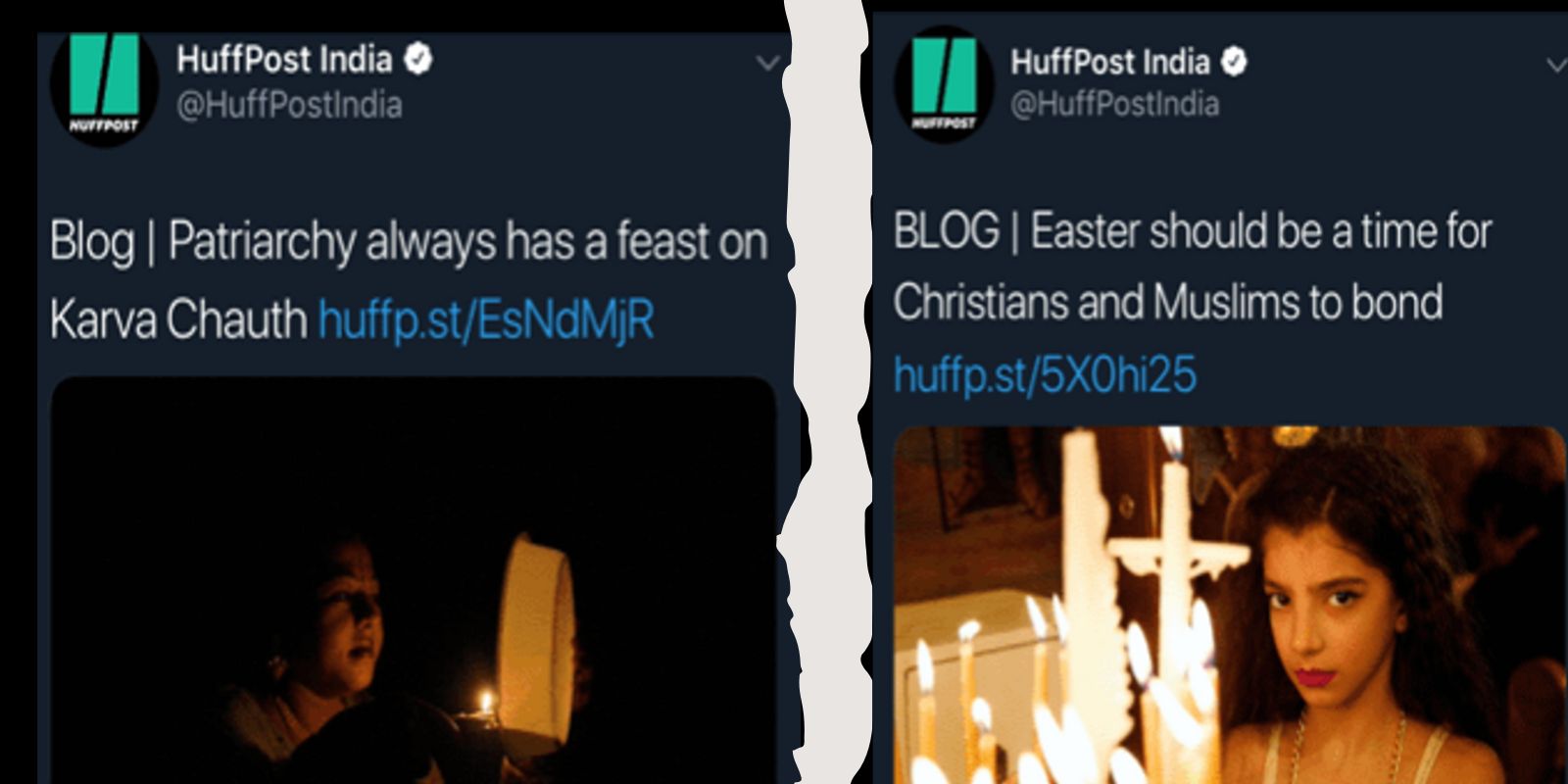
- The Western media ecosystem makes irrational linkages between Hindu festivals and issues like pollution, environmental degradation, women’s safety, etc.
- Hindu festival Diwali is the favorite target of Western media; every year, the ecosystem goes into overdrive mode around Diwali time, linking the bursting of crackers with air pollution.
- The media ecosystem frames Holi as a festival that “encourages” sexual crimes against women.
- Most Hindu festivals are labeled patriarchal and regressive; the Western media and think tank ecosystem presents a distorted version of the stories of origin of various Hindu festivals, interpreting these using simplistic Eurocentric and Abrahamic frameworks.
India’s apex court recently stayed the National Green Tribunal’s (NGT) directive that limited the number of participants in ‘dhol-tasha’ groups (celebratory groups invoking the Hindu deity, Lord Ganesh, using Indian drums known as dhol) to 30 during the celebrations of the Ganesh Chaturthi festival. The NGT’s restriction on group performances during the festival was temporarily halted by the Indian Supreme Court, thus allowing the celebratory rituals to continue in the run-up to the Ganpati idol immersion ritual.
The NGT had passed a directive putting a cap on the number of participants in a bid to supposedly control noise pollution. However, an appeal was filed against the NGT’s directive, and thus the court pronounced its verdict after hearing the appeal. Ganesh Chaturthi is an important festival on the Hindu calendar, and dhol-tasha groups have been an integral feature of the traditional celebrations. The Indian state of Maharashtra is the focal point of the Ganesh Chaturthi festival in India, and thus, the NGT directive restricting celebrations, stayed by the Supreme Court, mainly focused on the city of Pune, which is the main site of traditional celebrations.[1]
This puts into perspective the malicious targeting of Hindu festivals based on exaggerated claims of noise pollution, air pollution, traffic disruption, harm to the health of people, destruction of the green cover of cities, women’s safety, etc. Less than two months before the Hindu festival Diwali, it’s just a matter of time before one will see an avalanche of media reports targeting the festival on various counts. Both Western media and left-leaning Indian press will wax eloquently on the demerits of Diwali – air pollution, noise pollution, increase in consumerism, plastic waste menace (due to people gifting each other), lifestyle diseases (due to consumption of Indian sweets), et al.
Rationally speaking, all this sounds ridiculously exaggerated and agenda-driven. Unfortunately, this is pretty much how the Western media ecosystem paints the picture when it comes to Hindu festivals:
- Diwali crackers cause air pollution.
- Holi causes waste of water.
- Holi colors are toxic to one’s skin.
- Diwali sweets can cause lifestyle diseases like diabetes.
- The practice of gifting each other on Diwali causes the wastage of paper and leads to plastic waste.
- The process of idol immersion during festivals like Durga Puja and Ganesh Chaturthi pollutes the environment.
- Hindus, in general, pollute water bodies by worshipping them.
- Hindu festivals are patriarchal.
- A festival like Karvachauth tortures women by forcing them to stay hungry.
- Rakshabandhan is patriarchal because it sees brothers, that is, men, as protectors of women.
These are just a few of the vicious claims regarding Hindu festivals routinely peddled by the Western media ecosystem. It demonizes Hindu culture and traditions and encourages an over-critical analysis of it. However, it doesn’t apply a similar interrogative lens when it comes to Abrahamic festivals like Eid and Christmas. The coverage of these festivals is done from a no-nonsense celebratory point of view, exhibiting an excessive sense of cultural sensitivity. However, when it comes to the Hindu faith, all traditions are dehumanized and probed and prodded through a Eurocentric anthropological perspective. Hindu festivals are treated like laboratory animals, stripped of any autonomy. Most importantly, media coverage of Hindu festivals deliberately ignores the insider’s perspective.
In this article, we will analyze the Western media ecosystem’s demonization of Hindu festivals by highlighting various prejudiced frames through which the media portrays them.
Sustainability Paradigm
The Western media often uses a common narrative to dissect and demonize Hindu festivals, frequently accusing them of causing various forms of pollution. Sustainability rhetoric is regularly employed to portray Hindu culture and traditions in a negative light, labeling Hindu rituals as harmful to the environment and against sustainability. However, such write-ups offer no factual evidence to support the claim that Hindu festivals are “polluting monsters,” resembling conspiracy theories rather than objective reporting.
Let’s check out a few of the toxic headlines from the Western media ecosystem over the past couple of years:
- Hindu festival in India marred by a river of toxic foam and a blanket of killer smog (CBS News, November 2019)[2]
- Hindu festival chokes Indian waterways with flowers and idol debris (The Guardian, 2017)[3]
- Delhi panic over toxic air ahead of Indian festival Diwali (BBC, November 2018)[4]
- Use of fireworks during Hindu festival adds to dire pollution in New Delhi (The Irish Times, November 2021)[5]
- India’s Hindu festival begins under cloud of toxic air (Galesburg, January 2019)[6]
- Indian Court Chooses Clean Air Over Fireworks For a Festival (The New York Times, October 2017)[7]
- On Delhi’s Toxic River, Prayers to a Sun Struggling to Shine Through Smog (New York Times, November 2021)[8]
- India: Hindu Holy Men Say Ganges Is Too Dirty For Sin (New York Times, 2007) [9]
- Hindu priests burn hundreds of mango trees in prayer ritual to curb ‘pollution’ (The Washington Post, March 2018)[10]
- River in India sacred to Hindus blanketed in toxic white foam ( The Washington Post, November 2021)[11]
- Diwali may bring ‘severe air pollution’ to Delhi, despite fireworks ban (The Washington Post, November 2021)[12]
Certain common themes can be observed across these headlines:
- Rising air pollution, caused by multiple factors that require scientific analysis, is often exaggeratedly and irrationally blamed on the use of fireworks during Diwali. This is akin to claiming that people setting off fireworks for a few days are responsible for year-round pollution across India.
- Water pollution in Indian rivers is irrationally linked to Hindu rituals and traditions. Provocative and often derogatory headlines imply that Hindus are polluting rivers they “claim” to be sacred, with the assumption that Hindu practices are solely responsible for the pollution of India’s water bodies.
- Many headlines border on Hinduphobia, implicitly suggesting that Hindus have no right to celebrate their festivals and traditions because they are supposedly “dirty” and “polluting.” The subtle implication is that Hindu celebrations should be minimized or even banned altogether. For instance, a headline like “Diwali may bring ‘severe air pollution’ to Delhi, despite fireworks ban” (The Washington Post, November 2021) subtly suggests that perhaps we should consider abandoning Diwali celebrations altogether.
Western media coverage of Hindu festivals often demonstrates a glaring ignorance of the origins and significance of the rituals, distorting their meaning to fit a particular narrative, often without any understanding of their cultural and spiritual significance. For example, The Washington Post’s 2018 report titled “Hindu priests burn hundreds of mango trees in prayer ritual to curb ‘pollution’” seems primarily aimed at ridiculing Hindu practices, with the writer likely having little to no knowledge of the ritual itself. The visuals of Hindu priests performing Havan while sitting in vessels filled with water and flower petals appear to be included merely to exoticize and sensationalize the scene.
“More than 350 Hindu priests have gathered in India this week for a multiday religious ceremony to pray that Gods deliver them from a modern-day scourge – air pollution. But the ceremony involves burning hundreds of mango trees – some 110,000 pounds of wood – in large fire pits constructed at the venue in the city of Meerut in northern India”, say the opening lines of the write-up.
The writer makes it clear in the beginning that the sole intent of the article is to demonize and mock this Hindu festive ritual and present it as being responsible for deforestation without taking into account the specifics of the rituals or giving participants the choice to explain their side of things. Thus, the participants are being used as mere props, a practice common to Western media coverage, similar to colonial “ethnography” practice where the “natives” are mere subjects to be analyzed and interpreted, devoid of any agency of their own. [13]
It’s not only the Western media that demonizes Hindu festivals; the Indian media and broader ecosystem also appear to have embraced Hinduphobic tropes and narratives, perpetuating the same negative stereotypes. The Down to Earth magazine of the Centre for Science and Environment, India’s prestigious environment think tank, has published several pieces linking rising pollution levels to Hinduism. Such articles do a deep disservice to its otherwise meticulous and scientifically sound coverage of environmental issues in India. “Pollution of Hinduism”, says the title of the article published by Down to Earth. The date and year of publication of this article haven’t been specified on the site, but the headline itself is value-laden and Hinduphobic. The write-up claims that there is a wide gap between theory and practice when it comes to Hinduism and that the present-day practitioners of Hinduism have no right to call themselves Hindus because they go against the basic tenets. Hindus have turned festivals like Holi and Diwali into obnoxious polluting spectacles, argues the piece.
The writers make a calculated effort to present the article as neutral and dispassionate, but it clearly isn’t. Associating religious practices with air pollution is absurd. Has Down to Earth published similar articles criticizing the rampant commercialization or other problematic aspects of festivals like Christmas or Eid? Likely not. So, what justifies the publication’s right to discuss air pollution through the lens of Hinduphobia?[14]
An article published by The Organizer in November 2023 offers a strong rebuttal to the so-called atrocity literature frequently produced by left-leaning media and think tanks concerning Hindu festivals. It highlights the hypocrisy of remaining silent on the slaughter of millions of animals during certain festivals while loudly criticizing Hindu festivals. The article also challenges the double standards of celebrities and intellectuals who raise concerns about “air pollution” only around Diwali. It questions whether these individuals have ever taken steps to raise public awareness about year-round pollution or addressed the issues of vehicular, industrial, or construction-related pollution.[15]
It’s indeed ironic that the Western media singles out Diwali for the burning of firecrackers but remains silent about the firecracker displays during Christmas and New Year celebrations each year. Diwali is celebrated on a large scale, mainly in India, whereas fireworks during Christmas and New Year take place globally. Yet, the Western media seems disproportionately concerned about “Diwali air pollution” while turning a blind eye to the environmental impact of fireworks on other occasions.
Women’s Safety Paradigm
It may come as a shock to many that Hindu festivals have been demonized to such an extent that even serious issues like sexual violence against women are now being openly blamed on Hindus having the freedom to celebrate their festivals.
Accusing a religious festival of fostering violence against women represents the height of demonization, and this is precisely what has been happening with the Hindu festival of Holi. The Western media has constructed a narrative suggesting that because Holi involves breaking social barriers and applying colors to one another, the physical touch involved makes the festival unsafe for women. It’s alarming to see the sheer number of headlines casually labeling Holi as dangerous for women, implying that harassment is an inevitable part of the celebration.
While it’s true that incidents of misbehavior with women occur during Holi celebrations, these actions have nothing to do with the festival itself. Carnivals are celebrated in many countries, often lasting for weeks, where far worse incidents can take place. Yet, how often do we see the Western media demonizing these traditional carnivals or labeling them as inherently anti-women because a few incidents of harassment occurred? Sexual crimes against women are, unfortunately, a global issue that can happen anywhere, at any time, regardless of location or cultural context. However, the Western media seems fixated on portraying Hindu festivals as uniquely unsafe for women.
Let’s examine a few toxic headlines from the Western media’s coverage of Holi. Although most of these examples are from Western publications, we’ve also included a few headlines from non-Western outlets. The demonization of Indian festivals is no longer confined to Western media alone—left-leaning Indian media and other non-Western international outlets regularly engage in the distorted portrayal of Hindu culture and traditions as well:
- Why is the Indian Festival of Holi Dangerous for Women? (World Religious News, March 2018)[16]
- Some women shun Holi celebrations in India, fearing the violence that can lurk behind innocent fun (The Straits Times, March 2023) [17]
- Holi celebrations often come with harassment. These women are fighting for change. (The Washington Post, March 2021)[18]
- How Holi Becomes the Festival of Assault in India ( Papermag, March 2019)[19]
- ‘Fear harassment in the guise of festivities’: Women say they are scared of stepping out (The Times of India, March 2023)[20]
- Indian female students take on ‘Holi harassment’ (BBC, March 2018)[21]
- Indian women sexually harassed at Delhi’s Holi festival (ABC News, March 2018)[22]
- India’s Hindu rape festival – Holi’s origins explained (Defence Pakistan, March 2023)[23]
- Holi festival: Delhi women forced into lockdown amid sexual harassment fears (The Guardian, March 2017)[24]
- Do Public Festivals and Celebrations Enable A Culture of Violence? (Feminism India, March 2023)[25]
- Holi: The Festival of Colours or Crimes? (Youth ki Awaaz, March 2012) [26]
All these headlines are blatantly Hinduphobic, drawing a direct and unfounded correlation between Holi and sexual violence against women in India. The sheer malice in these headlines is enough to shock a typical Hindu family in India, even before delving into the full write-up. This sustained and calculated targeting of a culture and its traditions is not accidental. The Western media drive it with the backing of radical leftist and Islamist stakeholders.
Most of these articles use Holi as a pretext to associate the trope of toxic masculinity exclusively with Hindu men, implying that Hindu men are somehow inherently more prone to committing sexual violence. This stereotype is then exaggerated and tied to the Holi festivities as if the festival itself encourages such behavior. These pieces often cherry-pick individual accounts from women who had unfavorable experiences during Holi and then generalize them to vilify the entire festival. How often do you see similar write-ups about women being harassed or groped during Eid, Christmas, or other festivals of different faiths? Almost never.
However, when it comes to Hindu festivals, the media is saturated with articles that nitpick every isolated incident during Holi or other Indian celebrations, exaggeratedly linking them to broader social issues. Outsiders unfamiliar with Hinduism might read these pieces and develop a biased view, believing there is something inherently negative about Hinduism that makes its festivals prone to violence against women, air pollution, and other problems. This, of course, is the exact intention of the ecosystem that produces these narratives—to create a distorted and negative perception of Hindu culture.
An article published by OpIndia in March 2020 gives an excellent insight into the workings of the Communist-Islamist ecosystem that goes into an overdrive mode each year as Holi approaches. The write-up decodes one of the popular narratives spread around Holi that Hindu men are jealous of Muslim men because some Hindu women marry Muslim men, and hence these Hindu men want to rape/molest Muslim women. Then, the narrative is taken forward by placing it in the context of Holi, arguing that Holi is synonymous with “molestation” and “groping.”
“The Islamists and their ideological comrades have the dubious distinction of maligning Hindu festivals while ignoring the uncomfortable truths about the festivals of other religions. The most bizarre anti-Holi attack has come from an ultra-left group called ‘Baudhkaro’ who claims to be the followers of Dr Ambedkar’s teachings. In a song named “Tyohaar – the Anti-Holi song”, two left-wing radicals, out of which one is a PhD student from controversial left-wing university JNU, go on to make incendiary comments claiming that Holi was a casteist festival that results in upper-caste Hindus harassing women belonging to lower castes,” says the OpIndia piece. [27]
Out of all the toxic headlines mentioned above, the one from Pakistan Defence titled “India’s Hindu rape Festival and its origins – Holi explained”, is the most shocking, although not altogether unexpected. The vile anti-Hindu propaganda piece insinuates that Shri Krishna’s “Raas Leela” with “Gopis” legitimizes groping and harassment of women. It’s a perverted write-up that insults Hindu Dharma and mocks the festival of Holi. The issue is that much of the Hinduphobic Western media coverage of Holi is rooted in the same anti-Hindu hatred trope, even though it might seem mild in comparison to this particular vicious piece.[28]
Patriarchal Allegation
Another common tactic of Western media is to label all Hindu festivals as patriarchal and regressive. An earlier Hindudvesha article did a detailed analysis of the Western media ecosystem’s demonization and distortion of Hindu festivals like Karwachauth and Rakshabandhan. it discussed how both Rakshabandhan and Karwachauth, Hindi festivals in which women play an important role, have been turned into “demonstrative case studies in patriarchy” by the Western media.[29]
The Western media consistently distorts the origins of Hindu festivals, portraying the stories behind them as patriarchal and misogynistic. Given that most modern-day Hindus have limited knowledge of the origins of their own traditions, they often rely on Western narratives for interpretation. This, in turn, provides them with a biased and distorted understanding of their own civilizational and cultural heritage. As a result, many English-speaking Hindus now claim that Holi is inherently anti-women, citing the burning of Holika, a woman, as the basis for this view. The story of Holika Dahan and Prahlad has been grossly distorted and appropriated by various interest groups—radical feminists, Ambedkarites, and others—turning it into a narrative that suits their agendas.
Hindu gods and goddesses are being recast as “exploitative oppressors,” portrayed as enforcers of so-called “Brahmanical Patriarchy,” who allegedly oppressed lower caste beings like the Rakshas (demons) and others. But where are these absurd reinterpretations of Hindu festivals and their origins coming from? It’s the Western media and think tank ecosystem that constructs these narratives, which are then absorbed and spread within Indian society.
It cannot be emphasized enough that while Hinduism is consistently and viciously targeted, dissected, and demonized such “critical scholarship” is absent when it comes to other religions. This hypocrisy is evident in how traditional Diwali sweets are criticized as unhealthy (too sugary, fried, etc.), while sweets like chocolates and Christmas cakes are glamorously marketed. This is tied to the subtle but steady “secularization” of Hindu festivals—Diwali advertisements, for instance, show Indian women without a bindi, distancing them from traditional Hindu symbols.
The demonization of Hindu festivals is just one part of the issue. The equally troubling aspect is the forced “secularization” of Hindu festivals. These two phenomena are closely connected. By repeatedly drilling into people’s minds that their festivals are inherently bad—polluting, patriarchal, misogynistic—the Western media ecosystem creates a fear psychosis among Hindus. The global capitalist apparatus then capitalizes on this fear by encouraging Hindus to further detach themselves from the traditional Hindu roots of their festivals, transforming them into mere “secular spectacles.”
The Way Forward
We cannot stop the Western media from spreading negative stories about Hindus, but we can raise awareness among Hindus about this issue. Many media outlets interview ordinary Hindus, who often gladly share information about their religious practices and festivals. However, they are unaware that their words may be taken out of context or twisted to fit a biased narrative
Secondly, we must expose and criticize the “brown sepoys”—journalists with Indian names—who write these biased pieces. Many of the articles that criticize Hindu festivals are written by these individuals, regardless of their religion. They need to be called out for misrepresenting Hindu culture.
Lastly, India should take control of its narrative on Hindu festivals. The government, academic institutions, and Indian thinkers need to promote an accurate and positive portrayal of Hindu culture. The best way to fight negative portrayals is by sharing genuine stories from within India.
Citations
[1] ‘It is the heart of Pune’: SC stays NGT order of 30-people cap on ‘dhol-tasha’ groups for Ganesh festival | India News – Times of India; https://timesofindia.indiatimes.com/india/it-is-the-heart-of-pune-sc-stays-ngt-order-of-30-people-cap-on-dhol-tasha-groups-for-ganesh-festival/articleshow/113289181.cms
[2] Air Pollution in India and Yamuna River toxic foam mar Hindu festival in India – CBS News; https://www.cbsnews.com/news/yamuna-rivers-toxic-foam-and-delhi-air-pollution-greet-india-hindu-devotees-for-chhath-puja-festival/
[3] Hindu festival chokes Indian waterways with flowers and idol debris | Delhi | The Guardian; https://www.theguardian.com/world/2017/oct/03/hindu-festival-indian-waterways-flowers-idol-debris-yamuna-river
[4] Delhi panic over toxic air ahead of Indian festival Diwali; https://www.bbc.com/news/world-asia-india-46094228
[5] Use of fireworks during Hindu festival adds to dire pollution in New Delhi – The Irish Times; https://www.irishtimes.com/news/world/asia-pacific/use-of-fireworks-during-hindu-festival-adds-to-dire-pollution-in-new-delhi-1.4720695
[6] India’s Hindu festival begins under cloud of toxic air; https://www.galesburg.com/story/lifestyle/faith/2019/01/19/india-s-hindu-festival-begins/6252057007/
[7] Indian Court Chooses Clean Air Over Fireworks for a Festival – The New York Times; https://www.nytimes.com/2017/10/12/world/asia/india-pollution-new-delhi-diwali.html
[8] On Delhi’s Toxic River, Prayers to a Sun Struggling to Shine Through Smog – The New York Times; https://www.nytimes.com/2021/11/11/world/asia/india-pollution-yamuna-chhath.html
[9] India: Hindu Holy Men Say Ganges Is Too Dirty For Sin – The New York Times; https://www.nytimes.com/2007/01/09/world/asia/09briefs-gangesfestival.html
[10] Hindu priests burn hundreds of mango trees in prayer ritual to curb ‘pollution’ – The Washington Post; https://www.washingtonpost.com/news/worldviews/wp/2018/03/21/hindu-priests-burn-hundreds-of-mango-trees-in-prayer-ritual-to-curb-pollution/
[11] River in India sacred to Hindus blanketed in white toxic foam – The Washington Post;https://www.washingtonpost.com/world/2021/11/11/india-river-toxic-foam/
[12] Delhi may face ‘severe’ air quality despite push for a green Diwali, fireworks ban – The Washington Post; https://www.washingtonpost.com/world/2021/11/03/delhi-fireworks-ban-green-diwali/
[13] Hindu priests burn hundreds of mango trees in prayer ritual to curb ‘pollution’ – The Washington Post; https://www.washingtonpost.com/news/worldviews/wp/2018/03/21/hindu-priests-burn-hundreds-of-mango-trees-in-prayer-ritual-to-curb-pollution/
[14] Pollution of Hinduism https://www.downtoearth.org.in/environment/pollution-of-hinduisim-17622
[15] Why a false portrayal of Hindu festivals; https://organiser.org/2023/11/09/17366/bharat/why-a-false-portrayal-of-hindu-festivals/
[16] Why is the Indian Festival of Holi Dangerous For Women – World Religion News; https://www.worldreligionnews.com/religion-news/hinduism/indian-festival-holi-dangerous-women/
[17] Some women shun Holi celebrations in India, fearing the violence that can lurk behind innocent fun | The Straits Times; https://www.straitstimes.com/asia/south-asia/some-women-shun-holi-fearing-the-violence-that-can-lurk-behind-innocent-fun
[18] Holi celebrations often come with harassment. These women are fighting for change – The Washington Post; https://www.washingtonpost.com/gender-identity/holi-celebrations-often-come-with-harassment-these-women-are-fighting-for-change/
[19] The Festival of Holi in India Is Marked by Instances of Sexual Assault – PAPER Magazine; https://www.papermag.com/holi-sexual-assault-india
[20] ‘Fear harassment in guise of festivities’: Women say they are scared of stepping out | Delhi News – Times of India; https://timesofindia.indiatimes.com/city/delhi/fear-harassment-in-guise-of-festivities-women-say-they-are-scared-of-stepping-out/articleshow/98488479.cms
[21] India female students take on ‘Holi harassment’; https://www.bbc.com/news/world-asia-india-43252444
[22] Indian women sexually harassed at Delhi’s Holi festival – ABC News; https://www.abc.net.au/news/2018-03-02/holi-festival-abuse-in-india/9501132
[23] India’s Hindu rape festival and its origins – Holi Explained | Pakistan Defence; https://defence.pk/threads/indias-hindu-rape-festival-and-its-origins-holi-explained.762480/
[24] Holi festival: Delhi women forced into lockdown amid sexual harassment fears | India | The Guardian; https://www.theguardian.com/world/2017/mar/13/holi-delhi-women-forced-into-lockdown-amid-sexual-harassment-fears
[25] Do Public Festivals And Celebrations Enable A Culture of Violence? | Feminism in India; https://feminisminindia.com/2023/03/20/do-public-festivals-and-celebrations-enable-a-culture-of-violence/
[26] Holi: The Festival of Colours or Crimes?; https://www.youthkiawaaz.com/2012/03/holi-and-its-hysteria/
[27] Islamists spew Hinduphobia ahead of Holi, festival of colours; https://www.opindia.com/2020/03/holi-rape-culture-hinduphobia-molestation-islamists/
[28] India’s Hindu rape festival and its origins – Holi Explained | Pakistan Defence; https://defence.pk/threads/indias-hindu-rape-festival-and-its-origins-holi-explained.762480/
[29] Western Media’s Biased Portrayal of Women’s Issues in India – Hindu Dvesha;https://stophindudvesha.org/western-medias-biased-portrayal-of-womens-issues-in-india/

Donate to HINDUDVESHA
Our Mission is to explore and expose Hindudvesha through research analysis, education and response.
SUPPORT US