

Brown Money, Red Agendas: How Indian Billionaires Are Funding the Ivy League’s War on India
 Rakesh Krishnan Simha · 04/03/2025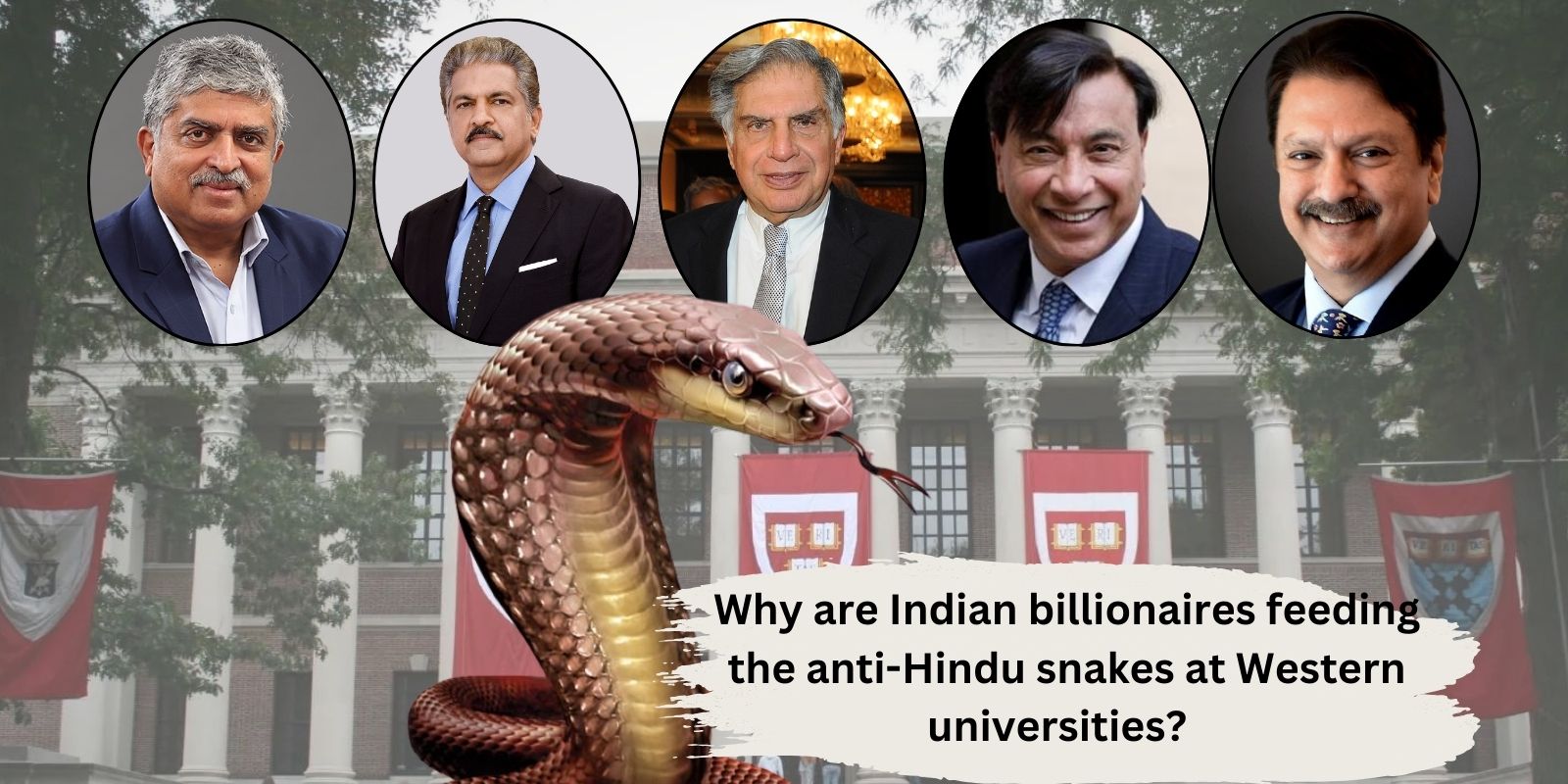
- Indian billionaires are funding elite Western universities that often promote anti-India and anti-Hindu narratives.
- Activists like Ranjani Srinivasan use academic platforms to push radical ideologies under the guise of scholarship.
- Foreign-funded research frequently distorts Indian history, replacing colonial blame with caste-based guilt.
- Universities like Harvard exploit Indian donations while offering little accountability or alignment with Indian interests.
- This trend reflects a deeper identity crisis among India’s elite, driven by Western validation over national loyalty.
Ranjani Srinivasan, on paper, flaunts an impressive academic pedigree. At 37, this Bengaluru-born scholar is still a student — amusing that someone inching toward middle age is wandering lecture halls instead of earning a living. A Fulbright at Harvard and a PhD pursuit in urban planning at Columbia — sure, it all sounds like intellectual gold. But scratch beneath the surface of this eternal student’s carefully curated academic life, and a grittier tale emerges, casting her not as a devoted scholar but as an agitator flirting with radical ideologies. A far cry from the hallowed halls she’d been haunting for far too long.[1]
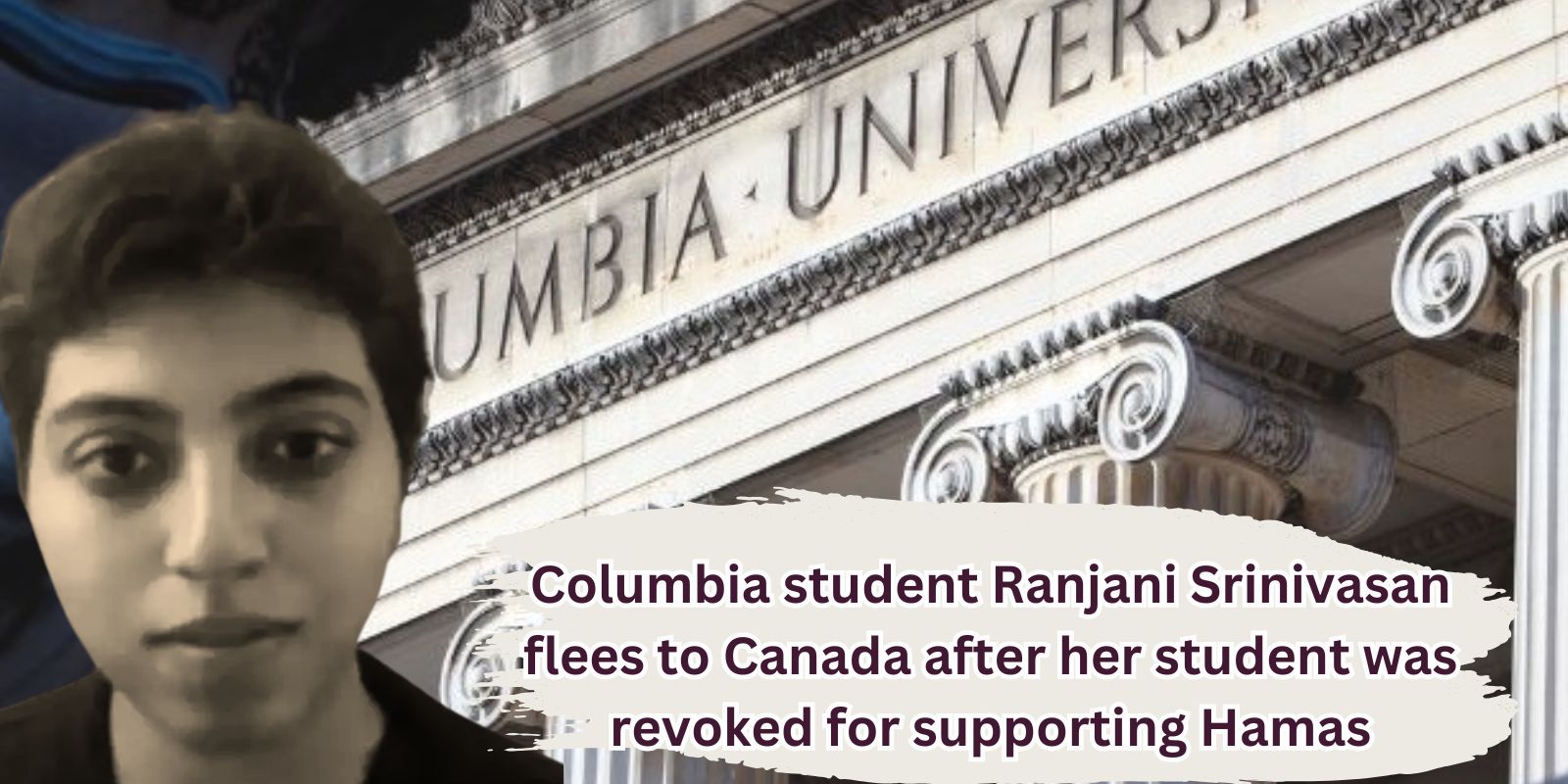 But you can’t keep up the act forever. Srinivasan had been living in the U.S. since 2016, and lately, she’d been spending her time on American campuses not just studying but throwing her weight behind Hamas, a group officially designated as a terrorist organization responsible for the deaths of countless innocent people: Jews, Muslims, Westerners, and Asians alike. Her activism ramped up just as the U.S. — under President Donald Trump — sharpened its focus on rooting out terror sympathizers. With the heat rising, Srinivasan didn’t stick around to defend her cause. She bolted. After ducking ICE officials and barricading herself in her dorm, she skipped town and slinked off to Canada, slipping through the airport like a cornered rat making its last dash.[2]
The accusations against Srinivasan extend beyond her time in the United States. She belongs to a breed of woke activists that target specific communities — for instance, attacking Hindus in India with impunity and assuming they could replicate such behavior against Jews in the U.S. That was a serious miscalculation. While American authorities didn’t pursue her as aggressively as they did Palestinian activist Mahmoud Khalil [3], the prevailing sentiment among her critics is that arrest, domestic terrorism charges, and a stiff prison sentence would have been a far more fitting outcome than her self-imposed exile. Instead, her move to Canada raises concerns that she may now resume her anarchist agenda from a country long seen as a fertile breeding ground for terrorists. [4]
With Trump withholding Columbia’s $400 million annual grant, the university quickly got the message and ceased platforming pro-Hamas activists on its campuses. It also de-enrolled Srinivasan from its PhD program.
Agenda-Driven Academia
Srinivasan’s actions align with the stereotype of an Antifa or urban Naxal figure determined to dismantle societal foundations. Her research paper, titled “Gold & Cyanide: Family, Caste, and the Post-extractive Landscape at Kolar Gold Fields,” is a textbook example of Mickey Mouse academics — university work that lacks depth or real-world relevance. [5]
The paper, funded by the Lakshmi Mittal South Asia Institute at Harvard, explores the socio-economic aftermath of mining in India. If banality has an address, it’s found in these pages. The paper is laughable in its contrived premise and lack of purpose, serving only as a vehicle for self-promotion or pushing an anti-Hindu narrative. Her central argument is that the gold mines’ high-caste owners exploited lower-caste laborers.
The issue here is that Srinivasan is being economical with the truth — the Kolar Gold Fields were owned by the British before India’s independence, and it was the colonialists who enforced segregation through three distinct zones: palatial bungalows for whites, second-tier housing for Brahmins, and peripheral slums for the lower castes. Once again, it was the British, not Indians, who exploited poor laborers by dumping cyanide waste near their homes. By reframing colonial abuse as caste oppression, she’s building activist credibility while angling for a faculty position.
There are two ways to look at this. First, when scholarships are awarded for vacuous, agenda-driven research like Srinivasan’s, it only deepens the suspicion that American universities serve as grooming grounds for international students and faculty to be shaped into deep-state assets — essentially, spies in academic robes. Had Trump lost the 2024 election, there’s every chance Srinivasan could have ended up as one more cog in the CIA’s global machine. [6] [7] [8]
Second, never attribute to malice what can just as easily be chalked up to incompetence. Perhaps the Indian director and staff at the Lakshmi Mittal and Family South Asia Institute don’t care about the substance or quality of the research they sponsor. As long as a candidate’s worldview aligns with Harvard’s Hinduphobic leanings, even drivel gets a stamp of approval.
But here’s the real puzzle: Why would an institute funded by a $25 million donation from steel tycoon Lakshmi N. Mittal [9] support someone like Srinivasan — a self-styled anarchist openly hostile to India? It’s not as if Mittal owes nothing to India. On the contrary, he may not have become the world’s largest steelmaker without Indian support. In 2006, when Mittal launched a $22 billion bid to acquire Arcelor — then Europe’s biggest steel company — he was met with fierce resistance, much of it fueled by racism from French politicians and corporate elites. It was only after the Indian government applied diplomatic pressure that France backed down and allowed the deal to go through. [10]
This raises an uncomfortable question: Does the Mittal family feel any real allegiance to India? Are they just driven by a mercenary motive? Is profit their only calling? To find the answers, we must explore the entire corporate donation business to foreign universities by India’s leading business houses.
Indian Tycoons and Foreign Nexus
Over the past two decades, in step with their rapidly growing fortunes, Indian billionaires have made substantial donations to prestigious foreign universities, with notable contributions from Nandan Nilekani, Ratan Tata, Anand Mahindra, Lakshmi Mittal, and Ajay Piramal, among others. [11]
Among the first to open their pursestrings to foreign campuses was Infosys co-founder Nilekani, whose gift of $5 million enabled Yale to catalyze the Yale India Initiative. [12] So, how has that worked out? Well, in 2021, Yale faculty members took part in the notorious Dismantling Global Hindutva conference, during which they produced the Goebbelsian ‘Hindutva Harassment Field Manual,’ which claims to offer “resources for how to defend those attacked (by Hindus) and how to educate others on campus and the workplace.” The document warned Muslim, feminist, LGBTQ+, and other students that they were at risk from Hindu students who may espouse “elite Hindu-centric ideas.” [13]
Again, an economics professor at Yale named Ahmed Mushfiq Mobarak sparked controversy with his social media post, wherein he blamed the Prime Minister’s visit to Bangladesh to justify the violence committed by the Islamist outfit Hefazat-e-Islam against Hindus. [14] Yale did nothing to discipline its Jihadi professor, indicating that Hinduphobia is normalized at the university.
The funding floodgates began to open in September 2010 when Anand Mahindra, the managing director of Mahindra & Mahindra, donated $10 million to Harvard University’s Humanities Center, which was renamed the Mahindra Humanities Center at Harvard. [15]
Here’s an interesting backstory. When Rajiv Malhotra, the famous author and founder of Infinity Foundation, learned about Mahindra’s intention to donate a large sum of money to Harvard, he met up with the tycoon and cautioned him about Harvard’s anti-Hindu agenda. Mahindra appeared sympathetic to Malhotra’s appeal and assured the author that he would only donate $20,000 for Indian students to visit as scholars. However, the mega donation – the largest in Harvard’s history for studying humanities – went through. [16]
Tata Hits a Century
Barely a month after Mahindra’s $10 million grant, the Tata family announced they would donate $50 million to Harvard. [17] While undoubtedly a great achievement for the Tatas, this donation sparked considerable debate in India. Critics questioned whether such large sums of money were being diverted from addressing pressing issues within India, such as education, healthcare, and infrastructure. They pointed out that by donating to one of the wealthiest universities in the world, the Tatas were essentially contributing to a system that had little interest in addressing the issues facing Indians. The donation led to the creation of Tata Hall at Harvard, and while this may have brought prestige to the family, it has done little to help India in the long term.
An Indian government sub-committee investigating this matter stated that the “construction of Tata Hall did not amount either to charity or international welfare in which India was interested” but instead may have been for the “promotion of the personal interest of one/some of the trustees of various Tata Trusts.” [18]
An equally devious aspect was the role played by Harvard Business School dean Nitin Nohria in the questionable donation. In September 2013, three months before the completion of Tata Hall, Nohria was appointed a non-executive director to the board of Tata Sons, the holding company of Ratan Tata’s companies.
Alan Beard, a former adjunct professor at Georgetown University, questioned: “How does one of America’s most prestigious institutions catering to the elite manage to have its silver spoon taken from the most destitute? And how can such a revered institution of business management be so blind to the ironies of accepting questionable funds that go against every tenet of good governance?”
Harvard had no qualms about pocketing the cash, and Tata wasn’t interested in explaining.
Feeding the Liberal Snakes
Some argue that when India was poor, American organizations like USAID funded chairs at places like the Indian Institute of Technology at Kanpur. So what’s wrong if Indian billionaires like Mahindra and Tata pay back their alma mater? But here’s the difference—Indian universities that received American grants did not have an anti-American agenda; they did not try to divide Americans based on ethnicity.
On the other hand, the structure of Indian donations, which focuses on short-term, high-profile initiatives rather than deep engagement with India’s academic community, lacks the accountability needed to ensure that India’s narrative is accurately and fairly represented.
Despite being portrayed as centers for academic excellence, these initiatives often reflect a skewed, sometimes hostile, portrayal of India. Many of the projects funded by these donations engage in research criticizing India’s history, political system, and socio-cultural fabric. For instance, scholars at these centers have produced works that critique India’s Constitution, its governance, and its role on the global stage. Often, these criticisms are masked under the veneer of social justice, but they can potentially distort India’s global understanding.
Brown Sahib Mentality
Malhotra explains that Indian corporate tycoons often skip due diligence before handing out donations because the temptation to gain fame in Ivy League circles and rub shoulders with the American elite is too irresistible for them. “The real ‘success’ for most is when they are recognized by the West. This is what the West knows well, having studied Indian culture for centuries and having used precisely this knowledge to manage, control, and topple one Indian raja after another in the 17th and 18th centuries. That is, take their kids to Cambridge, play polo with them, have Western women to flirt [with so they can feel like they have been admitted to the club as honorary whites in front of other Indians]. After independence, the British were replaced by the Americans in this game, hence the strategic importance of places like Harvard.” [19]
No argument there. Harvard seems to attract some of the most Hinduphobic people in academia. Among the most vicious characters in the snakepit is Sugata Bose, whom Harvard had appointed as its brand ambassador to raise funds in India. In his writings, Bose portrays pre-Mughal India as uncivilized. His perspective on colonial crimes centers solely on the British, overlooking the role of Islamic colonizers. He views de-colonization as a return to a unified South Asia under a quasi-Islamic civilization, which he frames as secularism. Notably, his girlfriend and co-author, Pakistani academic Ayesha Jalal, has adeptly integrated this viewpoint into the core curriculum on South Asia at several American universities, including Harvard. So basically, money donated by Indian billionaires is at the disposal of liberals and radicalized Muslims to further their anti-India agenda.
Real Reason Why Corporates Donate
If there’s one word that summarizes it, it’s self-interest. One of the primary reasons Indian industrialists donate to foreign universities is the institution’s global reputation for excellence in education and research. With a long history of incubating leadership and pioneering academic breakthroughs, the leading American campuses are symbols of prestige and intellectual capital. For Indian industrialists, supporting such colleges enhances their global stature.
Networking opportunities play a crucial role in these donations. The alumni network of campuses like Harvard, Yale, and Wharton is one of the most influential in the world, spanning various sectors, including business, politics, and technology. By contributing to these universities, Indian industrialists gain access to this network, providing valuable connections, partnerships, and insights that can benefit their businesses. Networking at such a high level can open doors to collaborations that may be otherwise difficult to access, enhancing their professional and personal circles.
Plus, there is prestige. The Piramals, for instance, may not rank very high in the corporate pecking order in India, outmatched as they are by the Tatas, Ambanis, and Adanis. However, donating millions to Harvard allows them to hobnob with Ivy Leaguers and have a say in the admissions and curriculum processes. For a comparatively minor business family, that’s quite a power trip.
Chinese Model: A Comparison
In contrast to India, China has been highly strategic in ensuring its academic interests are well-protected and promoted in Western institutions. The Chinese government and private donors have worked tirelessly to ensure that the study of China in Western universities is tightly controlled and aligned with the country’s national agenda. For instance, Chinese philanthropists and state-run entities continuously monitor and invest in China Studies programs in the West, ensuring that these departments produce research that serves Beijing’s interests.
India, however, lacks such a coordinated approach. Despite the millions of dollars being funneled into foreign universities, there is no systematic evaluation of how the study of India in Western academic institutions impacts the country’s global image. While China has established a robust presence in academia, India’s philanthropic efforts fail to create a cohesive strategy to safeguard its interests. As a result, India is at the mercy of foreign scholars and institutions that often shape the global discourse around India in ways that do not always align with its national goals.
NEP and Ivy League Expansion in India
The Indian government’s National Education Policy (NEP) of 2020 further facilitated the expansion of foreign universities in India. The policy allowed US universities to set up trusts in India, giving them tax-free status and enabling Indian donors to claim tax deductions for their contributions. This has led to an influx of funding to Ivy League schools, but it has also raised concerns about the influence of these institutions on India’s education system and intellectual landscape. [20]
The growing presence of foreign universities in India, coupled with the philanthropic contributions of Indian billionaires, means these institutions are becoming more deeply entrenched in India’s academic infrastructure. This could limit the space available for local institutions to define their curricula and research agendas, further entrenching foreign perspectives on Indian history, politics, and culture.
Endgame
Sending a big check to a foreign university may seem admirable for India’s wealthy elite, but it has unintended consequences. These contributions often reinforce narratives not aligned with India’s interests, shaping the global discourse on India in ways that may damage its reputation. As India continues to rise as a global power, its philanthropists and leaders must consider the long-term impact of their contributions. Only by carefully evaluating where their donations go and what agendas they support can India ensure that its story is told in an accurate and balanced manner on the global stage.
Citations
[1] The News Minute Cherry-Picks Facts In Columbia University ‘Scholar’ Ranjani Srinivasan Visa Revocation Case, Whitewashes Her Pro-Hamas Activities (The Commune Mag); https://thecommunemag.com/the-news-minute-cherry-picks-facts-in-columbia-univ-scholar-ranjani-srinivasan-visa-revocation-case/
[2] When you advocate for violence and terrorism that privilege should be revoked and you should not be in this country (X); https://x.com/Sec_Noem/status/1900562928849326488
[3] Palestinian activist Mahmoud Khalil describes his arrest in new court filing (ABC News); https://abcnews.go.com/US/columbia-activist-mahmoud-khalil-recounts-arrest/story?id=119891169
[4] Is Canada Safe Haven for Terrorists? (PBS); https://www.pbs.org/wgbh/pages/frontline/shows/trail/etc/canada.html
[5] Prasad Grant Report 2016-2017 (The Laxmi Mittal South Asia Institute, Harvard University); https://issuu.com/sainit/docs/prasad_grant_report_no_crops
[6] How Spy Agencies Use American Universities to Secretly Recruit Students (Daniel Golden, Town and Country Magazine 2017); https://www.townandcountrymag.com/society/tradition/a12814064/spy-school-daniel-golden-fbi-cia-recruit-at-american-colleges/
[7] The CIA’s Campus Spies (Counterpunch 2005); https://www.counterpunch.org/2005/03/12/the-cia-s-campus-spies/
[8] Exclusive: Peace Corps, Fulbright Scholar Asked to ‘Spy’ on Cubans, Venezuelans (ABC News); https://abcnews.go.com/Blotter/story?id=4262036&page=1
[9] Steel Tycoon Lakshmi Mittal Donates $25 Million To Harvard University (NDTV); https://www.ndtv.com/indians-abroad/steel-tycoon-lakshmi-mittal-donates-25-million-to-harvard-university-1763988
[10] Mittal ‘sad’ about ‘racists’ (News24, 2006); https://www.news24.com/fin24/mittal-sad-about-racists-20060219
[11] Global Indians who have donated who have donated millions of dollars to U.S. universities, (TheTimes of India, 2023); https://timesofindia.indiatimes.com/india/global-indians-who-have-donated-millions-of-dollars-to-us-universities/articleshow/101487950.cms
[12] Initiative to Transform Yale University’s Engagement with India (Yale News, 2008); https://news.yale.edu/2008/11/17/initiative-transform-yale-university-s-engagement-india
[13] US Hindu group files complaint against university over ‘anti-Hindu’ conference (Rediff, 2021); https://www.rediff.com/news/report/us-hindu-group-files-complaint-against-university-over-anti-hindu-conference/20211007.htm
[14] Yale professor blames Islamist attacks against Hindu temples in Bangladesh on Narendra Modi, backtracks after outrage (OpINdia, 2021); https://www.opindia.com/2021/04/yale-professor-sparks-outrage-ahmed-mushfiq-mobarak-islamist-attacks-against-hindu-temples-on-narendra-modi/#google_vignette
[15] Mahindra gifts 10 million to alma mater harvard (The Times of India, 2010); https://timesofindia.indiatimes.com/business/india-business/mahindra-gifts-10m-to-alma-mater-harvard/articleshow/6680992.cms
[16] Harvard and the Indian Billionaires (The Medha Journal, 2010); https://www.medhajournal.com/harvard-and-the-indian-billionaires/
[17] $50 million gift from Tata Trusts to Harvard Business School under scrutiny (Financial Express); https://www.financialexpress.com/business/industry-50-million-gift-from-tata-trusts-to-harvard-business-school-under-scrutiny-1181574/
[18] UPDATED: Harvard Business School’s Gift from Tata Trusts (Daily Caller, 2018); https://dailycaller.com/2018/05/21/harvard-business-school-tata/
[19] Harvard and the Indian Billionaires (The Medha Journal, 2010); https://www.medhajournal.com/harvard-and-the-indian-billionaires/
[20] Crackling News: India allows Foreign Higher Educational Institutions to set up in-country campus (Lexology; 2023); https://www.lexology.com/library/detail.aspx?g=c744c9a8-c7a1-4a3d-aa79-c563da53f7d5

Donate to HINDUDVESHA
Our Mission is to explore and expose Hindudvesha through research analysis, education and response.
SUPPORT US