

The Hyper-Sexualization of Children: India’s Pop Culture Crosses a Dangerous Line
 Rati Agnihotri · 04/15/2026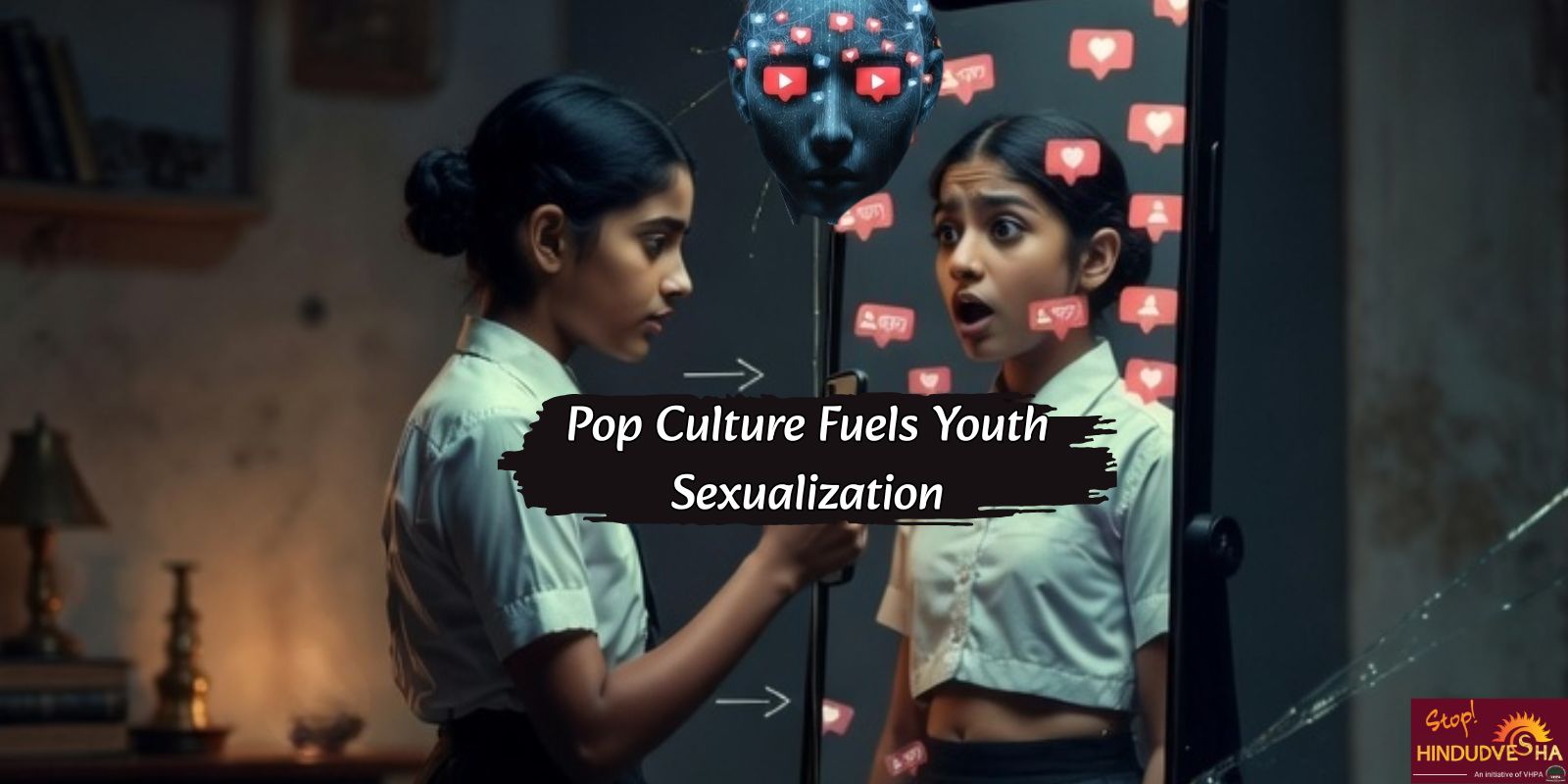
Summary
India’s popular culture is witnessing a troubling rise in the hyper-sexualization of children, visible across music videos, films, OTT content, and social media. What was once implicit has become increasingly explicit, with minors depicted in suggestive contexts and algorithms amplifying such content for engagement. The controversy around songs like Tateeree highlights a broader pattern rather than an isolated lapse. Social media platforms further intensify the risk by incentivizing self-sexualized content among impressionable users, often without meaningful regulation. At the same time, emerging cultural and educational influences are reshaping norms around childhood and sexuality. Together, these forces create an environment where commercial incentives override ethical considerations, leaving children more vulnerable to exploitation and eroding long-standing social safeguards meant to protect their well-being and dignity.
Indian rapper Badshah commands massive popularity across India. His songs routinely feature crass objectification of women, stripped-down language for mass appeal, and a shallow modern gloss slapped onto traditional folk tunes.
His latest release, “Tateeree,” crossed every line of decency and public morality, plunging into outright child sexualization by depicting school-uniform-clad girls dancing provocatively to suggestive Haryanvi lyrics. Unfortunately, this is far from an isolated case. From the casting of underage girls in Bollywood films to lyrics that shamelessly peddle the “solah baras” fantasy, the sexual objectification of teenagers has long simmered as a disturbing undercurrent in India’s mainstream entertainment industry.
Social media has amplified this perversion to new extremes. With no meaningful regulations governing children’s access to or use of these platforms, algorithms actively reward and promote content featuring alarming levels of self-sexualization among kids and teens. This danger is compounded by the creeping import of Western wokeism into India’s school education system, which grooms vulnerable children toward overtly sexualized behavior. Together, these forces have left Indian youth dangerously exposed.
In an increasingly digital world that has become a breeding ground for child pornography creators and pedophiles, the deliberate weaponization of popular culture in India to sexualize children and teenagers cannot be dismissed. It amounts to a calculated effort to re-engineer Indian society along the lines of the global woke marketplace—slowly dismantling the protective defenses of Dharma and cultural values that have long safeguarded Indian children.
Sexualization of Schoolchildren in Popular Culture
While Bollywood is no stranger to the subtle sexualization of schoolchildren, the OTT space has pushed these boundaries much more aggressively. From the adult web-series Rasbhari peddling soft-porn via the disturbing premise of a teacher-student sexual dynamic[1] to a movie like Haramkhor depicting a romantic relationship between a 14-year-old school student and her professor [2], the entertainment industry has routinely and casually promoted content that glorifies the sexualization of children.
The phenomenon of implicitly sexualized portrayals of schoolchildren in music videos is not new either; it is only with increasing awareness of the industry’s broader cultural influence that these patterns have begun to be widely recognized. In August 2025, Punjabi singer Guru Randhawa was embroiled in a controversy over his latest music video “Azul”, featuring women models dressed in school uniforms. The video sparked considerable outrage over its alleged sexualized depiction of schoolgirls. A scene featuring an actress in a school uniform performing a dance sequence for Guru Randhawa’s character, who plays a photography teacher, was particularly criticized. [3]
In the case of Badshah’s Tateeree, outrage extended beyond social media. Although most versions have been removed from YouTube, the original video showed girls in school uniforms dancing on a Haryana Roadways bus and making provocative gestures widely deemed inappropriate. According to the latest updates, the Haryana State Commission for Women (HSCW) directed the police to arrest Badshah and seize his passport. [4]
Numerous organizations and advocacy groups have sharply denounced Tateeree. Hindu rights activist Swati Goel Sharma, known for her satirical platform “Gems of Bollywood,” wrote on X [5]: “Sick perverts. It’s Badshah’s latest song, which shows schoolgirls throwing away bags and books, and he’s singing – Aaya Badshah toli chadhane, in sabki ghodi banana. FIR filed in Haryana, look-out circular issued. Do you realise this is what the lower-age-of-consent brigade will unleash on Indian families as sexualizing schoolgirls would become legal in media and entertainment?”
Badshah exemplifies an industry that routinely showcases visuals centered on the objectification of women and exaggerated masculine bravado. With lyrics often bordering on the nonsensical and reflecting misogyny, these songs command a large audience across age groups. The use of the “schoolgirl” trope appears to be a deliberate tactic to attract attention and expand viewership.
What further highlights the double standards of such artists is their response when confronted. They often resort to apologies, claiming no intent to offend. Regardless of intent, such content contributes to an unsafe environment for children by using provocative material for attention, rendering such apologies of limited value.
These productions form a genre that achieves commercial success through such tropes. In the absence of backlash, artists appear comfortable invoking them under creative freedom. When challenged, they tend to adopt a defensive stance, distancing themselves from the content they produced.
Role of Social Media
With the lack of a regulatory framework for the use of social media by children in India, the phenomenon of children as young as 12-year-olds making sexually suggestive content on social media platforms to go viral is on an alarming rise.
In October 2022, controversy erupted when 12-year-old social media influencer and child actor Riva Arora[6] appeared in a romantic dance video alongside 45-year-old singer Mika Singh. Netizens fiercely condemned the inappropriateness of a man in his 40s dancing intimately with a child. Her parents came under heavy scrutiny for allegedly encouraging her to accept such projects.
Her family insisted she was not 12 years old but refused to disclose her actual age. Riva has faced repeated criticism for starring in age-inappropriate content, with netizens claiming they uncovered earlier videos allegedly depicting her being abused and chained to a bed. [7]
Global research indicates social media platforms increasingly fuel sexual exploitation and online prostitution, with teenage girls from vulnerable backgrounds as prime targets. [8] Though not India-specific, the growing trend of teen influencers posting provocative clickbait reels with suggestive gestures and mannerisms raises serious concerns. Social media acts as a dangerous minefield for children and teens: algorithms reward sensational content, incentivizing impressionable kids to chase quick fame through self-sexualizing posts. Without any regulatory framework for child and teen influencers, the risks grow even more alarming.
In December 2025, Rajya Sabha MP Sudha Murthy voiced serious concerns about the portrayal of children on social media and urged the government to introduce strict regulations. She noted that while progress had been made in regulating advertisements featuring children, similar rules were largely absent for social media. Murthy also stressed parents’ responsibility to set boundaries for how their children present themselves online, stating that children “cannot wear certain kinds of dress or dance in a certain way or be portrayed in ads, because this is not the way we can bring up the next generation”. [9]
Her remarks carry great weight, not only regarding teen influencers creating disturbing content that caters to perverted adult fantasies, but also in light of parents carelessly sharing sensitive images of young children and babies on social media, leaving them highly vulnerable to manipulation and misuse.
Importation of Wokeism and Sexual Grooming of Children
In their book Who is Raising Your Children?, Rajiv Malhotra and Vijaya Viswanathan alert readers to the imminent danger of importing Western educational models into India’s school system. The authors argue that wokeism imported from the West is increasingly infiltrating school education policies and curriculum in India, bringing in concepts and frameworks that go completely against the ethos of Indian culture and family values.
One of the most important issues the book raises is that of the subtle grooming of children in the West through the rebranding of Sex Education as Comprehensive Sexuality Education. The authors argue that instead of emphasizing responsible behavior and abstinence, sex education in the West has now moved into the terrain of cultivating a positive attitude towards sex. Thus, comprehensive sex education is implicitly grooming children sexually by increasingly including explicit content explaining “desire” and “pleasure”, normalizing abortion, and teaching the concept of LGBTQ+ sexuality to extremely young children. [10] The book issues a warning to the reader that the import of these woke models and frameworks into the Indian educational context could lead to the implicit grooming of Indian children into early sexual activity.
One has already begun to witness the horrors of the uncritical import of wokeism in a few elite public schools in India. In July 2020, Tagore International School in Delhi came under scrutiny for hosting a session on gender identity politics that reportedly used explicitly sexual visuals to “educate” children. According to media reports, the session was conducted by Nazariya – Queer Feminist Resource Group (Nazariya QFRG). The group also faced criticism for a social media post advertising a coloring book for students featuring the image of a nude woman wearing a female sex toy. It also featured an image of a nude woman engaged in a self-stimulating act in the bottom left corner. [11]
In February 2024, Shiv Nadar School in Delhi-NCR faced criticism from parents for introducing a parent feedback form that offered the option to choose between “Male”, “Female”, and “Non-binary” for their child’s gender. The term “Non-binary” is typically used to describe people who feel that their gender cannot be defined within the confines of the gender binary. The school’s fascination with woke gender pronouns, however, didn’t go over well with the parents, some of whom viewed the move as an attempt to impose woke ideology on parents and students. [12]
While inculcating sensitivity towards the LGBTQ+ community amongst students is a welcome step, the implicit grooming of extremely young children into new-fangled woke concepts of gender fluidity sets a dangerous precedent. This brand of wokeism has already wreaked havoc in the West, with children of an impressionable age taking hormone injections and undergoing sex change operations, notwithstanding the dangerous and in some cases almost lethal repercussions for both their physical and mental health. Parents in the West have begun fiercely fighting back against the woke agenda that turns their children into pawns in a marketplace obsessed with promoting “alternate sexualities.” India, with its quintessential family structure and the civilizational value system protecting children from unwanted sexualization at an early age, is in a relatively better position. Yet, one cannot afford to be complicit. Experts warn that the speed with which wokeism is infiltrating the education system in India should ring alarm bells.
Legal Activism for Lowering the Age of Consent
In August 2025, senior advocate Indira Jaising called upon the Supreme Court to reconsider the age of consent mandated under the Protection of Children from Sexual Offences (POCSO) Act 2012, recommending the lowering of the age of consent from 18 to 16 years. She reportedly argued that the current legal threshold “disproportionately penalizes adolescents in consensual sexual relationships”. Indira Jaising also noted that the legal age of consent in India was set at 16 in the Indian Penal Code until POCSO came into effect in 2012, raising it to 18. She reportedly said that the sudden shift was “driven by an overly paternalistic desire to protect adolescent girls” that failed to take into account real-world dynamics. Jaising further submitted that 16–18-year-olds deserved the right to autonomy and privacy in their sexual decisions. [13]
Indira Jaising’s arguments for lowering the age of consent for consensual sexual relationships in India are couched in language that is typical of woke progressive discourse on sexuality, where grave issues surrounding the sexual abuse of minors are trivialized and children are covertly groomed into early sexual initiation through the overt emphasis on agency and sexual choice, and the insistence on treating adolescents as almost adults.
Experts argue that lowering the age of consent could end up undermining child safety, potentially leading to a spike in teenage pregnancies and exploitation of minor girls by older men in the guise of “consent”. Moreover, a 16-year-old girl does not have the requisite maturity to understand the implications of sexual relationships and pregnancy. Thus, lowering the age of consent puts minors at further risk of abuse and exploitation. [14]
The government has consistently maintained the stand that the age of consent must stay at 18 and be strictly enforced to protect child rights and prevent the exploitation of minors. The government also argued that lowering the age of consent would shift the focus away from the conduct of the accused and instead place the spotlight on the perceived willingness of the child, increasing the risk of victim-blaming and undermining the framework of child-centric justice. [15] In its official reply, the government maintained that uniformity across laws fixing the age of consent at 18 years is a necessary measure to prevent coercion, manipulation, and exploitation of minors, while recognizing that children lack the psychological and legal capacity “to give meaningful and informed consent in matters involving sexual activity”. [16]
Love Jihad and the Targeting of Young Hindu Girls
In India, cases of alleged Love Jihad (the deliberate targeting of a Hindu girl or woman by a Muslim man who typically hides his identity and poses as a Hindu to lure the girl with the ultimate objective of religious conversion) are becoming notoriously common. Yet, a major part of the mainstream media ecosystem claims that “love jihad” is a conspiracy theory, and it’s just a term used to indict consensual sexual relationships involving a Hindu woman and a Muslim man. However, one sees the same typical pattern being repeated in such cases, where the victim is eventually coerced to convert to Islam and abandon Hindu culture. If one looks at recently reported cases allegedly involving the angle of love jihad, there is a predominant trend of minor Hindu girls being trapped.
In the Mainpuri district of Uttar Pradesh, a man accused of involvement in a love jihad case was sentenced to 20 years of imprisonment by a special POCSO court. The convict reportedly assumed the identity of a Hindu man to lure a minor girl and eventually abduct her, taking her to many locations, before being caught by the police. [17] In another heinous incident reported from Prayagraj, a minor Hindu orphan girl was held captive for 3 years, gang-raped, and forced to convert her religion. [18]
In yet another such case reported from Haryana, a local court convicted a Muslim man for sexually assaulting and intimidating a minor Hindu girl to coerce her into a relationship with a Muslim juvenile. While acknowledging that love-jihad is not technically an offence under the Bharatiya Nyaya Sanhita, the judge described it as a “purported campaign by Muslim men to convert non-Muslim women to Islam by pretending to be in love”. [19] According to media reports, Madhya Pradesh recorded 283 cases of alleged “love jihad” between January 2020 and July 15, 2025, with 71 of them involving minor girls. [20]]
With a major part of the media ecosystem being borderline hostile to covering “love-jihad” cases, most such cases are covered only by niche nationalist media. Thus, there is a high probability that many such cases never see the light of day in the media. However, it’s important to keep in mind that legal activism aimed at lowering the age of consent in sexual relationships makes Hindu girls even more vulnerable to such targeted abuse and harassment.
The woke ecosystem and the popular culture machinery are implicitly grooming Hindu children into early sexual activity. With many Hindu parents themselves becoming victims of woke culture, the Indian family system, with its emphasis on Dharmic values, has clearly been compromised to some extent. This makes Hindu children even more vulnerable to woke grooming.
Wrapping Up
The relentless sexualization of children in India’s popular culture—from Badshah’s provocative “Tateeree” to Bollywood’s underage casting, OTT soft-porn tropes, and music videos exploiting schoolgirl fantasies—represents more than isolated lapses in taste. It forms part of a broader, insidious pattern amplified by unregulated social media algorithms that reward self-sexualization among minors and the creeping import of Western wokeism into education, grooming vulnerable youth toward early sexualization under the guise of autonomy and inclusivity.
Coupled with legal activism pushing to lower the age of consent and the alarming rise of “love jihad” cases targeting minor Hindu girls, these forces collectively threaten the protective shield of Dharma, family values, and civilizational ethos that have long safeguarded Indian childhood.
Parents, educators, policymakers, and society must act decisively: enforce robust regulations on child influencers and content, resist foreign ideological imports that clash with Indian ethos, and reclaim cultural sovereignty. Only through vigilant, Dharmic-rooted resistance can we shield the next generation from this calculated assault and preserve the innocence and moral integrity of our children.
Citations
[1] OTT vs Culture: India’s New Dilemma; https://stophindudvesha.org/when-entertainment-gets-weaponized-against-cultural-norms-indias-ott-challenge/
[2] Haraamkhor movie trailer: Nawazuddin Siddiqui, Shweta Tripathi are in a brilliant form; https://www.firstpost.com/entertainment/watch-haraamkhor-trailer-has-nawazuddin-siddiqui-shweta-tripathi-in-brilliant-form-3175826.html
[3] Guru Randhawa FINALLY breaks silence on ‘Azul’ controversy; drops cryptic post: ‘ When God…’ | – The Times of India; https://timesofindia.indiatimes.com/entertainment/hindi/music/news/guru-randhawa-finally-breaks-silence-on-azul-controversy-drops-cryptic-post-when-god-/articleshow/123588734.cms
[4] ‘Tateeree’ song controversy: Women’s panel orders Badshah’s arrest after rapper skips hearing | Hindustan Times; https://www.hindustantimes.com/cities/chandigarh-news/tateeree-song-controversy-women-s-panel-orders-badshah-s-arrest-after-rapper-skips-hearing-101773428477432.html
[5] Swati Goel Sharma on X; https://x.com/swati_gs/status/2030239328560128155
[6] Mika comes under fire for dancing with 12-year-old Riva Arora, netizens burst in anger | Hindi Movie News – Times of India; https://timesofindia.indiatimes.com/entertainment/hindi/bollywood/news/mika-comes-under-fire-for-dancing-with-12-year-old-riva-arora-netizens-burst-in-anger/articleshow/95003816.cms
[7] Riva Arora claims she is not 12, yet does not divulge her age, says ‘it will be revealed soon’ | Hindi Movie News – The Times of India; https://timesofindia.indiatimes.com/entertainment/hindi/bollywood/news/riva-arora-claims-she-is-not-12-yet-does-not-divulge-her-age-says-it-will-be-revealed-soon/articleshow/98196502.cms
[8] Social Media’s Toxic Mix: Wokeism, Sensationalism & Hinduphobia; https://stophindudvesha.org/social-medias-toxic-cocktail-how-wokeism-sensationalism-and-anti-hindu-sentiment-corrupt-youth/
[9] Sudha Murthy Warns: “Social Media is Like a Knife” – Calls for Regulation on Child Influencers – Storyboard 18; https://www.storyboard18.com/how-it-works/sudha-murthy-warns-social-media-is-like-a-knife-calls-for-regulation-on-child-influencers-85484.htm
[10] Hidden dangers of Western education models | Vijaya Viswanathan | Who Is Raising your Children? – YouTube; https://www.youtube.com/watch?v=FO1f_NMqxco&t=8s
[11] Nazariya QFRG sells colouring book with vulgar sex content to students; https://www.opindia.com/2020/07/nazariya-qfrg-tagore-international-school-gender-identity-politics-queer/
[12] Shiv Nadar School introduces ‘non-binary’ as child’s gender, parents say, ‘don’t shove woke politics down our throat’; https://www.opindia.com/2024/02/shiv-nadar-school-non-binary-child-gender-feedback-form-parents-outraged/
[13] Pocso ( The Protection of Children from Sexual Offences Act) | Indira Jaisingh urges Supreme Court to lower age of consent for sex to 16; Centre opposes – Telegraph India; https://www.telegraphindia.com/india/indira-jaising-urges-supreme-court-to-lower-age-of-consent-for-sex-to-16-centre-opposes/cid/2115111#goog_rewarded
[14] Sixteen And Illusion of Maturity: A Collision of Consent, Health, And Vulnerability; https://www.livelaw.in/articles/supreme-court-hearing-reducing-age-of-consent-case-pocso-act-analysis-309761
[15] Age of consent must stay 18: Centre to Supreme Court | India News; https://www.hindustantimes.com/india-news/age-of-consent-must-stay-18-centre-to-sc-101753297232453.html
[16] Lowering age of consent will undermine child safety: Govt | India News – The Times of India; https://timesofindia.indiatimes.com/india/lowering-age-of-consent-will-undermine-child-safety-govt/articleshow/128006608.cms
[17] Exclusive | UP POSCO court jails Love Jihad accused Shehensha, posed as Rajkumar to trap Minor Hindu girl, for 20 years; https://organiser.org/2025/10/20/321828/bharat/exclusive-up-pocso-court-jails-love-jihad-accused-shehensha-posed-as-rajkumar-to-trap-minor-hindu-girl-for-20-years/
[18] Minor Hindu girl held captive for 3 years, gang-raped, forced religious conversion in Prayagraj: Mohammad Alam, Atif, Mumtaz arrested, identity changed on Aadhaar card as well; https://hindupost.in/crime/minor-hindu-girl-held-captive-for-3-years-gang-raped-forced-religious-conversion-in-prayagraj-mohammad-alam-atif-mumtaz-arrested-identity-changed-on-aadhaar-card-as-well/
[19] Haryana court sentences a Muslim man to 7 years in jail for Love Jihad against a minor Hindu girl; https://www.opindia.com/2025/07/cases-of-love-jihad-are-a-potential-threat-to-national-integrity-haryana-court-while-convicting-shahbaj/
[20] 283 ‘love jihad’ cases lodged in MP since 2020, assembly told | Bhopal News – Times of India; https://timesofindia.indiatimes.com/city/bhopal/283-love-jihad-cases-lodged-in-mp-since-2020-assembly-told/articleshow/123127042.cms

Donate to HINDUDVESHA
Our Mission is to explore and expose Hindudvesha through research analysis, education and response.
SUPPORT US