

When Entertainment Gets Weaponized Against Cultural Norms: India’s OTT Challenge
 Rati Agnihotri · 04/16/2025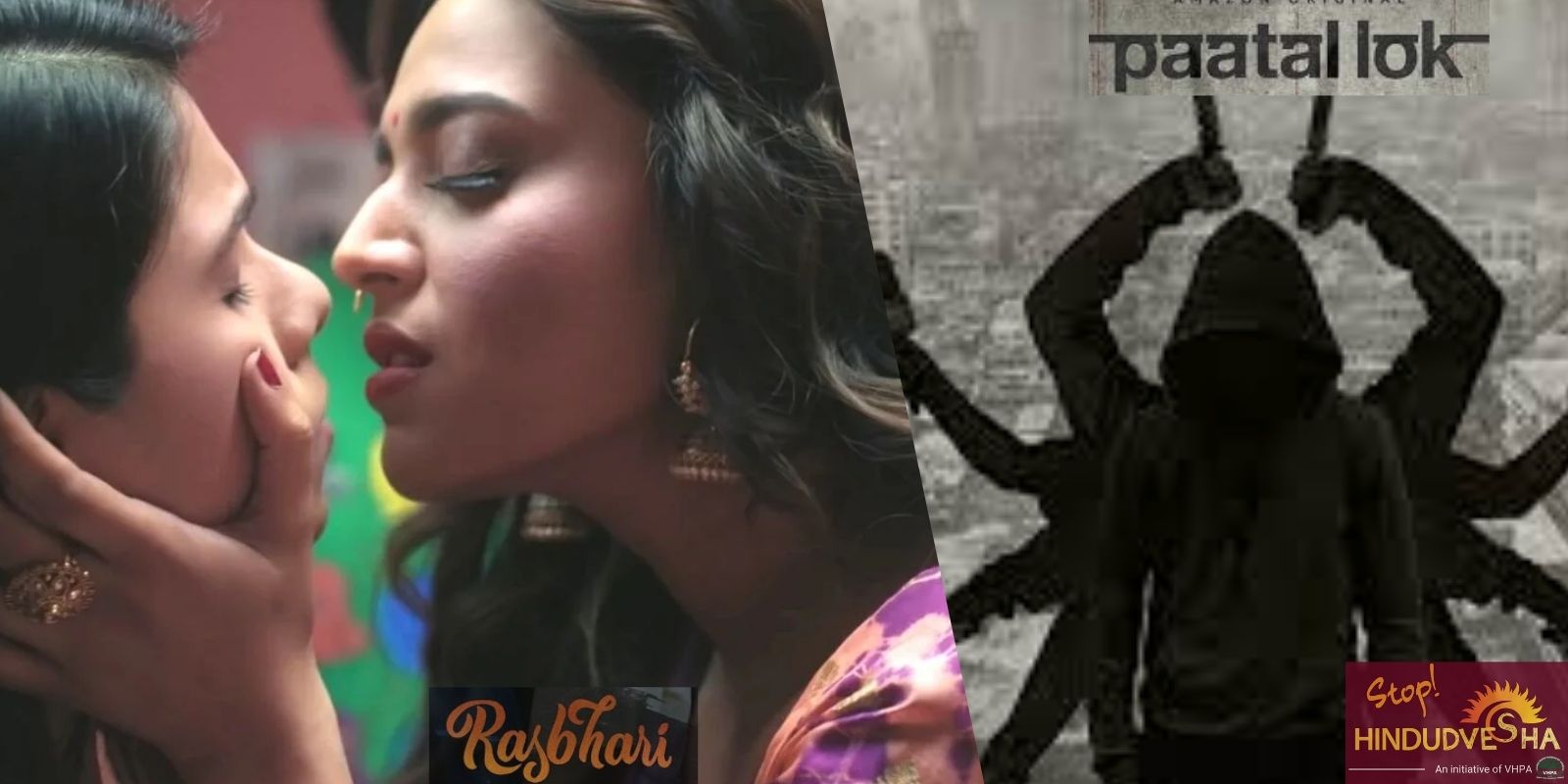
- OTT web series have become a playground for wokeism and rising Hinduphobia, with mockery of Hindu customs and deities now alarmingly routine in Hindi content.
- Distorted portrayals of the Indian middle class and Hindu families are being pushed as “progressive,” serving as soft propaganda aimed at dismantling traditional values.
- Many Hindi web series double as political commentary, glorifying protest culture and injecting ideological bias under the banner of entertainment.
- This woke agenda isn’t isolated; it mirrors a larger global trend dominating media, academia, and pop culture worldwide.
- While the Indian government has taken steps to regulate OTT platforms, real change will come when Hindus actively push back, take pride in their heritage, and demand respectful, value-driven content.
Hinduphobia is no ordinary prejudice. It’s a shapeshifter—subtle, insidious, and deeply entrenched within elite global institutions. It doesn’t announce itself with crude slogans. Instead, it seeps into minds through academic jargon, policy whitepapers, media narratives, and cultural content, all orchestrated by a well-oiled intellectual-industrial complex. This isn’t propaganda in the old-school sense—it’s more refined, more dangerous. It’s how hatred wears a suit and tie.
Rajiv Malhotra and Vijaya Viswanathan’s Snakes in the Ganga: Breaking India 2.0 shines a spotlight on how Western academia exports woke ideology into India, enabling anti-Hindu sentiment to take root under the guise of social justice. Once inside, it morphs into a narrative warfare machine—reprogramming Indian academia, politics, and cultural institutions from within.
The media, ever the willing amplifier, ensures that this narrative reaches every screen. Add the think tanks and policy influencers, and you have a perfect ecosystem for manufacturing consent. However, the most effective delivery system is pop culture.
From formulaic Netflix scripts to overproduced Bollywood dramas, there’s a clear agenda: ridicule tradition, trash Dharma, and glamorize moral decay—wrapped neatly in the packaging of “progress.” Wokeism, in the name of inclusivity, has become a convenient shortcut to digital virality. And since the youth are the primary targets, this strategy isn’t just deliberate—it’s surgical.
Bollywood has a long track record of demonizing Hindus—casting Sadhus as frauds and villains marked with Tilaks. But with the rise of OTT platforms, the battlefield has shifted. [1] Post-COVID, these platforms became breeding grounds for woke narratives exploiting the lockdown-era content gap to insert anti-Hindu themes stealthily.
Unlike mainstream cinema, OTT operates with minimal oversight. The absence of a censor board has allowed a flood of violent, vulgar, and Hinduphobic content to go unchecked. What began as a content alternative has morphed into a megaphone for twisted storytelling that targets Hindu traditions and beliefs.
In the following sections, we’ll unpack how OTT became a launchpad for anti-Hindu narratives, what drives this trend, and explore possible responses to curb its unchecked influence.
Peddling Hinduphobia
Western popular culture has often portrayed Hindus and their traditions in an exotic and shallow way. From rituals and festivals to Gods and Goddesses, these representations usually come from a place of ignorance and lack of fundamental understanding. What starts off as “exotic” often ends up crossing the line into disrespect—and sometimes even demonization.
The recent controversy involving the demonization of Hindu Gods in a “comic” Satanic cult skit aired on the popular Saturday Night Live (SNL) show of American broadcaster NBC mirrors the trend. A snippet from the show (in which popular American singer Lady Gaga also debuted) supposedly mocking Satanist rituals, but in actuality mocking and demonizing Hindu Gods and Goddesses, went viral on the internet.[2]
One would expect such distorted representations of Hinduism to be confined to the Western popular culture machinery, perhaps even giving the makers a benefit of the doubt considering their lack of understanding of Hindu Dharma and culture. However, what justifies the avalanche of such content in Hindi flooding OTT platforms in India?
The web series Tandav, released on Amazon Prime in 2021, became the gold standard reference for Hinduphobia as it spewed anti-Hindu bile and hatred under the pretense of freedom of expression. The source of controversy was a clip from the series featuring a conversation between a character enacting the role of Bhagwan Shiva and another enacting Narada Muni in a theatre festival organized at Vivekananda International University. The dialogue between the two characters involves the typical woke leftist paraphernalia of Azaadi, casteism, feudalism, etc. The characters conversing as Bhagwan Shiva and Narad Muni take a jibe at the phrase “anti-national.” [3] The web series sparked outrage for mocking Hindu Gods and mixing religion with politics. Thousands of Hindus slammed Tandav on social media for its Hinduphobic content, calling for a boycott, downrating it on IMDb, and urging a government ban.[4]
But Tandav is just the beginning. Many Indian OTT platforms seem to be competing to see who can push more anti-Hindu content. Shows like Paatal Lok, Ashram, Leila, Made in Heaven, Asur, and Ludo are filled with such themes. For example, Leila, released on Netflix in June 2019 and directed by Deepa Mehta, shows a dark, fictional future where a Hindu state called “Aryavart” discriminates against people based on their religion. The Voot web series Asur depicts psycho killers reading Hindu sacred texts and creates an overall impression that reading Hindu scriptures destroys one’s inner voice and breeds negativity and toxicity. The Amazon Prime series Paatal Lok also includes many scenes that mock Hindu beliefs and traditions. In one scene, a Hindu priest is shown cooking meat, which a politician eats in front of a picture of Goddess Durga. In another, a cartoon-style image of Bhagwan Shiva is painted on a prison wall, hinting at a connection between the deity and criminals.[5]
Zoya Akhtar’s Made in Heaven, streaming on Amazon Prime, openly mocks and denigrates the sanctity of a Hindu marriage. The series revolves around the life of an ambitious woman called Tara, who runs a wedding planning agency called “Made in Heaven,” along with her friend Karan, who lives in Delhi. Each episode shows an upmarket wedding interspersed with the characters’ life stories. However, almost every Hindu wedding showcased in the series involves a subtle subversion of Hindu customs, traditions, and rituals while forcefully bringing in issues like casteism, gender discrimination, colorism, etc. [6]
There are countless web series on Indian OTT platforms that openly mock Hindus and Hindu Dharma. Yet, the kind of strong public reaction this deserves is rarely seen. While some netizens do speak out against certain shows, there’s hardly any united outrage over the growing normalization of Hinduphobia in OTT content.
One reason is that Hinduphobia in India is often brushed aside or even encouraged in the name of “progressive thinking” or “critical introspection.” So, anyone who calls it out is quickly labeled backward or dismissed as a “Hindutvavaadi” in today’s lingo.
Recently, more Hindus have begun to speak out against anti-Hindu content and are trying to expose such narratives. Growing public pressure has also forced the government to pay attention. For instance, in July 2023, then Information and Broadcasting Minister Anurag Thakur warned OTT platforms that the government would not allow the Indian society and culture to be insulted under the guise of creative freedom.[7] In November 2024, India’s IT Ministry reiterated the importance of making laws to regulate OTT platforms.[8]
However, there’s an urgent need for stronger government action and wider public dialogue. Hinduphobia must be clearly identified and not dismissed as artistic freedom or linked to unrelated issues. OTT platforms should be held accountable and not allowed to justify anti-Hindu content under the guise of creativity.
Destroying Indian Culture
In 2020, the adult web series Rasbhari, starring B-grade Bollywood actor Swara Bhaskar, was released on Amazon Prime. The show, which borders on soft porn, tells the story of a schoolteacher (played by Bhaskar) whose frequently traveling husband leaves her the object of lust and fantasy for several men, including her students. The character also has an alter ego whose actions verge on sexual obsession. The series is widely seen as cringe-worthy and difficult to watch, especially given its disturbing premise involving an implied teacher-student sexual dynamic.
After its release, Rasbhari was strongly criticized across multiple review platforms for its vulgar and offensive content. Central Board of Film Certification (CBFC) Chief Prasoon Joshi also publicly slammed a particularly troubling scene that showed a young girl dancing suggestively in front of a group of intoxicated men.[9]
The troubling themes of Rasbhari are disturbing enough, but what’s worse is how easily such content is accessible to children with just a click. And Rasbhari is only the beginning—nudity and soft porn have become routine in many web series, thanks to a glaring lack of regulatory oversight.
However, more worrying is how these shows caricature the Indian middle class. Beneath the surface of so-called “Sanskaar,” they suggest a hidden world of moral decay—depicting ordinary men and women as frustrated, sexually aggressive, and contemptuous of traditional family values. These portrayals reduce middle-class life to a theater of hypocrisy, where everyone is secretly violating the very values they outwardly uphold. There’s a clear narrative shift: it’s no longer just the elite portrayed as morally loose. Today, the Indian middle class has become the new target—an experimental subject for woke creators looking to rewrite cultural norms.
For example, in Made in Heaven, the lead protagonist, Tara, who comes from a middle-class family, is ashamed of her roots and uses deceit and sexual maneuvering to break off the engagement of an ultra-rich businessman and get him to marry her. [10] OTT content is filled with distorted portrayals of the Indian middle class. The woke lens through which Hindu families are shown often pushes a subtle form of cultural propaganda aimed at undermining traditional Indian values. In such narratives, the line between reality and propaganda becomes increasingly blurred. These skewed representations are marketed to the Indian middle class as reflections of their own lives, gradually eroding family values and cultural identity.
Glorifying Wokeism
Alongside the propagation of anti-Hindu narratives, many Hindi web series on OTT platforms are also pushing a woke agenda and glorifying protest culture with strong political undertones. Much of this content appears to lack a solid storyline, instead offering a flashy, titillating mix of glamour, elite lifestyles, sex, alcohol, and so-called “liberation” and “progressive values.” These series depict a hyper-woke universe where social causes are championed at the drop of a hat, and indulgence in sex, alcohol, and profanity is portrayed as the fastest route to liberation.
A noticeable trend in the Indian context is the deliberate insertion of the “left vs. right” narrative—framing the conflict as good, liberal, progressive characters versus oppressive, regressive Hindutva figures. The so-called “Hindutva guys” are often shown as hyper-masculine, controlling, and repressive, especially toward women and marginalized groups. In contrast, the “good guys” are the progressive liberals who take on traditional Hindu orthodoxy. This pushes the content from storytelling into agenda-setting—advancing a subtle but persistent woke narrative that maligns Hindu Dharma, culture, and the political voices that represent Hindu concerns.
Take Four More Shots Please on Amazon Prime, for example. The show follows four wealthy urban women dealing with friendship and personal issues, but their problems often seem shallow and unrelatable in the Indian context. It pushes a flashy, surface-level version of feminism that ignores real issues faced by most Indian women. In season two, a sudden subplot of social activism is added, where one character, Damini Rizvi Roy, an investigative journalist, goes after a powerful right-wing politician—adding forced political messaging to the storyline. An NDTV review of Season 2 inadvertently captures the woke formula of such shows. While meant as praise, the review offers a glimpse into the structure of this content:
“The protagonists sound off on much more than just chins, heads, and hearts… they hold forth, without inhibition, other parts of the human anatomy and bodily fluids, and from thence branch out into an exploration of deeper ideas – gender dynamics, stress-induced hormonal imbalance, anti-natalism, polyamory, open marriages, and much else.” [11]
This wave of wokeism in Indian web series is part of a broader trend dominating global media, academia, and pop culture. Wokeism often serves as a marketing tool—pushing specific ideologies, products, and lifestyles. Today’s landscape increasingly represents an unholy alliance between the far left and capitalist forces, shaping a global counterculture with far-reaching social, cultural, political, and economic goals.
Embedded in this woke framework is a deep-seated Hinduphobia, which is why Indian web series are often saturated with gratuitous sex, violence, gender fluidity, glorification of moral breakdown, rebelliousness for its own sake, and a steady stream of anti-Hindu stereotypes.
What’s the Solution?
Given the widespread reach of OTT web series in Indian households, starting a serious conversation about addressing this growing crisis is crucial. Over 700 million people use OTT platforms in India, with over 50 percent of users hailing from rural areas, according to the Internet in India Report 2023, of which 208 million people exclusively use internet-connected devices to consume video content, surpassing the 181 million still dependent on commercial TV.[12] These statistics highlight the gravity of the situation. The alarming prevalence of Hinduphobia in OTT content makes the Indian audience extremely vulnerable, which is already bombarded with anti-Hindu content from multiple sources – mainstream media, social media, academia, etc.
To tackle the growing issue of Hinduphobic and culturally offensive content, two things are essential: raising public awareness and enforcing stronger regulations. Hindu advocacy groups and civil society must actively speak out, challenge disrespectful content, and protect their traditions. Silence is no longer an option—the Hindu community needs to take a strong and active stand against cultural distortion.
In recent years, the Indian government has begun to monitor the OTT space more closely. In March 2024, the Ministry of Information and Broadcasting took a bold step by banning 18 OTT platforms and their associated social media accounts for streaming pornographic and obscene material. This move, carried out under the Information Technology Act, 2000, came after consultation with experts in areas such as women’s rights, child protection, and media ethics. [13]
In response to the Tandav controversy, the government introduced a self-regulation mechanism in 2021, under which the OTT platforms are required to address viewer complaints within 15 days. Failure to comply could lead to government scrutiny and possible action. However, many critics believe more robust measures are needed. In November 2023, the government unveiled the draft Broadcasting Services (Regulation) Bill[14], aimed at bringing OTT platforms like Netflix and JioCinema under a formal regulatory framework. The Bill proposed setting up an oversight body to ensure that all content follows the rules laid out in the Programme and Advertising Code. In 2024, a revised draft expanded the scope to include digital content creators like YouTubers. However, the government reportedly recalled the updated draft due to backlash from some stakeholders. [15] The Bill has not yet been introduced in Parliament[16], but if passed, it could significantly alter the landscape of OTT regulation in India and help curb the spread of Hinduphobic content.
Meanwhile, under mounting governmental pressure, the Indian OTT industry has begun shifting toward more family-oriented programming. This trend avoids controversy, is more attractive to advertisers, and appeals to a broader audience base. [17]
Wrapping Up
Regulating vulgar and obscene content is just one piece of the puzzle when it comes to cleaning up India’s OTT space. The bigger, more insidious issue—rampant Hinduphobia—still flies under the radar, largely unchecked.
Unlike explicit material, anti-Hindu bias doesn’t always scream from the rooftops. It creeps in quietly—through side plots, sly dialogue, symbolic imagery, and distorted stereotypes. It’s subtle, calculated, and far more dangerous because it’s normalized. Blanket regulations focused on extreme cases won’t catch this kind of ideological sleight of hand. Even the recent shift toward “family-friendly” content is no silver bullet. Hinduphobic narratives are now being smuggled into storylines under the guise of harmless themes like weddings, festivals, or small-town drama.
So yes, regulation helps—but only up to a point. What we really need is public vigilance and a serious cultural reset. Hindus must wake up, speak out, and start taking pride in their own traditions and civilizational values. When the audience starts rejecting content that subtly mocks their identity, creators will be forced to think twice. And it’s high time that clean, intelligent, and culturally respectful content—especially content that treats Hindu culture with dignity—is actively encouraged, promoted, and rewarded.
Citations
[1] How the pandemic emerged as a blessing for India’s OTT Industry, ETBrandEquity; https://brandequity.economictimes.indiatimes.com/news/digital/how-the-pandemic-emerged-as-a-blessing-for-indias-ott-industry/84056159
[2] American broadcast television NBC’s SNL show demonizes Lord Ram and ‘Om Namah Shivaay’ mantra in a “comic” satanic skit; https://www.opindia.com/2025/03/rampant-hinduphobia-in-us-american-broadcast-television-nbc-snl-show-demonises-lord-ram-and-om-namah-shivaay-mantra-in-satanic-skit/
[3] ‘Tandav’ surpasses past web-series in anti-Hindu and divisive content, netizens call for ban; https://hindupost.in/media/tandav-becomes-latest-web-series-to/?fbclid=IwY2xjawJXIn1leHRuA2FlbQIxMAABHZOf2PNcuAQq55JDWYmXdhbGViz-BTzOHeSXKMx-HK6JZLRtNtIdJ5FY5w_aem_g5-v33NAVidx0079U_A0pA
[4] Netizens call for a boycott of Tandav web-series on Amazon Prime; https://www.opindia.com/2021/01/netizens-call-for-a-boycott-of-tandav-web-series-on-amazon-prime/
[5] OTT turned into a subtle tool to demonize Indian culture and tradition; https://myvoice.opindia.com/2022/11/ott-turned-into-a-subtle-tool-to-demonise-indian-culture-and-tradition/
[6] ‘Made in Heaven’ or Made in Hell soft propaganda to malign Hindus?; https://hindupost.in/media/made-in-heaven-or-made-in-hell-soft-propaganda-to-malign-hindus/
[7] Will not allow OTT platforms to demean Indian culture, society: Anurag Thakur – India Today; https://www.indiatoday.in/india/story/will-not-allow-ott-platforms-to-demean-indian-culture-society-anurag-thakur-2408444-2023-07-18
[8] Why IT Minister thinks India needs to urgently make laws to ‘regulate’ Netflix, Amazon Prime, Facebook, Instagram and other OTT/social media platforms – The Times of India; https://timesofindia.indiatimes.com/technology/tech-news/why-it-minister-thinks-india-needs-to-urgently-make-laws-to-regulate-netflix-amazon-prime-facebook-instagram-and-other-ott/social-media-platforms/articleshow/115737176.cms
[9] Swara Bhaskar’s series gets bad ratings, leftists say it is because she opposed CAA and NRC; https://www.opindia.com/2020/07/swara-bhasker-web-series-rasbhari-low-ratings-imdb-amazon-prime-leftists/
[10] ‘Made in Heaven’ or Made in Hell soft propaganda to malign Hindus?; https://hindupost.in/media/made-in-heaven-or-made-in-hell-soft-propaganda-to-malign-hindus/
[11] Four More Shots Please! Season 2 Review: Bolder, Brighter, Breezier Than Before; https://www.ndtv.com/entertainment/four-more-shots-please-season-2-review-bolder-brighter-breezier-than-before-3-5-stars-out-of-5-2213283
[12] OTT platforms have over 707 million users in India, with the push coming from rural users, finds IAMAI report – Firstpost; https://www.firstpost.com/tech/707-million-ott-platforms-in-india-major-push-rural-users-iamai-report-13743102.html
[13] Govt bans 18 OTT platforms for streaming obscene, vulgar, and pornographic content; https://www.opindia.com/2024/03/govt-bans-18-ott-platforms-for-streaming-obscene-vulgar-and-pornographic-content/
[14] Washington Post peddles anti-Bharat propaganda alleging the government is censoring OTT content; https://hindupost.in/media/washington-post-peddles-anti-bharat-propaganda-alleging-the-government-is-censoring-ott-content/
[15] India’s OTT Regulation Bill: Digital Creators on the Radar; https://www.medianama.com/2025/03/223-standing-committee-urges-quick-action-on-broadcast-bill-in-parliament/
[16] Parliament panel seeks early talks on broadcast bill | Latest News India – Hindustan Times; https://www.hindustantimes.com/india-news/parliament-panel-seeks-early-talks-on-broadcast-bill-101741720844184.html
[17] The rise of family-centric OTT content: A game-changer in streaming – Brand Wagon News | The Financial Express; https://www.financialexpress.com/business/brandwagon-the-rise-of-family-centric-ott-content-a-game-changer-in-streaming-3691495/

Donate to HINDUDVESHA
Our Mission is to explore and expose Hindudvesha through research analysis, education and response.
SUPPORT US