

The Fertility Question: Can Hindu Civilization Sustain Itself?
 Aditi Joshi · 07/26/2026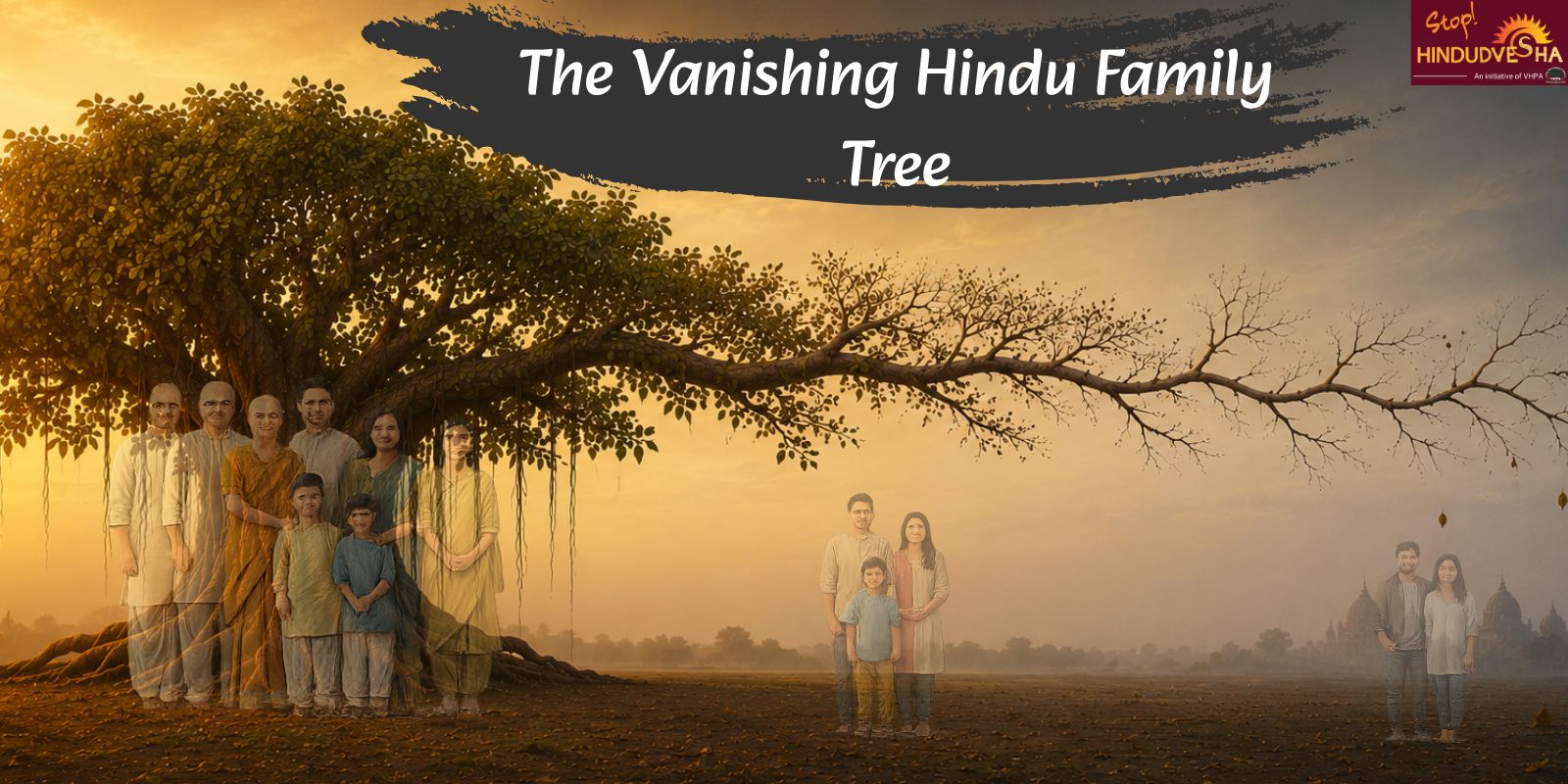
Summary
Declining fertility is reshaping both India and the global Hindu diaspora. While public attention often focuses on DINK (Double Income, No Kids) households, this article argues that the more significant trend is the broader contraction of family size through delayed parenthood, voluntary childlessness, and the normalization of one-child families. Situating these developments within demographic transition and rising individualism, it examines their implications for long-term cultural and civilizational continuity. Drawing on demographic theory, diaspora studies, and Dharmic concepts of intergenerational responsibility, the article argues that Hindu civilization, which has historically relied on the family-based transmission of culture, ritual, memory, and identity, faces challenges that extend beyond population decline. Fertility decline, it concludes, should be understood not merely as a demographic phenomenon but as a question of long-term civilizational sustainability.
Across much of the world, fertility rates have fallen dramatically over the past half-century.[1] Societies once concerned about population growth increasingly confront concerns about demographic decline, population aging, shrinking workforces, and long-term social sustainability. Countries as diverse as Japan, South Korea, Italy, Germany, Spain, and China now face persistent fertility deficits,[2] with birth rates remaining below replacement level for extended periods.[3]
India, long perceived as demographically youthful and expanding, is also experiencing a significant fertility transition. Recent demographic studies indicate that India’s Total Fertility Rate (TFR) has declined to approximately replacement level or below in many regions and social groups.[4] Urban populations, highly educated professionals, and economically affluent households often exhibit particularly low fertility patterns.[5]
Within this context, the rise of the DINK (Double Income, No Kids) lifestyle has attracted increasing public attention.[6] Frequently portrayed as a lifestyle choice emphasizing financial freedom, personal fulfillment, and career advancement, the DINK phenomenon reflects broader transformations in attitudes toward marriage, family, parenthood, and success.[7]
Yet childless couples represent only one manifestation of a much broader demographic trend. The more consequential phenomenon may be the widespread contraction of family size among affluent populations, including the normalization of one-child households and delayed childbearing. This development is evident not only within India’s metropolitan centers but also among Hindu diaspora communities in North America, Europe, Australia, and Southeast Asia.
This analysis investigates these developments through the lens of civilizational continuity. Specifically, it asks whether declining fertility among culturally influential Hindu populations carries implications beyond population statistics and whether demographic contraction may influence the transmission of religious, cultural, and civilizational inheritance across generations.
Demographic Transition and Family Contraction
The decline of fertility is a well-documented feature of demographic transition theory. As societies experience economic development, urbanization, educational expansion, declining infant mortality, and greater female participation in higher education and professional employment, family size typically decreases.
These transitions have generated significant social benefits, including improved health outcomes, increased educational attainment, and greater economic mobility. However, they have also produced new challenges. One of the most notable is the emergence of sub-replacement fertility, whereby populations fail to produce enough children to maintain their numbers over time without immigration.
Importantly, fertility decline rarely begins with widespread childlessness. More commonly, it emerges through progressive family contraction. Large families become medium-sized families. Medium-sized families become one-child families. Eventually, voluntary childlessness becomes socially normalized.[8]
The DINK lifestyle is only one manifestation of this broader trend. Even if most couples have one child instead of none, the population will still decline over time. The math is simple: when each generation has fewer children than needed to replace itself, society gradually shrinks.
Thus, the critical issue is not merely whether some couples choose to remain childless. Rather, it is whether entire social strata gradually lose the capacity—or desire—to reproduce themselves at replacement levels.
Affluence, Individualization, and the Reorientation of Family Life
Contemporary fertility decline cannot be understood solely through economic variables. In many affluent societies, declining birth rates persist despite rising incomes and improved living standards. This suggests that cultural and philosophical factors play a significant role.
Sociologists have increasingly documented the rise of individualization as a defining feature of modernity. Traditional institutions such as family, religion, and community exert less influence over life decisions, while personal autonomy, self-expression, and lifestyle optimization acquire greater importance. Within this framework, parenthood is increasingly evaluated through opportunity-cost calculations.[9]
Children require financial investment, time commitments, emotional labor, and lifestyle adjustments. Consequently, decisions regarding family formation are frequently assessed according to their impact on career advancement, consumption opportunities, geographic mobility, and personal freedom. The result is a subtle but important transformation. Historically, upward mobility often served to improve conditions for future generations.
Increasingly, upward mobility is pursued to maximize individual fulfillment. This shift does not necessarily indicate selfishness. Rather, it reflects a broader reconfiguration of social values in which personal autonomy becomes the dominant organizing principle. Nevertheless, the demographic consequences remain significant.
The Diaspora Context
The implications of fertility decline become particularly significant within diaspora communities. In homeland societies, cultural continuity is supported by multiple reinforcing institutions. Language, public rituals, educational systems, festivals, sacred geography, family networks, and broader social norms collectively sustain cultural identity. Diaspora communities operate under different conditions.[10]
For minority populations, family structures often become the primary mechanism through which cultural memory and religious identity are transmitted. While temples, cultural organizations, language schools, and community associations contribute significantly to preservation efforts, the family remains the central institution of intergenerational continuity.
Research on immigrant communities consistently demonstrates that cultural retention depends heavily upon family-based transmission.[11] Language acquisition, religious participation, cultural practices, and ethnic identification are strongly influenced by household environments and intergenerational relationships.[12]
Consequently, demographic contraction within diaspora communities may carry implications beyond population size. Smaller families reduce the number of future participants, practitioners, educators, donors, and community leaders. Over multiple generations, declining fertility may accelerate assimilation pressures and weaken institutional continuity. The issue, therefore, extends beyond demography to questions of cultural reproduction.
Hindu Civilization and the Household as a Cultural Institution
The relationship between fertility and cultural continuity acquires particular significance in the Hindu context. Unlike traditions that rely primarily on centralized ecclesiastical structures, Hindu civilization has historically functioned through decentralized networks of households, kinship systems, local communities, temples, pilgrimage traditions, and regional cultural practices.
Many core elements of Hindu life are transmitted informally. Festivals are experienced within families. Ritual practices are learned through participation. Language, food traditions, stories, genealogical memory, and local customs are embedded within everyday life. Children encounter these practices not primarily through formal instruction but through observation and participation. This mode of transmission makes the household a critical civilizational institution.
The continuity of Hindu traditions, therefore, depends not only upon texts, temples, or organizations but also upon the existence of succeeding generations capable of inheriting and reproducing these traditions. From this perspective, demographic decline carries implications for cultural continuity that extend beyond numerical considerations.
Existential Pessimism and Contemporary Cultural Attitudes
Modern fertility decline also intersects with broader philosophical developments. A long intellectual tradition of existential pessimism and anti-natalism can be traced through thinkers such as Sophocles, Arthur Schopenhauer, Peter Wessel Zapffe, and, more recently, David Benatar.[13] [14]
While these thinkers differ substantially, they share varying degrees of skepticism regarding the value of existence and the morality of reproduction. Most contemporary individuals who delay or avoid parenthood are not explicitly influenced by anti-natalist philosophy. Nevertheless, certain assumptions associated with these traditions increasingly appear within popular culture.
Life is portrayed as overwhelmingly stressful. The future is viewed with uncertainty. Parenthood is framed primarily as sacrifice. Responsibility is interpreted as a constraint. Freedom is understood as the absence of obligations. These assumptions do not necessarily produce explicit anti-natalism. However, they contribute to cultural environments in which reproduction becomes increasingly difficult to justify as a meaningful life project.
Pitṛ Ṛṇa and Intergenerational Responsibility
The Dharmic tradition offers an alternative framework for understanding family and continuity. One of the foundational concepts within Hindu thought is Pitṛ Ṛṇa, often translated as the debt owed to one’s ancestors. This concept situates individuals within an intergenerational continuum rather than treating them as autonomous units disconnected from past and future generations.
Human life is understood as inherited. Each generation receives cultural, social, material and spiritual inheritances produced through the sacrifices of preceding generations. Consequently, obligations extend beyond the self. While modern individualist frameworks frequently evaluate family formation through personal preference and utility, Dharmic thought emphasizes reciprocity, continuity and responsibility toward both ancestors and descendants. This framework does not reduce parenthood to biological reproduction. Rather, it locates family within a broader civilizational process of inheritance and transmission.
From Demographic Decline to Institutional Decline
Demographic changes eventually reshape institutions. Population contraction affects religious organizations, educational initiatives, community associations, volunteer networks, and cultural institutions. Smaller generations produce smaller pools of future participants and leaders.
In minority communities, these effects may be particularly pronounced because institutions often depend upon relatively small numbers of committed participants. Historical examples demonstrate that civilizational decline rarely occurs through sudden collapse. More commonly, it proceeds through gradual thinning. Participation decreases. Transmission weakens. Institutions shrink. Collective memory fades. Over time, communities retain symbolic markers of identity while losing substantive mechanisms of continuity. The challenge therefore lies not merely in preserving cultural artifacts but in sustaining living systems of transmission.
Conclusion
The contemporary discussion surrounding DINK lifestyles and declining fertility often focuses on questions of personal choice, financial planning, and lifestyle preferences. While these considerations are important, they do not exhaust the significance of the issue. Fertility decline is also a question of cultural reproduction and civilizational continuity.
For Hindu communities in both India and the diaspora, this question is particularly important because cultural transmission has historically depended on families and intergenerational inheritance. As fertility rates decline and family size contracts, the mechanisms through which traditions, memories, practices, and identities are transmitted may become increasingly fragile. The issue is therefore not simply whether individuals choose to have children.
The deeper question concerns whether societies can sustain the institutions, relationships, and cultural systems necessary for long-term continuity when demographic reproduction falls below replacement levels. Ultimately, civilizations survive not only through ideas, texts, monuments, or institutions. They survive because successive generations inherit, embody, and transmit them.
Demographic continuity does not guarantee civilizational continuity. Yet sustained civilizational continuity becomes difficult to imagine without demographic continuity. The future of any civilization depends not only upon what it remembers, but also upon whom it leaves behind to remember it.
Citations
[1] The Lancet: Dramatic declines in global fertility rates set to transform global population patterns by 2100; https://www.healthdata.org/news-events/newsroom/news-releases/lancet-dramatic-declines-global-fertility-rates-set-transform#:~:text=The%20global%20TFR%20has%20more,per%20female%20as%20of%202021.
[2] Fertility Rate | Our World in Data; https://ourworldindata.org/fertility-rate
[3] Gender Data Portal; https://genderdata.worldbank.org/en/home
[4] Where Are Fertility Rates Headed? | Economic and Political Weekly; https://www.epw.in/journal/2026/25/editorials/where-are-fertility-rates-headed.html#:~:text=Between%202014%20and%202024%2C%20the,primary%2C%20and%20middle%20school%20education
[5] State of Fertility | Interactive Dashboard; https://cdn.downtoearth.org.in/dte-interactive/state_of_fertility_dashboard_aligned_master.html
[6] Dual income, no kids: What we know about ‘DINKs’ in the U.S.; https://www.pewresearch.org/short-reads/2025/11/03/dual-income-no-kids-what-we-know-about-dinks-in-the-us/#:~:text=In%20the%20United%20States%2C%2012,slightly%20over%20the%20past%20decade.
[7] The Rise of DINKs: How Childfree Couples are Reshaping Economies; https://www.researchgate.net/publication/376751607_The_Rise_of_DINKs_How_Childfree_Couples_are_Reshaping_Economies#:~:text=families%20with%20children.-,This%20paper%20explores%20the%20economic%20influence%20of%20the%20growing%20DINK,voluntary%20childlessness%20have%20shifted%2C&text=The%20economic%20impact%20of%20the,and%20extended%20leisure
[8] View of An Exploratory Study on the Spending Pattern of DINK (Double Income No Kids) Community from India; https://jier.org/index.php/journal/article/view/226/245#:~:text=Philip%20Kotler%20of%20North%2Dwestern,DINK%20have%20entered%20middle%20age
[9] Raising kids in this economy: To DINK or not? Why more Indian couples are rethinking parenthood – The Times of India; https://timesofindia.indiatimes.com/business/india-business/raising-kids-in-this-economy-to-dink-or-not-why-more-indian-couples-are-rethinking-parenthood/articleshow/128913569.cms#:~:text=Rohit%20Saran%20explains%20in%20his,reaching%20nearly%20Rs%201.83%20crore
[10] Preserving and Promoting Indian Diaspora’s Socio-Cultural Heritage Globally; https://sociology.institute/diaspora-transnational-communities/indian-diaspora-socio-cultural-heritage-global/
[11] Cultural transmission of attitudes and behaviours from parents, peers and grandparents – PMC; https://pmc.ncbi.nlm.nih.gov/articles/PMC12851453/
[12] Parenting Attributions and Attitudes in Cross-Cultural Perspective – PMC; https://pmc.ncbi.nlm.nih.gov/articles/PMC3173779/
[13] Better Never to Have Been, Better to Cease to Be?; https://www.cambridge.org/core/services/aop-cambridge-core/content/view/C8F5A3A04DE6D4C7D9EA389FF9CE10DC/S0953820826100259a.pdf/better_never_to_have_been_better_to_cease_to_be.pdf
[14] Anti-Natalism | Internet Encyclopedia of Philosophy; https://iep.utm.edu/anti-natalism/

Donate to HINDUDVESHA
Our Mission is to explore and expose Hindudvesha through research analysis, education and response.
SUPPORT US