

Thanks For the Lecture, Professor Truschke, But Your Syllabus Belongs in a Museum
 Dr. Jai G. Bansal · 06/14/2025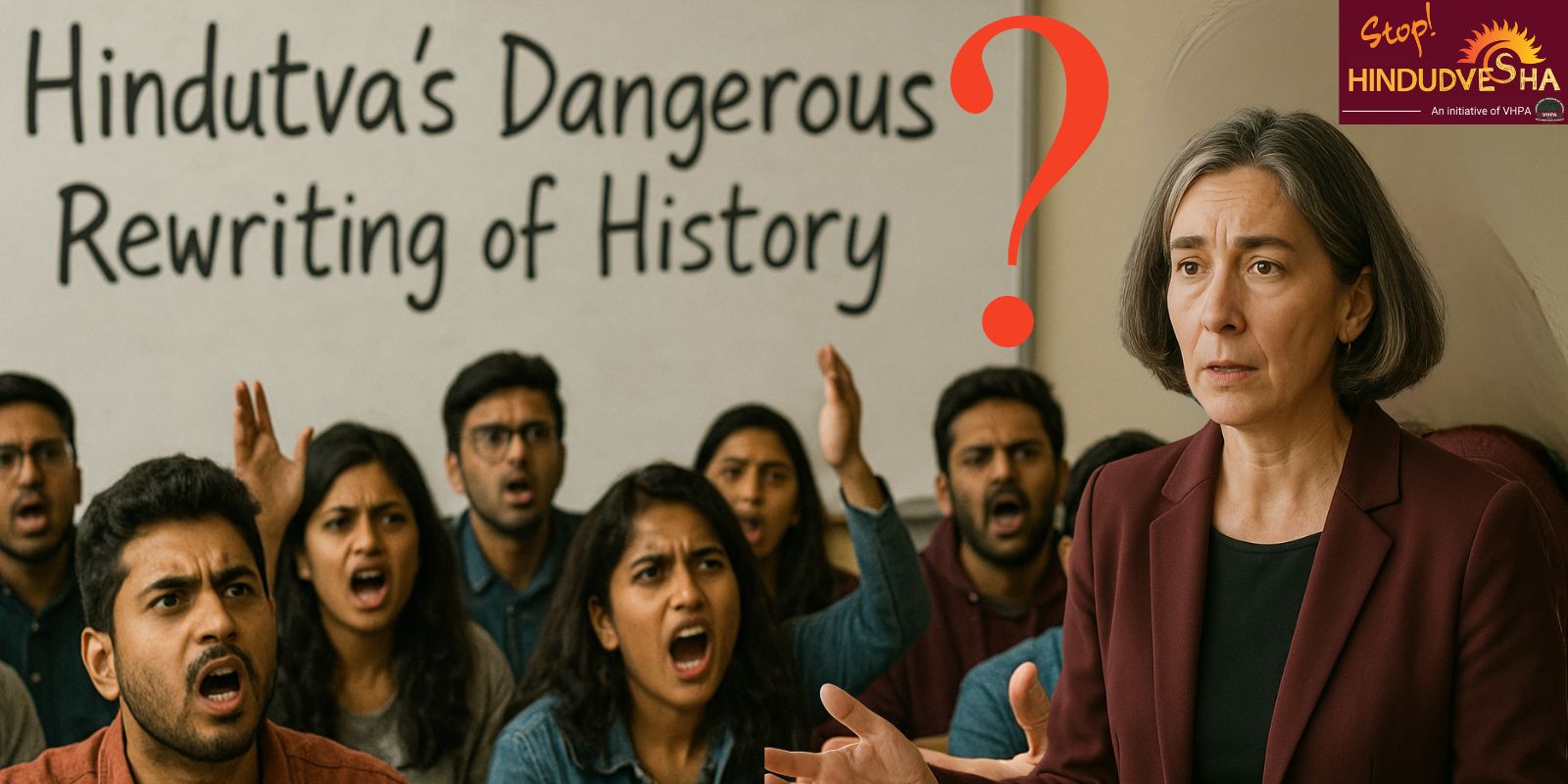
- Truschke’s Hindutva’s Dangerous Rewriting of History is not serious scholarship but ideological activism that misrepresents Hindutva and Hindu identity using colonial tropes, Marxist filters, and selective outrage.
- Her portrayal of Hindu history is deeply biased, whitewashing Islamic atrocities, mocking sacred figures, and reducing civilizational trauma to “imagined grievances.”
- Claims of academic neutrality are hollow—Truschke continues a legacy of intellectual gatekeeping, echoing colonial historians like James Mill while denying Hindus the right to define their own past.
- The backlash she faces is not trolling but accountability—a long-overdue response from Hindus tired of being misrepresented and patronized by out-of-touch Western scholars.
- What Truschke calls ‘rewriting’ is actually reclamation—a growing movement of Hindus asserting narrative sovereignty and challenging the old academic monopoly over their history and identity.
Audrey Truschke’s essay Hindutva’s Dangerous Rewriting of History[1] tries to pass itself off as serious scholarship. But let’s be honest—it reads more like a bitter rant dressed up in academic jargon, dripping with condescension and contempt toward Hindu civilization. Instead of engaging thoughtfully with India’s complex historical debates, Truschke launches yet another attack on the growing cultural self-awareness among Hindus, recycling colonial stereotypes, Marxist talking points, and her now-routine disdain for Hindu identity. This isn’t genuine scholarship seeking to understand—it’s ideological activism aimed at discrediting.
Truschke’s public persona has long relied less on deep research and more on stirring controversy, usually at the cost of Hindus. Whether it’s her flippant tweet calling Sita “abused” by Rama or sarcastic jabs at the Mahabharata, she’s shown a pattern of mocking what millions consider sacred. And yet, she continues to shelter behind her Western academic credentials, crying foul whenever she’s criticized. The irony? Even her own students have seen through the act—many rate her poorly as a teacher and describe her as hostile and overbearing in class.
This piece is no different. It doesn’t seek to inform—it seeks to demonize. It doesn’t challenge falsehoods—it uses them as weapons. And it absolutely needs to be called out—firmly, fearlessly, and without the baggage of colonial-era guilt or the silence imposed by elite academic circles.
The Lazy Lie: Hindutva = Fascism?
Truschke kicks off her essay with a familiar, worn-out claim: that Hindutva is synonymous with fascism. It’s not serious analysis—it’s a rhetorical hit piece dressed up as academic critique. Reducing a deeply rooted civilizational identity movement to a fascist label isn’t just lazy, it’s intentionally misleading. As our piece Understanding Hindutva: Ideological Foundations and Modern Misinterpretations[2] explains, Hindutva is not a religious cult or authoritarian agenda. It’s a civilizational framework aimed at punarutthaan—the cultural revival of a society that endured centuries of colonization, invasions, and erasure.
At its core, Hindutva is about continuity and rootedness, not theocracy or exclusion. Even Savarkar, often misrepresented, described it as a cultural and geographical identity built on shared heritage, not as a tool of dominance. And let’s be honest: any movement that continues to win elections in the world’s largest and most diverse democracy can’t be called fascist without twisting the word beyond recognition. That’s democratic legitimacy, plain and simple.
The real issue, it seems, is that Hindus are reclaiming their civilizational agency outside the approval of Western academic gatekeepers. It may not sit well with Truschke’s ideological lens, but democracy doesn’t become fascism just because voters aren’t following the script written in American faculty lounges.
Nazis Again? The Colonial Smear Playbook Returns
Invoking Hitler is the oldest smear tactic in the book—and, right on cue, Truschke goes there. She pulls a few isolated quotes from Savarkar and Golwalkar, rips them from their historical setting, and uses them to paint Hindu nationalism as some sort of Nazi parallel. But this isn’t serious scholarship—it’s ideological ambush dressed up with academic footnotes. Her method relies on oversimplification, not substance. What she presents isn’t a critique—it’s a caricature meant to provoke fear, not foster understanding.
But perhaps even more telling is what this approach reveals about her own intellectual heritage. Truschke doesn’t just echo colonial narratives—she channels them. In many ways, she’s a modern echo of James Mill, the British historian who never once visited India but still declared Hindu civilization backward and unworthy.[3] Like Mill, Truschke positions herself in a Western ivory tower and presumes the authority to define an ancient culture. She doesn’t deconstruct Orientalism—she updates it, swaps out Victorian superiority for woke academic condescension.
Mill justified British domination by branding Hindu thought as irrational and stagnant. Truschke follows the same script—only now it’s in the name of “liberal values.” The message remains unchanged: Hindus can’t be trusted to tell their own story. Her work isn’t a decolonial critique—it’s colonial judgment wrapped in progressive packaging.
Whitewashing Conquest: When Hindu Suffering Doesn’t Matter
Here’s where the mask truly slips. In her essay, Truschke waves away centuries of Islamic invasions, temple destruction, forced conversions, and cultural trauma with a stunning phrase—“imagined grievances.” That choice of words says far more about her worldview than it does about history. Would any other people be told that mass violence, spiritual devastation, and generational trauma were just political fiction? Try telling Holocaust survivors or descendants of African slave traders that their pain is imagined—and see how that goes.
The truth of Islamic conquest in India isn’t a recent invention. It was recorded in graphic, triumphant detail by the chroniclers of the time, the very invaders themselves. In our multi-part series, Rivers of Blood: The Forgotten History of Hindu Genocide by Islamic Zealots[4], we document mass slaughter, enslavement, temple demolitions, and religious taxes imposed on Hindus just for practicing their faith. These are not “propaganda pieces.” They are taken directly from historical Muslim writers—Firishta, Al-Biladhuri, Amir Khusrau, and others—who proudly detailed the destruction as a holy war.
Yet Truschke chooses to frame the perpetrators with “nuance” while dismissing the victims as inconvenient. In doing so, she’s not offering historical clarity; she’s pushing selective amnesia. Her refusal to acknowledge the civilizational wounds inflicted on Hindus isn’t just an oversight. It’s a deliberate erasure, dressed up as intellectual sophistication. This isn’t history; it’s gaslighting on a global stage.
The Myth of Neutral History (and the Priesthood That Enforces It)
Truschke likes to present herself as an impartial historian, a guardian of academic neutrality. But her writing tells a different story—one deeply colored by ideological bias. Her tone isn’t that of a curious scholar, but of someone determined to preserve a monopoly over how Indian history gets told. As we lay out in Still Shackled to the Empire[5], for decades, India’s historical narrative has been dominated by a tight alliance of Western academics and Indian Marxists. They didn’t treat Hinduism as a vibrant, evolving civilization—they treated it as an exotic leftover, something to be dissected or discarded politely.
This academic echo chamber didn’t end with the British—it simply changed hands. Post-independence, India replaced colonial rulers with leftist elites who inherited the same disdain for Hindu thought. Only the vocabulary changed—from imperialism to secularism. Sacred texts were reduced to tools of caste critique, temples were symbols of oppression, and invaders were rebranded as benevolent rulers. Truschke continues in that lineage. Now that Hindus are beginning to reclaim their narrative—with confidence, research, and pride—she sounds the alarm.
To her, if you’re a Hindu asserting your civilizational voice, you must be a “zealot.” But if you’re a Western scholar cherry-picking Sanskrit verses while tweeting jabs at Hindu epics, you’re the model of “objectivity.” That’s not neutrality, it’s academic casteism, where legitimacy is handed out based on ideological loyalty and Western approval. The old gatekeeping is being challenged, and Truschke’s backlash shows just how threatened that establishment feels.
Aryans, Genetics, and the Politics of Who Belongs
Truschke repeats the Aryan Invasion (now Migration) Theory as if it’s carved in stone, citing not geneticists or archaeologists, but a partisan journalist with no scientific expertise. That’s not scholarship, it’s narrative-spinning. And what exactly is her takeaway? That Hindus aren’t “truly” Indian because of a hypothetical migration from 4,000 years ago? If that logic applied universally, no population on Earth could claim any native connection to their homeland.
As we document at StopHinduDvesha.org [6], the Aryan Invasion/Migration theory is increasingly challenged by fresh linguistic, archaeological, and genetic data. The once-colonial myth of invading Aryans has steadily lost ground to actual evidence. But for scholars like Truschke, this outdated theory remains essential—it props up the idea that Hindu identity is somehow foreign, illegitimate, or imposed.
Yet history tells a different story. Hindus have lived, prayed, created, and shaped this land for millennia. No amount of selective referencing or ideological spin from a New Jersey academic can undo that civilizational rootedness.
Ancient Science = Envy? Seriously?
Dismissing Indian claims of ancient scientific achievement as “simmering science envy” isn’t just smug, it’s a classic case of cultural condescension. Sure, some nationalists go overboard, but the foundational contributions of Hindu civilization to mathematics, astronomy, medicine, linguistics, and philosophy are well-documented and world-renowned. These aren’t fringe theories—they’re acknowledged by serious scholars across the globe, as detailed in our piece Scholarship or Sabotage?[7], which compiles extensive Western praise for India’s intellectual legacy.
What’s more troubling is Truschke’s tendency to treat Hindu symbolic and philosophical expression as ignorance. But all civilizations use metaphor to convey deeper truths, including her own. The Judeo-Christian tradition, for example, begins with a talking serpent and a magical fruit—yet it’s revered as a sacred allegory. But when Hindus speak of divine sages or cosmic energies, it’s instantly dismissed as primitive fantasy.
Americans can revere their Founding Fathers without ridicule. But when Hindus honor their rishis and epics, it becomes something to mock. That’s not scholarship, it’s selective disdain masquerading as critical thinking.
Rewriting or Reclaiming? Let’s Talk About the Real Textbook History
Audrey Truschke laments what she calls the “rewriting” of Indian textbooks by Hindutva forces—but what she fails to acknowledge is that the project of distorting India’s past was not initiated by Hindutva—it was inherited by it, after generations of erasure, suppression, and ideological manipulation under colonial and postcolonial regimes. As we explain in Still Shackled to the Empire [8], post-independence India did not undergo a genuine decolonization of its intellectual foundations. Instead of dismantling the colonial epistemic scaffolding, successive governments preserved and repurposed it, most notably through state institutions like NCERT and the Indian Council of Historical Research (ICHR). Far from liberating Indian historiography, the Nehruvian-Marxist establishment cemented the colonial strategy of de-Hinduizing Indian history.
The intellectual groundwork for this erasure was laid by colonial figures like James Mill and Thomas Macaulay. They introduced the idea that Hindu civilization was static, superstitious, and morally degenerate—unworthy of modernity unless “reformed” through Western rationality and Christian moralism. Tragically, this narrative was not only accepted but amplified by postcolonial Indian scholars, particularly Marxist historians such as Romila Thapar, Irfan Habib, and R.S. Sharma. Instead of challenging colonial constructs, they internalized and propagated them, casting India’s spiritual traditions as oppressive, its heroes as mythical, and its sacred texts as mere anthropological curiosities.
This is the legacy Truschke defends, even as she postures as a critic of ideological distortion. Her selective outrage over alleged “Hindutva interference” conveniently ignores the ideological hegemony that dominated Indian academia for over half a century. What she truly mourns is not the politicization of history, but the decline of a particular kind of elite narrative control—one that upheld Mughal grandeur, glorified Islamic syncretism, and reduced millennia of Hindu thought to footnotes and caricatures.
For decades, Hindu saints, scientists, scholars, and resistance leaders were either marginalized or erased entirely from the national memory. Figures like Maharana Pratap, Rani Durgavati, Lachit Borphukan, and even Swami Vivekananda were sidelined in favor of a monochromatic, Nehruvian-Marxist tale of class conflict and “composite culture.” Temple desecrations were downplayed as political tactics, forced conversions recast as cultural assimilation, and civilizational trauma repackaged as tolerance. Meanwhile, sacred texts like the Vedas and Upanishads were treated not as philosophical milestones but as relics of a hierarchical past, unworthy of serious intellectual engagement.
The current efforts to revise historical narratives are not a descent into propaganda—they are a civilizational correction. They seek to recover what was deliberately erased, balance what was heavily tilted, and give voice to a silenced tradition of Indigenous memory and resistance. This is not a call for sectarian supremacy—it is a demand for epistemic justice. It is not communalization—it is decolonization.
If this unsettles Truschke and her intellectual cohort, it says more about their ideological insecurity than the intentions of those pushing for change. Their panic stems from the erosion of their gatekeeping power—the realization that the monopoly over memory is breaking. What they once dismissed as “mythology” is now being reevaluated in light of archaeology, genetics, and Indigenous scholarship. What they once suppressed as “communal” is now being reclaimed as cultural truth.
Reclaiming Hindu memory is not a fringe impulse—it is a decolonizing civilization’s moral and scholarly imperative. And no amount of Western academic paternalism will halt that awakening.
Sanskrit: Hindus Don’t Need Western Permission to Reclaim it
Truschke mocks Hindutva’s admiration for Sanskrit, brushing it off as political posturing. But the reality runs far deeper, and that depth is exactly what threatens her position. Sanskrit is not just an ancient tongue—it’s the gateway to 5,000 years of Indian thought across fields like metaphysics, mathematics, linguistics, aesthetics, and philosophy. As Rajiv Malhotra powerfully argues in The Battle for Sanskrit[9], the growing discomfort in Western Indology circles stems from the fact that Hindus are reclaiming the right to interpret their texts on their terms.
For decades, Sanskrit studies in the West were monopolized by scholars who saw the language as something to analyze but never revere. They dissected texts through Freudian, Marxist, and postcolonial theories, stripping them of sacred context and moral coherence. Their goal wasn’t understanding—it was reframing Hinduism as regressive and oppressive. Truschke is firmly planted in that tradition.
What really unsettles her is that Hindus are now reading the Mahabharata, Upanishads, and Dharmaśāstras without asking for permission. They’re no longer waiting for elite academic translators to tell them what their heritage “really” means. And that shift—from dependence to ownership-is what scares the gatekeepers most. Because this isn’t just about Sanskrit. It’s about who gets to define the soul of Hindu civilization.
Ram as Weapon? No—This Is Character Assassination
Truschke’s attempt to reduce Lord Ram to a symbol of mob violence isn’t just wrong, it’s a deliberate insult to the billion-strong Hindu society. For thousands of years, Ram has been revered as the highest moral ideal—a symbol of righteousness, devotion, and just leadership. The Ramayana isn’t just a religious text—it’s a civilizational blueprint that’s shaped cultural consciousness from India and much of Southeast Asia. Ram’s legacy is found in songs, stories, temples, and festivals that unite people across caste, region, and language.
Reducing such a deeply revered figure to a political weapon isn’t thoughtful critique—it’s erasure and a profound cultural affront. Yes, some fringe elements may misuse religious slogans. That happens in every tradition—Christian symbols like the cross have been misused during the Crusades and colonial conquests, and Islamic phrases like “Allahu Akbar” have often been co-opted by violent extremists, distorting their original meaning. But to hold an entire faith hostage to the actions of a few is not only lazy—it’s unjust. As we document in Ayodhya Ram Mandir Turns One: Celebrating a Year of Hindu Cultural Resurgence[10], the Ram Mandir is not about division but revival. It marks the end of cultural shame and the return of dignity to a long-suppressed identity.
Truschke doesn’t—or won’t—acknowledge this. Her portrayal of Ram isn’t based on theological insight or cultural sensitivity—it’s grounded in ideological contempt. She has no interest in understanding why Ram resonates so deeply. Because to do that, she would have to treat Hindu civilization as something more than a relic. And instead, she sticks to the one strategy that keeps her relevant: attack what’s sacred, stir controversy, and watch the backlash. This isn’t serious scholarship—it’s provocation dressed up as academic freedom.
Victimhood as a Shield from Accountability
In the end, Truschke retreats to a familiar defense: portraying herself as the embattled academic under constant attack from “Hindutva trolls.” It’s her go-to move: label all criticism from Hindus as abusive or extremist so she never has to engage with the actual arguments. But here’s what she never stops to ask: why are so many Hindus, across political and ideological lines, deeply frustrated with her work?
Maybe it’s because she has repeatedly insulted their gods, mocked their sacred epics, dismissed centuries of historical trauma, and presumed authority over their culture, without the intellectual depth to understand or engage with it truly. That’s not trolling, it’s the justified backlash of people tired of being misrepresented by someone constantly trying to punch far above her weight.
Let’s be clear: disagreement is not harassment. And criticism—especially from the very communities she casually stereotypes—isn’t hate speech. When someone builds a career out of belittling a civilization, they don’t get to cry victim when that civilization finally talks back.
The double standards here are impossible to miss. As we documented in Rutgers Punishes Jew-Hater While Defending Hindu-Hater[11], the same university that took quick action against Michael Chikindas’ antisemitic comments has consistently shielded Truschke—even in the face of documented anti-Hindu tweets, misrepresentations, and slurs. That silence tells a bigger story about how Hindu concerns are routinely dismissed in elite academic spaces.
Truschke also benefits from a wider ideological atmosphere where “free speech” is selectively granted. As we explored in Free Speech for Me, Not for Thee[12], if you belong to the dominant liberal academic tribe, you’re allowed to say anything under the banner of academic freedom. But when Hindus respond—calmly, thoughtfully, and reasonably—it’s labeled “abuse.” That’s not free speech. That’s gatekeeping disguised as virtue.
Let’s not confuse things. Truschke isn’t a victim of fanaticism—she’s a product of an ecosystem that rewards mocking Hindus while pretending it’s bravery. When you spend years provoking millions, you should expect some pushback. That’s not trolling, it’s the consequence of acting like a civilizational bully.
Concluding Remarks: History Doesn’t Belong to You Anymore
Audrey Truschke isn’t defending history—she’s defending her place in a system that has long decided who gets to speak and who must stay silent. For decades, Hindus have watched as their gods were mocked, their scriptures misread, their trauma erased, and their civilization defined by people who neither belonged to it nor respected it. That era is coming to an end. The pushback Truschke faces today isn’t about trolling or extremism—it’s the sound of a once-silenced people finally reclaiming their narrative. This awakening isn’t driven by hate but by a desire to be heard, understood, and represented with honesty and respect.
What unsettles scholars like Truschke is not some imagined authoritarianism—it’s that Hindus are no longer asking for approval. They’re asserting their own voice, on their own terms, with their own research, and that breaks the decades-long stranglehold of ideological gatekeepers. She may still have platforms and defenders, but the moral authority is shifting. Hindus are no longer passive subjects in someone else’s academic project. They’re active participants in retelling their story—and doing it with clarity, confidence, and care. That’s not a danger to history. That’s history, finally being told by those who lived it.
And if that makes Truschke uncomfortable, that’s just too bad!
Citations
[1] Audrey Truschke, Hindutva’s Dangerous Rewriting of History; https://www.academia.edu/44702872/Hindutva_s_Dangerous_Rewriting_of_History?auto=download&email_work_card=download-paper
[2] Jai G. Bansal, Understanding Hindutva: Ideological Foundations and Modern Misinterpretations; https://stophindudvesha.org/understanding-hindutva-ideological-foundations-and-modern-misinterpretations/
[3] Jai G. Bansal, Unmasking the Colonial Distortions of James Mill; https://stophindudvesha.org/unmasking-the-colonial-distortions-of-james-mill/
[4] Jai G. Bansal, Rivers of Blood: The Forgotten History of Hindu Genocide by Islamic Zealots; https://stophindudvesha.org/rivers-of-blood-the-forgotten-history-of-hindu-genocide-by-islamic-zealots8/
[5] Aditi Joshi, Still Shackled to the Empire: India’s Unfinished Business of Decolonization; https://stophindudvesha.org/still-shackled-to-the-empire-indias-unfinished-business-of-decolonization/
[6] Jai G. Bansal; Aryan Invasion Theory: Why this Colonial Abomination Must be Excised from School Textbooks; https://stophindudvesha.org/aryan-invasion-theory-why-this-colonial-abomination-must-be-excised-from-school-textbooks/
[7] Aditi Joshi, Scholarship or Sabotage? How Western Academia Seeks to Erase Hindu Thought; https://stophindudvesha.org/scholarship-or-sabotage-how-western-academia-seeks-to-erase-hindu-thought/
[8] Aditi Joshi, Still Shackled to the Empire: India’s Unfinished Business of Decolonization; https://stophindudvesha.org/still-shackled-to-the-empire-indias-unfinished-business-of-decolonization/
[9] Malhotra, Rajiv. The Battle for Sanskrit: Is Sanskrit Political or Sacred, Oppressive or Liberating, Dead or Alive? HarperCollins India, 2016.
[10] Aditi Joshi, Ayodhya Ram Mandir Turns One: Celebrating a Year of Hindu Cultural Resurgence; https://stophindudvesha.org/ayodhya-ram-mandir-turns-one-celebrating-a-year-of-hindu-cultural-resurgence/
[11] Rakesh Krishnan Simha, Rutgers Punishes Jew-Hater while Defending Hindu-Hater; https://stophindudvesha.org/rutgers-punishes-jew-hater-while-defending-hindu-hater/
[12] Aditi Joshi, ‘Free Speech for Me, not for Thee’: The Hypocrisy of the Left-Liberal Cabal; https://stophindudvesha.org/free-speech-for-me-not-for-thee-the-hypocrisy-of-the-left-liberal-cabal/

Donate to HINDUDVESHA
Our Mission is to explore and expose Hindudvesha through research analysis, education and response.
SUPPORT US