

Vilification of Hindu Dharma Through Misguided Gender Narratives
 Rati Agnihotri · 11/01/2024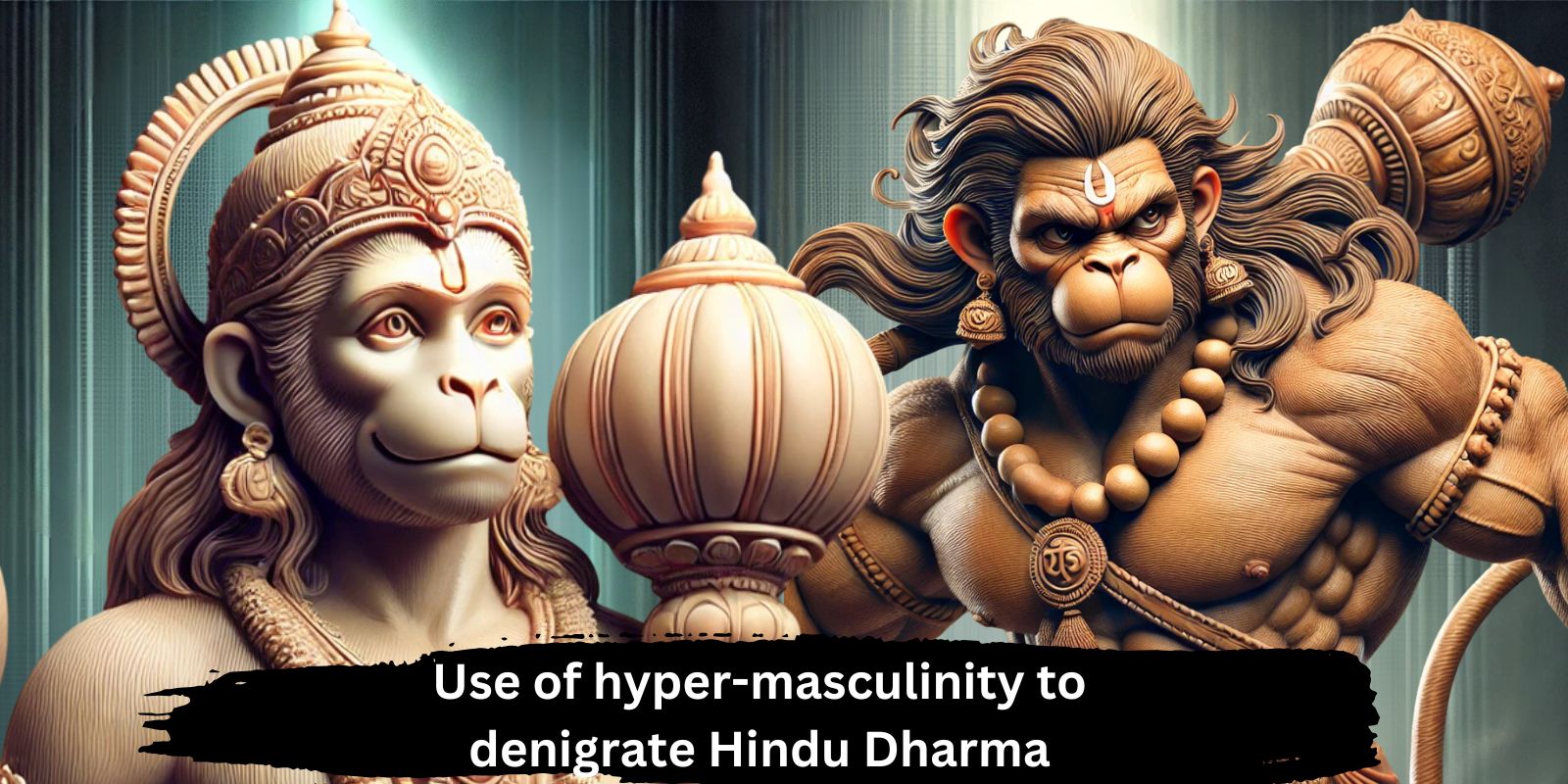
- The trope of toxic masculinity forcefully mapped onto the discourse of Hindu nationalism, Hindutva, and the representation of Hindu issues.
- Hindutva is routinely demonized and presented as a toxic ideology arising out of the masculine crisis of the Hindu male.
- Hindu nationalism and Hindutva discourse are increasingly projected as anti-women.
- Terms like “Brahmanical patriarchy” are used to malign Hindu Dharma and its customs and traditions; Hindu Dharma is presented as intrinsically patriarchal and misogynist.
- Hindu deities are mocked and demonized, and the hyper-masculinist paradigm is forcefully mapped onto Hindu Gods and Goddesses.
- The ultimate aim of this deliberate framing of Hindu issues using the trope of toxic masculinity is to silence and discredit public representation of Hindu issues.
During his visit to the US, Mr. Rahul Gandhi, India’s Opposition Leader, claimed that India’s current ruling party, BJP, and Hindu organizations like RSS (Rashtriya Swayamsevak Sangh) think women should only have one role: staying at home, cooking, and not speaking much. He compared this view, which he described as anti-women, to the beliefs of those who he believes support women’s right to pursue whatever they wish. He emphasized that the attitude towards women is a part of the ideological fight between the BJP and the Opposition.[1]
Political posturing aside, Mr. Gandhi’s remarks are a part of the larger ideological narrative taking potshots at Hindutva or “the essence of being Hindu.” Although Hindutva is a complex concept and going deep into the definitions of Hindutva is beyond the scope of the article, the various attacks on “Hindutva” ideology come in the wake of its association with the political expression of Hinduism, or the raising of Hindu issues politically and publicly.
Certain groups have often criticized Hindu organizations like the RSS and VHP due to their support for “Hindutva.” If you search for Sangh Parivar online, you’ll find many articles accusing the RSS and VHP of being violent, extremist, fundamentalist, and anti-minority. Some anti-Hindu groups have even labeled the RSS as a “paramilitary organization.”[2]
The narrative against Hinduism and Hindutva routinely portrays Hindu nationalist groups as “patriarchal,” “anti-women,” and symbols of “toxic masculinity.” Terms like “Brahmanical patriarchy” and “Hindutva fascism” are used to discredit these groups’ efforts in promoting Hindu rights and demonizing them in the public eye, which largely relies on media portrayals for information.
This narrative has built an academic discourse that links Hindutva and Hindu nationalism to toxic masculinity. The attempt to associate these ideologies with toxic masculinity has grown into a major academic trend. Various self-proclaimed feminists, historians, writers, and journalists have joined this movement, claiming expertise in connecting Hindutva and Hinduism to these negative tropes.
In this article, we will delve into the dynamics of the global woke branding of Hindutva and Hindu Nationalism as “anti-women”, “misogynistic”, “patriarchal”, and embodying “toxic masculinity”. We also argue that this ostensible attack on Hindutva and Hindu nationalism is an attack on Hindu Dharma and its associated culture and traditions in its full-fledged entirety.
Misrepresenting Hindutva: A Biased Masculinity Narrative
There is widespread media coverage, along with academic and think tank writings, that create baseless connections between Hindutva, the Indian government’s pro-Hindu policies, and the idea of toxic masculinity. Laws like the Citizenship Amendment Act (CAA), meant to provide citizenship to persecuted minorities from Afghanistan, Pakistan, and Bangladesh, have been unfairly framed by left-leaning media as part of an “aggressive masculinity” narrative.
Similarly, the Ram Janmabhoomi Movement and the construction of the Shri Ram Temple in Ayodhya have been exaggeratedly portrayed as displays of aggressive masculine power. The goal of this portrayal is clear—to demonize Hindutva to the point where anyone advocating for Hindu issues is instantly labeled as a villain. Feminist theories are deliberately applied to Hindutva and Hindu Nationalism to discredit these movements, portraying pride in Hindu identity as “hyper-masculine” and anti-women.
Let’s check out a few toxic headlines propagating these dangerous stereotypes about Hindutva, Hindu issues, and Hindu nationalism:
- Hyper-femininity as resistance to Hindu supremacy (The Caravan, May 2022) [3]
- How the Hindu man’s crisis of masculinity fuels Hindutva (News Laundry, January 2020)[4]
- The Cult of 56 -Inches and Toxic Masculinity (Counter-Currents, June 2018) [5]
- Ayodhya Issue Reflects The Increasing Masculinization of Politics in India (Feminism India, September 2020) [6]
- Hindutva’s War on Women: The Gendered Face of ‘Saffron Fascism’ (News Click, November 2020) [7]
- ModiSpeak: Manifesto for a Hindu Nation (The Wire, June 2024)[8]
- Animal’s Islamophobia and its many parallels to the Hindutva project (The News Minute, December 2023) [9]
- The new age politics of gender in the Hindutva movement and faith-based identity contestation (Open Democracy, December 2019) [10]
- Book Review: Why I Am Not A Hindu Woman By Wandana Sonalkar (Feminism India, October 2022) [11]
- ‘Hindutva Feminism’ And its Rhetoric of Hatred and Exclusion (Feminism India, July 2018) [12]
The majority of these articles portray Hindutva and Hindu nationalism as male-dominated, excluding women, minorities, and the socially disadvantaged. This narrative is becoming more common in academic and media discussions, where different identity groups—women, minorities, and Dalits—are grouped together, with claims that Hindutva oppresses all of them. However, these criticisms are often based on empty claims. I’ve yet to find any article that provides sound logic or reasoning to support the idea that addressing Hindu issues is inherently anti-women.
A typical example of this demonization is found in a News Laundry article titled “How the Hindu man’s crisis of masculinity fuels Hindutva.” The article is filled with anti-Hindu stereotypes and blatant hatred, making it hard to take seriously. It reads more like fiction, full of prejudiced rants and far-fetched theories. The piece starts by labeling Hindutva supporters as “angry masculinists” who display images of an “angry Hanuman” as their profile pictures, drenched in saffron and black. Rather than offering any meaningful analysis, the article focuses on vilifying Hindutva, spinning a narrative of toxic masculinity without evidence, and relying on inflammatory rhetoric to push an anti-Hindu agenda.
The writer, in his distorted perspective, views every form of inequality and oppression in India as a result of Hindutva’s so-called toxic masculinity. In this exaggerated worldview, even something as simple as vegetarianism is portrayed as a symbol of Hindutva’s supposed hyper-aggressive masculinity. The article suggests that “anxiety over masculinity is foundational to the Hindutva movement,” and absurdly claims that the widely discussed issue of love jihad is nothing more than a reflection of Hindu men’s insecurities, as represented by Hindutva.
This hallucinatory narrative attempts to link every societal issue to Hindutva’s alleged “masculinist tendencies,” twisting ordinary cultural practices and political concerns into far-fetched theories of male anxiety. Instead of engaging in rational debate, the article resorts to portraying Hindutva as the root of all forms of oppression, using these exaggerated claims to reinforce its biased viewpoint.
The article titled “Ayodhya Issue Reflects the Increasing Masculinity of Politics in India”[13] insinuates that the entire Ayodhya Ram Temple narrative since the beginning of Rath Yatra and the demolition of Babri Masjid is “excessively controlled and dominated by men” and is thus symbolic of Hindutva’s toxic masculinist project. The article’s explicit aim is to criticize Hindu nationalism, using feminist theories to label it patriarchal and anti-women. Doing so sidesteps the legal and historical aspects of the Ayodhya dispute, focusing instead on forcing a gendered narrative onto the issue. The blurb explicitly reveals the article’s agenda: “Understanding Ayodhya dispute through a feminist lens is important to deconstruct the masculine notions and critically assess the increasing masculinization of Indian politics.” This approach highlights an intentional effort to frame Hindutva as oppressive, overlooking key facts to push a biased interpretation.
Similarly, the article “Hindutva’s War on Women: The Gendered Face of ‘Saffron Fascism’”[14] brands Hindu resistance to a Tanishq advertisement depicting a Hindu daughter-in-law being celebrated by her Muslim mother-in-law as reeking of anti-women hatred and supremacist masculinist ideologies. The article further insinuates that key philosophies of Hindutva glorify violence and associate the hyper-masculinist tendencies of violence and aggression with nation-building. The article contrasts Gandhi’s ideals with Savarkar’s, stating, “Savarkar believed Gandhi’s non-violence and minority appeasement emasculated the nation, while he promoted military strength and sexual potency in Hindu men.”
Moreover, the article spreads dangerous misinformation by suggesting that Hindutva advocates for Hindu men to prove their masculinity by raping Muslim women, portraying this as a means of restoring the honor of Hindu women. It implies that Hindutva legitimizes rape as a weapon of war, presenting a distorted and inflammatory view of Hindu nationalism and its principles.
A detailed discussion on these toxic headlines is beyond the scope of this article, but the examples provided offer insight into how the woke academic, think tank, and media ecosystem frames Hindu issues in India. By using a feminist perspective, they label Hindutva and Hindu nationalism as “toxic masculinist” projects. While patriarchy and hyper-masculinity are global issues that should be critically examined, the Indian narrative often suggests that Hindu culture, ideals, and the political expression of Hindu rights are somehow solely responsible for misogyny and toxic masculinity. This unfair framing, as we argue, is a direct attack on Hindu culture and values, misrepresenting the broader, more complex societal challenges as being rooted in Hinduism itself.
Using the Myth of “Brahmanical Patriarchy” to demonize Hindu culture
Global woke academia has popularized terms like “Brahmanical patriarchy” and “Hindutva fascism” to demonize Hinduism and its culture. A simple Google search for “Brahmanical patriarchy” reveals numerous hostile articles, mainly from left-leaning publications, blaming Brahmins for various forms of structural inequality and discrimination. This narrative conveniently overlooks the fact that Hindus, including Brahmins, were themselves victims of centuries of European and Islamic colonization. Despite this, the discourse insists that “Brahmanical patriarchy” is at the root of global evils like racism, misogyny, and oppression.
Much of humanities research thrives on such loaded terms. Imagine coining terms like “European colonial patriarchy” or “Islamic fundamentalist patriarchy”—such narratives wouldn’t sit well with the woke circles. The Brahmanical patriarchy” narrative is closely linked to the “toxic masculinity” trope used to demonize Hindutva and Hindu nationalism. The woke ecosystem pushes the notion that a Hindu Rashtra is inherently anti-women and built on a hyper-masculine foundation. By doing so, terms like “Brahmanical patriarchy” are weaponized to attack Hinduism and its traditions, portraying Hindu culture as oppressive to women.
An example of this narrative was the 2021 virtual conference titled “Dismantling Global Hindutva,” supported by several prominent US universities. The conference featured Hinduphobic scholars discussing topics like the gender and sexual politics of Hindutva, further spreading the narrative that Hinduism is anti-women.
This conference illustrates the powerful nexus that actively demonizes Hinduism. Instead of addressing real issues like the persecution of Hindus, the ecosystem fabricates harmful labels to portray Hinduism as misogynistic. The rich feminist traditions within Hinduism—such as the worship of goddesses, the concept of Shakti, and the strong female characters in Hindu epics—are ignored, while women’s issues in India are selectively framed through a Hinduphobic lens.
Let’s check out a few toxic headlines attacking Hindu Dharma by deliberately imposing the trope of “Brahmanical patriarchy” onto it.
- The Curse of Brahmanical Patriarchy (Times of India, September 2021)[15]
- A call to ‘smash Brahmanical patriarchy’ is not hate speech – it’s progressive, anti-caste politics (Scroll, November 2018) [16]
- Fighting an Endless Battle Against the Brahmanical Patriarchy While Being A Feminist (Feminism India, September 2024)[17]
- Challenging The Brahmanical Patriarchy Isn’t A One- Woman Job (Youth Ki Awaaz, March 2021) [18]
- How Brahmanical Patriarchy Can Directly Affect Community Mental Health (The Wire, November 2018)[19]
- Understanding Brahminical Patriarchy and Why Smashing It Isn’t Bad (The Quint, November 2018)[20]
- The Brahmanical Nature of the Indian Patriarchy (Youth Ki Awaz, March 2023)[21]
- What is Holi (Holy) about this? Why would the Brahmanical-Patriarchal India celebrate the burning of Holika, an Asura Bahujan woman? (Maktoob Media, March 2018)[22]
- Opinion: The Institution of Marriage Is An instrument of Brahminical Patriarchy (Youth Ki Awaaz, February 2020)[23]
What is common to all these articles is the use of the term “Brahmanical patriarchy” to malign Hinduism and blame it for the supposedly poor treatment of women in India. They suggest that Hinduism is inherently misogynistic and anti-women. Some of these pieces, written as first-person accounts by Indian women, portray themselves as victims of Brahmanical patriarchy, ignoring the fact that the issues they describe are universal problems caused by patriarchy worldwide. By blaming Hindu Dharma, the underlying message seems to imply that Western societies are free of women’s issues, which is clearly not true.
The way the woke ecosystem influences Indian women to resent their own culture, society, and family is evident in the article “Fighting An Endless Battle Against The Brahmanical Patriarchy While Being A Feminist” (Feminism India). Written by an Indian woman, the piece describes common teenage rebellion and the generation gap, leading to temporary conflicts with family. While it’s true that Indian parents often impose restrictions on girls, this is a universal issue, not something unique to Hinduism. However, the writer insists on linking her experiences to “Brahmanical patriarchy,” which is both exaggerated and misleading. Describing her relationship with her family in these terms is deeply troubling and reflects an unnecessary demonization of her culture:
As you come to the realization that you serve the master called ‘Brahmanical patriarchy’, and the weight of his centuries-old chains tightly restrains you, then it is a constant battle you fight to free yourself from. Over time, in many parts of your being, you do manage to loosen their grip, while some areas remain clasped in their chokehold. And sometimes, the chains do not even come to vision, and you don’t realize until much later that a certain part of you remained bound without your knowledge. The process starts all over again, where you try to rid yourself of these seemingly never-ending shackles of Brahmanical patriarchy. [24]
One might think these ideas are confined to academia and of limited importance at the ground level. However, the reality is that academia heavily influences popular culture and mainstream media, creating simplified versions of the anti-Hindu academic narrative. These ideas are then repeatedly recycled through social media and digital platforms, gradually shaping public opinion. Unfortunately, this process alters the way Hindus perceive their own culture and religion.
Most concerning is how the political expression of Hinduism is being attacked by framing it as hyper-masculine. This tactic discourages Hindus from addressing issues affecting their community, setting a dangerous precedent that silences important voices.
Weaponizing Masculinity Tropes to Castigate Hindu Deities
Ultimately, the anti-Hindu lobby uses the toxic masculinity trope to insult, belittle, and demonize Hindu deities like Shri Ram and Hanuman. In numerous media publications, these deities are referred to as hyper-masculine and patriarchal figures. Thus, Hindu supporters displaying images of Hanuman jee on their social media profiles or proudly chanting Jai Shri Ram are also demonized and denounced as propagating a supposedly hyper-masculinist ideology that excludes women and minorities.
“Modi’s temple of Lies” reads the headline of a write-up published by The New York Times in April 2024.[25] The write-up abounds in pejorative and derogatory stereotypes about Hindu deities. The article, in its ostensible critique of “Mr Modi’s Hindu nationalism” in the aftermath of the construction of the Shri Ram Temple in Ayodhya, says that the souvenir shops lined up outside the temple display toxic Hindu masculinity as they sell “garish shirts featuring images of a steroid-fed Ram, all bulging muscles and chiseled six-packs. Similarly, the write-up calls the revered Hindu deity “Ram’s wise but slightly mischievous monkey companion. The blatant Hinduphobia of this piece has been discussed in detail in a previous article published by Hindudvesha; if you are interested in further exploring this critique, you can read the original piece.[26]
Scroll published a piece in 2019 presenting the views of the rabidly anti-Hindu writer, academic, and Dalit rights activist Kancha Ilaiah Shepherd.[27] In the Q&A-style piece, Ilaiah reveals his intense anti-Hindu sentiment by insinuating that even goddesses like Durga and Kali represent violence and aggression. His entire write-up is a deliberate attempt to defame and insult Hindu deities. In his extreme hatred for Hinduism, Ilaiah even targets the revered tradition of goddess worship, distorting the symbolic meaning of goddess iconography. He falsely claims that goddesses like Durga and Kali embody the so-called aggressive and violent hyper-masculinity, twisting their significance to fit his narrative. This gross misrepresentation disrespects the deep spiritual and cultural importance of these figures in Hinduism.
Devdutt Pattanaik, another writer with a long history of distorting Hindu dharmic texts, jumps onto the Hinduphobic bandwagon with a piece titled “Hindu gods like Rama & Shiva have six packs now to kill bad guys, like American superheroes” (The Print, July 2018).[28] The article argues that the popular culture’s representation of Hindu Gods is being increasingly influenced by the American superhero trope as the Raja Ravi Verma style of portraying Hindu Gods with gentle sensuality has been abandoned for the hyper-masculinist style, influenced by the American superhero aesthetics. The author further says, “This trend has been appropriated and legitimized by Right-wing politicians, those who follow a unique brand of Hinduism that they call Hindutva based on hating Muslims and on venerating the cult of toxic masculinity.”
These write-ups exemplify the deliberate use of the toxic masculinity trope to target Hindu Gods and Goddesses, aiming to discredit anyone who speaks up about Hindu nationalism or Hindu issues. This fits into the woke narrative surrounding Hinduism, which suggests that as long as Hindus keep their faith private, they are “good Hindus.” However, the moment they raise public concerns about Hindu issues, they are labeled as violent “Hindutva hate mongers.” The goal of such shaming is to suppress any discussion of Hindu issues and keep them in the shadows.
This narrative also extends to the distortion of Hindu epics like the Ramayana and Mahabharata. Selective incidents are exaggerated and oversimplified to spread harmful claims, such as portraying Bhagwan Ram as a misogynist for not trusting Sita or Yuddhishthira as disrespecting his wife for gambling her away. The Abrahamic lens, lacking understanding of Hindu symbolism, warps these stories and presents them to English-speaking Indians, influencing their views of their deities through distorted interpretations.
Wrapping up
A lot of colonial literature on Indians and Hindus frames the “Hindu male” as the weak, effeminate, and inferior other of the tall, strong, typically masculine Western or white male figure. This narrative was a part of the colonial enterprise’s quest to justify colonization itself, that the vulnerable, weak, and effeminate subjects of colonies couldn’t decide for themselves and thus needed the protection of the masculinist colonial enterprise.[29] Ironically enough, the woke media, academic, and think tank ecosystem that conveniently labels Hindu nationalism and Hindutva as hyper-masculine, never quite felt the need to interrogate or critique these problematic representations of the former colonial subjects.
The project to delegitimize the representation of Hindu issues and ultimately demonize Hindu Dharma itself can be viewed as a part of the larger colonial narrative that is still not quite comfortable with the idea of the “former colonial subjects” asserting their agency and power.
Citations
[1] RSS Believes Women Should Stay At Home, Says Rahul Gandhi. BJP Reacts; https://www.ndtv.com/india-news/rahul-gandhi-says-fear-of-pm-gone-bjp-flags-habit-of-insulting-india-6523040
[2] https://www.hindutvawatch.org/sangh-parivar/
[3] Hyper-femininity as resistance to Hindu supremacy | The Caravan; https://caravanmagazine.in/gender/hyper-femininity-resistance-hindu-supremacy
[4] How the Hindu man’s crisis of masculinity fuels Hindutva; https://www.newslaundry.com/2020/01/14/upper-caste-hindu-masculinity-hindutva-modi-gujarat-riots-rss
[5] The Cult of 56-Inches And Toxic Masculinity | Countercurrents; https://countercurrents.org/2018/06/the-cult-of-56-inches-and-toxic-masculinity/
[6] Ayodhya Issue Reflects The Increasing Masculinisation of Politics in India | Feminism in India; https://feminisminindia.com/2020/09/02/ayodhya-masculinisation-of-indian-politics/
[7] Hindutva’s War On Women: The Gendered Face of ‘Saffron Fascism’ | NewsClick; https://www.newsclick.in/Hindutva-War-Women-gendered-face-saffron-fascism
[8] ModiSpeak: Manifesto For A Hindu Nation – The Wire; https://thewire.in/politics/modispeak-manifesto-for-a-hindu-nation
[9] Animal’s Islamophobia and its many parallels to the Hindutva project; https://www.thenewsminute.com/flix/animals-islamophobia-and-its-many-parallels-to-the-hindutva-project
[10] The new age politics of gender in the Hindutva movement and faith-based identity contestation | openDemocracy; https://www.opendemocracy.net/en/rethinking-populism/new-age-politics-gender-hindutva-movement-and-faith-based-identity-contestation/
[11] Book Review: Why I Am Not A Hindu Woman By Wandana Sonalkar; https://feminisminindia.com/2022/10/19/book-review-wandana-sonalkar-why-i-am-not-a-hindu-woman/
[12] ‘Hindutva Feminism’ And Its Rhetoric of Hatred & Exclusion; https://feminisminindia.com/2018/07/11/hindutva-feminism-hatred-exclusion/
[13] Ayodhya Issue Reflects The Increasing Masculinisation of Politics in India| Feminism in India; https://feminisminindia.com/2020/09/02/ayodhya-masculinisation-of-indian-politics/
[14] Hindutva’s War on Women: The Gendered Face of ‘Saffron Fascism’ | NewsClick; https://www.newsclick.in/Hindutva-War-Women-gendered-face-saffron-fascism
[15] The curse of Brahmanical patriarchy; https://timesofindia.indiatimes.com/readersblog/blatheringovergreentea/the-curse-of-brahmanical-patriarchy-37102/#
[16] A call to ‘smash Brahmanical patriarchy’ is not hate speech – it’s progressive, anti-caste politics; https://scroll.in/article/902818/a-call-to-smash-brahmanical-patriarchy-is-not-hate-speech-it-s-progressive-anti-caste-politics
[17] Fighting An Endless Battle Against The Brahmanical Patriarchy While Being A Feminist | Feminism in India; https://feminisminindia.com/2024/09/18/fighting-an-endless-battle-against-the-brahmanical-patriarchy-while-being-a-feminist/
[18] Challenging The Brahmanical Patriarchy Isn’t A One-Woman Job; https://www.youthkiawaaz.com/2021/03/chosetochallengepatriarchy/
[19] How Brahmanical Patriarchy Can Directly Affect Community Mental Health – The Wire Science; https://science.thewire.in/health/how-the-brahmanical-patriarchy-can-directly-affect-community-mental-health/
[20] Understanding Brahminical Patriarchy and Why Smashing It Isn’t Bad | https://www.thequint.com/news/india/understanding-brahminical-patriarchy-why-smashing-it-isnt-bad
[21] The Brahmanical Nature of the Indian Patriarchy; https://www.youthkiawaaz.com/2023/03/the-brahmanical-nature-of-the-indian-patriarchy/
[22] What is Holi ( Holy) about this? Why would the Brahmanical-Patriarchal India celebrate the burning of Holika, an Asura Bahujan woman?; https://maktoobmedia.com/opinion/what-is-holi-holy-about-this-why-would-the-brahmanical-patriarchal-india-celebrate-the-burning-of-holika-an-asura-bahujan-woman/#:~:text=Holika%20sat%20with%20Prahlad%20on,victory%20of%20good%20over%20evil.
[23] Opinion: “The Institution Of Marriage Is An Instrument Of Brahminical Patriarchy”; https://www.youthkiawaaz.com/2020/02/love-noir/
[24] Ibid.
[25] Opinion | Modi’s Hindu Utopia Is A Tawdry Mirage – The New York Times; https://www.nytimes.com/2024/04/18/opinion/india-election-modi-religion.html#
[26] Role of Indian-Origin Journalists in Spreading Biased Narratives against India – Hindu Dvesha; https://stophindudvesha.org/role-of-indian-origin-journalists-in-spreading-biased-narratives-against-india/
[27] Kancha Ilaiah Shepherd discusses violence, iconography and aesthetics in Hinduism; https://scroll.in/article/920722/kancha-ilaiah-shepherd-discusses-violence-iconography-and-aesthetics-in-hinduism
[28] Hindu gods Rama & Shiva have 6 packs now to kill bad guys, like US superheroes; https://theprint.in/opinion/hindu-gods-like-rama-shiva-have-six-packs-now-to-kill-bad-guys-like-american-superheroes/89072/
[29] Project MUSE – Effeminism; https://muse.jhu.edu/pub/166/oa_monograph/chapter/3629037

Donate to HINDUDVESHA
Our Mission is to explore and expose Hindudvesha through research analysis, education and response.
SUPPORT US