

The UN’s Future in a Multipolar World: Change or Perish
 Rati Agnihotri · 11/11/2024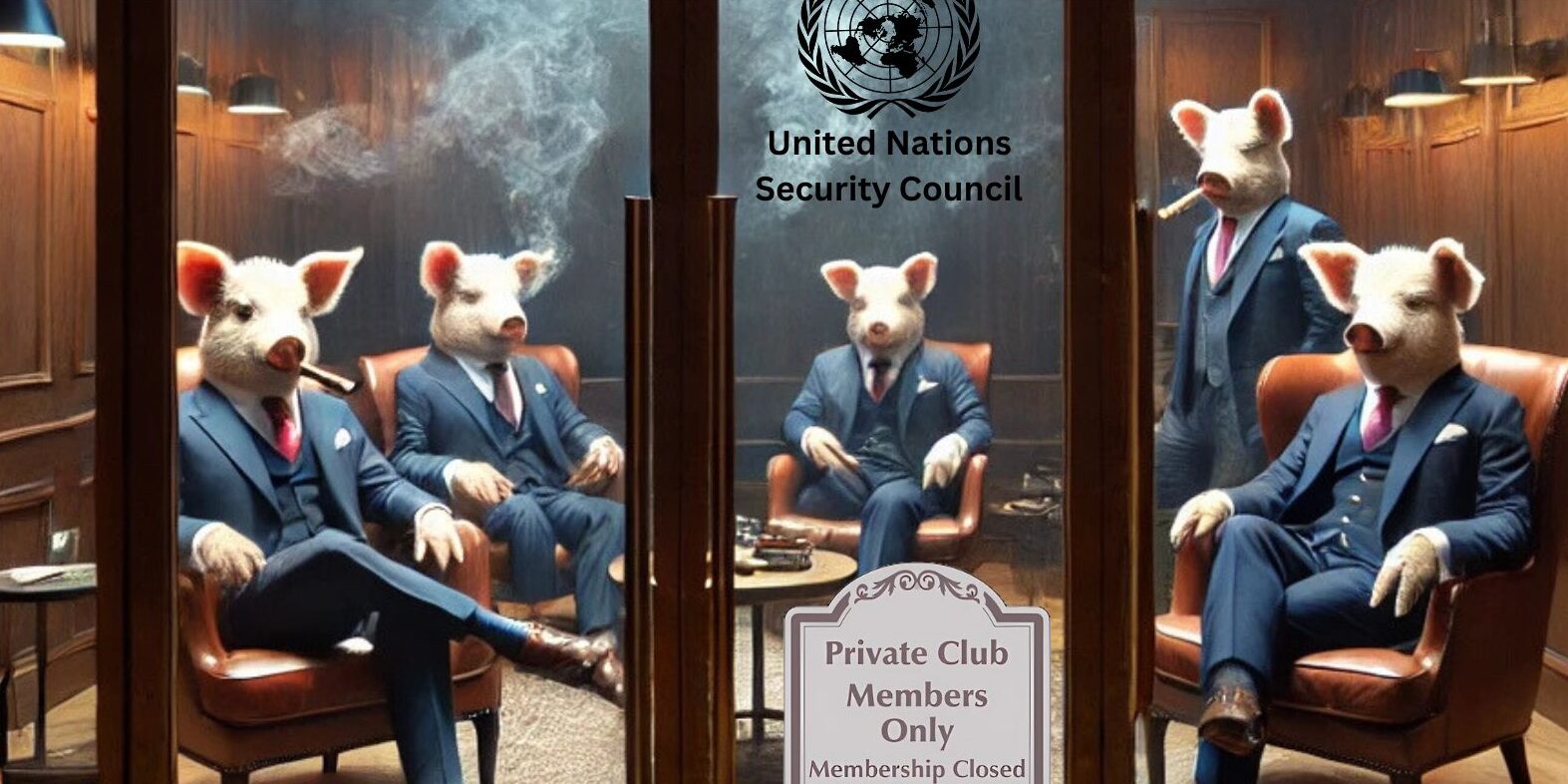
- The international world order has changed dramatically over the past decades, but the UN is still stuck in the post-World War II time warp, operating as the private property of a handful of elite nations.
- The West has largely paid lip service to the issue of UN reform; it often calls for UN reform but fails to back its words with action.
- While the US, UK, and others nominally support India’s bid for a permanent Security Council seat, it’s unclear if they’re ready to share power with the Global South.
- Even as the UN has failed to reform itself, countries of the Global South have succeeded in forging a common front, with India playing a significant role.
- With the rise of alternative forums like BRICS and SCO, questions arise about whether the UN will retain relevance or fade to the margins in the coming decades.
In recent years, the contours of the global geopolitical order have changed significantly. The once meek and submissive “third world” of Western imagination doesn’t exist anymore. Emerging economies are now collectively referred to as the Global South—a diverse group spread across continents, not defined by a specific geographical area, but has nevertheless assumed significant power in global geopolitical discourse. Most international issues are now viewed through the Global South vs Global North prism. But this North vs South isn’t a simplistic bipolar world of the Cold War era; it’s a complex world characterized by multiple points of convergence and perspectives.[1]
Against this backdrop, it is surprising that an organization like the United Nations is still stuck in a time warp. Much has changed since the UN was founded in 1945, but it remains stuck in the post-World War II global order when the world was characterized by the hegemony of a handful of Western countries and much of the Global South was still under colonial rule.
India’s External Affairs Minister S Jaishankar recently compared the UN with an “ old company” that could not keep up with the market but was still occupying space. He further called it a bystander that had failed to keep up with the changing world and was ineffective in addressing a range of global crises, including the COVID-19 crisis, the Russia-Ukraine conflict, and the Israel-Gaza issue.[2]
The calls for the UN reform are getting louder every day. Powerful stakeholders from within the organization are becoming increasingly vocal about reforming the international agency, especially the Security Council (UNSC). However, major powers within the UN show limited interest in implementing practical reforms. UN Secretary-General Antonio Guterres has repeatedly stressed the need for change, notably advocating for Africa’s inclusion in the UNSC as a permanent member. Guterres argued that Africa should hold at least two permanent seats on the Security Council and receive stronger financial backing to support its development goals. These remarks were made by Guterres during a speech in Addis Ababa, Ethiopia, underscoring the necessity for a more representative and equitable UN structure that addresses the evolving dynamics of global power and acknowledges Africa’s role in international affairs.[3]
The UN also hosted the Summit of the Future in September 2024, which led to world leaders adopting a landmark Pact for the Future. During the summit, The UN Secretary-General said, “We are here to bring multilateralism back from the brink.“[4] The Summit of the Future is viewed as a chance to turn the tables in favor of the Global South. The outcome document calls for a just, rules-based resolution of many issues impacting the Global South, including climate change, peace and security, global governance, human rights, gender, digital cooperation, youth, and future generations.
The summit’s outcome document, “Pact for the Future, “included pledges to strengthen the multilateral system to “keep peace with a changing world” and to “protect the needs and interests of current and future generations” facing “persistent crisis.” More importantly, the pact also includes declarations to reform the UNSC and calls for an adjustment of the international financial system in favor of the Global South. [5]
Given the UN’s history, optimism should be cautious. While reform is often discussed, the West has long evaded real action, making even minor changes rare. This raises doubts about whether the Global North genuinely seeks a more inclusive world order or whether its stance is merely symbolic.
UN – A Relic of the Post World-War II World Order
The UN officially came into existence on October 24, 1945, four months after the San Francisco Conference. Its Charter had been ratified by France, China, the Soviet Union, the United States, the United Kingdom, and a majority of other signatories.[6] The San Francisco Conference, held on April 25, 1945, can be regarded as a landmark in the formation of the UN. It was here that the final Charter was signed, and the Security Council veto power was affirmed amongst the permanent members.[7] It is important to remember that at this time, a major part of what is now called the Global South was still under Western colonial rule. Thus, the “status of colonial areas” was also a topic of discussion in the build-up to the formation of the UN.
It’s astonishing that nearly 80 years later, the UN Security Council still has the same five permanent members, ignoring how drastically the world has changed over eight decades. The UN’s structure resembles an old company clinging to outdated practices, refusing to adapt to the times. While new countries have joined the UN General Assembly and various agencies, the most powerful body—the Security Council—remains dominated by just five nations: the US, UK, France, Russia, and China.
With growing global conflicts—the Russia-Ukraine war, the escalating Israel-Gaza crisis with implications for all of West Asia, and tensions between China and Taiwan—the need for the UN to realign itself with a multipolar world order is urgent. The UN’s post-World War II structure no longer fits today’s reality. A more representative UN is essential, one that grants equal space to emerging economies of the Global South. The UN should also harness the influence of new geopolitical actors, including multilateral groups like the G20 and constructive non-state players, to bridge divides. Most critically, the UN must establish a clear plan to reform its institutions, especially the Security Council, ensuring Global South nations gain representation and are granted equal rights with the current five permanent UNSC members. [8]
A piece published by the prominent Indian think tank Observer Research Foundation in 2020 captures the awkward positioning of the UN in the current geopolitical order due to its sheer reluctance to reform itself:
“This is already beginning to happen. A fractured multilateral framework is the order of the day. The security dynamics in the immediate aftermath of World War II were focused on managing Europe and safeguarding its peripheries. Today, the Indo-Pacific region is driving the global economic and political agenda. The context and logic of global institutional frameworks should reflect this shift, especially at a time when a weakening UN is leading to the proliferation of plurilateral and mini-lateral forums. These coalitions of the willing are viewed as more effective and efficient in dealing with not only traditional security issues but even non-traditional ones like the ongoing COVID-19 pandemic.
This is an inflection point for a country like India that aims to be a rule-shaper rather than merely a rule-taker. If the extant multilateral order does not secure Indian interests, New Delhi will have to look for alternatives. That process is already underway.”[9]
Lip Service to UNSC Reform
India’s push for permanent membership in the UNSC highlights the UN’s superficial approach to institutional reform. The history behind India’s bid is complex. In the 1950s, reports suggest the US and the Soviet Union had discussed supporting India for a permanent Security Council seat. However, according to multiple sources, then-Prime Minister Jawaharlal Nehru declined the opportunity as he didn’t want India’s membership to come at China’s expense. Nehru is also said to have kept the Indian Parliament unaware of these discussions. On September 27, 1955, when Dr. J.N. Parekh questioned Nehru in the lower house of the Indian Parliament about whether India had refused an informal UNSC seat offer, Nehru denied any such offer, stating it was neither made formally nor informally.[10] [11]
The West has long used the “UNSC Permanent Membership” issue as a strategic lure in India’s case. Keeping India in a state of “endless anticipation” over a seat at the UNSC high table seems to align with Western interests, effectively guiding India to support its strategic goals. Many Western leaders have theoretically endorsed India’s bid for a permanent seat, but silence prevails when initiating text-based negotiations to advance actual UNSC reform. For instance, in 2010, then-U.S. President Barack Obama publicly supported India’s ambition for a permanent seat during his address to the Indian Parliament while visiting India. He stated, “As two global leaders, the United States and India can partner for global security…I look forward to a reformed United Nations Security Council that includes India as a Permanent Member.” Despite such endorsements, no concrete steps have followed.[12]
In 2017, then-U.S. President Donald Trump also supported India’s bid for a permanent seat on the UNSC. During Indian Prime Minister Narendra Modi’s visit to the US, the two leaders met at the White House, and a formal statement from the US administration followed, stating, “President Trump reaffirmed the support of the United States for India’s permanent membership on a reformed UN Security Council.” This endorsement added to the ongoing, though largely symbolic, support from US leaders for India’s UNSC aspirations.
Under President Joe Biden, the US has repeatedly supported India’s bid for a permanent UNSC seat. As of 2024, several UN Member States, including permanent members like France, the UK, and Russia, have openly backed India’s membership in the Security Council. Russia has specifically advocated for India, Brazil, and African nations to be represented on a permanent basis. Additional supporters include Chile, Portugal, Micronesia, Bhutan, and others. Importantly, India has been intensifying the UNSC reform debate, particularly from the Global South’s perspective, over recent years.
In March 2024, while reiterating its call for Security Council reforms, India presented a detailed reform model on behalf of the G4 nations – India, Brazil, Germany, and Japan. Catering to the new set of geopolitical realities, the G4 Model presented by India proposes that the Security Council’s membership increase from the current 15 to 25-26 by adding six permanent members and four or five non-permanent members. Amongst the new permanent members, two each are proposed to be from Asia-Pacific and African states, one from Caribbean and Latin American states, and one from Western European and Other States.[13] The G4 model addresses representational bias in the UN’s core structures and processes, advocating for comprehensive UNSC reforms based on fairness and equitable representation. Its focus goes beyond India’s bid for permanent membership, emphasizing a broader commitment to just representation rather than a narrow, single-nation perspective.
At its 69th General Assembly on September 14, 2015, the 193-member UN adopted a consensus resolution to shift from Inter-Governmental Negotiations (IGN) to a Text-Based Negotiations (TBN) process for UNSC reform. India’s Ministry of External Affairs welcomed this move, expressing optimism for the early start of text-based negotiations. [14] Nonetheless, while discussions on UN reform remain abundant nearly a decade later, the long-awaited text-based negotiations have yet to begin, underscoring a significant delay in meaningful action.
The recent “Pact for the Future” outcome document from the UN Summit for the Future included specific references to UNSC reform, even “promising” to reform the global body. Many view this as significant, as it reportedly marks the first time a UN summit document has dedicated a full paragraph to Security Council reform. However, in geopolitics, such promises should be met with caution. These UN summit documents are not binding; they serve as pointers rather than enforceable actions. Until there is genuine Western interest in “decolonizing” the UN, reform efforts are likely to continue going in circles.
Media reports often suggest that China’s opposition is the main obstacle to India’s bid for a permanent UNSC seat, given China’s position as a permanent member. However, this isn’t the only factor at play. While Western nations like the US and the UK frequently express support for India’s bid, it’s worth questioning whether this support is genuine or merely diplomatic rhetoric designed to keep India in a state of anticipation. This raises doubts about whether these endorsements are truly aimed at reform or if they serve broader geopolitical interests.
The tone seems condescending at best if one looks at the Western media and think tanks’ coverage of India’s UNSC Permanent Membership bid. Ironically enough, a few of these pieces have been written by journalists/commentators with Indian names, who go out of their way to prove that India doesn’t deserve to be a permanent member of the UNSC. “Obstacles to India Joining the UN Security Council,” reads the headline of a piece published by The Diplomat in September 2024. The writer adopts a rather condescending tone and advises India to pay more attention to fixing its problems like “failure to improve its ranking in the Human Development Index” and address the “recent criticism around its increasing political intolerance” before it thinks about becoming a permanent member of a body like the UNSC.[15]
A recent article from the Lowy Institute criticizes India for continuing to buy oil from Russia despite Western pressure to stop. Titled “Great power ambitions: India’s aim at the UN Security Council,” the article argues that India’s approach of balancing relationships with various countries, rather than strictly aligning with the West, goes against the responsibilities of being a permanent member of the UN Security Council (UNSC). In simpler terms, it suggests that India doesn’t quite deserve a permanent UNSC seat because its inclusion could challenge the current Western-dominated order. The article implies that since Western interests have shaped the UN, India’s actions, which go against those interests, are seen as contrary to the UN’s goals.
The crux of the matter is that the West is fundamentally hesitant about India’s bid for a permanent UNSC seat. While Western nations talk about wanting a more inclusive world order, they seem uncomfortable with India’s independent approach. India’s “multi-alignment” strategy allows countries in the Global South to make foreign policy decisions based on their priorities instead of following the Western agenda.
Global South Reshapes Global Power Dynamics
The COVID crisis marked a major shift in global dynamics. While Western countries stockpiled vaccines, and the UN proved to be grossly inept in responding to the crisis, countries in the Global South created their own ways to handle the pandemic together. India played a key role by using “vaccine diplomacy”—sharing its COVID-19 vaccines with neighboring countries and other Global South nations, including those in Africa and Latin America.
India also partnered with South Africa to propose a temporary waiver at the World Trade Organization (WTO). This waiver aimed to lift certain intellectual property rights on COVID-19 vaccines, medicines, and medical supplies, making them more affordable and accessible worldwide.[16]
India’s vaccine diplomacy also allowed the country to engage with its immediate neighborhood and solve outstanding disputes. India also took the lead in forging global manufacturing and supply chain mechanisms outside the mainstream networks dominated by Western hegemony, especially in the health and pharmaceutical sectors. [17]
India’s vaccine diplomacy has often been framed in global media as a rivalry with China, especially since India manufactured and supplied vaccines to numerous countries through the QUAD initiative. However, this narrow perspective overlooks the bigger picture. India’s efforts were less about competing with China and more about building solidarity with the Global South to tackle shared challenges during the COVID crisis. The Western media’s limited view misses India’s broader goal: creating a united approach to meet the needs of developing countries.
A key moment in Global South solidarity was the 2023 G20 Summit hosted by India. During its G20 Presidency, India positioned itself as a voice for the Global South, addressing various challenges developed and underdeveloped countries face across its platforms. Early in its Presidency, India organized the Voice of Global South Summit, which brought together representatives from 125 countries virtually.[18]
One of India’s most notable achievements during its G20 leadership was securing permanent membership for the African Union in the G20. India initially proposed this idea and, through persistent behind-the-scenes diplomacy and collaboration with other Global South nations, successfully pushed for this milestone, enhancing the representation of developing countries in global decision-making.
India’s Voice of Global South Summit stands out as a pioneering effort to build unity among Global South nations. In August 2024, India hosted the third edition of this virtual Summit under the theme “An Empowered Global South for a Sustainable Future,” with 173 dignitaries from 123 countries participating.[19] The Summit first launched in January 2023, with the second session held in November 2023.
Despite being entirely virtual, the Summit’s rapid growth is notable, with over 170 countries engaging in a forum established only a year ago. This gathering is crucial in India’s efforts to build a Global South consensus for reforming multilateral institutions like the UN. The initiative is only just beginning; if India moves the Summit to an in-person format, it could become a significant step in rebalancing the global order, challenging Western dominance.
Wrapping up
The UN has become so out of touch with modern realities that the question isn’t whether it will reform but whether it can even survive if it doesn’t. In recent major conflicts, like the ongoing Russia-Ukraine war and the Israel-Palestine tensions in West Asia, the UN has been ineffective and powerless to act. During the COVID crisis, it was equally paralyzed: the World Health Organization (WHO) was slow to respond, and the UN failed to address vaccine inequities, standing by as wealthy nations hoarded doses while poorer nations struggled. The vaccine diplomacy of Global South countries ultimately helped mitigate the crisis, underscoring the UN’s inaction.
Newer alliances like BRICS and the Shanghai Cooperation Organization (SCO) have risen in recent years, offering alternative platforms for collaboration. The UN risks becoming obsolete if it fails to adapt, as these new groupings increasingly offer a voice for the Global South, a role the UN has neglected. BRICS, initially formed in 2009 with Brazil, Russia, India, China, and South Africa, is expanding rapidly. New members like Iran, Ethiopia, Egypt, and the UAE have joined, and there are talks of establishing a BRICS currency to reduce reliance on the US dollar, signaling a shift away from Western-dominated systems.
With its history of non-aggression and constructive contributions, India is well-positioned to lead in this evolving order. Through initiatives like the International Solar Alliance, the Coalition for Disaster Resilient Infrastructure, and the Voice of Global South Summit, India fosters cooperation and advocates for a more equitable global structure.
As the world becomes increasingly multipolar, the UN must acknowledge these shifts or risk losing relevance entirely, reduced to a Western-aligned relic of its former self. To remain relevant in this new world, the UN must reform quickly, adapting to a landscape where emerging alliances are increasingly setting the global agenda.
Citations
[1] The India Way: Strategies For An Uncertain World, by S Jaishankar – Pune International Centre; https://puneinternationalcentre.org/2023/07/01/the-india-way-strategies-for-an-uncertain-world-by-s-jaishankar/
[2] S Jaishankar Criticizes UN as Bystander, Says It Hasn’t Kept up with the Times | India News – Times of India; https://timesofindia.indiatimes.com/india/un-a-bystander-hasnt-kept-up-with-times-eam-s-jaishankar/articleshow/113993663.cms
[3] In Ethiopia, UN chief advocates for permanent Security Council seats for Africa | UN News; https://news.un.org/en/story/2024/10/1155941
[4] What is the UN’s Summit of the Future in 2024? | World Economic Forum; https://www.weforum.org/agenda/2024/09/un-summit-future-sdgs/#:~:text=in%20September%202024.-,The%20United%20Nations’%20Summit%20of%20the%20Future%20is%20being%20held,a%20Declaration%20on%20Future%20Generations.
[5] UN reform plan adopted despite Russian opposition – DW – 09/22/2024; https://www.dw.com/en/un-reform-plan-adopted-despite-russian-opposition/a-70295441
[6] History of the United Nations | United Nations; https://www.un.org/en/about-us/history-of-the-un
[7] United Nations ( UN) | Definition, History, Founders, Flag, & Facts | Britannica; https://www.britannica.com/topic/United-Nations
[8] 2024: A chance of redemption for the UN?;https://www.orfonline.org/expert-speak/2024-a-chance-of-redemption-for-the-un
[9] A world order that’s in shambles and an ultimatum on UN reforms; https://www.orfonline.org/research/a-world-order-thats-in-shambles-and-an-ultimatum-on-un-reforms
[10] Not at the Cost of China: India and the United Nations Security Council,1950 | Wilson Center; https://www.wilsoncenter.org/publication/not-the-cost-china-india-and-the-united-nations-security-council-1950
[11] Looking Ahead: India, China and the UNSC Seat Conundrum- India Foundation; https://indiafoundation.in/articles-and-commentaries/looking-ahead-india-china-and-the-unsc-seat-conundrum/
[12] Obama backs India on permanent UN Security Council seat – BBC News; https://www.bbc.com/news/world-south-asia-11711007
[13] India reiterates call for Security Council Reforms, presents detailed model on behalf of G 4 nations | India Strategic; https://www.indiastrategic.in/india-reiterates-call-for-security-council-reforms-presents-detailed-model-on-behalf-of-g4-nations/
[14] India’s Pursuit of United Nations Security Council Reforms; https://www.orfonline.org/research/india-s-pursuit-of-united-nations-security-council-reforms
[15] 4 Obstacles to India Joining the UN Security Council – The Diplomat; https://thediplomat.com/2024/09/4-obstacles-to-india-joining-the-un-security-council/
[16] India’s Vaccine Diplomacy | Global Policy Journal; https://www.globalpolicyjournal.com/blog/08/04/2021/indias-vaccine-diplomacy
[17] India’s Vaccine Diplomacy; https://www.orfonline.org/research/indias-vaccine-diplomacy
[18] South” G20: How India emerged as the voice of Global South – The Economic Times; https://economictimes.indiatimes.com/news/india/g20-how-india-emerged-as-the-voice-of-global-south/articleshow/103410416.cms?from=mdr
[19] Chair’s Summary: 3rd Voice of Global South Summit ( August 17, 2024); https://www.mea.gov.in/bilateral-documents.htm?dtl/38186/Chairs+Summary+3rd+Voice+of+Global+South+Summit+August+17+2024

Donate to HINDUDVESHA
Our Mission is to explore and expose Hindudvesha through research analysis, education and response.
SUPPORT US