

Hindutva and the Hindu Diaspora: Navigating Identity Across Generations
 Dr. Jai G. Bansal · 08/04/2024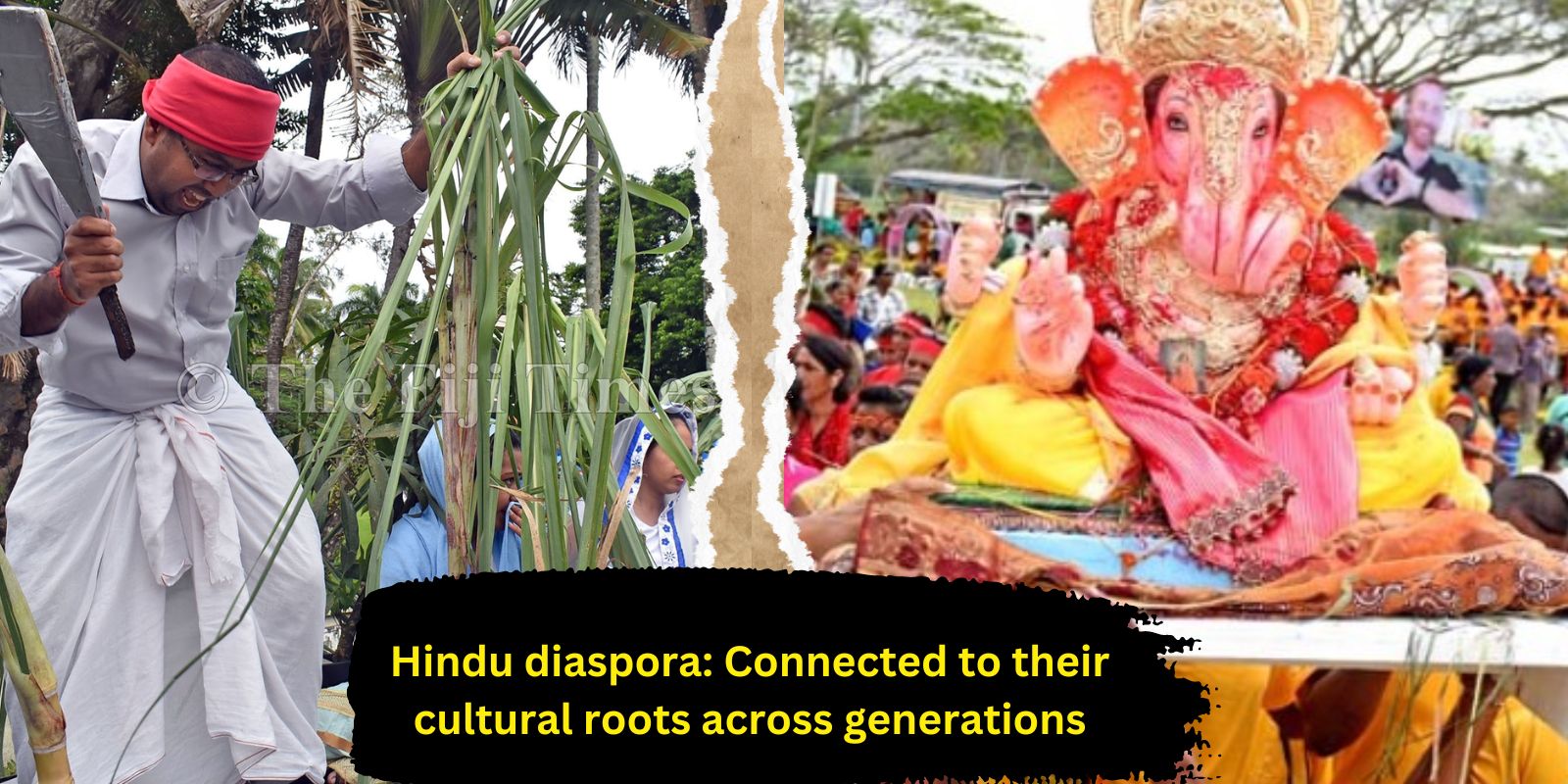
[Editor’s note: This article is part of a series of write-ups on the concept of Hindutva and its relationship with Hindu Dharma, with the aim to reclaim and assert a cohesive Hindu identity, promoting a shared heritage and universal humanism. In an earlier article of this series, we delve into the evolution and significance of Hindutva, a term coined by Chandra Nath Basu in 1892 and shaped by Influential figures like Rishi Raj Narayana Bose, Swami Dayanand Saraswati, Swami Vivekananda, Lokmanya Tilak, Yogi Aurobindo, Vir Savarkar, and M.S. Golwalkar. Savarkar’s concept of Hindutva distinguishes it from Hinduism, emphasizing cultural, linguistic, social, and political dimensions.
This article discusses how the Hindu diaspora experiences Hindutva and connects with their cultural and civilizational roots in their ancestral land in Bharat, despite a separation of several generations and thousands of miles from their ancestral land, Bharat.]
- Hindutva philosophy is ancient, having evolved over millennia. Contributions from intellectuals like Chandranath Basu, Lokmanya Tilak, Savarkar, and Golwalkar emerged in specific historical contexts, reshaping an already existing concept. Savarkar, in particular, emphasized that Hindutva starts with identity but ultimately transcends it, reflecting the universal philosophy of Hinduism that sees the world as a family and is inclusive by nature.
- Bharat is viewed as the Punyabhumi (holy land) for Hindus worldwide, uniting them through shared cultural and spiritual traditions, regardless of their geographical location.
- Despite the diversity within Hinduism, Buddhism, Jainism, and Sikhism, common values like the quest for ultimate truth, goal of liberation, and holistic thinking unite them under the umbrella of Dharma traditions.
- Hindus maintain their cultural identity and spiritual traditions globally, establishing temples and pilgrimage sites, resisting injustices, and contributing to their communities while preserving their connection to Bharat.
The definitions of Hindutva developed by scholars and leaders like Chandranath Basu, Lokmanya Tilak, Savarkar, and Guruji Golwalkar were created in specific contexts within Bharat. However, this does not mean that Hindus and Hindutva did not exist before these definitions. In fact, the concept of Hindutva has existed and evolved over millennia. Interestingly, defining Hindutva, and by inference, Hindu Dharma, often draws more opposition from within the Hindu community than from outside. Hindus generally resist drawing strict borders for definitions, feeling that it may lead to exclusion. However, defining Hindutva is not about excluding others; it’s about understanding our identity while maintaining the belief that the world is a family.
Veer Savarkar emphasized that while we start with our identity, we ultimately transcend it, reflecting the universal philosophy of Hinduism. Someone who embraces this expansive view is, in essence, a Hindu.
Read…Evolution of Hindutva philosophy
Veer Savarkar emphasized that while we start with our identity, we ultimately transcend it, reflecting the universal philosophy of Hinduism. Someone who embraces this expansive view is, in essence, a Hindu. This makes it easier to define the term “Hindu.” In the definitions provided by Savarkar and Golwalkar, the concepts of “Pitrabhumi” (Fatherland) and “Punyabhumi” (Holy Land) are central. Sometimes, “Matrubhumi” (Motherland) is also used to denote the cultural or spiritual motherland.
For Hindus living outside Bharat, the cultural unity emphasized by Savarkar and Golwalkar is vital. Despite following various paths, Hindus share a common culture. Bharat is considered the Punyabhumi, not just as the land of ancestors but as a sacred land, the cradle of Hindu civilization. This land is where great intellectual and spiritual traditions developed, thanks to the rishis, gurus, arhats, and bhikshus who lived, worked, and imparted knowledge there.
Bharat is dotted with numerous sacred pilgrimage sites, such as the Char Dham, Jyotirlingas, Shakti Peethas, places related to Bhagwan Buddha’s life, Jain pilgrimage sites, Sikh pilgrimage sites, and locations significant to the Ramayana and Mahabharata. These sites are not just spiritual but also represent places where individuals lived exemplary lives according to Dharma and made significant sacrifices.
For Hindus, Bharat remains our cultural and spiritual motherland, no matter where we live in the world.
For Hindus, Bharat remains our cultural and spiritual motherland, no matter where we live in the world. Even after generations of living abroad, Hindus continue to look towards Bharat as their Punyabhumi. It is not only the land of our ancestors but also the sacred geography where our spiritual heritage is rooted. This profound connection to Bharat is what unites Hindus globally, giving them a shared identity and a sense of belonging.
This deep-seated attachment to the land of their ancestors is widely prevalent across the Hindu diaspora. No matter how many generations they have lived there, they love their adopted countries and are proud to belong to places like Guyana, Trinidad, or South Africa. Yet, they hold a special place in their hearts for Bharat (India). This deep connection to Bharat is a testament to the enduring nature of Hindu identity, even among those who live far from their ancestral homeland.
Common Culture and Values
So, what is this common culture? Veer Savarkar’s definition of Hindu Dharma is often summarized with terms like “Indic traditions,” which include Hinduism, Buddhism, Jainism, and Sikhism. Traditionally, these were referred to as Vedic or Shramana Parampara. Despite the diversity within these traditions, there are common threads that unite them under the umbrella of the Dharma traditions of Bharat. These commonalities include:
- Quest for Ultimate Truth and Happiness: All these traditions seek ultimate truth and lasting happiness.
- Goal of Liberation: They share the goal of liberation (moksha or nirvana).
- Experiential Approach: They emphasize not just understanding but experiencing and realizing spiritual truths.
- Holistic Thinking: They advocate for a balanced life, encompassing both material and spiritual fulfillment.
This comprehensive approach is often misunderstood as otherworldly. However, it is deeply rooted in holistic thinking. It aims to live a complete life in this world while seeking spiritual transcendence. When we look at the virtues taught by these traditions, whether it’s the moral teachings in the Bhagavad Gita, Jain vows (vratas), the Buddhist Eightfold Path, or the Sikh codes of conduct (Maryada), they all emphasize leading a virtuous life. These virtues form a common moral foundation across these traditions.
Hindutva, as defined by Savarkar, refers to the culture that has nurtured the development of these traditions over millennia. This culture is not just about music and dance but about values that people are willing to live by and, if necessary, make supreme sacrifices for. It’s like the organizational culture of a company but on a much larger, national scale.
Professor Dharam Bhawuk from the University of Hawaii has written about how this culture has given rise to so many spiritual geniuses in Bharat. He argues that a society and culture that values certain ideals will naturally nurture and produce geniuses in those areas. Bharat’s culture, which values spiritual pursuits, has historically produced many spiritual leaders and thinkers.
Some core truths about our culture that unite us are deeply rooted in our minds and will never go away. For example, the belief that truth is one but expressed in many ways is fundamental. This belief fosters respect and acceptance of diverse paths to the divine. It encourages the single-minded pursuit of one’s path while avoiding narrow-minded extremism about others’ paths. We see the entire creation as pervaded by the same divine energy, attaching sacredness to everything and everyone, from Mother Earth to all living beings. This view underscores the unity in diversity and the potential for every individual to achieve spiritual greatness. Our culture also emphasizes social cohesion without losing plurality. We strive to create a society based on Dharma, supported by traditions, rituals, festivals, and observances that foster this social cohesion. These elements are integral to our expression of culture and are essential for maintaining our identity, especially in the diaspora.
Savarkar’s vision of Hindutva encompasses this cultural and spiritual unity, transcending geographical boundaries. It highlights the importance of maintaining a connection to Bharat while integrating into and contributing to the global community.
The Hindu diaspora, spread across the globe, continues to maintain this connection to Bharat and its cultural roots. For instance, wherever Hindus go, they establish temples (Mandirs) as centers of cultural and spiritual life. In Southeast Asia, the influence of Hindu civilization can still be seen in countries like Indonesia, particularly in Bali, where Hindu practices are part of daily life. In countries known as Girmitiya countries, like those in the Caribbean, the first generations of Hindu laborers established temples and maintained their cultural identity despite significant hardships. They created new pilgrimage sites, like Ganga Talao in Mauritius and Ganga Dhara in Trinidad, to keep their spiritual traditions alive. These sites became sacred to them, embodying the essence of Ganga, even in their new homes.
In more recent diasporas, such as in Western countries, we see similar efforts to maintain cultural identity. In the United States, for example, Hindus visit the Balaji Temple in Pittsburgh, perform rituals, and undertake pilgrimages to places associated with significant events in Hindu history, like the site of Swami Vivekananda’s speeches in Chicago.
Savarkar’s vision of Hindutva encompasses this cultural and spiritual unity, transcending geographical boundaries. It highlights the importance of maintaining a connection to Bharat while integrating into and contributing to the global community. This vision is not about rigid definitions but about embracing a shared heritage and identity that evolves and adapts over time.
Standing Against Injustice
In the diaspora, Hindus have always stood up against injustice, embodying the principle of resisting a-dharma (unrighteousness). For instance, in Sri Lanka, when Christian missionaries aggressively targeted the Hindu community, it was leaders like Arumuga Navalar who intellectually resisted and prevented mass conversions. Similarly, in Trinidad and Tobago, a sadhu (holy man) fought back when his temple was demolished by the colonial government, rebuilding it on a platform in the sea. More recently, in Malaysia, Hindus gathered in large numbers in Kuala Lumpur to protest discrimination against their community. Now, in Western countries, Hindus are resisting Hinduphobia in academia and media.
Hindus have a long tradition of standing against injustice, not just for their own community but for the greater good of all people. In South Africa, for example, Hindus stood shoulder to shoulder with Nelson Mandela in the fight against apartheid and discrimination. This spirit of resistance is ingrained in our culture and values.
While fighting against a-dharma, Hindus have also consistently thought about the welfare of all humanity. This is evident through various seva (service) activities, the promotion of International Yoga Day, and the global spread of Ayurveda. Even in other fields, Hindus contribute to the greater good, often unconsciously upholding their cultural values.
Hindutva, with its deep-rooted cultural and spiritual principles, continues to be vibrant and relevant. While its expressions may evolve to meet new challenges, its core character remains unchanged. It will always respond uniquely and creatively to changing circumstances.
A book called “The India Way“[1] by some Wharton School professors discusses how Indian CEOs operate differently, emphasizing holistic thinking and the greater good. Despite having a colonial education, the fundamental values of Hindutva (Hindu culture and identity) remain strong within us. These values guide our actions and bind us together, no matter where we are in the world.
Hindutva, with its deep-rooted cultural and spiritual principles, continues to be vibrant and relevant. While its expressions may evolve to meet new challenges, its core character remains unchanged. It will always respond uniquely and creatively to changing circumstances.
Concluding thoughts
Reflecting on the Ramleela (a traditional dramatic folk re-enactment of the life of Lord Rama) in Trinidad and Tobago, the Nobel Laureate Derek Walcott noted, “It was as if, on the edge of the central place, there was another plateau, a raft on which the Ramayana would be performed in this ocean of cane. They were not amateurs but believers. They did not have to psych themselves up to play the roles; their acting was as natural as belief.” What he initially perceived as a simple theatrical performance, he said, was actually a profound expression of faith. The participants’ joy and conviction were palpable, illustrating how deeply they believed in the sacredness of the text and the traditions of Bharat.
This deep sense of belief and cultural continuity is what Hindus carry with them, integrating it into their lives even in new geographies and countries. This universal aspect of Hindutva ensures that wherever Hindus go, they bring with them a piece of their spiritual and cultural heritage, enriching their new homes while maintaining their connection to Bharat.
Citations
[1] The India Way; https://en.wikipedia.org/wiki/The_India_Way

Donate to HINDUDVESHA
Our Mission is to explore and expose Hindudvesha through research analysis, education and response.
SUPPORT US