
Who Were the Shudras? Tribhuvan Singh’s Interpretation of Caste and History
 Dr. Jai G. Bansal · 04/17/2026
 - The modern Shudra narrative emerged from colonial Indology and was later internalized within Indian intellectual discourse rather than derived from indigenous textual or historical evidence.
- Classical Hindu texts and interpretive traditions do not support a rigid, birth-based, or permanently degrading model of social hierarchy.
- Pre-colonial political, military, and economic practice shows Shudras as active participants in public life rather than marginalized outcasts.
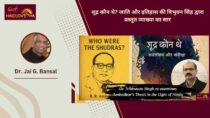
- Ambedkar’s Who Were the Shudras? transformed colonial conjectures into an authoritative framework that shaped post-Independence caste interpretation.
- Missionary polemics, colonial administration, and post-Independence policy together hardened fluid social categories into enduring caste abstractions.

Dr. Jai G. Bansal
Dr. Jai Bansal is a retired scientist, currently serving as the VP Education for the Vishwa Hindu Parishad America (VHPA)
View All Audio Books