

A Patriotic Surge They Can’t Ignore: Operation Sindoor and the Left’s Crumbling Narrative
 Rati Agnihotri · 06/02/2025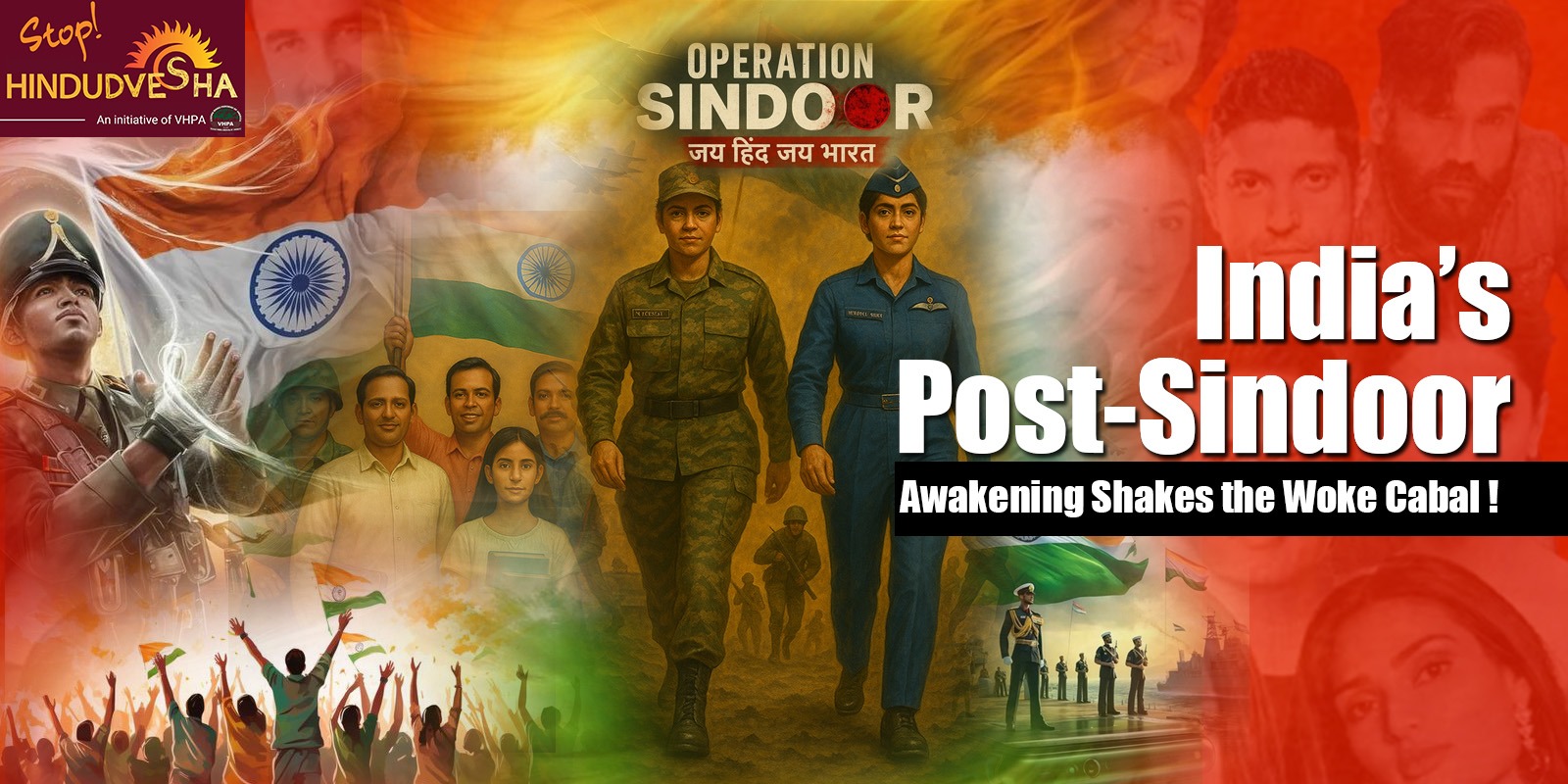
- In the aftermath of Operation Sindoor, there seems to be a clear paradigm shift. Indians are finally aligning their business and personal interests with the national interest.
- This wave of nationalism poses a formidable challenge to the left-liberal cabal that has infested Indian politics, society, culture, education, etc., like termites
- #BoycottTurkey and #BoycottAzerbaijan trends dominate social media – Indian businesses and consumers are boycotting Turkish products and services on a mass scale.
- The nationalist surge among citizens in the aftermath of Operation Sindoor should be a wake-up call for Indian billionaires, many of whom have, either knowingly or unknowingly, contributed their funds towards strengthening anti-Hindu and anti-India narratives.
- The revival of India’s civilizational and cultural ethos and its Hindu resurgence have given Indians the courage and imagination to act as informal strategic ambassadors of the nation by putting the “Nation First.”
Operation Sindoor represents several historic firsts for independent India. For the first time since 1947, India delivered a decisive military response to cross-border terrorism. More importantly, it marked a clear shift in policy: terrorism would now be treated as an act of war, warranting a proportional response.
What truly stood out, however, was the nationwide surge of unity. Indians from all walks of life rallied under the banner of nationalism, signaling a decisive cultural shift. In principle, such solidarity during threats to a nation’s sovereignty is to be expected. Yet, in India’s case, it feels exceptional—largely because public discourse has long been shaped by the left-liberal ecosystem, which routinely casts suspicion on nationalism and sows doubt among the youth about the very idea of patriotism. Left-liberal discourse has always questioned patriotism, mocking it as jingoism and using inflated rhetoric and skewed logic to present nationalism in the Indian context[1]as a “hyper-masculine,” “fascist,” and “Hindutva supremacy” exercise.
Against this backdrop, the post-Operation Sindoor surge in nationalism takes on immense significance. A paradigm shift is underway, with Indians increasingly aligning their business and personal interests with national priorities.
This rising wave of nationalism presents a formidable challenge to the entrenched left-liberal cabal that has long permeated Indian politics, culture, education, and society like termites. The Hindu resurgence and revival of India’s ancient civilizational ethos over the past 10–15 years have birthed a distinct form of cultural nationalism anchored in the vision of “Nation First.”
Rooted in India’s Vedic past and rich heritage, this nationalism displaces colonial and imperialist frameworks that once shaped Indian self-perception. It instills pride in all things Bhartiya and motivates citizens to act in alignment with national interest.
Unsurprisingly, this has rattled the left-liberal ecosystem, now agitated by citizen-led calls to boycott countries like Turkey and Azerbaijan—staunch allies of Pakistan. Is this surge in nationalism merely a fleeting reaction, or will it become a lasting force reshaping national discourse and challenging the anti-India narratives of the left-liberal bloc?
The sections that follow explore how Indians across society are standing up—both symbolically and literally—for the nation’s sovereignty and integrity and how this collective awakening could dismantle entrenched anti-India narratives.
Economic Blowback Rides Nationalist Surge
A powerful grassroots movement is gaining momentum in India, calling for a boycott of goods and services from Turkey and Azerbaijan. This comes in response to Turkey’s unequivocal support for Pakistan during Operation Sindoor. In a strong show of national solidarity, Indian companies, traders, and consumers are pushing back, particularly by targeting Turkish products and services.
The tourism sector has taken the hardest hit. Indians make up a significant portion of the travelers to these countries, especially Turkey. According to media reports, MakeMyTrip saw a staggering 60% drop in bookings to Turkey and Azerbaijan within a week, with cancellations spiking by 250%. The platform has also pulled all promotions related to these destinations. EaseMyTrip reported similar trends, with 22% cancellations for Turkey and over 30% for Azerbaijan. The platform has since suspended all flight and hotel bookings to both countries and advised customers to avoid travel unless essential. Travel platform Ixigo followed suit, halting all bookings to Turkey, Azerbaijan, and China. Ixigo CEO Alok Bajpai summed up the sentiment in a post on X: “Enough is enough! Blood and bookings won’t flow together. We are suspending all flight and hotel bookings for Turkey, China, and Azerbaijan on Ixigo.”[2] [3]
Several Indian travel platforms have either temporarily suspended new bookings to Turkey and Azerbaijan or added advisories urging travelers to visit only if absolutely necessary. What’s noteworthy is that these decisions weren’t driven by any government directive, but by the platforms themselves, reflecting a voluntary, nationalist stance in response to foreign policies seen as hostile to India’s interests.[4]
The stand taken by Indian businesses also reflects the sentiment of Indian consumers who have been relentlessly running BoycottTurkey and BoycottAzerbaijan trends on social media, urging businesses and consumers to boycott Turkish products and services alike. What India is currently witnessing is an unprecedented wave of nationalism, the ripples of which have already begun to rattle the left-liberal ecosystem.
The South China Morning Post appears visibly unsettled by the growing boycott movement among Indian consumers and businesses targeting goods and services from Turkey and Azerbaijan. It notes: “Calls to boycott Turkish and Azerbaijani products and travel have intensified across India, with experts describing the push as an emerging form of consumer-led diplomacy in response to the two countries’ support for Pakistan during recent cross-border hostilities.”[5]
In a one-of-its-kind display of economic nationalism, more than 125 top trade leaders from across India recently declared a total boycott of all travel, commercial, and cultural engagement with Turkey and Azerbaijan. The decision came in the wake of a unanimous resolution adopted at a national conference of traders in New Delhi convened by the Confederation of All India Traders (CAIT). The industry body also called on the Indian film industry to refrain from shooting in Turkey and Azerbaijan. In a clear-cut show of solidarity with the nation’s fight against terrorism, CAIT Secretary General Praveen Khandelwal said, “ It is deeply unfortunate that Turkey and Azerbaijan, who have benefitted from India’s goodwill, aid, and strategic support in times of distress, have now chosen to side with Pakistan – a country known globally for its support to terrorism. Their position not only hurts India’s sovereignty and national interest but also insults the sentiments of 140 crore Indians”. [6]
A broad range of Turkish products—fruits, chocolates, marble, and clothing—has come under the scanner as Indian traders rally behind the boycott call. The All-India Consumer Products Distributors Federation has announced an “indefinite and total boycott” of Turkish goods, including chocolates, jams, wafers, tea, coffee, cookies, and packaged sweets. Among the hardest hit are Turkish apples. Fruit traders across India have collectively pulled them from the market, redirecting demand to alternatives from Washington, New Zealand, and Iran to meet consumer preferences for imported quality.[7] [8]
Marble is another Turkish import expected to be severely impacted by the boycott. The Udaipur Marble Processors Association, representing 125 marble firms, has called on the government to halt Turkish marble imports immediately. The country currently supplies around 70 percent of the marble imported by India.[9]
The calls to boycott Turkish products and services have also extended into the education sector. Several Indian universities—including IIT Bombay, Jawaharlal Nehru University, IIT Roorkee, and Kanpur University—have suspended or terminated their academic partnerships with Turkish institutions.[10]
In another significant development, the Bureau of Civil Aviation Security (BCAS), the security division of the Ministry of Civil Aviation, has revoked the security clearance of Celebi and its associated companies due to national security concerns. Celebi Aviation offers ground handling services at nine major airports across India, including Mumbai, Delhi, Bangalore, Goa, Hyderabad, Ahmedabad, and Chennai.[11] Given Turkey’s unequivocal defense and strategic backing of Pakistan during recent India-Pakistan tensions, the involvement of a Turkish company in managing airport operations in major Indian cities raises serious national security concerns.
While the Indian government has yet to take an official stance on trade with Turkey, businesses across the spectrum—from small grocery stores to large corporations and e-commerce platforms—are independently boycotting Turkish imports. This marks an unprecedented show of solidarity with the armed forces and a clear alignment with national security interests.
The All-India Consumer Products Distributors Federation (AICPDF), which supplies products to roughly 13 million neighborhood shops, has declared an “indefinite and total boycott” of Turkish goods. According to AICPDF estimates, the retail ban could impact approximately $234 million in food product sales. Given that India imports about $2.7 billion worth of goods from Turkey annually, the boycott is expected to affect Turkey’s commercial interests significantly.[12]
A recent News18 article suggests that Turkish President Recep Tayyip Erdoğan could soon face a situation similar to that of the Maldives’ President Muizzu as Indian voices grow louder in calling for an economic offensive against Turkey. The piece draws parallels between the current #BoycottTurkey movement and the earlier Indian backlash against the Maldives, triggered by racist and bigoted remarks from Maldivian leaders following Prime Minister Modi’s widely publicized visit to Lakshadweep. In that case, Indian consumers and travel platforms swiftly responded by boycotting Maldivian tourism, delivering a serious economic blow that rattled the island nation’s leadership. The article speculates that Turkey may now be on the brink of a similar reckoning as Indian citizens increasingly align their economic choices with national sentiment in the wake of Operation Sindoor.[13]
Leftist Meltdown
In a classic case of “Grapes are Sour,” the left-liberal cabal seems visibly rattled by the proud display of nationalism by Indians from all walks of life. In a rather hilariously revealing gesture, Congress leaders Jairam Ramesh and Pawan Khera were seen passing the microphone back and forth when asked about the Turkey boycott, clearly trying to dodge the question.[14]
Many figures from the left-liberal cabal—who had gone out of their way to reaffirm their “Pakistan love” during Operation Sindoor—appeared visibly unsettled as #BoycottTurkey began trending. In response, some began flaunting their newfound “Turkey love,” while others resorted to rhetorical deflection, arguing that true nationalists should also boycott Chinese goods—an attempt to dilute the legitimacy of the Turkey boycott through false equivalence.
An article published by OpIndia provides a compelling insight into the shenanigans of the left-liberal ecosystem amidst “BoycottTurkey calls in the aftermath of Operation Sindoor. Here are a few revealing X posts shared in the write-up: “To all those wanting to boycott Turkey, a reminder about China, also that has a greater role and influence in Pakistan. Remember to please boycott all the Chinese goods and make sure you check and only buy Not made in China. Just saying”. (Saba Naqvi on X) [15]
Aakar Ahmed Patel, the former Head of Amnesty India, wrote on X: “think will visit turkey”.
Another X user resorted to the “BoycottChina” rhetoric to shame Indians boycotting Turkish products and services: “Turkey and China both supported Pakistan. China supplied fighter jets, drones, intelligence, and satellite data about Indian fighter jets, but bhakts want to boycott only Turkey, not China. What is the reason??” ( Surbhi on X)
The left-liberal cabal has been quick to frame the #BoycottTurkey and #BoycottAzerbaijan movements as right-wing expressions of bigotry. But this narrative reflects a deeper ideological bias—one that often equates nationalism, patriotism, and national pride with intolerance or fascism. In reality, support for these boycott calls has come from Indians across the ideological spectrum, united by a shared concern for national interest and sovereignty. What this ecosystem perhaps cannot tolerate is the large-scale consolidation of a nationalist narrative that runs counter to their “Breaking India” agenda.
Another group that stands out for its glaring hypocrisy is the Bollywood brigade. Most so-called celebrities maintained a conspicuous silence during and after Operation Sindoor, with only a handful of A-listers acknowledging the operation or lauding the armed forces. And even those few posts appeared to be little more than face-saving gestures in response to mounting backlash from netizens. For instance, Aamir Khan remained silent throughout—until his team suddenly began praising Operation Sindoor[16] just days before the release of his movie Sitaare Zameen Par.
The movie is under growing scrutiny, with many netizens in India calling for a boycott. The backlash stems from Khan’s past visit to Turkey and his silence during recent India-Pakistan tensions. A video clip of his 2020 meeting with Turkish First Lady Emine Erdoğan has resurfaced online, reigniting controversy. The meeting, which took place during the promotion of Laal Singh Chaddha, had earlier drawn criticism due to Turkey’s strained diplomatic ties with India—particularly its stance on Kashmir.[17]
It’s hardly surprising that most Bollywood celebrities—especially A-listers—have maintained a stoic silence on the #BoycottTurkey and #BoycottAzerbaijan movements. This is the same group that launches aggressive social media campaigns over global issues like Gaza, yet remains conspicuously silent when atrocities are committed against the Hindu community closer to home. Forget a blitzkrieg—there was barely a whisper.
Bollywood’s cold response to Operation Sindoor lays bare the “patriotism-for-profit” model behind many of its films. Time and again, A-listers use patriotic themes to cash in on public sentiment, undergoing carefully curated image makeovers ahead of film releases. But their silence speaks volumes when real events like the Pahalgam attacks or Operation Sindoor demand moral clarity.
What’s most significant, however, is that the Indian public is no longer buying the act. Citizens are actively calling out the hypocrisy of these so-called stars on social media, shifting their focus instead to honoring the true national heroes—the armed forces. If this grassroots awareness continues to grow, it could mark the beginning of a significant cultural shift in Indian society.
Wake-Up Call for Indian Billionaires
As Indian businesses—both large and small—begin aligning more clearly with national and civilizational interests in the wake of the Pahalgam terror attacks that targeted Hindus, there is an important lesson here for Indian billionaires everywhere. This is not just a moment of reckoning for those based in India but also for Indian-origin billionaires operating globally.
In Snakes in the Ganga: Breaking India 2.0, authors Rajiv Malhotra and Vijaya Viswanathan expose how many of these billionaires, knowingly or otherwise, have funded research and institutions in the West that are openly hostile to Indian and Hindu interests. The book highlights a troubling trend: Indian capital is not only enabling anti-Hindu and anti-India narratives abroad but is also being used to import Western “woke” ideologies into Indian academia under the guise of progressive collaboration.
A striking case study is that of the Godrej India Culture Lab, which the authors critique for uncritically adopting U.S.-style woke frameworks on gender and sexuality. While Godrej is credited with sensitizing Indian businesses to LGBTQ+ issues, the Lab has also, according to the authors, empowered radical activists whose rhetoric veers into anti-India territory. One such activist promoted by the Lab reportedly ended a speech by urging people to “escalate the Kashmir secessionist movement” and has a record of supporting anti-CAA protests.[18]
While prominent Indian billionaires like Mukesh Ambani and Gautam Adani have taken commendable steps by distancing their businesses from Turkish companies and products in solidarity with the national cause, a deeper issue persists: the general apathy of many Indian billionaires when it comes to aligning business decisions with national and civilizational interests.
The post–Operation Sindoor wave of nationalism should serve as a wake-up call to this elite class—a clear reminder that no one stands above the nation. Business leaders must recognize that Hindu interests and national interests are not optional considerations; they must be central to decision-making. If small tour operators can risk their livelihoods in defense of national integrity, what justifies the indifference of billionaires among the world’s richest?
It’s also worth noting that many of these billionaires excel in symbolic gestures: visiting temples, making charitable donations, and promoting Indian culture. But at this critical juncture, optics alone are no longer enough. If their wealth indirectly enables forces that harm the Hindu community or undermine India’s sovereignty, then all the ritualistic appearances lose meaning. What the nation needs now is not tokenism but principled action rooted in loyalty to Bharat and its civilizational values.
Conclusion
Over the past decade, India has been actively reclaiming its civilizational identity through a bold and determined cultural renaissance. At the heart of this movement is a decolonization project to restore Bharat’s ancient ethos and shape a distinctive brand of cultural nationalism rooted in indigenous values and traditions.
From the construction of the Ram Temple in Ayodhya to the revitalization of key Hindu pilgrimage sites, from the Hindu resurgence in regions like Sambhal to the celebration of pan-Indian unity through initiatives like the Kashi Tamil Sangamam, the transformation is both visible and profound. Even India’s foreign policy discourse now draws upon the profound civilizational wisdom of epics like the Ramayana and Mahabharata.
The India of 2025 is no longer tentative about its roots. This cultural resurgence has instilled a renewed sense of pride among citizens—not just in their heritage but in the country’s modern achievements. This newfound confidence is empowering Indians to act as informal ambassadors of Bharat, embodying the spirit of Nation First in everyday life and global engagement.
Citations
[1] Vilification of Hindu Dharma Through Misguided Gender Narratives – Hindu Dvesha; https://stophindudvesha.org/vilification-of-hindu-dharma-through-misguided-gender-narratives/
[2] How Much Money India Boycotting Turkey And Azerbaijan Travel Will Cost Them; https://www.ndtv.com/lifestyle/on-turkey-and-azerbaijan-travel-how-much-money-do-indian-tourists-spend-every-year-8419372
[3] Ixio CEO says ‘enough is enough’ as firm halts flight and hotel bookings to Turkey, Azerbaijan and China | Trending – Hindustan Times; https://www.hindustantimes.com/trending/ixigo-halts-flight-and-hotel-bookings-to-turkey-azerbaijan-and-china-ceo-says-enough-is-enough-101746875577969.html
[4] Indian travel sites suspend bookings to Turkey, Azerbaijan – Times of India; https://timesofindia.indiatimes.com/life-style/spotlight/indian-travel-sites-suspend-bookings-to-turkey-azerbaijan/articleshow/121075317.cms
[5] In India, boycott calls against Turkey, Azerbaijan reflect growing ‘consumer-led diplomacy’ – South China Morning Post; https://www.scmp.com/week-asia/economics/article/3310592/india-boycott-calls-against-turkey-azerbaijan-reflect-growing-consumer-led-diplomacy
[6] Backlash over backing Pakistan: Turkey and Azerbaijan face full trade boycott from Indian traders – BusinessToday; https://www.businesstoday.in/india/story/backlash-over-backing-pakistan-turkey-and-azerbaijan-face-full-trade-boycott-from-indian-traders-476596-2025-05-16
[7] Boycott Turkey gains momentum: From aviation to chocolates, list of Turkish products and services shunned by India | Today News; https://www.livemint.com/news/india/boycott-turkey-gains-momentum-from-aviation-to-chocolates-list-of-turkish-products-and-services-shunned-by-india-11747658753508.html
[8] Why Turkey’s Erdoğan May Be Reduced To Maldives’ Muizzu Amid Boycott Calls By Indians – News18; https://www.news18.com/india/treacherous-turkey-as-india-mulls-boycott-why-erdogan-may-be-reduced-to-maldives-muizzu-ws-kl-9336279.html
[9] Boycott Turkey Impacts India-Turkey Trade: Travel drops 60%, Apple & Marble Imports Affected | Economy News | The Financial Express; https://www.financialexpress.com/policy/economy/boycott-turkey-hits-business-check-impact-on-india-turkey-trade-as-travel-slumps-60-apple-and-marble-imports-feel-the-heat/3847327/
[10] These Indian universities suspended academic ties with Turkish educational institutions | Education News – The Indian Express; https://indianexpress.com/article/education/indian-universities-suspension-agreements-turkey-universities-10013469/
[11] Turkey’s Celebi sues India: Who’s representing the firm in Delhi HC? A look at timeline and legal team | Today News; https://www.livemint.com/news/india/turkeys-celebi-sues-india-who-s-representing-the-firm-in-delhi-hc-a-look-at-timeline-and-legal-team-11747643960149.html
[12] From small grocery shops to e-commerce platforms – Indians boycott Turkish chocolates, coffee, wafers – Times of India; https://timesofindia.indiatimes.com/business/india-business/from-small-grocery-shops-to-e-commerce-platforms-indians-boycott-turkish-chocolates-coffee-wafers/articleshow/121290902.cms#
[13] Why Turkey’s Erdoğan May Be Reduced To Maldives’ Muizzu Amid Boycott Calls By Indians – News18; https://www.news18.com/india/treacherous-turkey-as-india-mulls-boycott-why-erdogan-may-be-reduced-to-maldives-muizzu-ws-kl-9336279.html
[14] Jairam Ramesh, Pawan Khera pass mic to each other after question on Turkey boycott | Video | India News – India TV; https://www.indiatvnews.com/news/india/jairam-ramesh-pawan-khera-pass-mic-to-each-other-after-question-on-turkey-boycott-bjp-criticism-pours-in-amit-malviya-shares-video-on-x-2025-05-15-990483
[15] Secular Liberals of India suddenly develop love for Turkey and Azerbaijan after Indians call for a tourism boycott against those nations; https://www.opindia.com/2025/05/after-pro-pakistan-aman-ki-asha-liberals-are-simping-over-turkey-boycott-calls-against-turkey-and-azerbaijan/#google_vignette
[16] How Bollywood failed to stand up for India during Operation Sindoor; https://www.opindia.com/2025/05/how-bollywood-failed-to-stand-up-for-india-during-operation-sindoor/
[17] Aamir Khan’s ‘Sitaare Zameen Par’ Faces Boycott Calls Over Turkey Ties and Silence on India-Pakistan Conflict; https://www.indianewsnetwork.com/en/20250515/aamir-khan-s-sitare-zameen-par-faces-boycott-calls-over-turkey-ties-and-silence-on-india-pakistan-conflict
[18] Snakes in the Ganga Breaking India 2.0 by Rajiv Malhotra and Vijaya Viswanathan p. 572 – 583.

Donate to HINDUDVESHA
Our Mission is to explore and expose Hindudvesha through research analysis, education and response.
SUPPORT US