

Enough is Enough! The Global Hindu Pushback Against Centuries of Hinduphobia
 Rati Agnihotri · 03/29/2025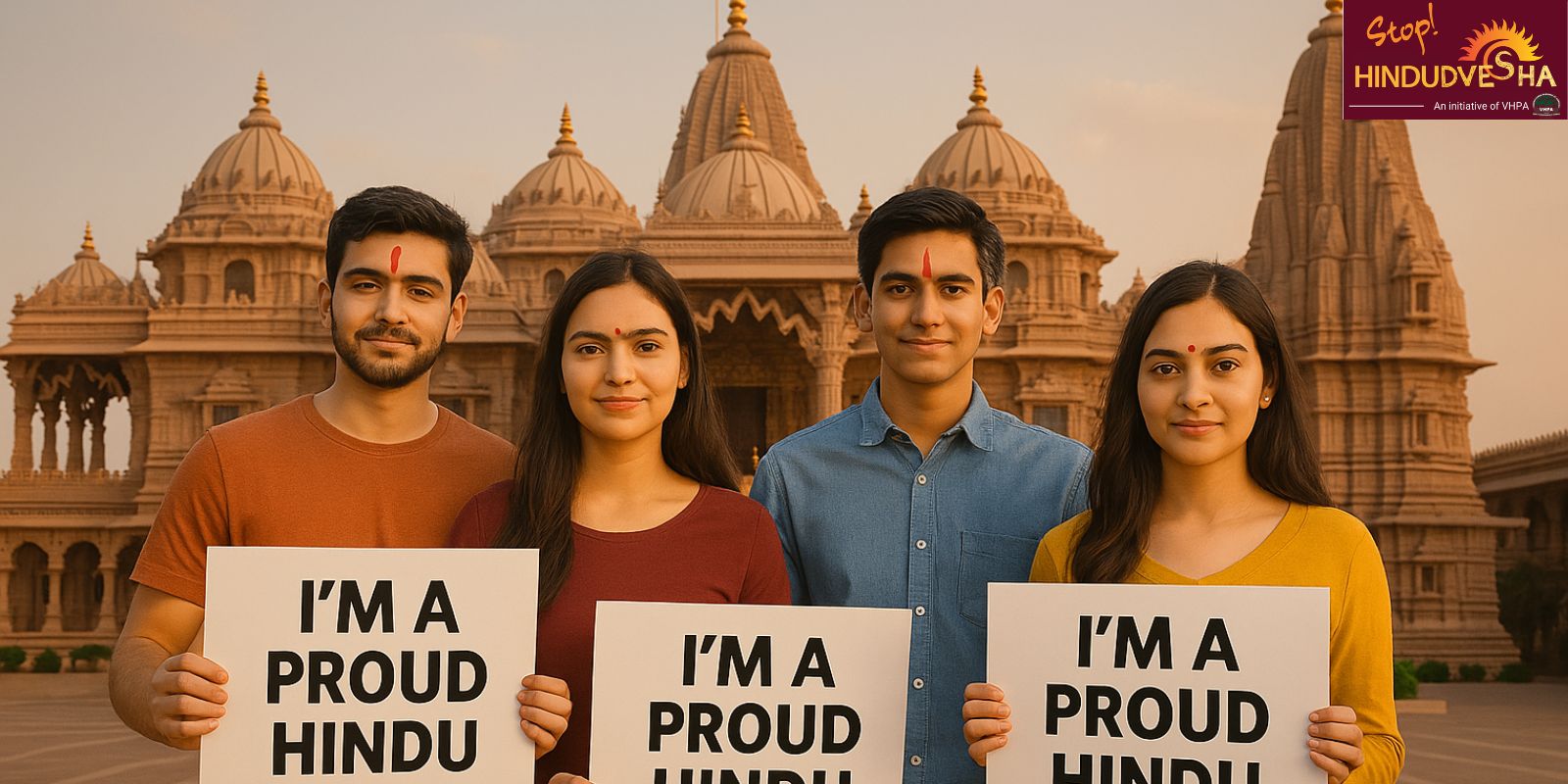
- As Hindudvesha (systemic Hinduphobia) reaches a tipping point, Hindus across the globe are uniting to confront and dismantle deeply entrenched colonial and left-liberal anti-Hindu narratives.
- A decade of building an alternative, Dharmic-centered discourse has empowered Hindus to speak out with renewed clarity and confidence on issues affecting their community.
- Global Hindu advocacy networks have emerged as powerful voices, actively spotlighting Hindu concerns and mobilizing international support.
- Embracing their civilizational identity, Hindus are proudly asserting their cultural roots and emerging as global ambassadors of Sanatani heritage.
- Through active social media engagement, Hindus are challenging hostile narratives and reclaiming space in the digital public sphere, transforming it into a vibrant front for cultural resistance.
यदा यदा हि धर्मस्य ग्लानिर्भवति भारत, अभ्युत्थानमधर्मस्य तदात्मानं सृजाम्यहम् ||
परित्राणाय साधूनां विनाशाय च दुष्कृताम्, धर्मसंस्थापनार्थाय सम्भवामि युगे युगे ॥
Whenever righteousness (Dharma) declines and unrighteousness (adharma) flourishes, I myself come forth to protect the good, destroy evil, and re-establish the path of dharma – Bhagwat Gita 4-7 and 8
In Hindu thought, time follows a cyclical pattern, and each Yuga, or era, reaches a critical point when the forces of evil begin to overshadow righteousness. The profound verses from the Bhagavad Gita remind us that, at such junctures, a restorative force inevitably emerges to challenge the imbalance and reestablish the moral order. The deeper message is that evil must never be endured in silence; instead, it should be actively resisted.
The current wave of global Hindu resistance and revival can be better understood through the lens of these verses. With anti-Hindu sentiment (Hindudvesha) reaching alarming levels, Hindus across the world are beginning to push back against colonial and left-liberal narratives that have long undermined their culture and civilization.
Vedic culture has faced continuous attacks for over a thousand years. Even after India’s independence, Hindus remained exposed to new forms of cultural domination through Westernization and neo-colonial ideologies. However, over the last decade or so, a major shift has taken place. Hindus are now organizing as a community, challenging long-standing narratives, and demanding meaningful change in response to the systemic Hinduphobia embedded in global institutions. This awakening is not just limited to India. Across countries like the U.S., U.K., Canada, and Australia, Hindus are actively confronting anti-Hindu bias while also coming together as a global community to address shared concerns.
This article will explore this growing Hindu resistance, its background, driving forces, and expanding global presence.
Global Hindu Resurgence
Hindus have been bearing the brunt of 200 years of European colonization of India, which gave rise to a wave of anti-Indic narratives crafted by Western scholars and so-called Indologists. These biased perspectives laid the foundation for much of the academic discourse on Hinduism in the West. Modern Western academia and think tanks continue to reinforce and propagate these narratives. Prominent academics such as Wendy Doniger, Sheldon Pollock, Michael Witzel, and Audrey Truschke have significantly shaped and spread these contemporary anti-Hindu viewpoints.[1]
Shaped by deeply entrenched colonial narratives, many Indians gradually became disconnected from their own rich cultural and civilizational heritage. In its place, a distorted form of secularism took root—one that prioritized minority appeasement while sidelining the majority’s identity. This environment created fertile ground for anti-Hindu narratives to thrive. It also enabled the rise of a powerful left-liberal establishment that actively promoted and normalized these narratives. By embedding itself within media, academia, and popular culture, this group successfully mainstreamed Hinduphobia to the point where even a simple expression of Hindu identity came to be seen as regressive, intolerant, or incompatible with modern ideals of equality and progress.
Then emerged wokeism, a potent blend of capitalism and far-left radicalism—that intensified anti-Hindu narratives. It brought together various self-identified victim groups under a single ideological umbrella, portraying “upper-caste Hindus” as the quintessential oppressors. In doing so, it effectively erased and distorted India’s traumatic colonial history, shifting the blame onto Hindus themselves and accusing them collectively of atrocities they never committed, thereby weaponizing identity politics to rewrite historical truths.
In Snakes in the Ganga: Breaking India 2.0, Rajiv Malhotra and Vijaya Viswanathan discuss the deliberate mapping of Critical Race Theory, which originated in Western academia, to the concept of caste in the Indian context. The authors further argue that Critical Race Theory is being forcefully applied to so-called upper caste Hindus to deliberately cast them as the ultimate oppressors, thus covertly responsible for all kinds of discrimination.
In recent years, Hinduphobia has reached a tipping point. The systematic targeting of Hinduism—ranging from the desecration and vandalism of temples in Western countries [2], the rise in anti-Hindu hate crimes, and the unequal treatment of Hindus under the Indian Constitution (such as state control of temples[3] and unchecked land acquisition by the Waqf Board)—has now reached a saturation point. Added to this are the persistent colonial-era narratives that belittle Hindu culture, the spread of anti-Hindu rhetoric by left-liberal and woke circles, increasing religious conversions, incidents of love jihad, and the ongoing persecution of Hindus in countries like Bangladesh. [4] [5]
Alarmed by this rising tide of pervasive anti-Hindu narratives and targeted aggression, Hindus across the world have begun to push back, reclaiming their identity and civilizational voice. Over the past decade, deliberate efforts have been made to create an alternative discourse rooted in the Dharmic worldview and reflective of India’s deep civilizational and cultural ethos. A defining moment in this resurgence has been the construction of the Ayodhya Ram Mandir, which marked a pivotal shift in the narrative. For years, Western media, academia, and think tanks portrayed the Hindu side as aggressors, pushing a distorted version of events suggesting that Hindu fanatics demolished a mosque to assert religious dominance. However, the 2019 Supreme Court judgment [6] and the subsequent inauguration of the Ram Mandir triggered a wide-scale reexamination of this misleading portrayal.
Simultaneously, there has been a noticeable shift in the Indian state’s approach toward Hindu Dharma. Hindu culture is now actively promoted, ancient temples are being renovated and restored, and Dharmic tourism is receiving significant support. These developments have played a vital role in the growing sense of unity and consolidation within the global Hindu community at this critical juncture.
Role of the Global Hindu Community
The global Hindu community has become increasingly proactive in highlighting issues affecting Hindus, both within India and around the world. International Hindu organizations have been at the forefront of condemning the ongoing persecution of Hindus in Bangladesh under the Yunus regime, amplifying these concerns on global platforms. Hindu advocacy groups across various countries have played a crucial role in raising awareness, informing policymakers, and mobilizing support for the plight of Bangladeshi Hindus in their respective regions.[7] [8]
Following the regime change in Bangladesh in August 2024, which led to Sheikh Hasina’s departure from the country, members of the global Hindu diaspora organized numerous peaceful protests to raise their voices against the ongoing persecution of Hindus. On August 11, 2024, a large group of South Asians gathered in California’s Bay Area to demonstrate solidarity with Bangladesh’s Hindu community. According to media reports, similar protests were held in several other U.S. cities, including Washington D.C., New York, Atlanta, Dallas, Houston, and Cleveland.[9]
The Canadian Hindu community also organized several such protests in solidarity. In August 2024, individuals from Hindu, Buddhist, Christian, and Jewish backgrounds came together in downtown Toronto to demand justice and raise awareness about the persecution of Hindus in Bangladesh.[10] In December 2024, members of the Canadian Hindu community held a protest outside the Bangladeshi Consulate in Toronto, calling for the protection of Hindus in Bangladesh. The protesters also urged the governments of India and Canada, along with the global community, to step up pressure on the Yunus regime to ensure the security and safety of Hindus and other minorities.[11] Many similar protests took place in countries like Australia[12], France[13], the UK[14], and, of course, India.[15]
Unfortunately, the Hindu minorities in Bangladesh have been subjected to acute discrimination and violence ever since the country came into being in December 1971, after a 9- month battle with West Pakistan (now Pakistan) in which an estimated 3 million people were killed and 2 million women raped, with 10 million Bengalis, having fled to India by November 1971, the majority of whom were Hindus.[16] During the Sheikh Hasina regime, the strengthening of India-Bangladesh relations led to some attempts to rein in the radical Islamic networks responsible for inciting anti-Hindu violence. However, hate crimes against Hindus remained a persistent issue even under her leadership. What has changed in recent years is the global Hindu community’s response —there is now a much more vocal, organized, and proactive stance on addressing and exposing such persecution. It’s perhaps for the first time since India gained independence that one is witnessing such large-scale consolidation of the Hindu community.
The Hindu diaspora is also playing an increasingly proactive role in influencing policymaking in their respective countries vis-à-vis Hindu issues. In 2023, Georgia became the first US state to officially recognize the existence of Hinduphobia or anti-Hindu hatred and prejudice.[17] In October 2023, California Governor Gavin Newsom vetoed a bill that would have made California the first US state to ban caste-based discrimination. The vetoing of this discriminatory bill was a major victory for the Hindu American community who had been fighting tooth and nail against the passing of such a Legislation.[18]
In a significant victory for the British Hindu community, British Hindu Labour Assembly Member Krupesh Hirani’s motion on Hinduphobia was passed unanimously at the London Assembly in November 2023. Hirani referred to the Crime Survey for Wales and England, which showed that Hindus were the second most likely religious community to have been victims of religiously motivated hate crime.[19] In Canada, Hindu advocacy groups have been raising their voice against the rising anti-Hindu hate crimes, including temple attacks perpetuated by Khalistani extremists.[20]
Similarly, the Hindus in India have become increasingly vocal about a wide range of issues affecting their community. Prominent among these are the demand for an end to state control of Hindu temples and concerns over the growing religious conversion of Hindus. Issues such as Love Jihad and Land Jihad have also sparked widespread debate and activism. There is a strong movement calling for the return of sacred pilgrimage sites like Ayodhya, Kashi, and Mathura to the Hindu community. Efforts are underway to reclaim lost temples and revive ancient Hindu heritage, as seen in Sambhal’s case.
Additionally, the community has been actively raising its voice against anti-Hindu violence in Bangladesh, the desecration of temples, increasing hate crimes, and attacks on Hindu processions during religious festivals. Another important issue being actively raised by the Hindu community is the continued glorification of Islamic invaders in the Indian education system. Many are calling for a comprehensive overhaul of history curricula to reflect a more accurate and balanced portrayal of India’s past, one that honors indigenous heroes and acknowledges the suffering endured during centuries of invasions and colonization.
Asserting Hindu Identity and Culture
Hindus the world over are increasingly asserting their cultural roots and becoming brand ambassadors of Sanatani culture. This marks one of the most significant paradigm shifts because when a community openly embraces its cultural heritage and confidently showcases it on the global stage, the negative narratives aimed at that community naturally begin to lose their impact and intensity.
In the West, showcasing the Bindi and Tilak as Sanatani symbols has evolved into a growing movement, with dedicated days celebrating their cultural significance. October 15th is now marked as International Bindi and Tilak Day, a tradition that began in 2021 through the efforts of Hindu organizations and individuals worldwide. Similarly, World Bindi Day is celebrated annually on the first day of Navratri.[21]
Such celebrations hold great significance in countering the anti-Hindu propaganda pushed by the left-liberal ecosystem. Cultural symbols like the Tilak and Bindi have long been soft targets—Bollywood, for instance, has often depicted villains with Tilaks, subtly vilifying the symbol. Meanwhile, the Bindi, traditionally worn by married women, is slowly disappearing, especially in urban India, partly due to its absence in modern portrayals of Indian women. In response, the global Hindu community is now reclaiming and asserting these cultural practices to actively challenge narratives that seek to undermine Indian culture.
The inauguration of the Ayodhya Ram Mandir signifies a historic turning point in the reclamation of Hindu civilizational and cultural identity. It represents a major paradigm shift in how Hindu issues are viewed—not just in India but globally. The temple’s construction stands as the culmination of a centuries-long struggle by Hindus to reclaim sacred sites lost during periods of Islamic invasions. According to media reports, the first legal case in the Ayodhya title dispute was filed nearly 140 years ago, with recorded legal proceedings dating back to 1858. [22] The Hindu diaspora around the world celebrated the inauguration with great enthusiasm, viewing it as the proverbial ‘Good over Evil’ victory.
In March 2024, the Vishwa Hindu Parishad of America (VHPA), along with its Canadian counterpart, organized the Shri Ram Rath Yatra, covering over a thousand Hindu temples across Canada and the US. [23] In August 2024, a float depicting the Ram Temple in Ayodhya joined the India Day Parade in New York. The showcasing of the Ram Mandir float marked a significant victory for the American Hindu community as the Indian American Muslim Council (IAMC), in connivance with various other groups, organized a smear campaign against the inclusion of the Ram Mandir float, labeling it an act of “bigotry” and “Muslim hate.”[24]
In summary, the Hindu community around the globe has been increasingly and proudly asserting its cultural and civilizational identity—whether by advocating for official recognition of festivals like Diwali in Western countries, pushing back against left-liberal narratives targeting Hindu traditions, reclaiming ancient heritage, or openly embracing and displaying symbols of Hindu identity.
Challenging Woke Leftist Narratives
Hindus are also becoming increasingly vocal in exposing anti-Hindu narratives pushed by the left-liberal ecosystem. Social media, especially platforms like X, has become a key space for Hindu resistance, where community members actively counter misleading narratives from left-liberal ideologues. This online pushback is especially significant in an era where social media shapes public opinion and often surpasses mainstream media in influencing perception.
As a case in point, a survey conducted by INSIGHT UK [25] sheds light on the perception of the British Hindu community regarding the British media coverage of Hindu issues. Amongst its many findings, the survey also discovered that more than 90 percent of the respondents considered the BBC to be the most inaccurate and biased in its coverage of Hindu issues, followed by 67 percent considering The Guardian to be the most biased. It also reported that the BBC and Guardian had the highest number of complaints raised against them by British Hindus.
The Hindu diaspora has also been successful in challenging woke narratives targeting the Hindu community in the West in the name of curbing caste discrimination and propagating dangerous and vicious anti-Hindu stereotypes.[26] In India, the Hindu community has been constantly challenging left-liberal narratives on Indian history, culture, civilization, etc., and propagating alternative Dharmic narratives in the process. Sambhal is an apt case study in this regard. The local Hindu community is playing a significant role in reviving the city’s Hindu heritage and challenging leftist and Islamist narratives in the process.
Similarly, there is a high degree of awareness amongst Hindus regarding phenomena like love jihad, fraudulent religious conversions, etc. As several Indian states have their own set of anti-conversion laws, Hindus no longer hesitate to file complaints regarding these incidents. In January, a special court in the Ambedkar district of Uttar Pradesh reportedly convicted a Christian couple under UP’s stringent anti-conversion law.[27] [28] Since the implementation of the Uttar Pradesh Anti-Conversion Law in 2020, a total of 835 cases have been registered and 1,682 individuals arrested under the Act as of July 31, 2024.[29]
Misleading narratives of Hinduphobic organizations like the Equality Labs [30] and Hindus for Human Rights [31] perpetuating anti-Hindu narratives in the name of protecting Hindu narratives are also being effectively exposed by the community.
Wrapping up
The Hindu community walks a precarious tightrope. Hindus in India bear the brunt of the politics of secularism and minority appeasement. Hindus in Islamic countries like Pakistan and Bangladesh live in perpetual fear for their life. The Hindu diaspora across the world, especially the Western countries, is accused of propagating the so-called “Hindu majoritarian ideology” of the Modi government if they assert their cultural roots and get vocal on Hindu issues.
Wokeism has created a vicious unified front against the Hindu community; an opportunistic alliance of global communists, Islamists, Khalistanis, etc. However, over the past decade, a significant paradigm shift has taken place, leading to the emergence of alternative Dharmic narratives. As a result, the Hindu community has gained newfound confidence and is now boldly challenging anti-Hindu left-liberal narratives while actively building a strong pro-Hindu discourse.
Citations
[1] The Case for India’s Digital Sovereignty; https://stophindudvesha.org/the-case-for-indias-digital-sovereignty/
[2] BAPS Shri Swaminarayan Mandir: VHP condemns California temple vandalism, urges US for strict action | India News – The Times of India; https://timesofindia.indiatimes.com/india/vhp-condemns-california-temple-vandalism-urges-us-for-strict-action/articleshow/118818240.cms
[3] State Control of Hindu Temples in India: A Historical Perspective; https://stophindudvesha.org/state-control-of-hindu-temples-in-india-a-historical-perspective/
[4]Hindu diaspora under attack: The rising trends of global Hinduphobia, attacks by Islamists and propaganda; https://www.opindia.com/2022/10/global-hinduphobia-attacks-hindus-islamists-leicester-worrying-trend/
[5] Rising Hinduphobia: Global Surge in Anti-Hindu Violence Raises Alarms; https://ddnews.gov.in/en/rising-hinduphobia-global-surge-in-anti-hindu-violence-raises-alarms/
[6] Ayodhya Title Dispute – Supreme Court Observer; https://www.scobserver.in/cases/m-siddiq-v-mahant-das-ayodhya-title-dispute-case-background/
[7] Protests erupt in Paris over anti-Hindu violence in Bangladesh; https://www.opindia.com/2024/08/protests-erupt-in-paris-over-anti-hindu-violence-in-bangladesh/
[8] ‘Stop violence on Bangladeshi Hindus’: Airline banner floats in New York city skyline – Times of India; https://timesofindia.indiatimes.com/world/us/stop-violence-on-bangladeshi-hindus-airline-banner-floats-in-new-york-city-skyline/articleshow/113925377.cms
[9] Hindu Diaspora Reacts To Bangladesh Violence; https://indiacurrents.com/bangladesh-hindu-violence-student-protestors-awami-leag/
[10] Canada: Thousands protest in Downtown Toronto over violence against Hindus in Bangladesh – World News – India TV; https://www.indiatvnews.com/news/world/canada-thousands-of-protesters-protest-in-downtown-toronto-over-violence-against-hindus-in-bangladesh-sheikh-hasina-latest-updates-2024-08-11-946377
[11] ‘Stop genocide’: Canadian Hindus stage protest outside Bangladesh consulate in Toronto – The Times of India; https://timesofindia.indiatimes.com/world/south-asia/stop-genocide-canadian-hindus-stage-protest-outside-bangladesh-consulate-in-toronto/articleshow/116194865.cms
[12] Australia: Hindus protest in Melbourne against the atrocities on minorities in Bangladesh;https://organiser.org/2024/12/23/270495/world/australia-hindus-protest-in-melbourne-against-the-atrocities-on-minorities-in-bangladesh/
[13] Protests erupt in Paris over anti-Hindu violence in Bangladesh; https://www.opindia.com/2024/08/protests-erupt-in-paris-over-anti-hindu-violence-in-bangladesh/
[14] Protesters Outside UK Parliament Condemn Violence Against Bangladeshi Hindus; https://www.ndtv.com/world-news/uk-bangladesh-unrest-protesters-outside-uk-parliament-condemn-violence-against-bangladeshi-hindus-6311475
[15] Protests in Noida, Ghaziabad over anti-Hindu violence in Bangladesh – India Today; https://www.indiatoday.in/india/story/protests-noida-ghaziabad-over-anti-hindu-violence-in-bangladesh-seeks-centres-action-2646722-2024-12-08
[16] 1971 Bengali Hindu Genocide – Hindu American Foundation; https://www.hinduamerican.org/1971-bangladesh-genocide
17] US: Georgia legislature passes resolution condemning Hinduphobia – The Economic Times; https://economictimes.indiatimes.com/news/international/world-news/us-georgia-legislature-passes-resolution-condemning-hinduphobia/articleshow/99159280.cms?from=mdr
[18] California Governor returns ‘unnecessary’, Hinduphobic bill SB403; https://www.opindia.com/2023/10/california-governor-gavin-newsom-returns-hinduphobic-bill-sb403-calls-it-unnecessary/
[19] Hinduphobia motion unanimously passed at the London Assembly – INSIGHT UK; https://insightuk.org/hinduphobia-motion-unanimously-passed-at-the-london-assembly
[20] Hindus in Canada protest against Khalistani attack on Brampton temple | World News – Hindustan Times; https://www.hindustantimes.com/world-news/hindus-in-canada-protest-against-khalistani-attack-on-brampton-temple-hindu-temple-attack-justin-trudeau-101730778110221.html
[21] Bindi and Tilak making a resurgence across India as symbols of Hindu renaissance; https://hindupost.in/dharma-religion/bindi-and-tilak-making-a-resurgence-across-the-world-as-symbols-of-hindu-renaissance/
[22] Ayodhya case: A brief history of India’s longest running property dispute – The Economic Times; https://economictimes.indiatimes.com/news/politics-and-nation/ayodhya-case-a-brief-history-of-indias-longest-running-property-dispute/articleshow/71988076.cms?from=mdr#
[23] VHP organises Shri Ram Rath Yatra across US, Canada; aims to connect with Hindu temples – Times of India; https://timesofindia.indiatimes.com/nri/us-canada-news/vhp-organises-shri-ram-rath-yatra-across-us-canada-aims-to-connect-with-hindu-temples/articleshow/108759684.cms
[24] Ram Mandir float joins India Day Parade in New York amidst protests; Indian diaspora celebrates unity and diversity; https://organiser.org/2024/08/20/252576/bharat/ram-mandir-float-joins-india-day-parade-in-new-york-amidst-protests-indian-diaspora-celebrates-unity-and-diversity/
[25] BBC and The Guardian most biased sources of news regarding Hindus and Bharat, says INSIGHT UK survey; https://hindupost.in/world/bbc-and-the-guardian-most-biased-sources-of-news-regarding-hindus-and-bharat-says-insight-uk-survey/
[26]In the US, caste being used as a ploy to soft-sell Hinduphobia – The Sunday Guardian Live; https://sundayguardianlive.com/opinion/in-the-us-caste-being-used-as-a-ploy-to-soft-sell-hinduphobia
[27] UP: Christian couple sentenced 5 years in jail for mass conversion of Dalits; https://www.opindia.com/2025/01/first-conviction-of-christian-evangelists-under-ups-anti-conversion-law-christian-couple-sentenced-to-5-years-in-prison-for-mass-conversion-of-dalits-read-the-court-verdict/
[28] Lucknow: Hindus protest against Christian conversion activities in Gomti Nagar church, locals say Christians buying land and houses at double price; https://www.opindia.com/2025/02/lucknow-hindus-protest-against-christian-conversion-activities-in-gomti-nagar-church/
[29] 835 cases, 1682 arrests: UP’s clampdown on unlawful religious conversions in four years; https://www.moneycontrol.com/news/india/up-anti-religious-conversion-law-yogi-adityanath-cases-arrest-12792399.html
[30] A discriminatory affair: How Dalit advocacy group Equality Labs portrays Hindu religion as irredeemable in US – Firstpost; https://www.firstpost.com/opinion/a-discriminatory-affair-how-dalit-advocacy-group-equality-labs-portrays-hindu-religion-as-irredeemable-in-us-12440202.html
[31] HfHR asks London’s Mayor to ‘cut off all ties’ with Hindu institutions in UK that helped organise Diwali event; https://www.opindia.com/2024/10/anti-hindu-hindus-for-human-rights-with-ties-to-islamists-calls-on-londons-mayor-to-cut-off-all-ties-with-hindu-institutions-that-helped-organise-diwali-event/

Donate to HINDUDVESHA
Our Mission is to explore and expose Hindudvesha through research analysis, education and response.
SUPPORT US