

Safeguarding Hindu Dharma: The Growing Demand for a National Sanatan Board
 Rati Agnihotri · 11/14/2024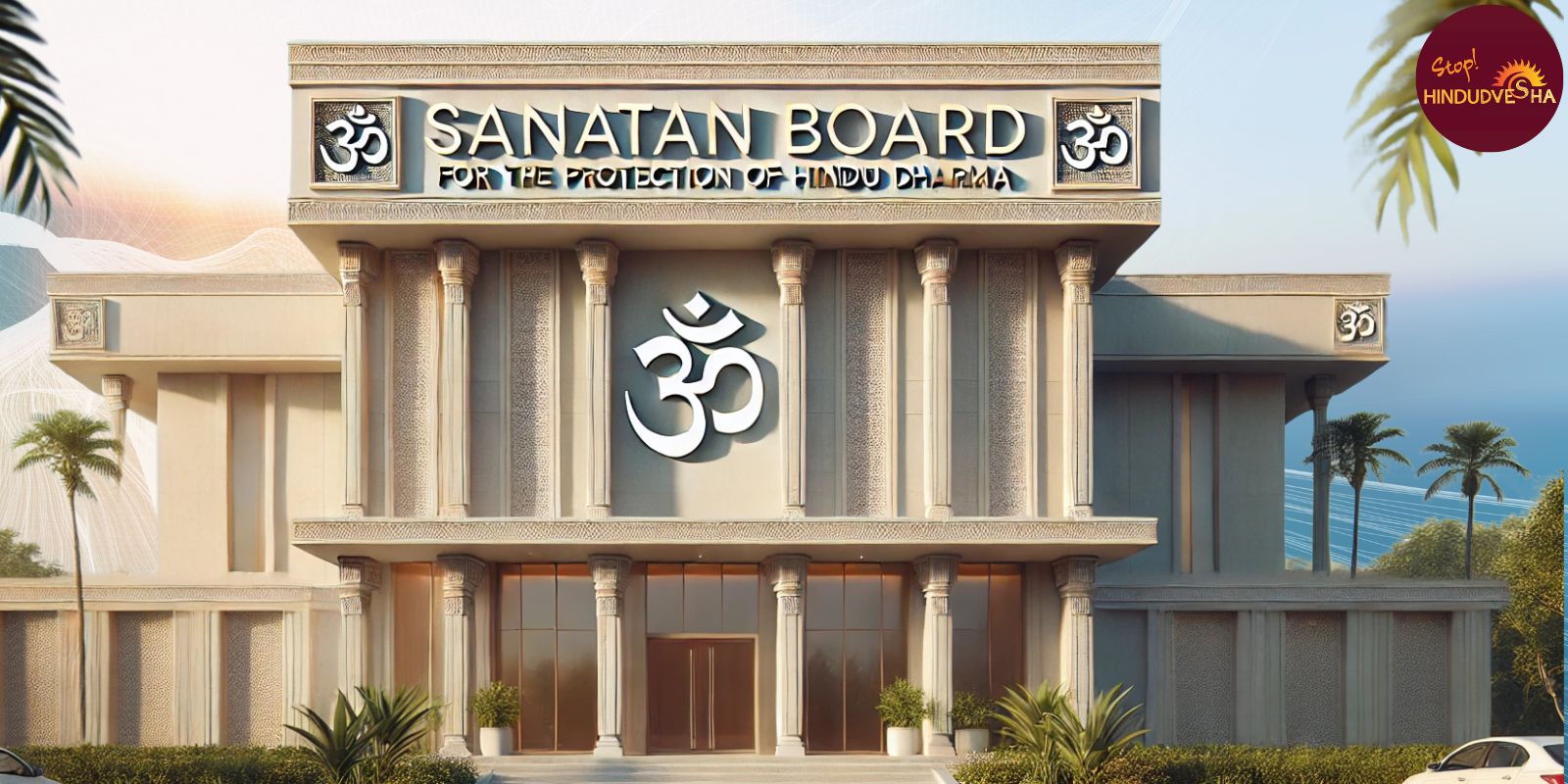
- The call for a Sanatan Board to protect and preserve Hindu values and culture is gaining momentum, particularly amid recent debates on the Waqf (Amendment) Bill.
- Hindu spiritual leaders advocate for a concept similar to the Waqf Board to protect temple lands from mismanagement and encroachment.
- Various Hindu organizations are set to discuss the Board’s formal structure and activities at the Dharma Sansad in Delhi on November 16, 2024.
- While media coverage often frames the Sanatan Board demand as a response to the Waqf Board, it is, in fact, an independent call for an organizational structure to safeguard Hindu rights, identity, and Sanatan Dharma.
- This demand holds significant importance, especially given the global challenges facing Hindus, including intimidation, persecution, and fraudulent religious conversions.
Secularism for All Except Hindus
Following the recent Tirupati Prasadam adulteration row over the alleged presence of traces of pig fat, beef fat, and fish oil in the Prasadam Laddus, the Deputy Chief Minister of Andhra Pradesh Pawan Kalyan called for the establishment of a National Sanatana Dharma Rakshana Board. Addressing Varahi Sabha in the temple town of Tirupati in September 2024, he called for establishing a Sanatan Dharma Protection Board at both the national and state level to safeguard the principles of Sanatan Dharma and ensure its preservation. Pawan Kalyan further emphasized that it is high time that secularism be upheld in a manner that guarantees a uniform response to threats against any religion. He also suggested that a Sanatan Dharma certification system be adopted and implemented to ensure the purity of ingredients used while preparing Prasadam at temples. [1] [2]
Hindu organizations have consistently raised the demand for an overarching organizational framework to protect the rights and interests of Hindus and preserve Hindu Dharma and culture over the past couple of years. Prominent Hindu organizations like the VHP and RSS have repeatedly demanded that the control of Hindu temples be handed back to the community and that secular governments have no business in running religious institutions.[3] These organizations have also repeatedly warned Indians against the external and internal threats being posed to Sanatan Dharma and the need for Hindus to get together to protect their identity and culture.[4] Recently, calls for a Sanatan Dharma Board have gained media attention, partly due to the timing of the Waqf Amendment Bill controversy. This bill, currently under review by a Joint Parliamentary Committee, aims to regulate the powers of the Muslim Waqf Board.
There have been numerous recent instances of the Waqf Board claiming temple land in India. In August 2024, the Board staked its claim on a 1,500-year-old Chola temple in a Tamil Nadu village. The matter was also reportedly raised in the Parliament by India’s Minister for Minority Affairs, Kiren Rijiju, during the discussion on the Waqf (Amendment) Bill. [5] In the city of Mysore in Karnataka, the Waqf Board has claimed ownership of land belonging to the Sri Chikkamma Chikkadevi Temple in Mahadevapura. [6] While the Waqf Board claiming lands against Hindu religious institutions is nothing new, the recent intensification of such cases has sparked a broader conversation on secularism. The media spotlight on these claims has led to growing resentment among Hindus, who see these actions as symptomatic of a secularism that is blatantly biased against their interests.
A recent OpIndia report highlights how the fears of the Waqf Board occupying Hindu temples and houses led to clashes between two sides in a local village.[7] In response to the Waqf Board’s widespread claims over Hindu temple lands, voices within the Hindu community calling for the creation of a Sanatan Board have grown notably stronger. Prominent Hindu storyteller Shri Devkinandan Thakur has become a leading voice calling for a Sanatan Board to protect Hindu temple lands. He warns Hindus plainly that without a constitutionally protected body like the Waqf Board to safeguard Hindu temples, soon there might be very little land left beyond Waqf’s control in India.[8]
The demand for a Sanatan Board is an independent call, not merely a reaction to the Muslim Waqf Board. However, it highlights the stark contrast between the organizational power of minority religious groups in India—who manage their lands and often claim lands of majority religious institutions—and the organizational limitations faced by the Hindu community, despite being the majority. This contrast underscores the need for a board to effectively protect Hindu temples and lands.
Given this context, it’s unsurprising that the Indian media often frames the call for a Sanatan Board as a majority vs. minority issue. This portrayal underscores the precarious position of India’s Hindu majority, who frequently face accusations of intolerance simply for seeking an organizational structure to protect their temple lands, culture, and heritage.
Sanatan Board Debate – A Hindu Resurgence in the Making
The call for a Sanatan Board by Hindu leaders, activists, and stakeholders comes at a crucial time for preserving Hindu culture and identity in the face of global challenges. Devkinandan Thakur has announced a Hindu Dharma Sansad in Delhi on November 16, where issues affecting the Hindu community—such as love jihad, cow slaughter, and reclaiming Shri Krishna’s birthplace—will be discussed. Thakur also emphasized that the need for a Sanatan Board will be raised[9], envisioning it as a body led by Shankaracharya and religious leaders, free from bureaucratic or political interference. He encouraged Hindus to gather in large numbers at the Dharma Sansad, where prominent Dharmic and spiritual leaders will deliberate on the Board’s structure and role in safeguarding Hindu interests. [10]
Prominent Hindu leader Dhirendra Shastri has also called for a ‘Sanatani Hindu Board.’ Known for his firebrand style oratory, Shastri argued it’s time to curb forces conspiring against Hindu society. He emphasized the need for a board similar to the Waqf Board to protect Hindus’ religious, social, and cultural rights. [11]
The demand for a Sanatan Board is also gaining momentum within the broader Hindu community, with prominent figures supporting this organizational structure. Notably, two-time National Award-winning film producer Abhishek Agarwal, known for films like The Kashmir Files and Karthikeya 2, has advocated for a board to protect Hindu Dharma. In an interview with PTI, Abhishek Agarwal stressed the need for a Sanatan Board to prevent mismanagement and encroachment on temple funds and lands, ensuring the protection of these properties. He suggested the Board be responsible for promoting and preserving Hindu rituals, traditions, and culture, with members from Hindu organizations like VHP and RSS, along with Hindu scholars, activists, and Dharmacharyas. Agarwal emphasized that the Board must have constitutional validity and protection rather than being a voluntary or informal body.[12]
Hindu organizations in Chhattisgarh have also stepped up the demand for forming a Sanatan Board to protect and preserve Hindu Dharma and culture. Various Hindu organizations recently held a peaceful demonstration in the capital, Raipur, demanding the constitution of a Sanatan Board at the state level. The demonstration witnessed the participation of Hindu spiritual leaders and activists from VHP, Bajrang Dal, Sarv Hindu Samaj, etc.[13] As highlighted in a previous article by Hindudvesha, the Tirupati Prasadam adulteration controversy became a catalyst for awakening Hindu consciousness. Dharmic and spiritual leaders, along with activists within the Hindu community, used this moment to advocate for freeing Hindu temples from state control.[14]
While the general Hindu public has not been overwhelmingly enthusiastic about creating a Sanatan Board, this is largely due to a lack of awareness. As Dharmic and spiritual leaders continue to amplify the demand and with increased coverage through television debates and social media, it’s hoped that the broader Hindu community in India will soon be energized to support this cause.
In February 2023, BJP leader Sadhvi Pragya Singh Thakur expressed her support for the Sanatan Board issue. She said that the temple ecosystem should look after the health and education of Hindu children and that temple funds should be further used to construct new temples. If all this can be accomplished better through an organizational structure like the Sanatan Board, then such a Board should certainly be constituted, she added.[15]
In July 2023, members advocated for creating a Sanatan Board at the annual Shri Sanatan Dharm Sabha Jammu & Kashmir meeting in Jammu. They discussed initiatives to promote Sanatan values and culture, emphasizing the importance of organizing Kathas (storytelling sessions based on Hindu epics) and Dharmic Yatras (religious pilgrimages) to uplift Hindu society. The Sabha also underscored the role of Gou Raksha Samiti (Cow Protection Committee) and Gaushalas (cow shelters) in safeguarding Gau Mata (the revered cow). They appealed to the Union Territory and central governments to establish a Sanatan Board to protect Sanatan values.[16]
The concept of forming a Sanatan Board was proposed in 2021, but progress has stalled due to differing views within the Hindu community. While many support the idea, critics argue that an external organizational structure would compromise Sanatan Dharma’s self-sustaining nature. They believe Hinduism’s inherent plurality would be undermined, as various sects may struggle to unite under a single vision promoted by the Board.[17] [18]
Current media coverage of the demand for a Sanatan Board is primarily framed in comparison to the Islamic Waqf Board. While these comparisons bring greater visibility to the issue, viewing the Sanatan Board solely as a counterpart to the Waqf Board oversimplifies its significance. With ongoing attention to the Waqf Bill (Amendment), drawing parallels certainly helps gain media traction, and Hindu spiritual leaders may be highlighting this angle to boost awareness. However, Hindu issues shouldn’t always be reduced to a majority vs. minority framework, though India’s brand of secularism often pressures Hindus into such positioning by limiting their religious rights.
Regardless of the Waqf Board analogy, establishing a Sanatan Board remains crucial to protecting Hindu rights, culture, and identity. This is not merely a symbolic matter; with the ongoing persecution of Hindus in countries like Pakistan and Bangladesh and the increasing targeting of Hindu minorities in Western nations like Canada, protecting Sanatan Dharma is now essential. A Sanatan Board would help consolidate Hindu efforts to preserve their heritage and ensure fair treatment and representation in India and abroad.
How a Sanatan Board Could Protect Hindu Interests
What powers and responsibilities should it have if a Sanatan Board were established at the national level through an Act of Parliament? What should its core agenda be?
These questions naturally arise as we consider the formation of a Sanatan Board. The call for an organizational structure to protect and preserve Hindu Dharma is gradually gaining momentum, evolving into a nationwide movement. Demands for such a Board are surfacing nationally and within various states. Although there isn’t yet a unified structure guiding these efforts, this should not detract from the issue’s importance. While there is no fully defined agenda for the Board’s powers and scope, there is broad agreement that its primary goal should be safeguarding Hindu rights and culture and advocating for their concerns.
The most widely discussed model for the Sanatan Board, advocated by Hindu spiritual leader Devkinandan Thakur, envisions a body to manage and protect temple lands. Such a Board could offer a viable alternative to state control over Hindu temples, providing a framework for Hindus to manage their religious sites independently. Additionally, prominent Hindu organizations like the VHP and RSS have long supported the Free Temples Movement at the grassroots level, working toward this goal for decades. Establishing a Sanatan Board could, therefore, be a significant step toward self-management for Hindu temples.[19] [20] Thus, the demand for a Sanatan Board could further strengthen the Free Temples Movement, potentially paving the way for legislation to liberate Hindu temples from state control. Hindudvesha has published a series of articles exploring the issue of temple governance in India. For those interested in learning more about the efforts by Hindu organizations to achieve temple autonomy, the final article in this series is available on the Hindudvesha website.[21]
Some envision a Sanatan Board with a broader mandate, establishing guidelines for administering Hindu religious events and festivals, possibly through initiatives like Sanatan Certification. Many also advocate for the Board to proactively protect, preserve, and promote Sanatani values, culture, beliefs, and knowledge. Additionally, there’s a call for it to serve as an umbrella organization supporting Hindu families in impoverished circumstances. This expanded vision goes beyond comparisons with the Waqf Board, whose primary role is land ownership. Although a detailed discussion on the Sanatan Board’s legal framework is outside this article’s scope, an initial framework for its structure and activities is expected to be outlined at the Dharma Sansad in Delhi on November 16th.
The Sanatan Dharma Board could provide Hindu Dharma with an organizational structure it currently lacks without interfering with the ritual practices or traditions of various sects. Its role could focus on overseeing that funds donated by Hindus to religious institutions are directed toward the welfare of the Hindu community. In today’s climate, where Hindu rights are often compromised globally due to the absence of a unified voice, such a Board could significantly strengthen Hindu rights. Additionally, it could serve as an influential pressure group, increasing political visibility for Hindu issues.
Wrapping Up
The global “woke” ecosystem often employs tactics to shame Hindus who bring Hindu issues into the public sphere, creating a false dichotomy between Hinduism and Hindutva. This division, propagated by the “Hinduism vs. Hindutva” narrative, has misled many educated Hindus into feeling that advocating for Hindu issues is bigoted or non-secular. An example of this anti-Hindu bias is the “Hindutva Harassment Field Manual,” a website created by North America-based academics from the South Asia Scholar Activist Collective (SASAC). The site claims to warn readers of the supposed dangers of Hindutva but instead spreads propaganda against Hindu Dharma by defining Hindutva in a way that aligns with their agenda. This contributes to a larger trend of anti-Hindu narratives by falsely contrasting Hindutva with Hinduism.[22]
Such an ecosystem will inevitably oppose any attempt by Hindus to formally and politically organize as an interest group. As the Sanatan Board issue gains traction and more visibility in the media, expect a surge of “woke” critiques accusing Hindus of divisiveness and communalism for advocating for their interests. However, it’s crucial for Hindus to recognize that organizing to seek representation for their issues is neither non-secular nor disrespectful to any religion. Like any other community, Hindus have the right to safeguard their interests and ensure their voices are heard.
It would be perhaps apt to end with these lines by the American author and researcher Stephen Knapp, who is well known for his writings on Vedic culture and spirituality. In this write-up featured on his website, he lays out “An Action Plan for the Survival of Vedic Culture”:
This plan is not intended to be all inclusive. Other ideas and refinements can be suggested, added and implemented. Nonetheless, it is a start toward a cohesive strategy to preserve what is left of the Vedic culture in which all Hindus and devotees can participate in some way. If we do not take this seriously, others certainly will because that is their goal, to take over or convert all of Hindus to something else. They are not so relaxed about it as Hindus seem to be. They are much more aggressive. It is natural that Hindus may feel that all religions are paths to God, and thus deserve their freedom to exist. The problem is that not all other religions feel the same way, and have numerous members who view Hinduism as something that should be eliminated.[23]
Citations
[1] Enact Act, set up board to protect Sanatana Dharma: Dy CM Pawan Kalyan; https://www.newindianexpress.com/states/andhra-pradesh/2024/Oct/04/enact-act-set-up-board-to-protect-sanatana-dharma-dy-cm-pawan-kalyan
[2] Andhra Pradesh: Pawan Kalyan calls for ‘Sanatana Dharma Protection Board’ to safeguard traditions – India Today; https://www.indiatoday.in/india/andhra-pradesh/story/pawan-kalyan-sanatana-dharma-protection-board-hindus-andhra-pradesh-janasena-2610843-2024-10-03
[3] Tirupati laddu row: VHP demands control of Hindu temples to be given to society to safeguard sentiments of believers – The Hindu; https://www.thehindu.com/news/national/tirupati-laddu-row-vhp-demands-control-of-hindu-temples-to-be-given-to-society-to-safeguard-sentiments-of-believers/article68664354.ece
[4] RSS chief Mohan Bhagwat lays stress on protection of Sanatan Dharma – Hindustan Times; https://www.hindustantimes.com/cities/lucknow-news/rss-chief-mohan-bhagwat-lays-stress-on-protection-of-sanatan-dharma-101730916929221.html
[5] Tiruchendurai village in Tamil Nadu fights Waqf Board claim on their land, Chola era temple – India Today; https://www.indiatoday.in/india/tamil-nadu/video/tiruchendurai-village-in-tamil-nadu-fights-waqf-board-claim-on-their-land-chola-era-temple-2588051-2024-08-26
[6] New row erupts in Mandya over Waqf Board claims – Star of Mysore; https://starofmysore.com/new-row-erupts-in-mandya-over-waqf-board-claims/
[7] Karnataka: Fears of Waqf board occupying Hindu temples and houses lead to clashes; https://www.opindia.com/2024/11/karnataka-fears-of-waqf-board-occupying-hindu-temples-and-houses-lead-to-clashes/
[8] वक़्फ़ बोर्ड की तरह बने सनातन बोर्ड…कथावाचक देवकीनंदन ठाकुर ने रखी माँग, सपोर्ट में आये बृजभूषण सिंह – devkinandan thakur demands sanatan board amidst waqf board controversy brij Bhushan singh; https://navbharattimes.indiatimes.com/metro/lucknow/politics/devkinandan-thakur-demands-sanatan-board-amidst-waqf-board-controversy-brij-bhushan-singh-supported/articleshow/114630709.cms
[9] दिल्ली में जुटेंगे सनातनी! 16 नवंबर को धर्म संसद, लव जिहाद से गौहत्या तक होंगे चर्चा के ये एजेंडे | Republic Bharat; https://www.republicbharat.com/india/sanatan-dharma-sansad-on-16-november-in-delhi-devkinandan-thakur-said
[10] Spiritual Guru Devkinandan Calls Dharma Sansad in Delhi as Sanatan Board Proposal Gains Momentum | Republic World; https://www.republicworld.com/india/spiritual-guru-devkinandan-calls-dharma-sansad-in-delhi-as-sanatan-board-proposal-gains-momentum
[11] बागेश्वर बाबा का बड़ा बयान: वक़्फ़ बोर्ड हो सकता है, तो हिंदू बोर्ड क्यों नहीं?; https://panchjanya.com/2024/09/25/356295/bharat/bageshwar-baba-big-statement-if-there-can-be-a-waqf-board-then-why-not-a-hindu-board/
[12] Two Times National Award Winner film Producer Abhishek Agarwal Champions the Formation of the Sanatan Board to Protect Sanatan Dharma; https://www.ptinews.com/press-release/two-times-national-award-winner-film-producer-abhishek-agarwal-champions-the-formation-of-the-sanatan-board-to-protect-sanatan-dharma/1835510
[13] छत्तीसगढ़ में सनातन बोर्ड के गठन की माँग, हिंदू संगठनों ने सीएम साय को सौंपा ज्ञापन – formation of Sanatan Board; https://www.etvbharat.com/hi/!state/demand-for-formation-of-sanatan-board-hindu-organizations-protest-in-raipur-on-tirupati-laddu-controversy-chhattisgarh-news-cts24100108584
[14] Tirupati Prasadam Controversy: Hindu Apathy to Tradition Attacks; https://stophindudvesha.org/tirupati-prasadam-controversy-hindu-apathy-amid-blatant-attacks-on-their-traditions/
[15] Bjp mp said Sadhvi Pragya Singh Thankur Sanatan Board should be made for Hindu also reacts on Waqf Board सनातन बोर्ड बनाना चाहिए, बोलीं प्रज्ञा ठाकुर – वक़्फ़ बोर्ड किसी की भी ज़मीन ले लेता है, मध्य प्रदेश न्यूज़; https://www.livehindustan.com/madhya-pradesh/story-bjp-mp-said-sadhvi-pragya-singh-thakur-sanatan-board-should-be-made-for-hindu-also-reacts-on-waqf-board-7773962.html
[16] Sanatan Dharm Sabha seeks ‘Sanatan Board’ – Daily Excelsior; https://www.dailyexcelsior.com/sanatan-dharm-sabha-seeks-sanatan-board/
[17] What is the importance of the Sanatana Board these days?; https://hindupost.in/education/what-is-the-importance-of-the-sanatana-board-these-days/
[18] Why Is Sanatana Board An Absolute Necessity Now?; https://thecommunemag.com/why-is-sanatana-board-an-absolute-necessity-now/
[19] VHP vows to free temples from govt control; https://www.deccanherald.com/india/vhp-vows-to-free-temples-from-govt-control-3204968
[20] RSS gives ‘Chalo Vijayawada’ call to free temples from State’s clutches – The Hindu; https://www.thehindu.com/news/national/andhra-pradesh/rss-gives-chalo-vijayawada-call-to-free-temples-from-states-clutches/article68825200.ece
[21] The Battle for Hindu Temples: Rise of the Free Temples Movement; https://stophindudvesha.org/the-battle-for-hindu-temples-mobilizing-the-free-hindu-temples-movement/
[22] Hindutva Harassment Field Manual; https://www.hindutvaharassmentfieldmanual.org
[23] An Action Plan for the Survival of Vedic culture; https://www.stephen-knapp.com/action_plan_for_survival_of_Vedic_culture.htm

Donate to HINDUDVESHA
Our Mission is to explore and expose Hindudvesha through research analysis, education and response.
SUPPORT US