

Rediscovering the Swastika’s Place in Jewish History Before Its Hijacking
 Stop Hindudvesha · 05/18/2020
While the swastika has come to be a hated symbol in modern times due to its mistaken association with Hitler’s antisemitism, its actual history tells a very different story. These perspectives show that the swastika once appeared in Jewish manuscripts, synagogues, and early Zionist imagery, long before it was distorted by the Nazi Hakenkreuz. They also highlight modern interfaith efforts in which Jewish, Hindu, and Buddhist communities collaborate to explain the symbol’s ancient meaning of peace, prosperity, and continuity. By recounting its once-positive presence in the West, these sources underscore the need for contextual education to restore clarity to this misunderstood symbol.
Elder of Ziyon. “A Swastika in a Jewish Newspaper—100 Years Ago.” Blog. January 3, 2022. https://elderofziyon.blogspot.com/2022/01/a-swastika-in-jewish-newspaper-100.html.
This article from the popular Jewish educational platform explains that the swastika is an ancient symbol found in numerous cultures, including Judaism, dating back thousands of years. It appeared on ancient synagogues, Jewish manuscripts, and even early Zionist coins. The author emphasizes that the symbol originally signified luck and eternity. The Nazi adoption of the tilted, black Hakenkreuz (“hooked cross”) in the 1920s permanently tainted the ancient swastika in Western eyes. The piece stresses the critical distinction between the millennia-old religious/cultural swastika and the Nazi emblem while acknowledging the pain the image now causes many Jews.
US Holocaust Memorial Museum
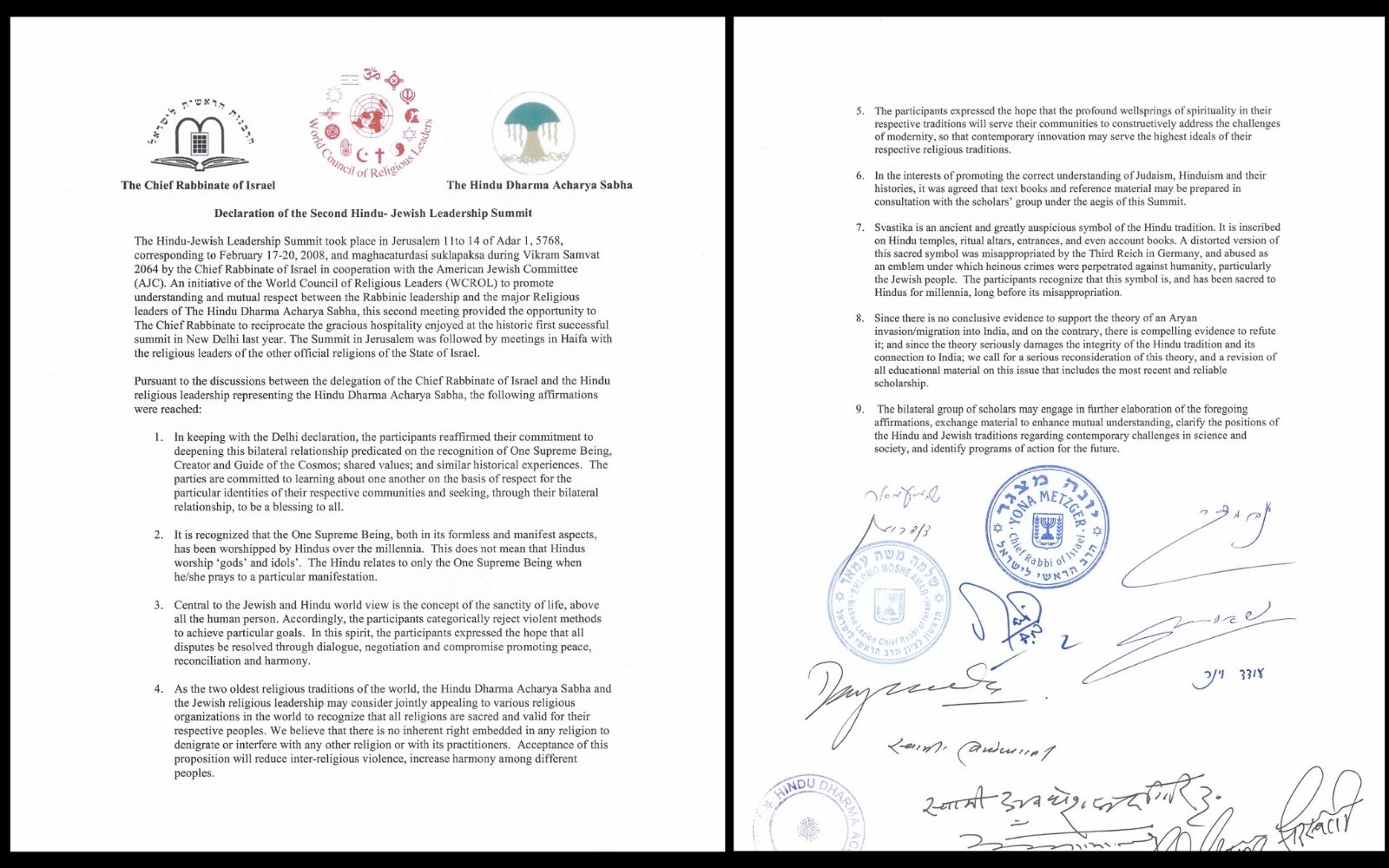
Declaration of the Second Hindu-Jewish Leadership Summit
The Jewish perspective on the Swastika has evolved through meaningful interfaith engagement, most notably during the Second Hindu–Jewish Leadership Summit held in Jerusalem from February 17–20, 2008. Convened by the Chief Rabbinate of Israel in cooperation with the American Jewish Committee and the Hindu Dharma Acharya Sabha, the summit brought together senior rabbis and major Hindu religious leaders. Their discussions emphasized mutual respect, historical clarity, and the need to distinguish the sacred Hindu swastika from the Nazi Hakenkreuz. Item 7 in their joint declaration made it very clear that the Swastika is a sacred symbol for Hindus, Buddhists, Jains, and many other faiths, and that it is distinctly different from the hated Nazi symbol of Hakenkreuz.
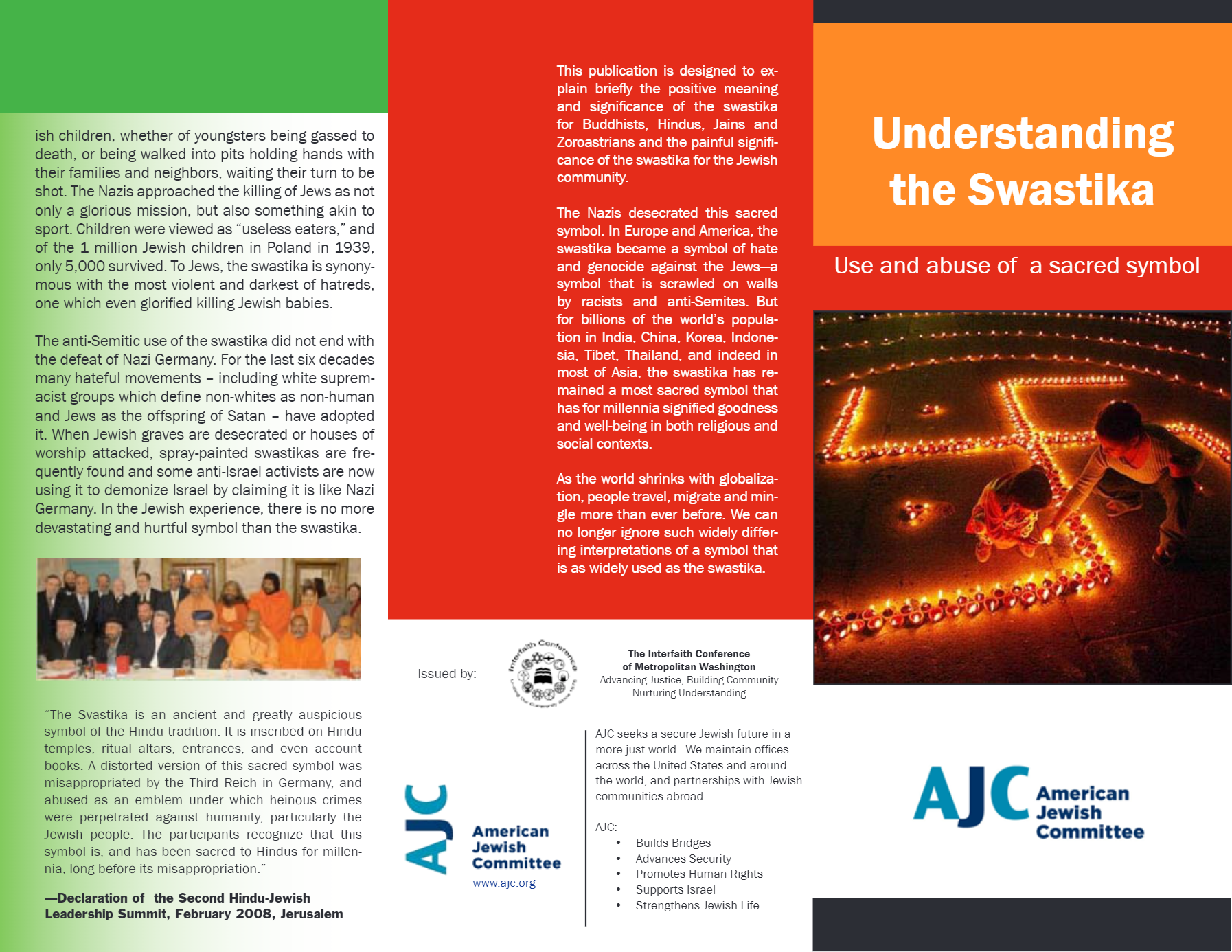
American Jewish Committee’s Position on the Swastika
The American Jewish Committee has acknowledged that the Swastika is a sacred, ancient symbol for Hindus, Buddhists, Jains, and many other communities, and that its confusion with Hitler’s Hakenkreuz is historically inaccurate. Their position paper encourages a clearer understanding and careful distinction to support respectful interfaith dialogue.


Donate to HINDUDVESHA
Our Mission is to explore and expose Hindudvesha through research analysis, education and response.
SUPPORT US