

Rediscovering Hinduism: Divya Jain’s Spiritual Journey of Conversion and Reversion
 Dr. Jai G. Bansal · 10/27/2024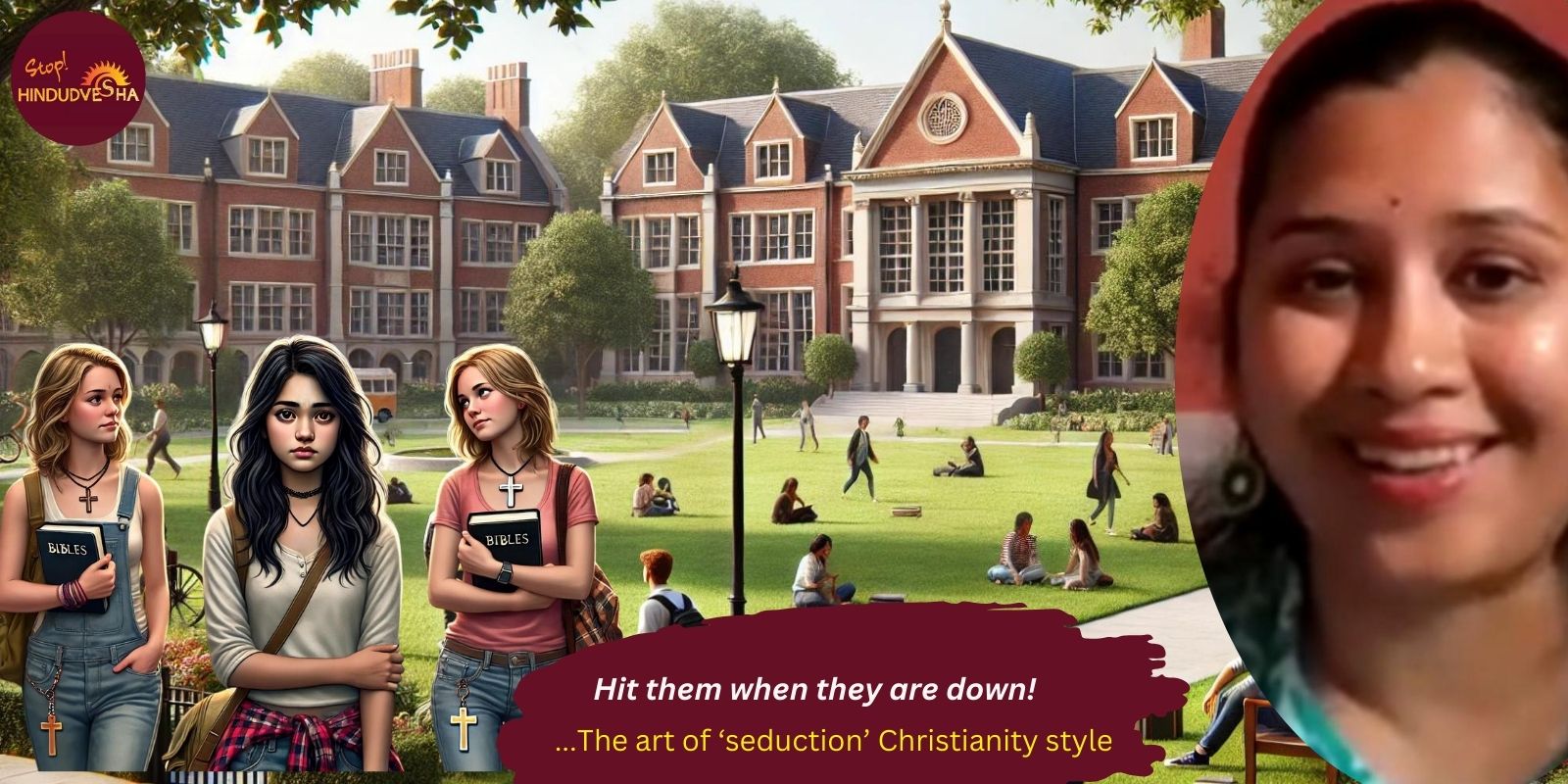
- Divya Jain discussed her childhood in a Dharmic household in India, highlighting her family’s strong cultural and spiritual practices.
- She shared her experience of converting to Christianity during her college years in the U.S., influenced by loneliness and a welcoming Christian community.
- Despite being deeply involved in Christianity, she faced internal conflicts and doubts about abandoning her Dharmic roots, influenced by both her family’s and friends’ logical arguments.
- Divya explained her decision to return to Sanatana Dharma in 2020, which was driven by her realization of cultural dissonance and her desire to raise her child with Dharmic values.
- Post-reconversion, Divya emphasized the importance of organized educational programs, community involvement, and advocacy to preserve and promote Hinduism.
Divya Jain is a Biotech professional and mother of two girls. She is originally from Indore, Madhya Pradesh, India, and is currently living in Detroit, Michigan. She comes from a Sanatan Dharma household, but during her college years, she converted to Christianity and then made a homecoming to Sanatan Dharma. She has been deeply involved in Hindu advocacy for the last four years. She is a board member of the Hindu Community Relations Council, an executive committee member of HinduACTion, and a volunteer with HSS.
This write-up is based on her conversation on our Dharma Explorers platform. A complete video recording of the interview can be found here.
Please tell us a bit about your upbringing, your family, and the Dharmic atmosphere in your household.
I was born in Sagar, Madhya Pradesh, but my family eventually moved to Indore. Both of them worked as public servants for the Madhya Pradesh government—my mother was a Sanskrit teacher, and my father was a geologist. They are both retired now, and our family had a simple, middle-class lifestyle.
My mother, despite being a working woman, always made sure to cook fresh meals for us. We adhered to a Jain vegetarian diet and avoided eating outside for religious and health reasons. Though I grew up in a nuclear family, our extended family was very close. Even though we didn’t live under one roof, we maintained strong family connections.
My mother was quite ritualistic, regularly performing religious ceremonies and practices. My father was more inclined towards spirituality through yoga. He didn’t participate much in temple visits or rituals but focused on his yoga practice as his form of spiritual discipline.
In our home, traditional remedies were the first line of treatment. Ayurvedic medicines were preferred over modern medical treatments whenever possible. My father maintained a vast collection of herbs and medicinal plants at home, a tradition that continues even now. Whenever I visit India from the United States, my parents ensure I return with a supply of these herbs. This tradition has been passed down through generations; I now use these remedies for my own children, appreciating their value and the legacy they represent.
Reflecting back, I realize how deeply ingrained these practices are in our family. My parents learned from their parents, and now I am passing this knowledge on to my children. This continuity of tradition and values defines our family.
Despite your mother’s strong Dharmic influence, what made you susceptible to converting? Were you not deeply rooted in your original beliefs, or did you have doubts?
Growing up, I had many questions, much like my daughters do now. Reflecting on my childhood, I realize I wasn’t deeply connected to any Hindu organization. Although my parents attended local religious gatherings and participated in temple activities, there wasn’t a formal system of education in place for me.
We lived quite far from the Jain Pathshala, and my parents might not have recognized the importance of traditional education. Now, I understand how crucial these systems are in shaping children’s perspectives. This realization has led me to enroll my children in such programs and plan to continue their education through organized systems from kindergarten to 12th grade, ensuring they have a strong foundation in our cultural and religious teachings.
Despite my mother’s Ph.D. in Jainism, there was a communication gap. I didn’t fully understand rituals and temple visits, highlighting the need for organized educational programs. While home is fundamental in this process, formal systems ensure that children understand and appreciate their heritage fully, complementing what they learn at home.
What was the conversion process like? How did they approach you and convince you to change your beliefs?
Reflecting on my journey, I realize it started long before I arrived in the United States. Growing up, I had many questions about cultural and religious identities, particularly during my college years in India. Colleges often serve as breeding grounds for ideological shifts, and mine was no different. I began questioning whether Western culture was superior to my own Dharmic upbringing.
In 2011, I moved to the United States to pursue an MS in Biotechnology at the University of Texas, San Antonio. The cultural shock was immense, and I struggled to adjust. The absence of a supportive Indian or Hindu community made it even harder. I was an extrovert who thrived on social interactions, but I found myself increasingly lonely. By 2012, this loneliness had reached a devastating peak. It was during this vulnerable time that I encountered proselytization efforts.
A Telugu Christian from Andhra Pradesh joined the university and befriended me. Understanding my loneliness, he invited me to a church service on campus. The southern US, particularly the Bible Belt, has a strong presence of religious ministries on college campuses. These ministries, including an ISKCON one, were actively involved in campus life.
A Telugu Christian from Andhra Pradesh joined the university and befriended me. Understanding my loneliness, he invited me to a church service on campus. Eager for companionship, I attended the church service. I was greeted warmly, with smiles and genuine interest in my background. This immediate sense of belonging was exactly what I craved.
Eager for companionship, I attended the church service. I was greeted warmly, with smiles and genuine interest in my background. This immediate sense of belonging was exactly what I craved. The church service was a spectacle unlike anything I had experienced—a blend of rock music and prayer that captivated me. I was so engrossed in the atmosphere and the music that I barely noticed the pastor’s message proclaiming that Jesus is the only way. Had I been more attentive, I might have reconsidered my attendance.
However, the sense of community I found kept me returning every Wednesday. I was drawn to the warmth and the friendships forming around me. The person who invited me continued to preach Christianity subtly during our interactions. While I was inquisitive and asked questions, I was more focused on enjoying the newfound social circle.
This was the summer of 2012, and my routine of attending church services and engaging with this new community continued. It was a period of exploring new relationships and finding a sense of belonging, albeit through a different cultural lens.
Within a few meetings, I was invited to a small group led by a young girl who was several years younger than me. This small group met every Thursday at a beautiful ranch house, where we discussed Bible verses, engaged in activities, and enjoyed each other’s company. The welcoming environment made it easy for me to feel at home.
In these small groups, I began to ask questions about the teachings of Christianity and how they compared to my knowledge of Hinduism. However, the young members often struggled to provide satisfactory answers. However, I decided to stop questioning them to maintain the camaraderie I had found. This gradual acceptance marked the beginning of my brainwashing process, as I started to internalize their teachings without resistance.
As my involvement deepened, I was introduced to older, more knowledgeable Christians who had a broader worldview. They were well-read and could answer my questions more convincingly, further solidifying my beliefs. These individuals accepted me into their families, and I began attending multiple small groups and church services each week. The constant reinforcement of the message that “Jesus is the only way” began to take hold.
Over time, my questioning shifted from a skeptical stance to one seeking understanding within the framework of Christianity. I started to inquire about Christian teachings and their implications rather than comparing them to Hindu beliefs. By 2012, the pressure to get baptized began to mount. The leaders of the small groups encouraged me to take this step as a public declaration of my faith. They emphasized that baptism was necessary to confess my belief in Christ and signify my commitment to him. Eventually, in May 2014, I made the decision to get baptized, marking the culmination of a two-year journey of gradual conversion.
Reflecting back, I realize it was a series of emotional experiences and influential interactions that led to my conversion to Christianity. Growing up, I was a very emotional person, often overwhelmed by my feelings. When someone said something like, “Jesus loves you; he understands your pain,” I would start crying, seeking solace in the belief that there was a God who understood my struggles.
During this time, were you communicating any of this with your parents or your non-Christian friends?
In the summer of 2012 or 2013, I visited my family and attempted to convince them that the Bible was the ultimate truth. While I refrained from mentioning my church involvement over the phone, I openly discussed my beliefs during my visit. My parents were unable to counter my arguments, as they lacked knowledge about Christianity. My mother invited me to go to the temple with her, but I refused, citing the Bible’s opposition to idol worship.
During this period, I was in a relationship with the person who is now my husband. He was aware of my involvement with the church and my Christian journey. From 2012 to 2014, he tried to convince me of the value and comprehensiveness of Hinduism, encouraging pride in our heritage. Despite his efforts, I remained drawn to Christianity.
After my baptism in 2014, another friend joined our discussions. This friend, originally my husband’s acquaintance, became a significant influence. He was well-versed in Hindu advocacy and approached the topic with logical and compelling arguments.
Despite their logical points and gentle persuasion, I continued to be drawn into the Christian faith. The emotional and communal support I found in the church was overwhelming. However, I now believe their efforts were helpful in keeping me somewhat connected with my roots, even as I explored new religious landscapes. Their logical and non-pushy approach provided a balanced perspective, which eventually played a role in my spiritual journey.
After you were baptized, what advice did they give you regarding interactions with non-Christians? Did you take on a Christian name? Also, did they refrain you from practicing any of your old traditions, such as food habits, dress, or wearing a bindi?
When I joined the Chi Alpha Christian Ministry, a campus evangelical Protestant group, I didn’t change my name, unlike some Christian denominations that encourage new converts to adopt Christian names. This group, which emphasizes inclusivity, welcomed me without requiring such a change.
During my time in San Antonio, I connected deeply with an older woman from the ministry who still calls me her sister. She and her twin sister were very passionate and emotional about spirituality, but I was particularly close to one of them. We spent a lot of time together, discussing various aspects of faith and spirituality. Even after I graduated in 2014 and left San Antonio, I continued visiting her whenever possible.
My [Christian] friend would often ask me about Hindu practices, such as the significance of the bindi or other symbols, but her questions were rooted in a belief that these practices were inherently wrong or evil. Although she seemed curious, she wasn’t truly open to understanding my explanations.
By the time I got baptized in 2014, I was fully convinced that Jesus was the only way to salvation. My new faith community reinforced this belief through regular meetings and discussions. My friend would often ask me about Hindu practices, such as the significance of the bindi or other symbols, but her questions were rooted in a belief that these practices were inherently wrong or evil. Although she seemed curious, she wasn’t truly open to understanding my explanations.
The Chi Alpha community, like many evangelical groups, held a firm belief that non-Christians were destined for eternal hell unless they accepted Jesus. This belief was often softened with compassionate language, but the underlying message remained clear: conversion was seen as a form of salvation. This mindset was evident in my interactions with the sisters, who, while kind and welcoming, were convinced that only Christianity offered true salvation.
The process of my conversion was gradual, involving a mix of emotional support and persistent messaging about the exclusivity of Christian salvation. The older Christians I interacted with were skilled in apologetics, providing convincing arguments and addressing my questions in ways that gradually aligned my thinking with their beliefs. This gradual brainwashing was effective because it created an environment where I felt supported and valued, even as my old beliefs were being dismantled.
After my baptism, my interactions with my Christian friends continued to influence my perceptions. They often expressed concern about Hindu symbols and practices, questioning whether they were cultural or religious. It was challenging to explain that in Hinduism, culture, and religion are deeply intertwined. Despite their questions, these women didn’t express hatred towards non-Christians but rather a sense of pity. They believed that the only way to save others from eternal hell was to convert them to Christianity.
How long did it take you to return to Sanatana Dharma? Did you actively proselytize while you were in the Christian fold? Were you expected to, and did they provide you with training on how to do it?
Although they didn’t provide the training themselves, they encouraged me to learn the process, which I never managed due to time constraints and my move from the town to the city. Notwithstanding my lack of training, I was expected to spread the gospel and convert people, including my family, friends, and my soon-to-be husband.
To the question of whether I actually proselytized or converted anyone to Christianity, I can say that I tried. I made an effort with my parents, my boyfriend, and his friend. I also attempted to influence a few other friends.
During this period, did you ever have any regrets about your decision to convert? Did you miss any aspects of your previous life?
From 2014 to 2016, until I got married, I was a very strict Christian who rejected everything related to Dharmic values and teachings, including going to temples. I would often curse my luck, lamenting why I was born into a Hindu family instead of being born in this amazing country with this amazing religion, which would have made things so much easier. During this time, I even started having second thoughts about marrying my boyfriend, whom I had been dating since 2010. I was constantly debating in my mind about what was right and wrong, struggling with my beliefs and the choices ahead of me.
What was the attitude of the Hindu and Jain society towards your conversion? How did your social groups react as you shared your decision to convert?
My conversations were limited to my friends and family. I don’t know how my message would have been received by my society, as I never discussed it with them.
What led you to come back to Sanatana Dharma? What was that process like?
From 2014 to 2016, I would visit San Antonio at least once a year, staying with a very kind friend who accommodated me in her home. During these visits, I observed her deeply ingrained Christian lifestyle, teaching her children about Christianity and living every moment in faith. However, I couldn’t ignore the fear she was instilling in her young children about eternal damnation for not following the faith. These children, aged four or five, were hearing stories of destruction and punishment, creating a sense of fear and exclusivity that troubled me.
The emotional atmosphere of these gatherings, especially the singing and fervent prayers, was compelling. I loved the passionate singing and the way people connected emotionally with their faith. However, one practice that puzzled me was speaking in “tongues”. Initially, I saw it as a psychological phenomenon rather than a genuine spiritual experience. Over time, influenced by those around me, I began speaking in tongues, too, although it now feels like a manifestation of my need to belong rather than a spiritual awakening.
I got married in 2016 and had my first daughter in September 2017. I continued visiting my friend’s house and constantly debated how to raise my daughter. I struggled with my severance from Hindu rituals and deities despite still feeling a deep connection to Indian classical dance and music. These art forms, rooted in shastras and a way to connect to the divine, remained a significant part of my identity.
Before the COVID-19 pandemic, in the summer of 2019, I visited my friend in Texas for two weeks. During one of our conversations, I asked her about Indian classical dance and music. Although she acknowledged their complexity and beauty, she outrightly rejected them due to their association with Hindu divinity, suggesting that I shouldn’t even watch them. This bothered me a great deal because these art forms were enchanting to me, and her rejection rekindled doubts about my spiritual path.
Although my intense Christian phase lasted from 2014 to 2016, I never entirely stopped exploring other viewpoints. I continued learning and questioning, especially regarding how to raise my child. The pandemic in 2020 and the mob lynching of two Hindu saints in Palghar, Maharashtra, further fueled my doubts. I reached out to my friend to discuss the lynching and the high rate of conversions in Palghar, but her response was very troubling. She cited some incidents of Hindu persecution of Christians, which did not square against the aggressive proselytization I was witnessing.
The forced conversions, the fear tactics used in indoctrinating young minds, and the inability to embrace the cultural and spiritual richness of my heritage pushed me to reconsider my path. The emotional and psychological manipulation I experienced now felt like a betrayal of my true self.
This series of events led me to re-evaluate my beliefs. The forced conversions, the fear tactics used in indoctrinating young minds, and the inability to embrace the cultural and spiritual richness of my heritage pushed me to reconsider my path. The emotional and psychological manipulation I experienced now felt like a betrayal of my true self.
In April 2020, during the lockdown, I began a journey back to my roots. The time for reflection allowed me to reconnect with my Dharmic values, and the dissonance I felt in trying to raise my daughter in a faith that required rejecting my cultural heritage became too great to ignore. The experience with Indian classical arts, which had always connected me to the divine, played a crucial role in my return.
This period of introspection helped me realize the importance of maintaining my cultural and spiritual identity. It was a journey of reclaiming my roots and understanding that my heritage and spirituality are intertwined and cannot be easily separated. My connection to Indian classical dance and music, which had always been a source of joy and spiritual fulfillment, guided me back to a path that felt authentic and true to my being.
What challenges, if any, did you face in your return journey? Did you encounter pushback from your Christian friends? Did you face any acceptance issues from the Dharmic community?
In 2020, I had a pivotal moment that I call my “snap out” moment. I realized I could no longer pursue Christianity and decided to tell my friend that it was over. I explained that I was no longer a Christian and that we should stop communicating. After this decision, I shared my experiences and new viewpoints on Facebook. A few months later, the Telugu Christian, who had played a pivotal role in my conversion to Christianity, reached out to me via text, implying that he was watching my actions. Although it wasn’t directly intimidating, it felt like a subtle form of intimidation.
I immediately ceased communication with the women from my previous Christian circles. Despite their attempts to reach out, including a recent message from one of them wanting to reconnect as sisters, I felt unable to reestablish those relationships. My advocacy work since my reconversion in 2020 has exposed me to the problematic aspects of Abrahamic ideologies, making it difficult to find common ground for meaningful conversation.
During my transition back to my Dharmic roots, the Hindu community received me warmly. Although a few people initially doubted my intentions, most were supportive. Esther Dhanraj, whose interview with Rajiv Malhotra inspired me, conducted my first interview in August 2020. This opportunity opened doors for me to speak as a Hindu advocate. I learned from various resources, including podcasts, and developed my voice as a speaker. To date, I have participated in over 100 interfaith talks, presenting Hinduism and teaching its basics in schools and colleges.
In 2021, I joined the local Hindu advocacy organization, Hindu Community Relations Council (HCRC), based in Michigan, where I serve as an interfaith and outreach representative. Later, I joined the Hindu advocacy group HinduAction as a committee member. My weekends are now devoted to this advocacy work, allowing me to integrate deeply into the community.
My experiences and the openness of the Hindu community have been encouraging. I shared my story on various platforms and engaged with numerous friends and family members, explaining my journey and addressing their questions. This interaction has strengthened my commitment to my Dharmic roots.
Overall, I remain dedicated to contributing to the community. I participate in projects, share my experiences, and provide support wherever needed. My journey has been about reconnecting with my cultural and spiritual identity and helping others understand and appreciate the richness of our heritage.
Now that you teach Sanatana Dharma to young people, how would you advise a teenager or college student being approached with conversion ideas?
Understanding the comprehensive nature of Hinduism, or Sanatana Dharma, is crucial in a world filled with confusion and conversions. Unlike the doctrines of Abrahamic faiths, which often emphasize a singular path to salvation, Sanatana Dharma offers a path of liberation and continuous seeking. Abrahamic religions typically declare their way as the only true path, excluding other perspectives. In contrast, Sanatana Dharma encourages questioning and exploration.
Hinduism’s approach to understanding the universe is highly nuanced. It embraces six orthodox schools of thought (Astika) and four heterodox schools (Nastika), each providing unique perspectives. These diverse philosophies illustrate Hinduism’s pluralistic nature, accommodating a wide range of beliefs and practices. This diversity allows individuals to find their own spiritual path tailored to their unique journey.
In Hinduism, the cyclical view of time eliminates the fear associated with a finite life or a singular judgment day. This perspective encourages believers to focus on making this life meaningful and spiritually enriching rather than fixating on an afterlife. This approach fosters a holistic harmony between mind, body, soul, and nature.
The richness of Hinduism lies not only in its philosophical depth but also in its cultural and artistic expressions. Practices such as yoga, Ayurveda, dance, and music are integral to the Hindu way of life, serving as different pathways to the divine. These utility values make Hinduism aesthetically appealing and accessible to people from diverse backgrounds.
Yoga, for instance, offers various paths like Bhakti (devotion), Karma (action), Jnana (knowledge), and Raja (meditation), catering to different dispositions and spiritual needs. Whether one is drawn to the intellectual rigor of Jnana Yoga, the selfless service of Karma Yoga, or the devotional practices of Bhakti Yoga, there is a path for everyone.
Moreover, Hinduism’s emphasis on living harmoniously with nature and maintaining balance in life is reflected in its practices and beliefs. This holistic approach nurtures a deep connection to the divine through everyday practices and rituals.
My personal connection to Hinduism is deeply rooted in its utility values. The practices of yoga, Ayurveda, and the classical arts have been my pathways to experiencing the divine. These practices are not just physical or artistic endeavors but spiritual disciplines that enrich the soul and provide a sense of purpose and connection.
In essence, Hinduism’s comprehensiveness and inclusivity make it a rich and rewarding spiritual tradition. It offers a pluralistic approach that respects and incorporates various paths and practices, allowing for a personalized and profound spiritual journey. These are some of the ways in which Hinduism not only unique but also deeply fulfilling.
As someone deeply invested in Hindu advocacy, what do you think the Hindu society at large and organizations like VHP can do to resist the proselytizing tactics of the conversion mafia?
In my advocacy work, I have interacted with people from diverse backgrounds, including Mexicans, South Americans, and Europeans, who often reminisce about their indigenous cultures. They express sorrow over the loss of their cultural heritage, with no books, practices, or connections left to revive. This sentiment shatters me and raises a pressing question: What if this happens to India as well?
Imagine a future where, due to rampant conversions, our Dharmic values are eroded to the point of being irretrievable. If we lose our cultural and spiritual heritage now, reviving it in the future would be almost impossible.
Imagine a future where, due to rampant conversions, our Dharmic values are eroded to the point of being irretrievable. If we lose our cultural and spiritual heritage now, reviving it in the future would be almost impossible. Therefore, practicing Hinduism at home is crucial, but equally important is our social responsibility to engage with and support our temples and organizations. Bringing our children to these institutions and volunteering is vital for sustaining our traditions.
I often emphasize this message in large gatherings and conferences. Many people, including Hindus, have little understanding of what Hinduism truly is. As a teacher, I strive to provide a comprehensive overview, explaining its pluralistic and inclusive nature. Hinduism, or Sanatana Dharma, encompasses a wide array of philosophies and practices that promote a holistic balance between mind, body, soul, and nature.
As a mother, I recognize my responsibility to teach my children these values while also contributing to society. Understanding Dharma, or righteous duty, is essential. It is not just about personal spirituality but also about social and national responsibilities. To communicate the essence of Dharma effectively, we need to simplify and articulate its core principles clearly.
Organizations play a crucial role in this. They must work towards spreading awareness and educating people about the depth and breadth of Sanatana Dharma. By providing clear, concise information, they can help individuals understand why Hinduism is comprehensive and vital for maintaining harmony and humanity.
On a personal level, I encourage everyone to actively participate in Hindu organizations. Temples are more than places of worship; they are cultural, spiritual, and social hubs that facilitate community interaction and support. Joining organizations like VHP, HSS, or local Hindu advocacy groups can strengthen our community and promote social awakening. These organizations have decades of experience and a strong grassroots presence, making them valuable resources for anyone passionate about preserving our heritage.
In conclusion, the preservation and revival of Hinduism depend on both individual and collective efforts. Practicing our traditions at home, engaging with community organizations, and educating others about the richness of Sanatana Dharma are crucial steps. By fostering a supportive, inclusive, and enlightened community, we can ensure that our cultural and spiritual heritage not only survives but thrives for future generations.
Thank you for sharing your time and thoughts. It was wonderful talking with you and seeing how your journey evolves each year.
Thank you!

Donate to HINDUDVESHA
Our Mission is to explore and expose Hindudvesha through research analysis, education and response.
SUPPORT US