

Protecting Hindu Minorities in a Hostile Neighborhood: India’s Balancing Act in Bangladesh
 Rati Agnihotri · 03/11/2025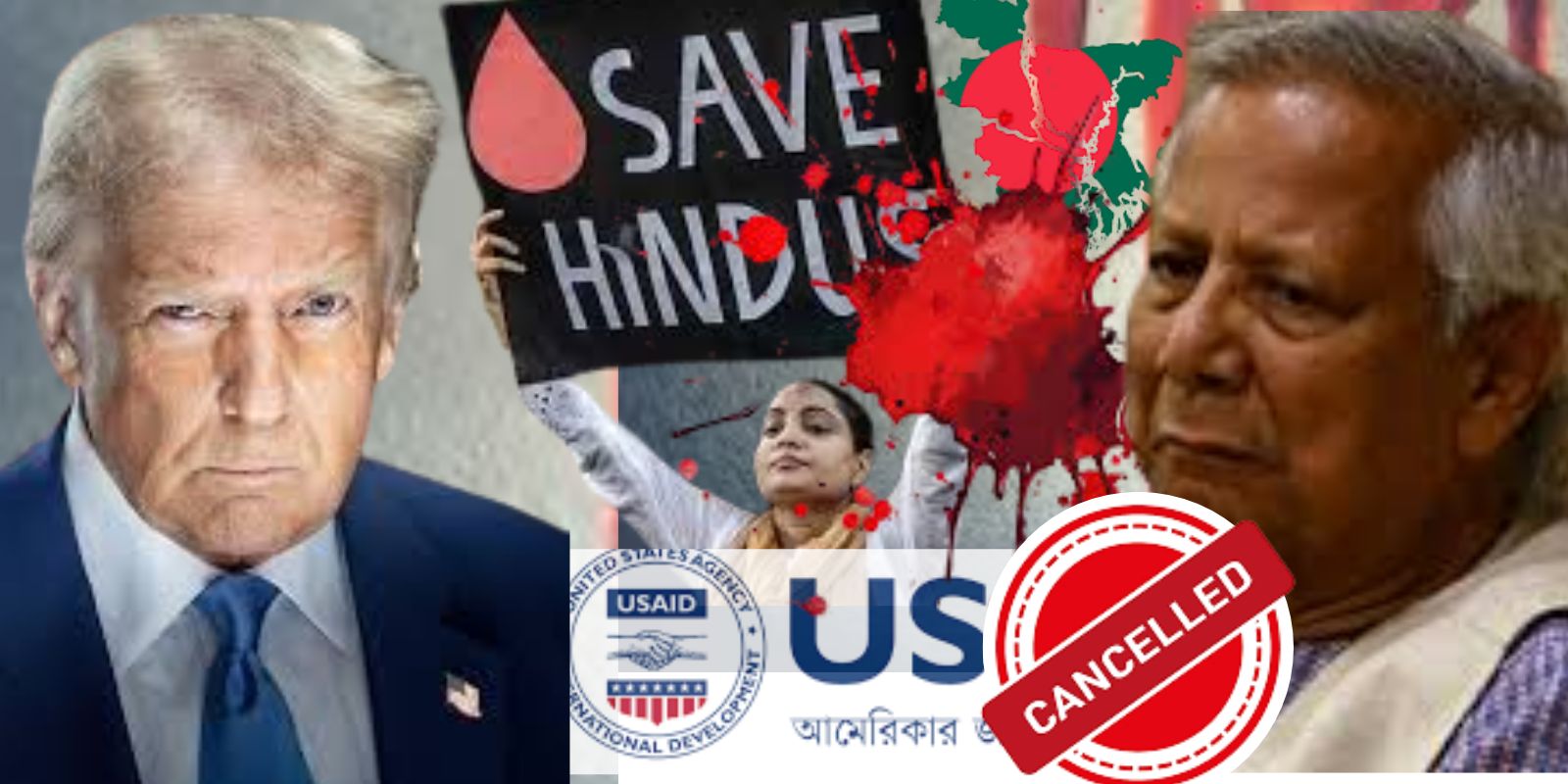
- A UN fact-finding report debunks the Yunus regime’s claims that reports of anti-Hindu violence in Bangladesh are Indian propaganda.
- With Trump in power, India has greater strategic autonomy in handling Bangladesh.
- Trump’s hard stance on radical Islamic terrorism ensures the US won’t use Pakistan and Bangladesh to pressure India.
- India must stay vigilant about the growing Pakistan-Bangladesh ties and consider the broader Pakistan-China-Bangladesh dynamic.
- Trump’s backing gives Modi a free hand in managing Bangladesh, weakening the Yunus regime’s anti-India rhetoric.
- The Bangladesh crisis was orchestrated to destabilize Modi’s government, so India must stay assertive yet diplomatic, avoiding escalation.
A recent fact-finding report from the United Nations Human Rights Office has debunked claims by the Yunus regime of an India-backed propaganda effort, instead exposing extensive human rights violations and violence against Bangladesh’s Hindu community. The investigation, conducted at the invitation of interim leader Muhammad Yunus, details attacks on Hindu homes, businesses, and places of worship, confirming their deliberate persecution.[1] [2]
Based on interviews with victims, the UN report documents widespread arson, property destruction, and physical threats. Witnesses described targeted assaults on Hindu-owned businesses and religious sites, with shops looted and homes set ablaze. Additionally, testimonies revealed pressure on Hindu educators to resign, further underscoring the systemic nature of the persecution.[3]
The report, however, dedicates significant attention to alleged human rights abuses by the Sheikh Hasina regime, particularly its crackdown on student protests. It states that between July 15 and August 5, as many as 1,400 people were killed, with thousands more injured, the majority reportedly shot by Bangladeshi security forces.[4] In contrast, the section addressing anti-Hindu violence is relatively brief and avoids explicitly framing the attacks as communal killings, instead maintaining that post-Hasina violence primarily targeted Awami League supporters. Given the UN’s historical reluctance to recognize Hinduphobia, it is not surprising that the report is more of a diplomatic maneuver than a serious intervention. Nevertheless, it does represent an initial step toward acknowledging anti-Hindu violence in Bangladesh.
The safety of Bangladesh’s Hindu minority is an important concern in the context of regional stability and relations between neighboring countries, as it directly ties into the need for a stable, moderate government in Dhaka, which is crucial for both humanitarian and geopolitical reasons. However, despite Indian diplomats repeatedly urging the UN to acknowledge anti-Hindu violence, no formal recognition has been granted, reflecting the international body’s broader indifference toward Hindu persecution.[5] Expecting direct UN intervention in Bangladesh is therefore unrealistic.
With the Trump administration in power, India has increased leverage to advocate for fair elections in Bangladesh, potentially enabling Sheikh Hasina’s Awami League to contest again while also using its geopolitical influence and ‘Neighborhood First’ policy to counteract the Yunus regime’s discriminatory stance. Since the Yunus administration is merely a caretaker government lacking democratic legitimacy, India has an opportunity to expose its anti-Hindu policies and rally international support. By strategically engaging diplomatically and employing targeted geopolitical maneuvers, India can play a key role in shaping Bangladesh’s future while safeguarding its Hindu minority.
The following sections will explore how India can navigate the Bangladesh situation to secure its geopolitical interests and the well-being of Hindus. Additionally, we will examine factors that work in India’s favor in this evolving geopolitical landscape.
Implications of Trump-Modi Meeting
During Indian Prime Minister Modi’s recent visit to the United States, his meeting with US President Donald Trump highlighted a strong commitment to combating radical Islamic terrorism. A key focus of their discussions was dismantling terror networks worldwide, as emphasized in the India-US Joint Statement. The statement reaffirmed cooperation against terrorist groups such as Jaish-e-Mohammad, ISIS, Al-Qa’ida, and Lashkar-e-Taiba while also condemning the 26/11 Mumbai attacks. It urged Pakistan to bring the perpetrators of both the Mumbai and Pathankot attacks to justice and to prevent its territory from being used for cross-border terrorism.[6]
This joint declaration marked a departure from the previous Biden administration’s approach toward Pakistan, signaling a tougher stance on its alleged role in supporting terrorism. Trump’s explicit condemnation of radical Islamic terrorism sent a direct warning to Pakistan, making it clear that his administration would hold the country accountable for its actions. Pakistan reacted strongly, calling the statement “one-sided and misleading” while attempting to deflect attention by accusing India of sponsoring terrorism and extrajudicial killings.[7]
India now has an opportunity to leverage the Trump administration’s firm position on counterterrorism to enhance its security, particularly in protecting Hindu minorities in countries like Bangladesh and Pakistan. While Bangladesh was not a central topic of discussion, Trump addressed the issue when questioned by a reporter about the Biden administration’s alleged role in regime change there. He denied US deep-state involvement and said he would leave Bangladesh’s affairs to Prime Minister Modi. His comments reflected an unusual deference toward India’s role in managing its neighborhood, signaling that the US would not interfere in India’s approach toward Bangladesh.
Trump’s remarks held significant weight, especially following the persecution of Hindu minorities in Bangladesh after Sheikh Hasina’s removal. While some had hoped for direct US intervention, his response aligned with his administration’s broader policy of reducing American involvement in foreign affairs. Unlike the Biden administration, Trump’s government has shown little interest in controlling India or influencing its regional dynamics, instead supporting India’s autonomy in handling its neighbors.[8]
For India, Trump’s stance provides greater flexibility in managing regional challenges without external pressure from the US. Historically, American administrations have often interfered in the internal affairs of other nations under the guise of upholding democratic values. However, with Trump at the helm, India can navigate its neighborhood policy without US intervention. His administration’s approach reassures India that it will not face diplomatic roadblocks from Washington while addressing security threats and geopolitical concerns in South Asia.
Under President Trump’s executive order to reevaluate foreign aid, the US government suspended all USAID funding for Bangladesh.[9] An order dated January 25, 2025, directed implementing partners to immediately halt all contracts, assistance programs, and grants, citing the President’s directive.[10]
The U.S. government’s recent suspension of USAID funding will have significant socio-economic consequences for Bangladesh. The country is still struggling to recover from the violent protests that led to the ouster of Sheikh Hasina’s government in 2024. However, evidence suggests that USAID funding was also entangled in the US deep state’s efforts to orchestrate regime change.
Muhammad Yunus admitted at a public event in New York in December 2024 that his rise to power resulted from a carefully executed coup. Speaking at the Clinton Global Initiative’s annual meeting, attended by former US Presidents Joe Biden and Bill Clinton, Yunus acknowledged that the Bangladesh student protests leading to Hasina’s removal were not spontaneous but strategically designed.[11]
Additionally, President Trump recently alleged that US financial aid, ostensibly allocated to “strengthen the political landscape” in Bangladesh, was used to install a radical left-wing communist government after Hasina’s ouster. He specifically criticized a $29 million fund, stating, “$29 million goes to strengthen the political landscape and help them out so that they can vote for a radical left communist in Bangladesh. You got to see who they supported.”[12]
The Indian government can leverage the Trump administration’s explicit acknowledgment of deep-state involvement in Bangladesh’s regime change. Trump’s strong critique of the Yunus regime as a puppet government reinforces the view that it lacks democratic legitimacy. This undermines its credibility, especially as it seeks the extradition of Sheikh Hasina, a democratically elected leader removed through an orchestrated coup. The Trump administration’s stance gives India a diplomatic advantage in navigating Bangladesh’s political landscape.
The Growing Bangladesh-Pakistan Nexus and Its Implications for India
The Yunus regime in Bangladesh has fostered an unexpected closeness with Pakistan, marking a shift in regional dynamics. Over the past few months, ties between radical Islamic factions in both countries have strengthened, raising concerns for India. This newfound alliance was highlighted by a visit from Pakistan’s Inter-Services Intelligence (ISI) to Bangladesh in January, following a Bangladeshi delegation’s trip to Pakistan, where they met the country’s top military leadership.[13]
Historically, high-level interactions between the two nations have been rare, with the last publicly acknowledged visit of a senior Pakistani official to Dhaka dating back to 2009. This sudden diplomatic and military engagement is troubling for India, given Pakistan’s past use of Bangladeshi soil to support insurgent groups in India’s northeastern states during the 1990s and 2000s.[14]
The shift under the Yunus regime is stark when compared to the policies of the previous government led by Sheikh Hasina. Under Hasina’s leadership, Bangladesh prioritized strong ties with India, leading to extensive trade, security collaboration, and infrastructure development. Additionally, her government actively balanced relations with China, securing competitive deals to advance Bangladesh’s interests while maintaining ties with India. Pakistan, however, remained largely absent from this equation.[15]
In contrast, the Yunus administration appears more focused on reviving military ties with Pakistan rather than fostering Bangladesh’s socio-economic growth. This pivot raises concerns that Dhaka is aligning itself with Pakistan’s deep-state interests, potentially enabling anti-India activities on Bangladeshi soil.
India’s apprehensions are not unfounded. A News18 report revisits Pakistan and Bangladesh’s involvement in fueling insurgencies in India. In 2004, one of the largest arms hauls in South Asia’s history took place at Chittagong port, where more than 1,500 boxes of Chinese ammunition—worth an estimated $4.5–7 million—were discovered. While the weapons originated in China, the operation was allegedly masterminded by ISI and intended for India’s militant group, the United Liberation Front of Asom (ULFA).[16]
A report by The Interpreter further highlights the stark contrast in Bangladesh’s diplomatic engagement under Yunus. He has met Pakistani Prime Minister Shehbaz Sharif twice but has yet to hold direct talks with Indian Prime Minister Narendra Modi. Furthermore, for the first time since the 1971 Bangladesh Liberation War, two Pakistani cargo ships carrying various commodities arrived at Bangladesh’s Chittagong Port in late 2024.[17]
Given these concerns, addressing the growing Bangladesh-Pakistan nexus requires a comprehensive approach that considers regional security dynamics. Strengthening strategic ties with the United States, particularly under the Trump administration’s firm stance against radical Islamic terrorism, aligns with broader counterterrorism efforts and diplomatic engagement on security issues in South Asia. Coordinating security concerns with the US’s counterterrorism policies could put diplomatic pressure on Bangladesh’s caretaker government to act against extremist elements.
At the same time, the West’s selective approach to South Asian geopolitics remains a crucial factor to consider. The US deep state has historically leveraged Pakistan to counterbalance India’s rise, and recent political shifts in Bangladesh raise concerns about potential efforts to destabilize the region and create internal security challenges. While the Trump administration has distanced itself from such tactics, certain Western nations may still seek to influence regional politics to serve their strategic interests.
A self-reliant and assertive approach to regional security challenges ensures that security threats from Bangladesh are addressed without undue reliance on Western validation. While Western nations have pushed India for definitive positions on global conflicts such as the Russia-Ukraine war, critical regional developments—such as the Taliban’s takeover of Afghanistan and political changes in Bangladesh—have often been overlooked. A proactive response to the evolving security landscape can help safeguard regional stability and counter emerging challenges in South Asia.
China’s growing influence is a key factor in the Bangladesh-Pakistan equation, with experts suggesting both countries may be part of its broader strategy to expand control in South Asia and counterbalance India.[18] Given this, India’s measured approach to the Bangladesh situation allows it to reinforce the benefits of stronger ties, positioning itself as a more reliable partner for Bangladesh’s economic and strategic interests.
Managing the Bangladesh Situation – India’s Strategic Approach
India has already made a strong geopolitical statement by granting asylum to former Bangladeshi Prime Minister Sheikh Hasina while maintaining a firm stance against the Yunus regime’s request for her extradition. The unelected caretaker government in Bangladesh, aware of its lack of democratic legitimacy, has little leverage to pressure India on this issue. Moreover, India has legal grounds to refuse Hasina’s extradition under the 2013 extradition treaty, which was amended in 2016. With Donald Trump at the helm of the US government, the Yunus regime can expect little support from Washington, further strengthening India’s diplomatic position. This allows India to put pressure on the Bangladeshi leadership to crack down on radical Islamic terrorism and protect its Hindu minorities.
However, diplomacy alone is not likely to compel the Yunus regime to act responsibly. The interim government appears to be a puppet regime installed by deep-state actors to create instability in India’s neighborhood. It appears to be an attempt to provoke India into military intervention ultimately failed, which could have resulted in a conflict scenario reminiscent of Russia-Ukraine. Had it succeeded, it could have destabilized the Modi government, potentially reducing India to a controllable state under Western influence. However, India’s strategic restraint prevented escalation, thwarting these geopolitical maneuvers. Contrary to these expectations, India has successfully avoided direct confrontation, instead opting for diplomatic engagement, strategic deliberation, and international lobbying to manage the crisis.
India has consistently expressed concerns about the rising violence against Hindus in Bangladesh, urging the interim government to ensure minority protection.[19] Despite provocations from internal and external actors, including the Yunus regime, India has exercised restraint. The caretaker government, mirroring its deep-state backers, claims to seek better relations with India while simultaneously dismissing reports of Hindu persecution as “vested propaganda” by Indian media and government. In November 2024, Yunus downplayed anti-Hindu violence, calling it “exaggerated propaganda” designed to destabilize Bangladesh.[20]
At the same time, the Yunus regime engages in diplomatic virtue signaling, blaming India for strained bilateral relations. Its latest tactic involves reviving the South Asian Association for Regional Cooperation (SAARC), an initiative long suspended due to India-Pakistan tensions. Bangladesh’s push for SAARC reflects its broader agenda—deflecting attention from domestic instability and provoking India on international platforms rather than addressing its internal crises.[21]
The Yunus regime appears aligned with global deep-state interests, with every policy move aimed at diplomatically isolating India. However, the geopolitical landscape is shifting. The rise of right-wing governments in the West is challenging the influence of deep-state networks, limiting their ability to dictate South Asian affairs as they once did.
Mainstream Western and Chinese media continue to echo Bangladesh’s anti-India rhetoric, underscoring the larger geopolitical battle at play. The installation of the Yunus regime was likely intended to weaken the Modi government, and when that failed, its secondary objectives shifted to creating internal and external challenges for India. China, while not directly involved in Hasina’s removal, is now positioned to benefit from Bangladesh’s political instability. A Bangladeshi government hostile to India serves both Chinese and Western interests—Beijing gains a strategic foothold in South Asia, while Western powers maintain leverage over India’s regional dynamics.
The possibility of Sheikh Hasina’s Awami League returning to power in the near future appears uncertain, given shifting public sentiment and the party’s declining popularity in Bangladesh. Rather than focusing on reinstating her government, the broader priority remains ensuring that Bangladesh moves toward free and fair elections as soon as possible.
The de facto consolidation of the Yunus regime presents long-term regional challenges, particularly concerning minority rights and democratic governance. Raising awareness of the persecution of Hindus in Bangladesh at international forums, including the United Nations, could bring global attention to the issue. Additionally, highlighting concerns about the undemocratic nature of the caretaker government may impact its international legitimacy.
Furthermore, addressing inconsistencies in the Yunus regime’s political stance on the global stage remains an important aspect of broader geopolitical discourse. The Indian government has already taken steps in this direction, with External Affairs Minister S. Jaishankar recently calling out Bangladesh’s leaders for their baseless accusations against India. He called out the leaders of the country’s interim regime for “making “absolutely ridiculous” charges against India”, days after he met Touhid Hassan, his counterpart from the Yunus regime in Oman: [22]
“If every day, someone in the interim government stands up and blames India for everything…some of those things, if you look at the reports, are absolutely ridiculous. You cannot, on the one hand, say that ‘I would now like to have good relations with you,’ but I wake up every morning and blame you for everything that goes wrong. It is a decision that they must make.”[23]
Thus, India appears to be taking a measured and strategic approach, avoiding extreme or hasty actions despite the Yunus regime’s continued provocations. Instead of reacting impulsively, it must continue leveraging its strong ties with the Trump administration to emphasize the need for free and fair elections in Bangladesh. Given the Yunus regime’s overt hostility toward India and its growing alignment with radical Islamic extremism, sustained diplomatic engagement with the US will be crucial in countering these threats and ensuring stability in the region.
Wrapping up
The plight of Hindu minorities in Bangladesh, Pakistan, and Afghanistan has long been a concern for India. However, efforts to address this issue have faced resistance from certain ideological factions within the country, often aligning with deep-state global interests. This was evident in the anti-CAA protests, which aimed to obstruct a law designed to grant Indian citizenship to persecuted minorities from these nations.
With Pakistan already posing a persistent challenge in the region, the ousting of Sheikh Hasina’s government in Bangladesh has introduced a new security threat. The Yunus regime’s overt hostility toward India, its appeasement of radical Islamist elements, and its increasing closeness with Pakistan present a complex challenge. Navigating this situation strategically is essential to ensuring that Bangladesh moves toward democratic governance through free and fair elections.
On the geopolitical front, India has an advantage. The Trump administration’s firm stance against radical Islamic terrorism aligns with India’s security concerns. How effectively India capitalizes on this alignment to counter the evolving situation in Bangladesh will be a key test of its diplomatic and strategic acumen in the coming months.
Citations
[1] Bangladesh Hindu News – UN report exposes Yunus on attacks on Hindus in Bangladesh – India Today; https://www.indiatoday.in/world/story/un-human-rights-report-exposes-muhammad-yunus-attacks-on-hindu-minority-bangladesh-2679359-2025-02-13
[2] United. Nations Human Rights Fact-Finding Report; https://www.ohchr.org/sites/default/files/documents/countries/bangladesh/ohchr-fftb-hr-violations-bd.pdf
[3] ibid
[4] Bangladesh: UN report finds brutal, systematic repression of protests,calls for justice for serious rights violations | OHCHR; https://www.ohchr.org/en/press-releases/2025/02/bangladesh-un-report-finds-brutal-systematic-repression-protests-calls
[5] Recognise ‘Hinduphobia’ and violence against Buddhists, Sikhs too: Indian envoy to U.N. – The Hindu; https://www.thehindu.com/news/national/recognise-hinduphobia-and-violence-against-buddhists-and-sikhs-too-indian-envoy-to-un/article38295761.ece
[6] Press Release: Press Information Bureau; https://pib.gov.in/PressReleaseIframePage.aspx?PRID=2103037
[7] ‘One-Sided, Misleading’: Pakistan Reacts To Bold India-US Joint Statement On Cross-Border Terrorism – News18; https://www.news18.com/world/one-sided-misleading-pakistan-reatcs-to-bold-india-us-joint-statement-on-cross-border-terrorism-9227332.html
[8] “No Role For Deep State, Leave It To PM Modi” – Trump On Bangladesh Crisis; https://www.ndtv.com/world-news/no-role-for-deep-state-leave-it-to-pm-narendra-modi-says-donald-trump-on-bangladesh-crisis-7711092
[9] US Suspends Funding To Bangladesh After Trump Orders 90-Day Freeze On All Foreign Aid – News18; https://www.news18.com/world/us-suspends-funding-to-bangladesh-after-trump-orders-90-day-freeze-on-all-foreign-aid-9203998.html
[10] US suspends all funding to Bangladesh under USAID; https://www.opindia.com/2025/01/us-suspends-all-funding-to-bangladesh-under-usaid/
[11] ‘Hasina’s Ouster Planned’: Muhammad Yunus Admits Plot Behind Bangladesh Upheaval, Names Mastermind – News18; https://www.news18.com/world/bangladeshs-yunus-reveals-who-masterminded-ex-pm-sheikh-hasinas-ouster-at-event-hosted-by-biden-clinton-9063535.html
[12] $29 million goes to Bangladesh to Bring Radical Left in Power: Trump Questions USAID Funding Again | Republic World; https://www.republicworld.com/world-news/usaid-funding-29-million-goes-to-bangladesh-to-bring-radical-left-in-power-trump-questions-again
[13] Red flags in Delhi as a 4-member ISI team from Pak makes a quiet visit to Dhaka | World News – Hindustan Times; https://www.hindustantimes.com/world-news/isi-team-in-dhaka-less-than-a-week-after-top-bangladesh-general-s-visit-to-pakistan-101737633641253.html
[14] ibid
[15] Bangladesh, China sign 21 agreements, MoU as PM Hasina meets President Xi – The Hindu; https://www.thehindu.com/news/international/bangladesh-china-sign-21-agreements-mou-as-pm-hasina-meets-president-xi/article68390283.ece
[16] Straight Talk | Bangladesh And Pakistan Are Cosying Up As Dhaka Defies India’s Red Lines – News18; https://www.news18.com/opinion/straight-talk-bangladesh-and-pakistan-are-cosying-up-as-dhaka-defies-indias-red-lines-9126301.html
[17] Straight Talk | Bangladesh And Pakistan Are Cosying Up As Dhaka Defies India’s Red Lines – News 18; https://www.news18.com/opinion/straight-talk-bangladesh-and-pakistan-are-cosying-up-as-dhaka-defies-indias-red-lines-9126301.html
[18] Bangladesh’s risky bet on Pakistan: Pawn in China’s strategic game? – World News – The Financial Express; https://www.financialexpress.com/world-news/bangladeshs-risky-bet-on-pakistan-pawn-in-chinas-strategic-game/3726997/
[19] ‘Cannot Dismiss As Media Exaggeration’: MEA Condemns Violence Against Hindus In Bangladesh, Seeks Action From Yunus Government; https://swarajyamag.com/news-brief/cannot-dismiss-as-media-exaggerations-mea-condemns-violence-against-hindus-in-bangladesh-seeks-action-from-yunus-government
[20] Bangladesh Chief Advisor Muhammad Yunus calls attacks on Hindus ‘exaggerated propaganda’ – India Today; https://www.indiatoday.in/world/story/bangladesh-chief-advisor-muhammad-yunus-attacks-hindus-exaggerated-propaganda-2634937-2024-11-18
[21] India – Bangladesh ties – Bangladesh seeks India’s backing to revive SAARC: Bangladesh seeks India’s support to revive Saarc – India Today; https://www.indiatoday.in/india/story/bangladesh-muhammad-yunus-government-india-support-saarc-revival-2681647-2025-02-18
[22] ‘Ridiculous’: S Jaishankar calls out Bangladeshi leaders for ‘blaming’ India for everything | Latest News India – Hindustan Times; https://www.hindustantimes.com/india-news/ridiculous-s-jaishankar-calls-out-bangladeshi-leaders-for-blaming-india-for-everything-101740454984419.html
[23] ibid

Donate to HINDUDVESHA
Our Mission is to explore and expose Hindudvesha through research analysis, education and response.
SUPPORT US