

Is India’s Billionaire Boom Worse Than British Rule? Debunking West’s Inequality Narrative
 Rakesh Krishnan Simha · 01/22/2025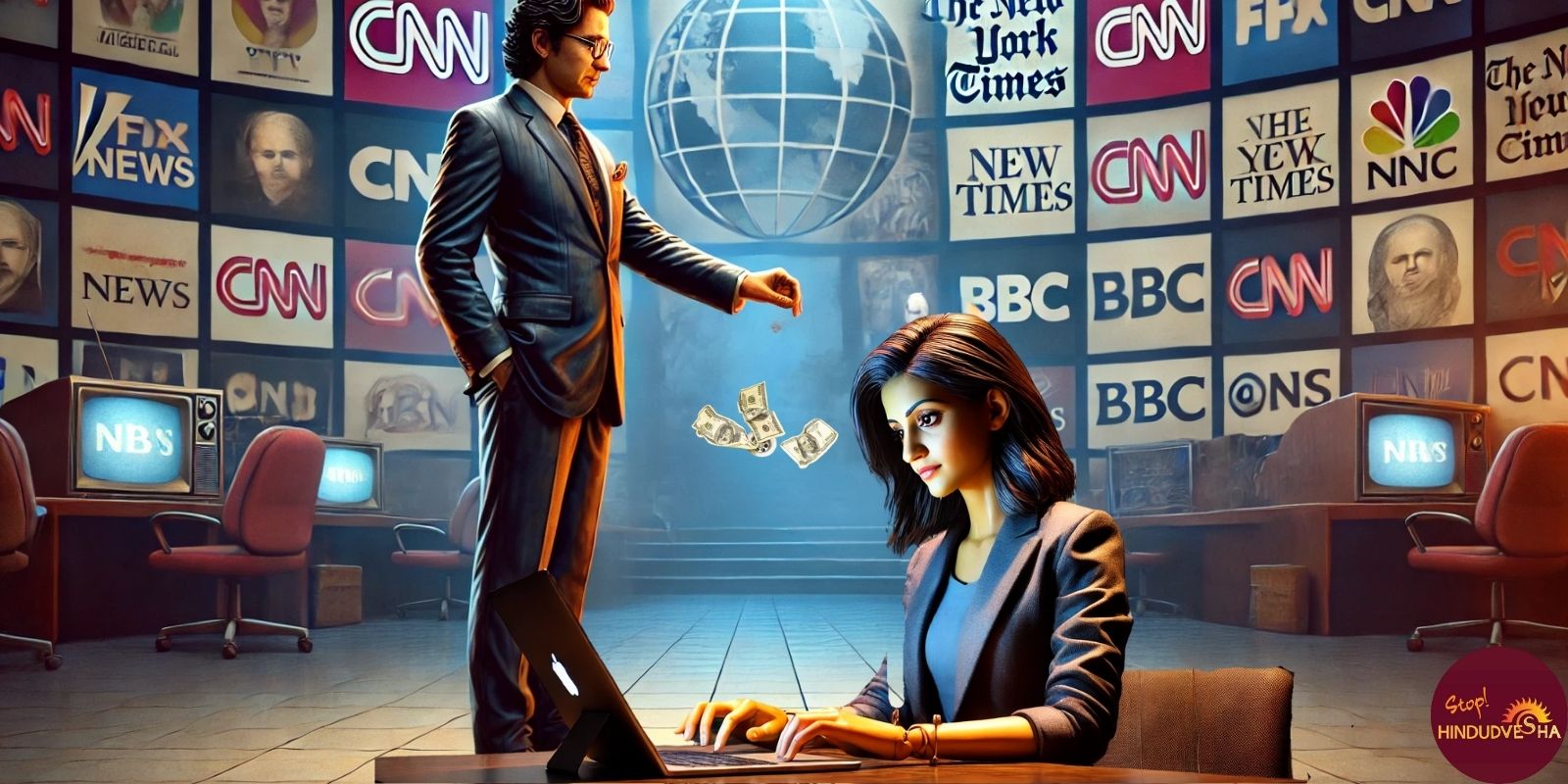
- Claims that modern India’s inequality surpasses British colonial levels are misleading and ignore historical suffering under colonial rule.
- Western outlets, often aided by Brown Sepoys, exaggerate inequality narratives to undermine India’s leadership and economic progress.
- Significant achievements, such as poverty reduction, improved life expectancy, and expanded social welfare, highlight India’s progress since independence.
- Indian billionaires actively reinvest in the local economy, driving job creation, infrastructure growth, and improved living standards for millions.
- Criticism of India’s inequality is part of a broader Western strategy to delegitimize India’s government and hinder its rise as a global power.
A recent article from TIME magazine has made the dramatic claim that income inequality in India is worse than it was during British rule.[1] The article quotes a new study from the World Inequality Lab: “The gap between India’s rich and poor is now so wide that by some measures, the distribution of income in India was more equitable under British colonial rule than it is now.”[2] The report asserts that India’s “Billionaire Raj,” headed by the modern bourgeoisie, is now more unequal than the colonial British Raj. The country’s income inequality, it says, is now among the highest in the world and starker than in the US, Brazil, and South Africa.
As provocative as this claim sounds, it raises several important questions: Is this claim accurate? And how should we understand the current state of inequality in India in a broader historical and geopolitical context?
First, let’s take a step back and consider the source of the claim. The World Inequality Lab is a Paris-based organisation funded by several leftist outfits, such as Berkley University, the Sloan Foundation[3], and the CIA-backed Ford Foundation[4]. TIME is an American media outlet, part of what many would describe as the “Western media” ecosystem, known for its own particular brand of agenda-driven journalism.
Given the mainstream media’s long-standing criticism of India’s political leadership, especially since Hindu nationalists came to power in 2014, it is necessary to approach any statement coming from such a source with a large dose of caution. It’s a familiar pattern: often, Western outlets accuse India of authoritarianism, fascism, and increasing inequality while glossing over the broader economic realities.
It’s also important to point out that there is a deeply ingrained bias in the Western media, especially when reporting on countries like India, Russia, and China. These outlets have a knee-jerk tendency to amplify negative news, focusing disproportionately on issues like poverty and inequality, almost always without a nuanced or balanced analysis. In fact, anything that comes out of Western media needs to be taken with a fistful of salt. If you believe this is overblowing things, why not question the motivations behind these narratives?
British Rule vs Modern India
When India was under British colonial rule, it suffered immense hardships. British colonial policies systematically impoverished the local population. In fact, when India gained independence in 1947, the life expectancy of an average Indian was just 32 years – that means life under British rule was a virtual death sentence. For comparison, life expectancy today is around 71 years.[5] This alone illustrates how far India has come in improving its people’s quality of life.
Moreover, during the 200 years of British rule, India experienced 32 major famines, compared with 17 famines over the previous 2,000 years before British rule.[6] The British Empire’s policies directly contributed to the deaths of an estimated 100 to 165 million Indians through famines, which were engineered or exacerbated by colonial policies aimed at resource extraction.[7] [8] These famines were part of a Darwinian policy to depopulate India and make it feasible for the settlement of British settlers.
These events were not merely bad governance; they were a deliberate form of economic warfare and population control. The British almost eradicated the native populations of North America, Australia (Aborigines), and New Zealand (Maori). Complete genocide was interrupted due to the Napoleonic Wars and the two World Wars when the British had to move their soldiers to Europe.
So, can we really compare the economic disparity in modern India to the brutal and genocidal inequality of British rule? In terms of raw suffering and state-induced hardship, the answer is an unequivocal no.
State of Inequality in India
Income inequality is indeed a pressing issue in India, but it’s not as simple as TIME portrays it. Inequality exists in every nation, whether it’s the United States, the United Kingdom, or France, and India is no exception. But here’s where the comparison to British colonialism breaks down.
India today is not a static society. Yes, the rich are getting richer, but the poor are also steadily getting less poor. Since the liberalization of India’s economy in the early 1990s, millions have been lifted out of poverty, and there has been significant progress in reducing absolute poverty levels. The National Economic Survey, for example, shows that between 2004 and 2019, India reduced its poverty rate by 12 percent, lifting more than 100 million people out of poverty. In fact, the country has almost eradicated extreme poverty and brought down consumption inequality to its lowest levels in 40 years.[9] [10]
What’s more, India has launched various social welfare schemes aimed at uplifting the poor, from free housing and food grains under the Public Distribution System to healthcare schemes like Ayushman Bharat, which provides free health insurance to more than 100 million families. Additionally, older citizens over 70 are entitled to free healthcare services and government-funded health insurance.[11]
This is not to say that India is without its problems. The country’s social safety nets are far from perfect, and income inequality – especially between urban and rural areas – remains a challenge. However, it is also crucial to recognize the ways in which the country has dramatically improved the lives of its citizens, particularly those at the bottom of the socio-economic ladder, compared to the suffering and deprivation endured under British colonial rule.
Role of Indian Billionaires
Let’s not ignore the role of India’s burgeoning class of billionaires. TIME criticizes this new wave of wealth accumulation as a sign of growing inequality, but this narrative often overlooks these billionaires’ role in driving economic growth. Unlike the Western model, where billionaires send manufacturing jobs to China and then funnel most of their profits into tax havens like Macao or the Bahamas, Indian billionaires are more inclined to reinvest in the local economy, which supports infrastructure development, job creation, and improved living standards. Major Indian corporations have been instrumental in fostering a strong middle class by creating employment opportunities and improving the quality of life for millions of people.
Take the case of the late Dhirubhai Ambani, chairman of Reliance Industries. The company’s annual shareholders meeting was held in a sports stadium in Mumbai and attended by tens of thousands of middle-class shareholders. In 2020, as many as 320,000 shareholders from 550 cities in 48 countries attended the company’s first virtual shareholders meeting.[12] Many of these new middle-class investors are not just wealthy elites but ordinary Indians who now have access to capital markets and wealth-building opportunities that were unimaginable just a few decades ago.[13]
Agenda-Driven Journalism of Astha Rajvanshi and TIME
Now, let’s look at the politics behind TIME’s reporting. The article is written by Astha Rajvanshi – a person of Indian origin who is known for performing hit jobs for her white masters. Her claim that “the rise in inequality has been particularly pronounced since the ruling Bharatiya Janata Party first came to power in 2014” seems to suggest a causal link between BJP governance and worsening inequality. While it’s true that India’s economic reforms and political centralization have been under the BJP’s leadership, to pin the blame for rising inequality solely on the government is oversimplified.
Inequality is a complex issue, with many factors at play – global economic trends, technological advancements, demographic changes, and India’s own historical challenges. The rise of a “Billionaire Raj” is a worldwide phenomenon, and while the BJP has presided over an era of economic growth, it is too simplistic – and childish – to reduce all of India’s inequality to a political party’s agenda.
Furthermore, it is evident that the criticism carries a political undertone. Certain segments of the Western media appear intent on undermining Indian Prime Minister Narendra Modi and the Bharatiya Janata Party (BJP), frequently portraying them as authoritarian and illiberal. These outlets seemingly aim to delegitimize the current government and pave the way for potential political change by emphasizing inequality as a central concern.
People like Rajvanshi are modern-day brown sepoys, eager to bow before their Western masters in exchange for mere scraps from the proverbial high table. In 2023, she interviewed with Khalistani terrorist Gurpatwant Pannu, who had previously threatened to blow up Indian aircraft.[14] During the interview, Rajvanshi allowed him to propagate blatant falsehoods unchecked, despite Pannu’s own statement: “Don’t fly Air India after November 19; your lives may be in danger.”[15]
In an astonishing display of journalistic irresponsibility, Rajvanshi also attempted to glorify the Nigerian mafia by portraying drug lord Bola Ahmed Tinubu as one of the 100 most influential people in the world. Following a backlash from ordinary Nigerians on social media, she subsequently locked her X (formerly Twitter) account to avoid further criticism.[16]
According to news analyst Abhijeet Iyer-Mitra, her actions may constitute a violation of Indian law, and she could face arrest if she returns to India.[17] However, in the eyes of her Western patrons, running afoul of Indian law is not a disqualification. On the contrary, journalists with questionable ethics, like Rajvanshi, seem to be precisely the type of individuals sought by Western media to serve their narrative interests in India.
Why don’t they clean their own houses first?
Despite millions going hungry in America, Britain, and Europe, these countries take potshots at India instead of improving the lives of their own people. In 2024, the UK witnessed the sharpest increase in absolute poverty in 30 years. The figure now stands at 12 million, a rise of 600,000. This means the rate of absolute poverty in the UK now stands at 18%. “This is a devastating rise, and behind these numbers will be stories of children going hungry and families unable to heat their homes,” said a British politician.[18]
Canada’s Globe & Mail newspaper wonders if Britain’s current condition is a window into the West’s future. It says that “intergenerational poverty, rare in most countries today, has become a factor in a notable British subculture.”[19] This is backed by a British government report that shows that if you are born poor, you will stay poor. A Church of England charity described England as one of the most unequal countries in the Western world, as research showed an “alarming disparity” between the richest and poorest neighborhoods.[20]
Child poverty
“At lunchtime, I was embarrassed about having no food, so I hid in the bathroom.”[21] This is a heartbreaking story from New Zealand, where 40,000 children – out of a total population of just 5 million – are going hungry. Thousands of children will be going back to school without essential items. Many will arrive hungry, missing a uniform, shoes, and stationery. Or they won’t arrive at all.
Yet, in the backdrop of an overwhelmed social security system, New Zealand continues to dispatch Christian missionaries to India. Even as the number of buskers and beggars in New Zealand increases, many Kiwis will lament about poverty in India.
There is a shocking story of a starving six-year-old boy and his three siblings in New Zealand who ate cockroaches to survive before being rescued by government workers.[22] Shockingly, a bug expert, Ruud Kleinpaste, commented that the boy made a good choice in dire circumstances and “had opted for an insect with one of the highest nutritional values.”
“Eating a cockroach is not necessarily disgusting at all,” he said. “Well, some people might think it’s disgusting, but from a health point of view, they have a gland on their back that gives them pure antibiotics, anti-bacterial stuff, so they’re not as dirty as people think.”
Clearly, well-off Westerners do not care about the less fortunate people in their countries. If they are so callously prepared to let their own citizens die of hunger and malnutrition while wanting to “save” Indians, there can be only one possible explanation: they haven’t given up their dreams of global domination and hope to achieve this by converting India’s Hindu population to Christianity. They know very well that once the West converts all Indians to Christianity, they have full mind control over 1.4 billion people who would otherwise become a future superpower.
Closing remarks
The comparison between income inequality today and under British colonial rule is not just flawed – it’s misleading. While India undoubtedly faces challenges related to inequality, it is also making tremendous strides in reducing poverty and improving the standard of living for its people. The poor in India are definitely better off than they were under British rule, even if they still face struggles in terms of access to education, healthcare, and social mobility.
The portrayal of India’s economic progress as a “Billionaire Raj” that exacerbates inequality needs to be put into context and challenged. Billionaires in India are not the same as the colonial parasites of the British Raj – they are part of a dynamic, rapidly changing economy where wealth creation is also creating opportunities for hundreds of millions of people.
Before buying into the narratives promoted by Western media, it’s critical to look beyond the headlines and ask: Is India today better or worse than it was under British colonial rule? The answer is clear – India’s poor are no longer subjected to the horrors of colonialism, and the country is steadily progressing toward a more inclusive future. Let’s not forget that context matters.
Citations
[1] India’s Income Inequality Is Now Worse Than Under British Rule, New Report Says (Time); https://time.com/6961171/india-british-rule-income-inequality/
[2] Income and Wealth Inequality in India, 1922-2023: The Rise of the Billionaire Raj (World Inequality Lab) ; https://wid.world/www-site/uploads/2024/03/WorldInequalityLab_WP2024_09_Income-and-Wealth-Inequality-in-India-1922-2023_Final.pdf
[3] World Inequality Lab Website; https://inequalitylab.world/en/funding-and-partners/
[4] Ford Foundation and its alleged CIA connections (NEW 18); https://www.news18.com/news/india/ford-foundation-and-its-alleged-cia-connections-983755.html
[5] Our greatest achievement: Longer lives (Times of India); https://timesofindia.indiatimes.com/sa-aiyar/swaminomics/our-greatest-achievement-longer-lives/articleshow/2291641.cms
[6] Britain’s Biological Warfare: How Colonial Famines Made India the World’s Diabetes Capital (StopHindudvesha.Org); https://stophindudvesha.org/britains-biological-warfare-how-colonial-famines-made-india-the-worlds-diabetes-capital/
[7] How British colonialism killed 100 million Indians in 40 years (Al Jazeera); https://www.aljazeera.com/opinions/2022/12/2/how-british-colonial-policy-killed-100-million-indians
[8] Independence Day: 165 million unaccounted Indian victims of the British colonial regime (The Economic Times); https://economictimes.indiatimes.com/news/india/independence-day-165-million-unaccounted-indian-victims-of-the-british-colonial-regime/articleshow/102696431.cms?from=mdr
[9] India’s poverty rate falls below 5% in 2024, extreme poverty nearly eradicated: SBI Report (DD News); https://ddnews.gov.in/en/indias-poverty-rate-falls-below-5-in-2024-extreme-poverty-nearly-eradicated-sbi-report/#:~:text=In%202024%2C%20India’s%20poverty%20rate,living%20conditions%20across%20the%20country.
[10] India eradicates ‘extreme poverty’ via PMGKY: IMF paper (The Hindu); https://www.thehindu.com/news/national/india-eradicates-extreme-poverty-via-pmgky-imf-paper/article65303147.ece
[11] Cabinet approves health coverage to all senior citizens of the age 70 years and above irrespective of income under Ayushman Bharat Pradhan Mantri Jan Arogya Yojana (Government of India – Ministry of Health and Family Welfare); https://mohfw.gov.in/?q=gu/node/7742
[12] Reliance hosts world’s largest virtual AGM (Rediff.com); https://www.rediff.com/money/report/reliance-hosts-worlds-largest-virtual-agm/20200715.htm
[13] Ambani rewrote India’s corporate history (The Times of India); https://timesofindia.indiatimes.com/ambani/ambani-rewrote-indias-corporate-history/articleshow/15240287.cms
[14] Exclusive: Gurpatwant Singh Pannun on Sikh Separatism and Being the Target of a Foiled Assassination (Time); https://time.com/6339942/india-gurpatwant-singh-pannun-sikh-separatist-qa/
[15] Canada says taking SFJ’s Air India threat ‘seriously’, enhanced security (Hindustan Times); https://www.hindustantimes.com/world-news/canada-says-taking-khalistani-terrorist-gurpatwant-pannuns-air-india-threat-seriously-enhanced-security-101699582880695.html
[16] Astha rajvanshi is known for glorifying terrorists, druggists and mafias . Earlier this year she tried to Glory drug lord Tinubu as a result got attacked by Nigerians and locked her account later (X); https://x.com/subhsays/status/1729402924764385361
[17] @astharajvanshi has violated section 39 of UAPA & will face enhanced interrogation if she returns to India. An Australian citizen with < 1 years experience of india, she’s been flogging her brown skin to gain cred as an “india expert” (X); https://x.com/Iyervval/status/1729481188660900299
[18] Absolute poverty: UK sees biggest rise for 30 years (BBC); https://www.bbc.com/news/uk-68625344
[19] How Britain is falling down on the yob (The Globe and Mail); https://www.theglobeandmail.com/news/world/how-britain-is-falling-down-on-the-yob/article4281518/
[20] Born poor, stay poor: the scandal of social immobility Independent); https://www.independent.co.uk/news/uk/home-news/born-poor-stay-poor-the-scandal-of-social-immobility-7771336.html
[21] https://www.facebook.com/KidsCanNZ/videos/427849908657208/
[22] Starving boy eats roach (The New Zealand Herald); https://www.nzherald.co.nz/nz/starving-boy-eats-roach/T6AC7OBJ4NAZG4W7RAMGOFI2HA/?c_id=1&objectid=10716810

Donate to HINDUDVESHA
Our Mission is to explore and expose Hindudvesha through research analysis, education and response.
SUPPORT US