

Inside the Systemic Failure Behind Britain’s Grooming Gangs
 Dr. Jai G. Bansal · 04/29/2026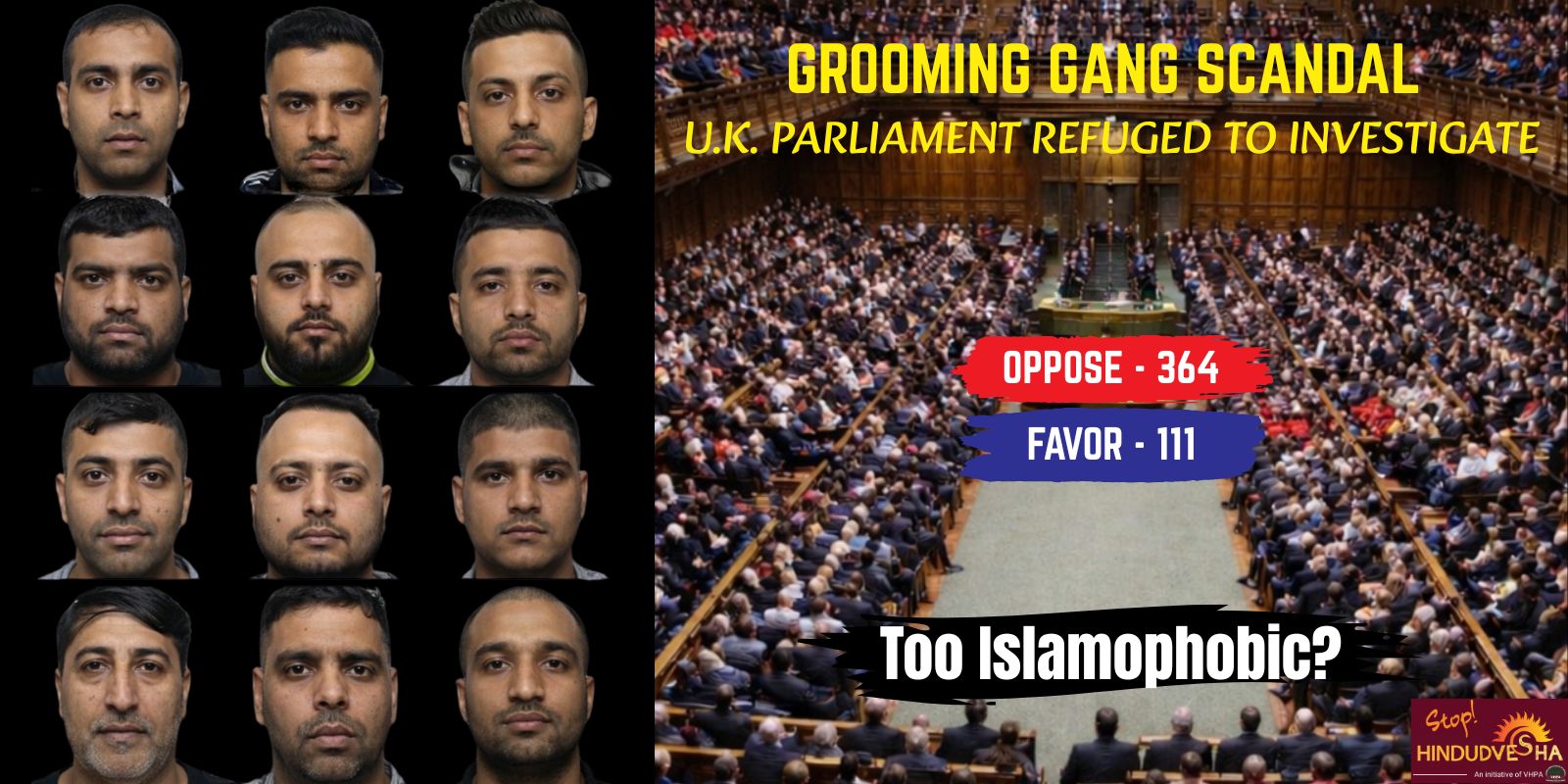
Summary
For more than three decades, organized grooming gangs operated across multiple towns in England despite repeated warnings, intelligence reports, and documented patterns. The central failure was not a lack of awareness, but a sustained failure to act. Official inquiries, including the Jay Report and the Casey Audit, reveal systemic weaknesses in policing, data collection, and institutional accountability. Victims were often dismissed, investigations were delayed, and critical information was inconsistently recorded. Fear of being labeled racist, along with broader political and social sensitivities, shaped decision-making and discouraged intervention. The result was prolonged abuse and fragmented enforcement. The ongoing statutory inquiry now represents a delayed effort to confront these failures and establish meaningful accountability.
For more than three decades, organized grooming gangs operated across multiple towns in England in full view of law enforcement and local authorities. During this time, hundreds—if not thousands—of vulnerable girls, many of them minors, were systematically groomed, raped, trafficked, and sexually exploited.
In the most prominent cases, the perpetrators were overwhelmingly men of Pakistani Muslim background. The pattern was visible early and repeatedly documented, yet it was not confronted. Victims were dismissed as “promiscuous” or complicit, while the organized sexual abuse they endured was minimized or ignored.
The pattern suggests failure was not accidental. Fear of being labeled Islamophobic and the pressures of vote-bank politics entrenched a refusal to acknowledge the problem. Even as evidence mounted, calls for a full investigation were blocked and delayed until the scale of the failure became impossible to deny, and a national inquiry was finally initiated.
Similar patterns are beginning to surface in parts of the United States[1], accompanied by the same institutional instinct to downplay, rationalize, or avoid confronting uncomfortable realities. The experience in Britain offers a clear warning: when such patterns are ignored, the consequences do not remain contained.
This article traces how this failure unfolded—from early warnings and denial to reluctant acknowledgment—and examines the institutional choices that allowed the abuse to continue. The article relies heavily on two official inquiries—the Jay Report (2014)[2] and the Casey Report (2025)[3]. Subsequent references make clear which report supports the evidence cited.
The Scandal Under Law Enforcement’s Nose (1990s–2010)
A 2025 Sky News article[4] makes clear that the grooming gangs scandal was a long-documented problem, known to the authorities from the 1990s onward, with repeated warnings that went unheeded for years.
The Jay Report shows that by 1997, care home managers in Rotherham were already reporting that groups of men—predominantly of Pakistani heritage—were collecting vulnerable girls, some as young as 11 or 12, from residential homes in taxis. These girls were supplied with alcohol and drugs and subjected to repeated sexual abuse. Similar reports surfaced in Keighley, Bradford, Rochdale, and other towns, indicating that the pattern was already spreading.
Drawing on findings detailed in the Casey Report, this was not isolated behavior but a defined modus operandi. Perpetrators targeted vulnerable girls—often in care or unstable environments—using attention, gifts, alcohol, and drugs to establish control before escalating to coercion, group rape, and trafficking. Taxis, takeaways, and short-term accommodation were routinely used to facilitate movement and abuse.
By the early 2000s, the pattern had moved beyond internal concern to documented intelligence. South Yorkshire Police had recorded cases involving taxi drivers targeting girls in Rotherham. In 2002, MP Ann Cryer publicly raised concerns about the grooming of underage girls in Keighley. That same year, internal reports identified organized networks of men—overwhelmingly of Pakistani heritage—systematically exploiting girls across multiple towns in South Yorkshire.
The issue was not a lack of information. It was a failure to act on information already in hand. Reports were filed, patterns identified, and risks understood, yet interventions remained limited and inconsistent. Frontline concerns were not escalated, and institutional responses were slow or absent.
Enforcement was further weakened by how cases were framed. Victims—many of them minors—were dismissed as “promiscuous” or blamed for their circumstances. This framing reduced urgency and allowed cases to be deprioritized, even when the underlying abuse was clear.
By the time prosecutions began in the late 2000s, the networks, methods, and risks had been known for years. The failure of this period was not one of awareness, but of action.
Media Exposure and Continued Institutional Denial
By 2011, the facts were no longer confined to internal reports. The issue entered the public domain through sustained investigative journalism. In January 2011, The Times journalist Andrew Norfolk published a series exposing the systematic grooming and rape of girls in Rotherham and other towns. His reporting made clear that authorities had long been aware of the abuse but had failed to respond effectively.[5]
Public exposure finally forced action. In 2012, nine men in Rochdale—eight of Pakistani heritage—were convicted of grooming, raping, and trafficking girls as young as 13. This was followed by further prosecutions, including Operation Bullfinch in Oxford (2013), where the majority of convicted perpetrators were also of Pakistani background (Casey Report).
However, these prosecutions led to no meaningful change. Cases were isolated, not connected. Denial continued, victims were blamed, and even basic records—particularly on ethnicity—were distorted by political sensitivities.
Parliament took cognizance of the issue[6], but with little resolve. The 2013 Home Affairs Select Committee admitted that fear of racism accusations had obstructed investigations, yet declined to confront the patterns already visible across multiple towns.
It took the 2014 publication of Professor Alexis Jay’s report on Rotherham to force the crisis into national consciousness. The report estimated that at least 1,400 children had been sexually exploited between 1997 and 2013. It described a “collective failure” of leadership and a pattern of denial in which institutional priorities—reputation, public reaction, and internal defensiveness—took precedence over protecting victims.
The Jay Report made the reality undeniable that this was systemic abuse of monumental proportions. But little changed; the same gaps, the same blame game, the same weak enforcement remained. By 2014, the scandal was public, but action was still absent.
The Ethnic Dimension
As investigations expanded across multiple towns, a consistent pattern emerged in the most severe group-based cases: a disproportionate presence of men of Pakistani heritage among identified perpetrators, with local data showing 52% of suspects in Greater Manchester and about 64–65% in Rotherham were Pakistani Muslims. Similar patterns appeared elsewhere, but weak and inconsistent national data continue to obscure their full scale.
However, authorities continued to resist confronting the ethnic dimension, frequently leaving ethnicity unrecorded, inconsistently documented, or stripped from records. Shaped by concerns over accusations of racism, this approach prevented local patterns from forming a coherent national picture, leaving investigations fragmented and responses disconnected from reality. Basic gaps in intelligence sharing and enforcement persisted, further limiting the ability to understand and address the problem’s scale.
The Casey Report later described this period as a continuation of a “culture of ignorance.” Authorities were not operating without knowledge; they were operating without consistent follow-through. Earlier findings were acknowledged but not fully acted upon, and reforms were often delayed, diluted, or applied unevenly across jurisdictions.
Political Paralysis
By early 2023, the scandal had been publicly documented for over a decade, with evidence of organized abuse in multiple towns stretching back more than 25 years. Yet, political resistance to a full national investigation remained entrenched.[7]
A Grooming Gangs Taskforce was established under the Conservatives in 2023, but its impact was limited. It did not resolve long-standing issues such as incomplete data, gaps in ethnicity recording, or the broader institutional failures identified in earlier inquiries. When the Labour Party took power in 2024, expectations of a more comprehensive response grew, but action remained sluggish.
The issue came to a head on 8 January 2025, when the Conservative Party introduced an amendment calling for a national statutory inquiry into grooming gangs within three months. The proposal sought a coordinated examination of the long-standing failures in addressing organized child sexual exploitation.
The amendment was decisively defeated by 364 votes to 111. Labour MPs voted against it in large numbers, describing it as a “wrecking amendment,” while many Liberal Democrats abstained.[8]
The June 2025 piece by Sky News positions the UK Prime Minister Keir Starmer squarely within the institutional failure surrounding the grooming gangs scandal, pointing to his tenure as Director of Public Prosecutions as part of a system that failed to act despite mounting evidence. While prosecutions did occur and no direct evidence shows he blocked cases, the broader record is one of hesitation and missed opportunities. That record became the target of intense criticism in early 2025, when Elon Musk intervened on X, accusing Starmer of being “deeply complicit”[9] and suggesting that political actors had shielded accountability. Musk’s posts, though disputed, cut through official caution, escalated public anger, and forced renewed political attention on a long-avoided scandal.
The Casey Audit and the U-Turn
After more than three decades of grooming gangs operating under the watch of law enforcement, and years of political hesitation, the June 2025 publication of Casey National Audit forced a decisive shift.
The report was direct in its findings. It confirmed that the full scale of abuse remains unknown due to persistent data failures, but local investigations consistently showed disproportionate involvement of Pakistani-heritage men in many of the most serious group-based cases. It identified a continuing “culture of ignorance,” marked by institutional defensiveness, poor data practices, weak coordination, and repeated victim-blaming. Ethnicity was recorded in only about two-thirds of cases, and reluctance to examine cultural and social factors remained evident.
Confronted with findings it could no longer ignore, the Labour government accepted all 12 recommendations, including the creation of a statutory national inquiry, a National Crime Agency-led review of more than 800 closed cases, mandatory ethnicity data collection, and legal changes to strengthen prosecution in cases involving minors.[10]
By late 2025, the statutory Independent Inquiry into Grooming Gangs was formally announced. Chaired by Baroness Anne Longfield, with powers to compel evidence, it began operations in April 2026. Its mandate includes examining both offending patterns and institutional responses, including the role of ethnicity, culture, and systemic failures. The inquiry combines targeted local investigations with a broader national review.[11]
While this marks a significant development, limitations remain. Historical records may be incomplete, potentially affecting the depth of retrospective investigations. The inquiry’s three-year timeline and defined budget also raise questions about the scope of outcomes it can realistically deliver.
For the first time, the inquiry is tasked with addressing issues that earlier responses often left unresolved: the duration of the abuse, recurring operational patterns, data gaps, and institutional barriers that hindered effective action.
Whether this process will lead to sustained reform and accountability remains uncertain. After decades of delayed response, its impact will depend on how fully these findings are translated into long-term structural change.
Conclusion
For more than three decades, organized grooming gangs—predominantly involving men of Pakistani Muslim background—subjected thousands of vulnerable girls across England to sustained abuse while operating within systems that already had the information needed to intervene. The methods were known, the patterns visible, and the risks repeatedly documented.
The central failure was not discovery, but response. Institutions did not lack awareness—they lacked the resolve to act. Fear of being labeled racist, concerns over community relations, and the political sensitivities surrounding segments of the Muslim population shaped decision-making. These pressures, combined with gaps in data, enforcement, and coordination, allowed known patterns to go unchallenged and vulnerabilities to persist.
The cost was cumulative. Delayed action prolonged harm, and fragmented implementation failed to prevent recurrence. When clear patterns are avoided for fear of social or political consequences, accountability weakens and prevention fails.
The Casey Audit marked a belated reckoning, consolidating years of findings into a clear assessment of systemic failure. The statutory inquiry now offers a chance to confront not only the scale of the abuse, but the pressures that prevented earlier action.
After three decades, the lesson is clear: when institutions allow political and social sensitivities to override enforcement, failure becomes systemic. Whether that pattern is broken will depend on one thing—whether this time, acknowledgment is followed by action.
Citation
[1] Jai G. Bansal, “From Love Jihad to Womb Jihad: The Problem We Kept Thinking Wasn’t Ours,” StopHinduDvesha.org, April 17, 2026, https://stophindudvesha.org/from-love-jihad-to-womb-jihad-the-problem-we-kept-thinking-wasnt-ours/
[2] Alexis Jay, Independent Inquiry into Child Sexual Exploitation in Rotherham (1997–2013) (Rotherham Metropolitan Borough Council, 2014), https://www.rotherham.gov.uk/downloads/download/31/independent-inquiry-into-child-sexual-exploitation-in-rotherham-1997-2013
[3] Louise Casey, National Audit on Group-Based Child Sexual Exploitation and Abuse (UK Government, 2025), https://assets.publishing.service.gov.uk/media/685559d05225e4ed0bf3ce54/National_Audit_on_Group-based_Child_Sexual_Exploitation_and_Abuse.pdf
[4] Sky News, “Grooming Gangs Scandal Timeline: What Happened, What Inquiries There Were, and How Starmer Was Involved,” updated 2025, https://news.sky.com/story/grooming-gangs-scandal-timeline-what-happened-what-inquiries-there-were-and-how-starmer-was-involved-after-elon-musks-accusations-13285021
[5] Ibid
[6] House of Commons Home Affairs Committee, Child Sexual Exploitation and the Response to Localised Grooming (June 2013), https://publications.parliament.uk/pa/cm201314/cmselect/cmhaff/68/68i.pdf
[7] Sky News, “Grooming Gangs Scandal Timeline: What Happened, What Inquiries There Were, and How Starmer Was Involved,” updated 2025, https://news.sky.com/story/grooming-gangs-scandal-timeline-what-happened-what-inquiries-there-were-and-how-starmer-was-involved-after-elon-musks-accusations-13285021
[8] Sky News, “MPs Vote Against New National Inquiry into Grooming Gangs,” January 8, 2025, https://news.sky.com/story/mps-vote-against-new-national-inquiry-into-grooming-gangs-13285629
[9] Sky News, “Sir Keir Starmer Comments on Elon Musk Grooming Gang Accusations for First Time,” January 6, 2025, https://news.sky.com/story/sir-keir-starmer-comments-on-elon-musk-grooming-gang-accusations-for-first-time-13284467
[10] UK Government, “National Audit on Group-Based Child Sexual Exploitation and Abuse: Government Response,” https://www.gov.uk/government/publications/national-audit-on-group-based-child-sexual-exploitation-and-abuse
[11] UK Government, “Independent Inquiry into Grooming Gangs,” https://www.gov.uk/government/collections/independent-inquiry-into-grooming-gangs

Donate to HINDUDVESHA
Our Mission is to explore and expose Hindudvesha through research analysis, education and response.
SUPPORT US