

Corporate Jihad: How a Muslim Group at TCS Targeted Vulnerable Hindu Women via Power, Predation, and a Complicit HR Department
 Rakesh Krishnan Simha · 04/19/2026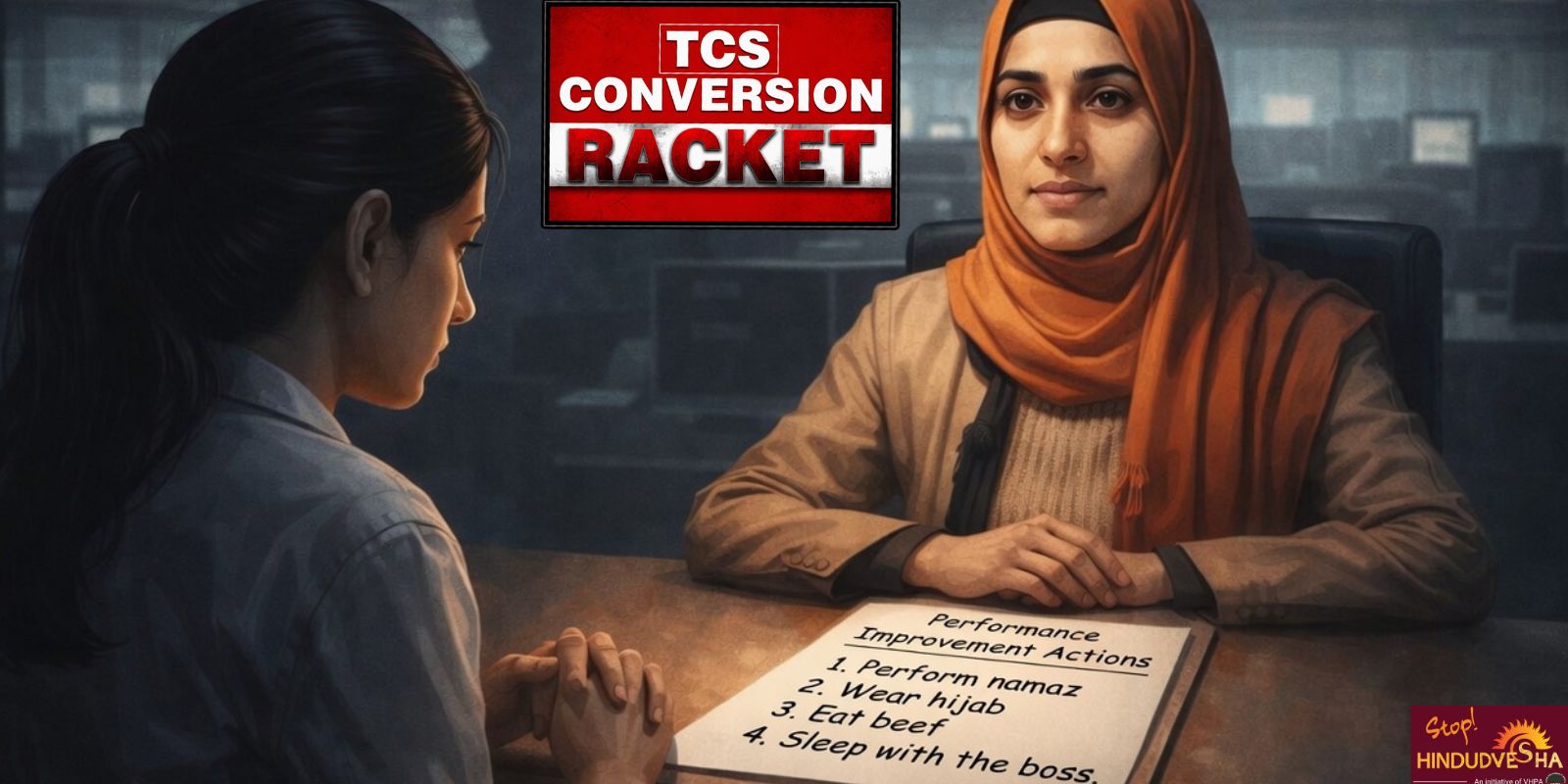
Summary
The Nashik TCS case, based on multiple police complaints and an ongoing investigation, outlines serious allegations of sexual exploitation, harassment, and religious coercion involving several team leaders and HR personnel. An undercover operation reportedly revealed a pattern in which young, vulnerable employees—many working night shifts—were targeted through a combination of authority, personal manipulation, and institutional failure. Accounts point to the misuse of supervisory power, inadequate HR response, and gaps in the enforcement of workplace safeguards under the POSH framework. Beyond the individuals involved, the case raises broader concerns about vulnerability within India’s BPO sector and the effectiveness of corporate grievance systems. As investigations continue, it stands as a critical test of accountability for corporate India.
More than a decade ago, a former Indian Navy officer fresh out of his Short Service Commission landed what should have been a dream job at one of Bengaluru’s biggest IT firms. Instead, he walked into a corporate minefield. The HR department, he later confided, operated like a shadow network — openly woke Hindus and Muslim employees working in eerie tandem. Show even mild support for the Ram Temple or Hindu causes, and your career was quietly torched: negative appraisals, denied promotions, extended benching. “I shut down completely and stopped talking to my colleagues because anyone could have been a spy,” he recalled. The anti-Hindu undercurrent was so thick that he lasted just months before putting in his papers. His warning? This wasn’t just one rogue office. It was the underbelly of India’s marquee IT giants.
The former Navy officer’s words now read like a prophecy.
Horror Show at TCS
Here’s a quick quiz. What’s the basic qualification to get a job at Tata Consultancy Services? An IT degree? Sure, but you must also know how to offer namaz. What’s the performance target for a salary hike? Simple — eat beef and show you are a team player. What about a promotion? Easy — wear a hijab, convert to Islam, sleep with a Muslim. These were some of the unbelievable demands made by Muslim team leaders, according to complaints filed by Hindu women at TCS’ BPO facility in Nashik, Maharashtra. [1]
For Hindu women employees, what seemed like a routine night shift inside the fluorescent-lit TCS office in the Satpur–Mumbai Naka industrial belt concealed something far darker beneath the surface. What started as a tip-off in February 2026 about a young Hindu woman in her early twenties suddenly observing Ramzan fasts has detonated into one of the most explosive workplace scandals to hit India’s $250-billion IT services juggernaut.[2] By mid-April, the police had filed nine cases detailing a four-year pattern of rape, sexual harassment, molestation, stalking, vulgar remarks, religious conversion, and deliberate acts to insult Hindu gods and traditions.
Gallery of Rogues
The arrested include seven team leaders and at least one HR official. A senior operations manager, Nida Khan, remains absconding. [3] The seven male employees functioned “like an organized gang” to target female staff members, said a senior police officer who is part of the investigation.[4] The scope of the crimes and the number of perpetrators involved can be judged from the fact that the state police formed a Special Investigation Team (SIT) to probe the company. Here’s the lineup of the accused:
- Danish Sheikh, 34: Team leader; accused of serious sexual misconduct, including rape — Arrested
- Asif Ansari, 22: Team leader; allegedly linked to harassment-related complaints — Arrested
- Shafi Sheikh, 34: Team leader; accused of workplace misconduct — Arrested
- Shah Rukh Qureshi, 34: Team leader; accused of sexual harassment — Arrested
- Raza Memon, 35: Team leader; named in FIRs (police reports) tied to misconduct — Arrested
- Tausif Attar, 36: Team leader; part of the accused group under investigation — Arrested
- Ashwini Ashok Chainani: HR official; inaction on complaints filed by employees — Arrested
- Nida Khan: Senior Operations Manager; complicit in grooming — Absconding
Grooming Gang in India’s Silicon Plateau
The TCS case isn’t just another #MeToo flare-up in the cubicles. It is a case study in how unchecked supervisory power, allegedly exercised by certain Muslim employees within India’s shift-work BPO model—where entry-level hires, often women aged 18–25 from modest backgrounds, depend heavily on team leaders for appraisals, shifts, and promotions—can metastasize into predation.[5]
It lays bare significant gaps in the implementation of India’s “Sexual Harassment of Women at Workplace (Prevention, Prohibition and Redressal) Act, 2013,” known as the POSH Act. It also raises uncomfortable questions about whether corporate India’s vaunted diversity rhetoric holds up when confronted with real cultural and religious fault lines. With women comprising roughly 35–40 percent of the IT-BPM workforce [6], and night shifts drawing talent from smaller towns, the Nashik episode is not merely a local HR failure. It is a national wake-up call for an industry that employs nearly five million people and underpins India’s services export engine.
The Spark: One Tip-Off, an Undercover Sting, and Nine FIRs
The fuse was lit in February 2026, when a local political worker alerted Nashik City Police to suspicious activity at the TCS BPO unit. A young Hindu employee, the tipster said, had begun living “in an Islamic manner”—observing Ramadan fasts and adopting practices that alarmed her family. Officers discreetly contacted her parents, who confirmed they had withdrawn her from the job. Rather than intervene immediately, police launched a carefully planned undercover operation. For several weeks, police staff worked undercover inside the facility, posing as housekeeping personnel. They blended into the daily routine: workstations, meetings, pantries, and lobbies. They observed, listened, and reported back after every shift.[7]
The outcome was swift and serious. On March 26, the first case was registered against Danish Shaikh, a married senior colleague, of rape—allegedly luring the woman into a physical relationship under false promises of marriage while concealing his existing family. Additional charges were filed for hurting religious sentiments. Over the following week, eight more such police reports were filed. Victims—primarily young women, along with at least one male colleague—described a consistent pattern of misconduct: inappropriate touching, crude remarks about bodies and fertility, stalking, molestation, and pressure linked to personal vulnerabilities such as marital distress or financial hardship.[8]
Turning TCS into a Sharia Hell
Religious coercion ran like a live wire through several complaints. Allegations included disparaging Hindu practices, pressuring employees to participate in Islamic rituals such as offering namaz during work hours, and encouraging conversion-like behaviors—observing Ramadan fasts, consuming non-vegetarian food against dietary norms, or adopting associated attire. One accused’s phone reportedly contained images of a female Hindu employee dressed in Muslim clothing. The charges span serious offenses, including rape, sexual harassment, stalking, outraging modesty, and deliberate acts intended to offend religious sentiments. According to the complaints, targeting often began during onboarding, when personal details—family finances, emotional stressors, and marital status—were collected and later weaponized.[9]
A contract employee at the Nashik office explained how the Muslim team leaders behaved: “They used to say, ‘Go make Hindu girls your girlfriends and marry them.’ They used to say ‘convert your religion’ and used to talk about their religion. They were also given money. It has been ongoing since 2021. The HR madam was also funded.” [10] Another woman said she was taken to a resort under the pretext of a holiday, where she was raped.
A male complainant stated that he was repeatedly humiliated for his Hindu faith and pressured to abandon his religious identity. Victims also alleged being forced to consume beef. Such coercion, if substantiated, can have deep psychological and emotional impact, given that consuming beef is prohibited within Hindu religious practice.[11]
The pattern was systematic — targeting the vulnerable, exploiting authority, and blending sexual predation with faith-based pressure. [12]
Lincoln Sokhadia, a former IT worker, writes: “The most shocking revelation in the police investigation into the TCS case in Nashik was that these jihadis had created a secret Muslim WhatsApp group inside the office. In this group, photos of Hindu girls in the office were shared. Discussions took place there – ‘Whose turn is it today?’ ‘Which girl is weak and will soon fall into the trap?’ ‘How to blackmail whom?’ [13]
Sokhadia adds: “The girl who considered her team leader as her protector, the same team leader would bid for that girl in the digital group. This was a ‘digital mandi’ (digital market) where deals were made for the dignity of Hindu girls.”
Team Leaders Who Ran the Playbook
The named individuals were largely senior team leaders who exercised direct control over shifts, performance reviews, and the day-to-day work environment of junior staff. Two women in HR-related roles were also implicated: Nida Khan, accused of complicity in the grooming process and of explaining prayer rituals, and Ashwini Chainani, an HR official arrested for allegedly ignoring complaints. TCS suspended all implicated employees.
Investigators have described what appears to be a calculated grooming dynamic. Personal vulnerabilities—strained marriages, childlessness, financial stress—were identified and, according to the allegations, exploited. Initial interactions were often framed to appear consensual, with female intermediaries reportedly easing targets into the process before male supervisors escalated matters. Digital evidence, including chat records, dozens of calls linked to the arrested HR official, and numerous emails, as well as financial transactions, is under scrutiny. The pattern, as outlined in the investigation, suggests a methodical approach: identify distress, build trust, leverage workplace authority, and reinforce control through a mix of personal and religious pressure. [14]
Isolation, Intimidation, and a Darker Culture
Fresh accounts are amplifying the severity of the allegations. In an NDTV interview, a TCS Nashik employee with six years of experience described what she characterized as a suffocating regime: she was reassigned to work alone on a rooftop terrace, physically isolated from colleagues. Her phone, bag, and personal belongings were routinely confiscated under “security” pretexts whenever she left her station. Young women aged 20–25, she said, were treated as “soft targets” for manipulation and pressure. “Thank God I survived,” she told reporters. “Otherwise the same thing would have happened to me.” Following the scandal’s emergence, the Nashik office reportedly shifted to a work-from-home model as investigations intensified.[15]
Three more victims have reportedly come forward, potentially pushing the FIR count higher. Police are examining digital trails, possible resort angles for off-site grooming, and unconfirmed international threads.
HR Complicity and the POSH Catastrophe
The most corrosive aspect for any corporate boardroom is not the alleged misconduct at the operational level, but the claims of institutional failure at the top. Victims state that they repeatedly filed complaints with TCS’s HR, but received dismissive responses. When women approached Nida Khan, the HR manager, they alleged they were discouraged from escalating the matter and, in some cases, threatened with termination. [16] Statements attributed to HR responses included remarks such as, “Why do you want to get highlighted? Let it go,” and “Such things are common in MNCs.”
Nida Khan has reportedly been described by police as a central figure in the case, sometimes referred to as the “lady captain.” According to the allegations, she befriended women employees, gained their trust, and gradually encouraged them to adopt practices such as offering namaz and wearing the hijab.[17]
Chainani, the arrested HR official, is accused of failing to activate the Internal Committee mandated under the POSH Act, despite receiving emails and formal grievances. The SIT is now reviewing TCS’s compliance with the 2013 Act, which requires independent committees, timely inquiries, and protections against retaliation.
Industry Ripples: From Nashik to the National Stage
The TCS case illustrates how BPOs can expose individuals to heightened vulnerability: young recruits from Tier-2 and Tier-3 towns, financially dependent, far from family support, and working overnight shifts while the city sleeps. In such conditions, supervisors often become de facto gatekeepers of their livelihood.
Sokhadia offers his perspective on the dynamics within the BPO/call center industry. “No major degree is required to enter this sector. Basic English proficiency can secure a job paying Rs 20,000–30,000. Broadly, there are two types of employees: those with limited formal education who remain in the same roles for extended periods, and college-going youths who work night shifts to support themselves,” he notes. [18]
Reflecting on his own experience, he adds: “I worked in a BPO during my college years to earn extra income. In my observation, when individuals rise to positions such as Team Leader, Trainer, or HR, they can significantly shape the workplace environment, including recruitment and internal dynamics. Those who remain in the system longer often move into positions of influence. When such power is concentrated, the risk of misuse increases, particularly for new and younger employees entering the system.”
Muslim Appeasement in Corporate India
The revelations sparked protests outside the TCS office in Nashik, with demonstrators demanding swift justice and greater accountability from the company. While TCS has been publicly named and investigations are underway, it is not the only Indian corporation facing serious scrutiny over its workplace practices.
India’s private sector is often criticized for its intensely demanding and, at times, exploitative work culture. Call center employees, for example, frequently struggle to get even a two-minute bathroom break. Sick leave or casual leave is hard to obtain, even in genuine emergencies. Staff are routinely expected to work 10-12 hours a day, despite official shifts being only 9 hours. These strict rules, however, appear to apply selectively.
In contrast, employees say Muslim workers are often granted significant flexibility to offer prayers during office hours. Meetings are rescheduled to accommodate prayer breaks, sometimes overriding business priorities. Many large companies have also set up dedicated prayer rooms. During Ramadan, several major corporations organize free iftar meals exclusively for Muslim employees, while similar arrangements are rarely made for other communities’ festivals.
A software engineer who worked at a Bengaluru-based IT firm in 2009 described what he viewed as a pattern of differential accommodation. “The company organized sehri meals for Muslim employees, and the cafeteria remained closed to others until early morning. There were additional breaks for namaz and extended leave during Ramadan and Eid. Hindu employees did not receive similar concessions; in fact, we were often expected to compensate for the lost hours. Over time, this created a sense of imbalance within the workplace,” he said.
Women’s Safety – A Big Concern in Corporate India
Neeru Zinzuwadia Adesara, Executive Editor at TV9 Gujarati News, who has considerable experience working in newsrooms and corporate circles where women work late hours, said cases like TCS are neither entirely rare nor alarmingly widespread. The truth sits somewhere in between, and that’s what makes it uncomfortable, she observes.
“Big names like Tata Consultancy Services come into focus because they’re visible,” Adesara explains. “They have scale, reputation, and public scrutiny. But what really worries me is what we don’t see. Smaller firms, vendors, and even some startups, where complaints never go beyond a closed room. In many places, it’s not safety that keeps things in order; it’s silence. And that’s why this issue goes beyond just women’s safety. It’s really about how accountable our corporate systems actually are when something goes wrong. When you hear about multiple complaints over the years, it’s hard to view it as a one-off incident. It starts looking like something deeper, a failure of systems that were supposed to step in early and prevent escalation.”
According to Adesara, what makes the case more unsettling is that companies like TCS represent aspiration for so many middle-class families. “For many young professionals, it’s not just a job, it’s stability, respect, a sense of having ‘made it’.” So when something like this surfaces, it shakes that trust. And the reality is, across cities, whether metros or smaller towns, thousands of young women walk into workplaces with that same trust. In many places, things work exactly as they should. But in others, systems exist more on paper than in practice. When that happens, people often don’t know where to go. Or worse, they do know, but choose not to, because the cost of speaking up feels too high.”
Adesara feels the harsh truth is that many more TCS’s may be happening right now, since not every case comes to light. “Many remain buried under fear, hesitation, or simply lack of access to a fair process. And that, more than anything else, is the real concern.”
Conclusion: For Corporate India, Nashik is Existential.
India’s IT sector is central to the country’s economic ambition. If employee safety—especially for women working night shifts under demanding conditions—is an afterthought, the talent pipeline weakens, client confidence erodes, and the $ 250 billion growth story comes under strain. Corporate India faces a clear choice: treat this as a reputational issue to contain, or undertake a deeper cultural audit to address systemic failures. That requires rotating authority where necessary, conducting rigorous audits, strengthening training, and ensuring that HR failures do not persist unchecked.
The warning signs have been visible for some time. The Nashik case has now forced the industry to confront them directly—and the reflection is uncomfortable. The real test lies not in official responses, but in whether similar incidents are prevented in the future. For a sector built on delivering reliability and future readiness, safeguarding the present for every employee is not optional; it is fundamental to its sustainability.
As Adesara of TV9 notes: “TCS is not necessarily a villain, nor is it the lone bad actor. It is a mirror—reflecting both progress and persistent failure in corporate India. Women are not afraid of work. They are afraid of being unheard. And in a country aspiring to be a global economic power, that should concern us far more than any single headline.”
Citations
[1] OpIndia Gujarati, “BPO, KPO or Jihadi Hubs? Inside ‘Office Jihad’—Nashik Incident Personal Experience,” https://gujarati.opindia.com/opinion/bpo-kpo-or-jihadi-hubs-inside-office-jihad-nashik-incident-personal-experience/
[2] YouTube, “Video,” https://www.youtube.com/watch?v=jOTGOy-X4E0
[3] The Economic Times, “Nashik TCS IT Company Case: Victims Allegedly Forced to Offer Namaz, Eat Beef, Sexually and Mentally Harassed, Says Maharashtra Minister,” https://economictimes.indiatimes.com/news/new-updates/nashik-tcs-it-company-case-victims-allegedly-forced-to-offer-namaz-eat-beef-sexually-and-mentally-harassed-says-maharashtra-minister/articleshow/130205490.cms
[4] Hindustan Times, “‘These Things Happen’: TCS Nashik HR Arrested After Dismissing Woman’s Harassment, Religious Conversion Claims,” https://www.hindustantimes.com/india-news/these-things-happen-tcs-nashik-hr-arrested-after-dismissing-womans-harassment-religious-conversion-claims-maharashtra-101776306288451.html
[5] Facebook, “Video,” https://www.facebook.com/share/v/1BtKNyDPU6/
[6] NASSCOM, “Women ‘in’ Equality—Not Anymore!: Gender Diversity and Inclusivity Trends in IT,” https://nasscom.in/knowledge-center/publications/women-inequality-not-anymore-gender-diversity-inclusivity-trends-it
[7] The Economic Times, “TCS Nashik Case: How Undercover Police Posing as Cleaners Exposed Sexual Abuse, Religious Coercion, and HR Failure in the BPO Unit,” https://economictimes.indiatimes.com/news/new-updates/tcs-nashik-case-how-undercover-police-posing-as-cleaners-exposed-sexual-abuse-religious-coercion-and-hr-failure-in-the-bpo-unit/articleshow/130251273.cms
[8] The Economic Times, “TCS Nashik Case: How Undercover Police Posing as Cleaners Exposed Sexual Abuse, Religious Coercion, and HR Failure in the BPO Unit,” https://economictimes.indiatimes.com/news/new-updates/tcs-nashik-case-how-undercover-police-posing-as-cleaners-exposed-sexual-abuse-religious-coercion-and-hr-failure-in-the-bpo-unit/articleshow/130251273.cms
[9] Firstpost, “TCS Nashik Case: Inside the Grooming Trap That Involved Sexual Abuse and Religious Conversion,” https://www.firstpost.com/explainers/tcs-nashik-case-inside-the-grooming-trap-that-involved-sexual-abuse-religious-conversion-14000058.html
[10] NDTV, “TCS Nashik: Made to Work Alone on Rooftop, Phone Snatched—Victims Speak,” https://www.ndtv.com/india-news/tcs-nashik-made-to-work-alone-on-rooftop-phone-snatched-tcs-nashik-victims-to-ndtv-11362391
[11] Jihad Watch, “India: Muslim Employers Arrested Over Forced Conversion of Hindu Staff, Sexual Abuse Charges,” https://jihadwatch.org/2026/04/india-muslim-employers-arrested-over-forced-conversion-of-hindu-staff-sexual-abuse-charges
[12] The Economic Times, “TCS Nashik Case: How Undercover Police Posing as Cleaners Exposed Sexual Abuse, Religious Coercion, and HR Failure in the BPO Unit,” https://economictimes.indiatimes.com/news/new-updates/tcs-nashik-case-how-undercover-police-posing-as-cleaners-exposed-sexual-abuse-religious-coercion-and-hr-failure-in-the-bpo-unit/articleshow/130251273.cms
[13] OpIndia Staff, “What Happened in Nashik Isn’t Isolated: ‘Corporate Jihad’ Operates Nationwide,” https://www.opindia.com/2026/04/what-happened-in-nashik-isnt-isolated-corporate-jihad-operates-nationwide/
[14] Firstpost, “TCS Nashik Case: Inside the Grooming Trap That Involved Sexual Abuse and Religious Conversion,” https://www.firstpost.com/explainers/tcs-nashik-case-inside-the-grooming-trap-that-involved-sexual-abuse-religious-conversion-14000058.html
[15] NDTV, “TCS Nashik: Made to Work Alone on Rooftop, Phone Snatched—Victims Speak,” https://www.ndtv.com/india-news/tcs-nashik-made-to-work-alone-on-rooftop-phone-snatched-tcs-nashik-victims-to-ndtv-11362391
[16] Times Now News, “First Friendship, Then Hijab Training: Who Is the ‘Lady Captain’ in TCS Conversion Case?” https://www.timesnownews.com/city/first-friendship-then-hijab-training-who-is-the-lady-captain-in-tcs-conversion-case-article-154090161
[17] NDTV, “TCS Nashik: Made to Work Alone on Rooftop, Phone Snatched—Victims Speak,” https://www.ndtv.com/india-news/tcs-nashik-made-to-work-alone-on-rooftop-phone-snatched-tcs-nashik-victims-to-ndtv-11362391
[18] OpIndia Staff, “What Happened in Nashik Isn’t Isolated: ‘Corporate Jihad’ Operates Nationwide,” https://www.opindia.com/2026/04/what-happened-in-nashik-isnt-isolated-corporate-jihad-operates-nationwide/

Donate to HINDUDVESHA
Our Mission is to explore and expose Hindudvesha through research analysis, education and response.
SUPPORT US