

A National Blind Spot: Why America Must Re-Examine CAIR, ICNA, and the Expanding Network of Islamic Influence
 Staff Writer · 11/30/2025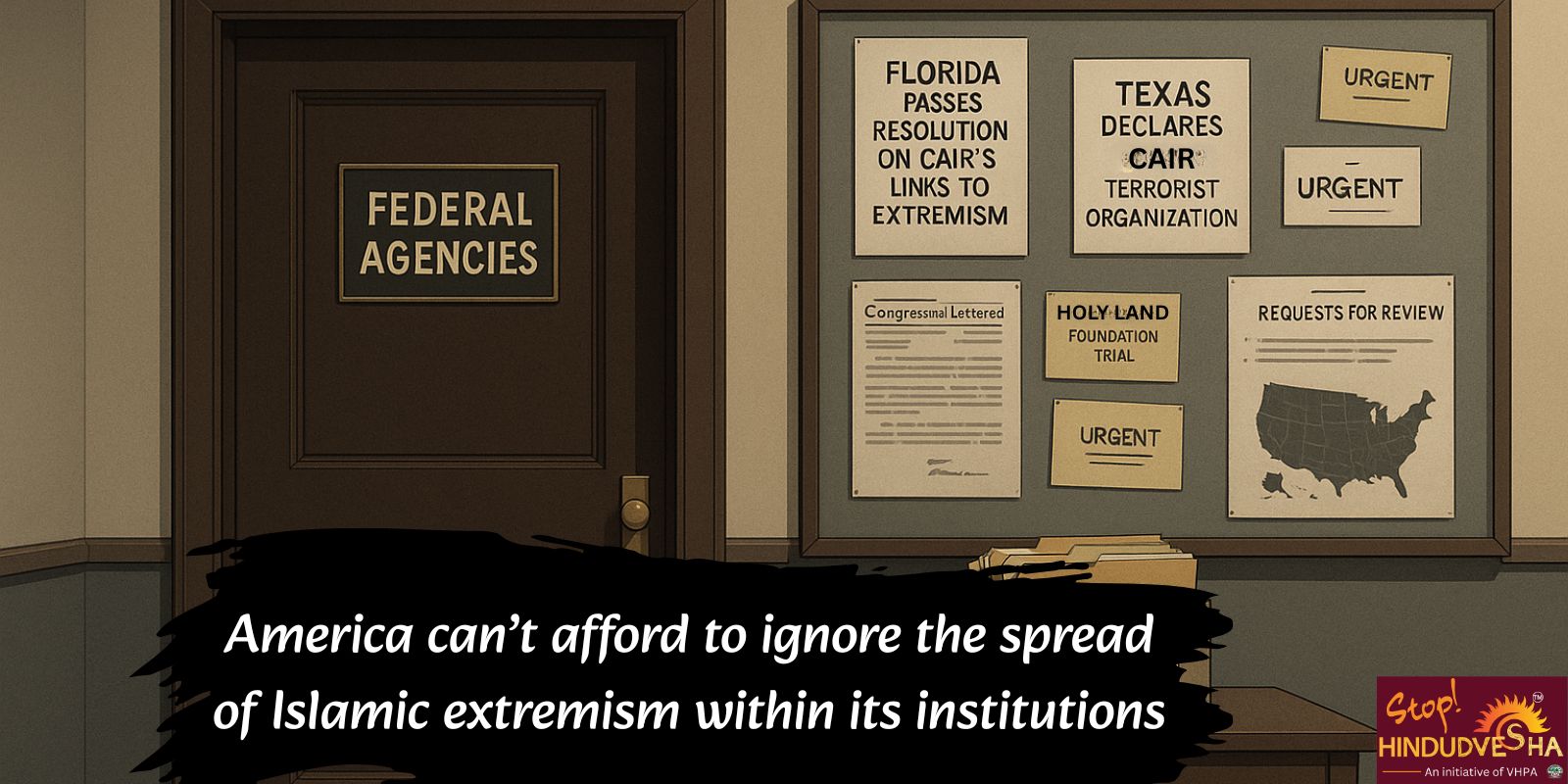
- Islamist-aligned groups like CAIR and ICNA have expanded influence across American institutions for decades with little scrutiny, presenting themselves as civil-rights advocates while maintaining ideological ties to political Islam.
- Their credibility persists despite documented associations with extremist networks and concerns raised by investigators, journalists, and several U.S. states.
- Florida and Texas have begun taking notable actions to restrict or investigate these organizations, signaling rising awareness of their growing influence.
- The United Kingdom offers a cautionary example of how ideological networks can entrench themselves when institutions hesitate to confront them due to cultural sensitivities.
- As these organizations deepen their presence in universities, media, and civic structures, it is increasingly important for national authorities to undertake serious, coordinated oversight to protect democratic norms.
Winston Churchill is supposedly to have observed that America can always be counted on to do the right thing …after it has tried everything else. That sentiment underscores America’s reluctance to act decisively, allowing Islamist extremist ideology to grow quickly and embed itself more deeply within its own institutional ecosystem.
For more than two decades, well-organized Islamist-aligned groups have operated in the United States with minimal scrutiny and substantial public credibility. Organizations such as the Council on American-Islamic Relations (CAIR) and the Islamic Circle of North America (ICNA) are widely regarded as civil-rights advocates committed to protecting Muslim Americans from discrimination. Their polished messaging, legal advocacy, and institutional partnerships reinforce the image of impartial defenders. Yet beneath this reassuring exterior lies a pattern the nation has been slow to confront. Investigators, journalists, and several state governments have documented ideological links between these organizations and movements abroad that espouse political Islam or operate in proximity to extremist networks[1],[2],[3],[4].
Despite this evidence, federal agencies and universities continue treating CAIR and ICNA as default representatives of Muslim Americans, relying on them for community engagement, diversity programming, and media commentary[5]. This disconnect between public perception and documented reality has created a dangerous institutional blind spot.
Other democracies have already paid the price for similar hesitation. In the United Kingdom, decades of political caution and institutional fear allowed Islamist-aligned networks to entrench themselves within universities, media, and local councils—with serious consequences for public safety and civic cohesion[6] [7].
America may now be nearing its own moment of recognition. States such as Florida and Texas have begun taking decisive action, openly acknowledging risks that federal authorities have long sidestepped. Their willingness to act suggests a shift in awareness—and perhaps the beginning of a broader national course correction.
Understanding the Ecosystem: What CAIR and ICNA Actually Represent
A realistic assessment of CAIR and ICNA must begin with their origins. CAIR, founded in 1994, rapidly positioned itself as the nation’s most prominent Muslim advocacy organization. But behind that public profile lies a record that raises serious concerns. CAIR was named an unindicted co-conspirator in the Holy Land Foundation terror-financing case, which documented the foundation’s ties to Hamas[8]. In response to unresolved questions emerging from that investigation, the FBI formally cut off official engagement with CAIR in 2009[9]. International authorities reached similar conclusions: in 2014, the United Arab Emirates designated CAIR as a terrorist organization[10].
ICNA’s roots trace back to South Asian Islamist movements, particularly Jamaat-e-Islami, which seeks societal Islamization through political activism. ICNA’s conferences and publications have featured individuals tied to extremist movements in Pakistan and Bangladesh[11]. Its humanitarian arm, Helping Hand for Relief and Development, has been scrutinized for partnering with Pakistan-based groups linked to terrorist organizations[12].
Although CAIR and ICNA portray themselves as mainstream civil-rights organizations, their ideological lineage and documented associations reveal something very different. Their origins, partnerships, and public positions consistently align with the goals of political Islam and usually overlap with networks and narratives linked to extremist movements—rather than reflecting the broad, diverse interests of Muslim Americans.
Evidence From U.S. States: Early Alarms and Uneven Awareness
To quote a February 11, 2024, analysis from the Middle East Forum[13], CAIR “is no stranger to public disgrace.” Over its turbulent history, the organization has faced legal scrutiny, public controversies, and multiple scandals—yet it continues to be treated as the media’s default authority on Muslim issues and Middle Eastern affairs.
That veneer of credibility is now starting to crack. A growing number of U.S. states have begun scrutinizing CAIR despite continued federal hesitation.
Florida led the shift. House Resolution 1209 (2024) urged state agencies to suspend all ties with CAIR, citing its involvement in the Holy Land Foundation case, the FBI’s suspension of engagement, and CAIR officials’ public statements following the Hamas attacks of October 7[14] [15] [16].
Texas went further. In 2025, Governor Greg Abbott designated CAIR and the Muslim Brotherhood as terrorist organizations within the state, banned their ability to purchase land, and authorized the Attorney General to investigate affiliated entities[17]. Although terrorism designations are typically a federal prerogative, Texas’s move signaled a deliberate and consequential assertion of state authority in response to mounting concerns.
Yet, nationally, federal agencies and local governments continue treating CAIR as a mainstream civil rights organization. This fragmented awareness allows CAIR and ICNA to retain influence even as evidence against them continues to mount.
Lessons from the United Kingdom
The United Kingdom demonstrates how quickly democratic institutions can erode when ideological actors learn to exploit cultural sensitivities and bureaucratic fear[18] [19]. For years, local councils, social services, and law-enforcement agencies hesitated to intervene in clear patterns of criminal behavior because officials feared being branded racist or Islamophobic. This dynamic was most starkly revealed in the grooming-gang scandals, where multiple government inquiries found that authorities had ample evidence of organized abuse but chose not to act. The fear of reputational backlash—and the pressure to maintain a façade of cultural harmony—paralyzed institutions responsible for protecting vulnerable citizens. As a result, networks of perpetrators were able to operate openly for more than a decade, preying on young girls while officials suppressed or ignored mounting warning signs.
Simultaneously, Sharia councils proliferated across parts of the United Kingdom, gradually establishing themselves as informal but influential authorities on marriage, divorce, inheritance, and family disputes [20] [21]. Although these councils lacked legal standing under the nation’s civil-law framework, they operated as parallel judicial forums whose decisions exerted significant social pressure within certain communities. Numerous investigations and parliamentary reviews documented how these bodies often enforced conservative or patriarchal interpretations of Islamic law, leaving women at a distinct disadvantage. Many were pressured into accepting unequal divorce settlements, coerced into remaining in abusive marriages, or denied access to rights guaranteed under British law. In effect, these councils created a shadow legal system that contradicted the principles of individual autonomy, gender equality, and equal protection before the law, thereby undermining the integrity of the nation’s official judicial framework.
Islamist-aligned groups in the UK strengthened their influence by carefully positioning themselves as civil-rights defenders, presenting their agendas through the language of equality, anti-racism, and community advocacy [22]. This strategic framing earned them credibility with institutions that were eager to demonstrate cultural sensitivity. As a result, these groups became the preferred partners for major media outlets seeking commentary on Muslim issues, for universities designing programs on diversity and Islamophobia, and for government agencies looking for community interlocutors. Over time, this positioning allowed them to shape public narratives, influence policy conversations, and marginalize dissenting Muslim voices who did not conform to their ideological outlook. By embedding themselves within these influential institutions, they were able not only to legitimize their worldview, but also to steer national debates in ways that aligned with their political aims—often without meaningful scrutiny or balanced representation.
The United States is beginning to show similar symptoms: institutional fear, deference to ideological gatekeepers, and reliance on activist-framed definitions of Islamophobia.
Political Strategy Behind Islamist Advocacy in the United States
CAIR and ICNA gained influence through a deliberate strategy that blends identity politics, narrative control, academic partnerships, and political mobilization.
They have strategically broadened the definition of Islamophobia far beyond genuine anti-Muslim prejudice, stretching it to include ideological critique, policy analysis, academic inquiry, and even legitimate investigations into extremist affiliations [23] [24]. By framing these forms of scrutiny as hostility toward Islam itself, they create a powerful cultural and political shield that discourages journalists, policymakers, and law-enforcement agencies from asking critical questions—effectively insulating their ideology from accountability.
Academic partnerships significantly amplify this strategy by giving activist narratives the veneer of scholarly legitimacy. The Bridge Initiative at Georgetown University and Rutgers University’s CSRR frequently produce research, reports, and public commentary that echo CAIR’s ideological framing on Islamophobia, civil rights, and extremism[25] [26] [27] [28]. These outputs are then cited by media outlets, policymakers, and advocacy groups as neutral academic authority. In turn, CAIR and its affiliates reference this scholarship to validate their own claims, creating a mutually reinforcing feedback loop between academia and activism that elevates their worldview while marginalizing dissenting or reformist Muslim perspectives.
Politically, CAIR and ICNA encourage bloc voting by framing civic participation as a defensive response to discrimination. Internally, they police dissent by marginalizing reformist Muslims, secular voices, women’s rights advocates, and ex-Muslims.
The result is an ecosystem that shapes public discourse while limiting alternative Muslim perspectives.
Security and Social Risks of Allowing These Organizations to Operate Unchecked
Unchecked influence by CAIR and ICNA creates multiple risks.
Their narrative control normalizes political Islam and fosters grievance-based identities, often discouraging cooperation with law enforcement. Their public stances have frequently defended individuals linked to extremist causes or reframed ideological concerns as discrimination[29] [30].
They also pressure public institutions to adopt accommodations that conflict with universal civil-law standards. The UK’s Sharia Council experience demonstrates how such concessions can evolve into systemic inequities[31].
Social cohesion is further strained by CAIR’s portrayal of American Muslims as uniquely persecuted, despite FBI data showing otherwise[32]. This isolation empowers ideological actors at the expense of women, minorities within Islam, and dissenting Muslims.
Law-enforcement partnerships remain problematic. The FBI’s suspension of engagement with CAIR in 2009 highlights longstanding concerns[33], yet many agencies continue using CAIR as a liaison.
A final and overlooked vulnerability: federal funding. In 2022, nearly $2 million in taxpayer funds went to organizations identified as Islamist-aligned, part of over $15 million in grants to Muslim-community groups that year[34]. Such funding inadvertently strengthens groups whose ideological goals may conflict with democratic norms.
Institutional Entrenchment: Influence Inside America’s Universities
Universities have become key power centers for Islamist-aligned influence, providing ideological groups with prestige, access to young audiences, and the aura of scholarly legitimacy. CAIR frequently conducts campus workshops, advises DEI offices, and shapes institutional conversations on civil rights, often positioning its political agenda as the authoritative Muslim perspective. This influence is reinforced by academic centers that echo CAIR’s narrative frameworks. Georgetown University’s Bridge Initiative routinely produces scholarship that mirrors CAIR’s positions on Islamophobia and extremism, giving activist arguments academic weight and enabling them to circulate unchallenged in media and policy circles [35]. Rutgers University’s Center for Security, Race, and Rights (CSRR) has gone even further, drawing congressional scrutiny for hosting speakers linked to extremist causes, promoting one-sided political content, and framing Islamist-aligned positions as academic analysis[36].
Together, these university platforms function as amplifiers, extending the reach of ideological networks and shaping the worldview of future policymakers, journalists, and civic leaders. Students exposed to these frameworks adopt ideological definitions of Islamophobia that equate critique with bigotry. Graduates carry these assumptions into journalism, law, government, and education, creating a long-term pipeline of influence.
Why Federal Recognition Has Lagged Behind
Federal reluctance stems from cultural fear, bureaucratic inertia, public-relations pressure, and political polarization.
Federal hesitation is driven in large part by officials’ fear of being accused of Islamophobia, a concern intensified by activist-aligned definitions that deliberately blur the line between religious identity and political ideology[37]. This climate discourages even routine scrutiny. At the same time, bureaucratic requirements for terrorist designation are narrow, slow, and procedurally rigid, allowing CAIR to avoid formal designation despite a long record of troubling associations revealed through investigations and court documents.
CAIR and ICNA further reinforce this protective barrier through sophisticated public relations campaigns that portray themselves as indispensable civil rights advocates, making institutions wary of challenging their ideological orientations. The problem is compounded by deep political polarization. Any attempt to examine these organizations is quickly framed as partisan, undermining efforts to build bipartisan consensus and leaving federal agencies locked into outdated engagement models.
What Responsible Scrutiny Should Look Like
Effective oversight requires distinguishing Muslim civil rights from Islamist political agendas.
Diverse Muslim voices—reformist Muslims, secular thinkers, women’s-rights advocates, Shia and Ahmadiyya communities—must be elevated beyond CAIR and ICNA.
Transparency should be mandatory for any organization receiving government funds or partnering with agencies, including disclosure of foreign ties and ideological affiliations.
Universities must diversify academic perspectives and reduce dependence on CAIR-aligned definitions of Islamophobia. Academic freedom requires protecting critique from ideological policing.
Law-enforcement agencies must update community-engagement models to prioritize non-ideological organizations rooted in democratic values.
Conclusion: A Moment for Clarity and Institutional Responsibility
CAIR and ICNA’s expanding influence expose a deeper national challenge: distinguishing legitimate civil rights advocacy from ideological agendas that exploit institutional sensitivities. State-level actions in Florida, Texas, Arkansas, and Louisiana show that concern is growing, but federal agencies remain restrained by cultural caution and political paralysis.
The UK’s experience demonstrates that hesitating to confront ideological actors leads to long-term institutional damage. The United States faces similar early warning signs.
Protecting Muslim Americans from discrimination and safeguarding national institutions from ideological capture are mutually reinforcing goals. The path forward requires transparency, broader representation, updated engagement strategies, and a willingness to examine evidence directly.
The window for preventative action is still open—but narrowing.
Citations
[1] U.S. Department of Justice. Federal Judge Hands Down Sentences in Holy Land Foundation Case, 2009. https://www.justice.gov/archives/opa/pr/federal-judge-hands-downs-sentences-holy-land-foundation-case
[2] The Investigative Project on Terrorism. UAE Designates CAIR, MAS as Terrorist Groups, 2014. https://www.investigativeproject.org/4655/uae-designates-cair-mas-as-terrorist-groups
[3] StopHinduDvesha.org. “Deconstructing CAIR.” https://stophindudvesha.org/deconstructing-cair-council-on-american-islamic-relations/
[4] StopHinduDvesha.org. “ICNA (Islamic Circle of North America) Deconstructed.” https://stophindudvesha.org/icna-islamic-circle-of-north-america-deconstructed/
[5] CAIR. Mission Statement and Public Documents. https://www.cair.com/about_cair/about-us/
[6] Home Office (UK). Independent Inquiry into the Rotherham Child Sexual Exploitation Scandal, 2014.
https://www.rotherham.gov.uk/downloads/file/279/independent-inquiry-into-child-sexual-exploitation-in-rotherham
[7] InfluenceWatch. The Quilliam Foundation. https://www.influencewatch.org/organization/the-quilliam-foundation/
[8] U.S. Department of Justice. Federal Judge Hands Down Sentences in Holy Land Foundation Case, 2009. https://www.justice.gov/archives/opa/pr/federal-judge-hands-downs-sentences-holy-land-foundation-case
[9] Federal Bureau of Investigation. Letter Suspending Formal Engagement with CAIR, 2009. https://www.investigativeproject.org/documents/case_docs/757.pdf
[10] The Investigative Project on Terrorism. UAE Designates CAIR, MAS as Terrorist Groups, 2014. https://www.investigativeproject.org/4655/uae-designates-cair-mas-as-terrorist-groups
[11] StopHinduDvesha.org. “ICNA (Islamic Circle of North America) Deconstructed.” https://stophindudvesha.org/icna-islamic-circle-of-north-america-deconstructed/
[12] Focus on Western Islam. USAID Investigating Funding of Islamist Organization after Years of MEF Exposés. https://www.meforum.org/usaid-investigating-funding-of-islamist
[13] Middle East Forum. Florida House Passes Bill Slamming Hamas-Linked CAIR, 2024. https://www.meforum.org/florida-house-passes-bill-slamming-hamas-linked?goal=0_086cfd423c-7a029fa46e-34460485&mc_cid=7a029fa46e&mc_eid=2c33a9f4ec&utm_campaign=7a029fa46e-MEF_Baird_02122024&utm_medium=email&utm_source=Middle%20East%20Forum&utm_term=0_086cfd423c-7a029fa46e-%5BLIST_EMAIL_ID%5D
[14] Florida House of Representatives. House Resolution 1209, 2024: Disassociation from Council on American-Islamic Relations. https://legiscan.com/FL/bill/H1209/2024
[15] Federal Bureau of Investigation. Letter Suspending Formal Engagement with CAIR, 2009. https://www.investigativeproject.org/documents/case_docs/757.pdf
[16] JNS.org. Florida House passes bill slamming Hamas-linked CAIR, 2024.
https://www.jns.org/florida-house-passes-bill-slamming-hamas-linked-cair/
[17] Houston Public Media. Gov. Abbott declares CAIR, Muslim Brotherhood terrorist groups, 2025. https://www.houstonpublicmedia.org/articles/news/religion/2025/11/18/536475/gov-abbott-declares-cair-muslim-brotherhood-terrorist-groups/
[18] Home Office (UK). Independent Inquiry into the Rotherham Child Sexual Exploitation Scandal, 2014.
https://www.rotherham.gov.uk/downloads/file/279/independent-inquiry-into-child-sexual-exploitation-in-rotherham
[19] Home Office (UK). Group-Based Child Sexual Exploitation: Characteristics and Contextual Research, 2020. https://www.gov.uk/government/publications/group-based-child-sexual-exploitation-characteristics-of-offending
[20] Nuntiatoria. One Law for All: Sharia and the Challenge to British Democracy. 2025.
https://nuntiatoria.org/2025/09/22/one-law-for-all-sharia-and-the-challenge-to-british-democracy/
[21] UK Parliament. Debate on Sharia Law, 2018. https://hansard.parliament.uk/lords/2018-05-24/debates/2A29E13B-AF77-4292-B938-5065C812EFAB/ShariaLaw
[22] InfluenceWatch. The Quilliam Foundation. https://www.influencewatch.org/organization/the-quilliam-foundation/
[23] CAIR. Annual Islamophobia Reports, 2015–2024. https://islamophobia.org
[24] StopHinduDvesha.org. “Islamophobia: Whose Fault Is It Anyway?” https://stophindudvesha.org/islamophobia-whose-fault-is-it-anyway/
[25] Georgetown University, Prince Alwaleed bin Talal Center. Bridge Initiative Publications, 2015–2024.
https://bridge.georgetown.edu/research/
[26] Rutgers University Center for Security, Race, and Rights (CSRR). Event and Speaker Archives, 2018–2023. https://csrr.rutgers.edu/events/lectures/
[27] StopHinduDvesha.org. “Islamist Influence in Western Academia: Georgetown’s Bridge Initiative.”
https://stophindudvesha.org/islamist-influence-in-western-academia-the-bridge-initiative-and-georgetown-universitys-dilemma/
[28] StopHinduDvesha.org. “Rutgers Law Center Under Federal Investigation.” https://stophindudvesha.org/under-federal-investigation-how-rutgers-law-center-used-taxpayer-funds-to-platform-extremism/
[29] U.S. Department of Justice. Federal Judge Hands Down Sentences in Holy Land Foundation Case, 2009. https://www.justice.gov/archives/opa/pr/federal-judge-hands-downs-sentences-holy-land-foundation-case
[30] CAIR. Annual Islamophobia Reports, 2015–2024. https://islamophobia.org
[31] Nuntiatoria. One Law for All: Sharia and the Challenge to British Democracy. 2025.
https://nuntiatoria.org/2025/09/22/one-law-for-all-sharia-and-the-challenge-to-british-democracy/
[32] Federal Bureau of Investigation. Hate Crime Statistics, annual reports. https://ucr.fbi.gov/hate-crime
[33] Federal Bureau of Investigation. Letter Suspending Formal Engagement with CAIR, 2009. https://www.investigativeproject.org/documents/case_docs/757.pdf
[34] Focus on Western Islam. “Federal Government Hands Almost $2 Million to Domestic Islamist Organizations in 2022,” 2023. https://islamism.news/research/investigations/federal-government-hands-almost-2-million-to-domestic-islamist-organizations-in-2022/
[35] StopHinduDvesha.org. “Islamist Influence in Western Academia: Georgetown’s Bridge Initiative.”
https://stophindudvesha.org/islamist-influence-in-western-academia-the-bridge-initiative-and-georgetown-universitys-dilemma/
[36] U.S. House Committee on Education and the Workforce. Inquiry into Rutgers CSRR, 2023.
https://edworkforce.house.gov/uploadedfiles/rutgers_letter_final.pdf
[37] Georgetown University, Prince Alwaleed bin Talal Center. Bridge Initiative Publications, 2015–2024.
https://bridge.georgetown.edu/research/

Donate to HINDUDVESHA
Our Mission is to explore and expose Hindudvesha through research analysis, education and response.
SUPPORT US