

No Dual Entitlement: The Indian Supreme Court Clarifies SC Status After Conversion
 K. Sindhu · 05/26/2026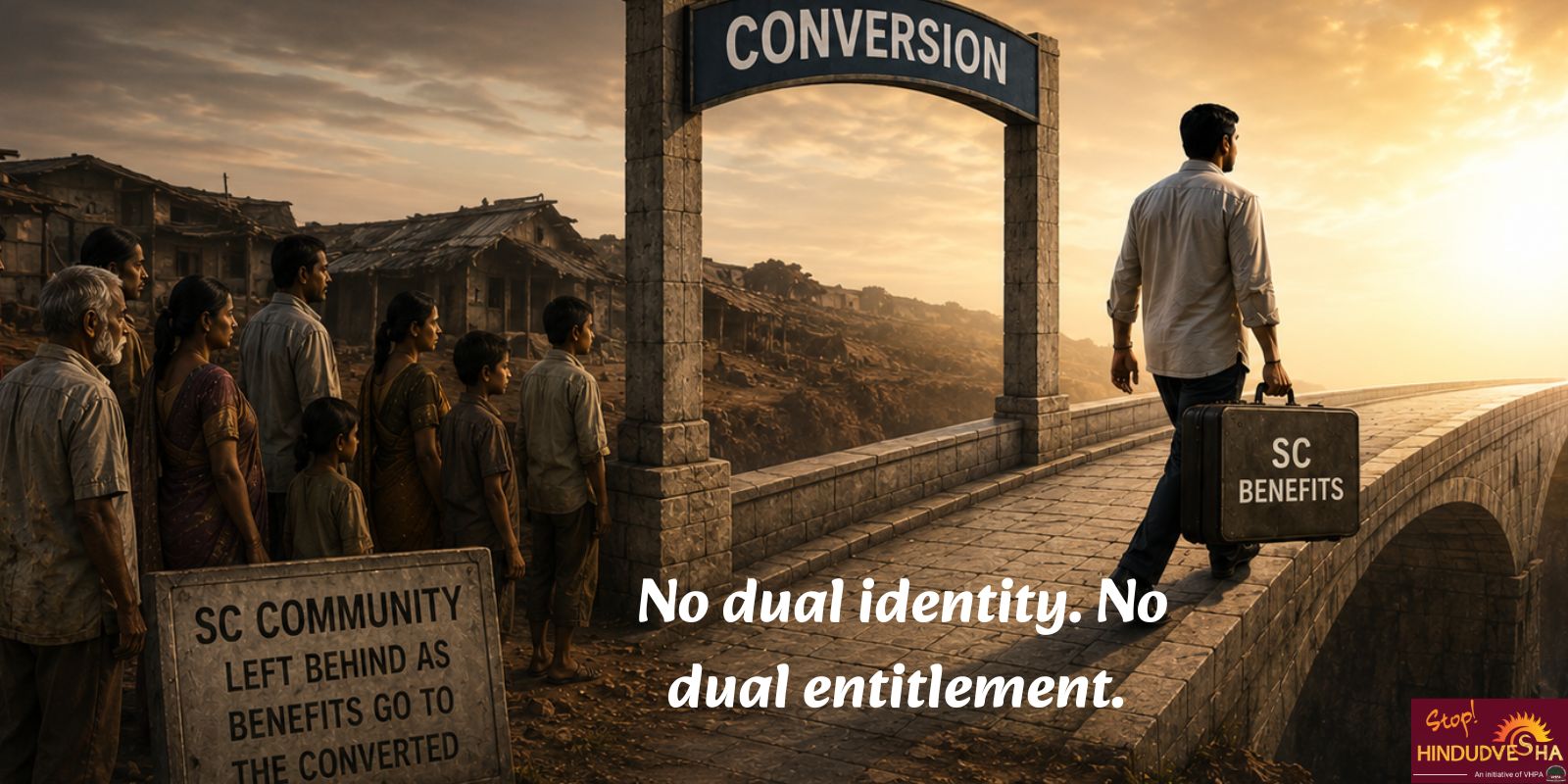
Summary
The growing demand to extend Scheduled Caste (SC) benefits to individuals who have converted out of the Hindu fold has exposed a major constitutional contradiction. Conversion is often presented as an escape from caste discrimination, yet the same discrimination is invoked to justify continued access to caste-linked protections. Indian courts have consistently rejected this duality, holding that SC status is tied to a specific socio-religious framework recognized under the Constitution. The article examines the legal foundations of this position, judicial rulings reaffirming it, and the systemic misuse enabled by weak enforcement. It further argues that extending such benefits across religious boundaries would distort the logic of affirmative action, encourage strategic conversion, weaken targeted safeguards, and fundamentally reshape the incentive structure surrounding religious identity in India.
For years, India has witnessed a contentious and recurring debate over individuals converting out of Hindu Dharma, Sikhism, or Buddhism while continuing to claim Scheduled Caste benefits reserved under the constitutional affirmative-action framework. Courts, commissions, caste surveys, and political controversies across multiple states have repeatedly grappled with the issue, with critics arguing that the practice unfairly burdens taxpayers, dilutes benefits meant for genuinely eligible communities, and undermines the constitutional logic underlying reservation policy. A 2025 Allahabad High Court judgment even described the continued availing of SC benefits after conversion to Christianity as a “fraud on the Constitution,” reflecting the growing intensity of the debate.
That long-running controversy has now received a decisive legal response from the Supreme Court of India in Chinthada Anand v. State of Andhra Pradesh(2026) [1], which drew a firm constitutional line on a question that has lingered at the intersection of law, religion, and social justice: can a person who has converted out of the Hindu–Sikh–Buddhist fold continue to retain Scheduled Caste (SC) status? The Court’s answer is unequivocal: no.
The ruling reiterates a foundational principle embedded in India’s constitutional framework: conversion to a religion outside the specified Indic fold results in the immediate loss of Scheduled Caste status, irrespective of birth. This is not merely a technical interpretation of law; it is a reaffirmation of the structural logic underlying affirmative action in India.
At the outset, however, one clarification is essential—and non-negotiable. Supporting this judgment and recognizing the logic behind restricting SC benefits to specific religious frameworks does not amount to endorsing the oft-repeated but deeply flawed narrative that caste-based discrimination is intrinsic to Hindu Dharma. That narrative itself emerged through colonial distortions and was later weaponized to delegitimize an entire civilizational ethos. To equate social distortions with the essence of Hindu Dharma is a profound civilizational mischaracterization—one repeatedly invoked to discredit indigenous traditions.
What the Court has done, therefore, is not to validate such narratives, but to reinforce a constitutional firewall—one designed to prevent the misuse of identity through strategic religious shifting while preserving the integrity and purpose of affirmative action.
The Court Rejects Double Claims
The facts of the case are simple yet telling. The complainant, born into a Scheduled Caste, had converted to Christianity and was serving as a pastor. Despite this, he sought to invoke protections under the Scheduled Castes and Scheduled Tribes (Prevention of Atrocities) Act, 1989. The High Court of Andhra Pradesh rejected the claim, holding that the statutory protections associated with Scheduled Caste status could not be extended to individuals who no longer profess the religions specified in the Constitution (Scheduled Castes) Order, 1950. When the matter reached the Supreme Court, the apex court affirmed this reasoning in clear terms. [2]
The Court emphasized that constitutional identity cannot be selectively invoked. One cannot publicly profess Christianity—through conduct, occupation, and institutional affiliation—while simultaneously claiming benefits reserved for Scheduled Caste Hindus.
A central issue before the Court was the meaning of the term “professing” a religion. The judgment clarifies that religion is not merely a matter of private belief; it is expressed through public conduct, rituals, and institutional roles. A person serving as a pastor, participating in church activities, and publicly identifying with Christianity cannot simultaneously claim to “profess” Hinduism merely for statutory benefits.[3] The law does not recognize such fluidity where it results in selective entitlement. In essence, the Court rejected the possibility of dual religious identity for legal purposes, treating such attempts as a misuse of constitutional protections.
However, the Court did acknowledge that reconversion to Hinduism, Sikhism, or Buddhism may restore SC status—but only under strict and cumulative conditions. The individual must establish [4]:
- Original belonging to a recognized SC community;
- Bonafide reconversion to the original religion; and
- Acceptance by the members of the original caste community (mere self-proclamation is insufficient)
The burden of proof lies entirely on the claimant. This ensures that reconversion is not used merely as a convenient legal strategy but reflects a genuine return to Hinduism.
Article 341 Draws the Line
The legal foundation of this position lies in Article 341 of the Constitution, which empowers the President to specify the castes deemed to be Scheduled Castes. This authority is operationalized through the Constitution (Scheduled Castes) Order, 1950. Clause 3 of this Order explicitly states that no person professing a religion other than Hinduism, Sikhism, or Buddhism shall be deemed a member of a Scheduled Caste. [5] This was not an act of exclusion. It was an act of constitutional precision.
The Constitution did not attempt to create a universal category of disadvantage. Instead, it identified a historically specific injustice—caste-based discrimination—and crafted a targeted legal remedy in response. This is why Scheduled Caste status is not merely about backwardness. It is tied to a particular form of social exclusion rooted in a specific historical and civilizational context.
Decades of Judicial Clarity
This ruling is not an isolated departure but part of a consistent judicial trajectory. In C. Selvarani v. Special Secretary, the Supreme Court dismissed a claim by a practicing Christian seeking SC benefits, terming it a “fraud on the Constitution.” Similarly, in Soosai v. Union of India, the Court affirmed that the Constitution (Scheduled Castes) Order (1950) specifically excludes Christians from Scheduled Caste status.[6]
In K.P. Manu v. Scrutiny Committee (2015), SC benefits were permitted, but only upon clear proof of reconversion to the original religion and acceptance by the caste community. [7] The Jitendra Sahani (2024) case carried this principle further by addressing its systemic misuse. It directed authorities to identify converted individuals who continue to avail of SC/ST benefits, initiate legal action, and ensure strict constitutional compliance—marking a shift from case-specific adjudication to administrative enforcement.[8]
The message across decades of jurisprudence is consistent: SC benefits cannot coexist with conversion outside the specified religious framework. Across these cases, a clear legal logic emerges: Scheduled Caste status is not merely about ancestry or birth, but about present social reality within a constitutionally recognized religious framework. Once that framework changes, the entitlement ceases.
Reservation Misuse Hurts the Genuine Poor
While the constitutional and judicial position is clear in doctrine, its implementation on the ground reveals a troubling gap. The persistence of fraudulent claims is not incidental–it reflects a systemic failure in enforcement.
Investigative reports and field-level findings have repeatedly pointed toward the large-scale use of fabricated or dubious caste certificates by individuals who have, in fact, converted to religions outside Hinduism. A particularly revealing instance emerged from Andhra Pradesh, where inquiries indicated that a substantial proportion of Christian pastors receiving state benefits—intended exclusively for Scheduled Castes—were in possession of fake caste certificates.[9] This is not an isolated irregularity – it reflects a broader pattern of misuse.
The problem is compounded by weak verification mechanisms. Once caste certificates are issued, there is often little institutional follow-up to assess whether the individual continues to meet the foundational eligibility conditions, particularly the requirement to belong to a religion recognized under the constitutional framework governing Scheduled Castes. This administrative gap enables a dual advantage: individuals exit the socio-religious framework that gave rise to their eligibility while continuing to draw upon the benefits meant for those who remain within it.
The consequences are severe and immediate. Reservation is a limited, targeted instrument designed to address specific historical disadvantages. When misappropriated, it undermines both its purpose and its fairness. Benefits meant for genuinely disadvantaged Hindu Scheduled Caste communities are diverted, reducing their access to education, employment, and representation. Every ineligible claim is not just a legal violation–it is a denial of opportunity to those for whom the system was intended.
The Contradiction at the Heart of Conversion Politics
The ideological premise of conversion is often framed as a promise—that exiting Hinduism offers liberation from caste-based discrimination and entry into a community grounded in equality and dignity. Yet, accounts from within converted communities themselves point to the persistence of internal hierarchies, exclusion in leadership roles, and forms of social segregation.[10]
These realities complicate the foundational claim that conversion eliminates caste. If the new religious framework does not recognize caste, as is often asserted, then the continued existence of caste-like discrimination to claim benefits raises an unavoidable contradiction.
This produces a clear paradox. Conversion is often justified as an escape from caste oppression, yet the continued existence of similar disadvantages is then invoked to retain statutory protections linked to that very oppression. Both claims cannot logically coexist without weakening the argument’s coherence.
When Incentives Drive Conversion
Perhaps the most revealing aspect of this entire debate is not merely what is being demanded, but what is being consistently avoided. The demand for extending Scheduled Caste benefits to converted individuals has been pursued persistently through litigation, advocacy, and coordinated pressure campaigns. Yet, parallel to this activism, a conspicuous silence exists.
There has been little sustained effort to address the internal inequalities—on the basis of which SC benefits continue to be claimed by converts—within the very religious structures into which conversion is encouraged. Even where caste-like discrimination within sections of the Indian Christian community is acknowledged[11], there is no comparable movement demanding institutional reform or accountability. The call for equality is rarely directed inward; instead, it is projected outward. This asymmetry is revealing.
If the true objective were the eradication of discrimination, the primary struggle would logically focus on reform within the converted framework itself. Instead, the emphasis remains on securing access to state-backed benefits historically tied to Hindu Scheduled Castes. This selective prioritization suggests that the issue is not solely justice but also about access and institutional advantage.
Viewed in this context, the demand acquires a broader implication—it begins to function as a facilitator of conversion. By promoting a framework in which individuals can convert without losing statutory protection, one of the few natural disincentives to conversion is effectively removed. The resulting message is both clear and powerful: one can exit the Hindu fold without losing any legal protection, and in fact gain additional advantages through minority-specific schemes and institutional networks.[12]
This creates a structurally incentivized pathway for conversion, particularly among economically vulnerable sections of Hindu society. In such a setting, conversion is no longer purely a matter of belief; it becomes materially insulated from risk and, in some cases, an advantageous choice. Over time, this can accelerate conversion rates not through theological persuasion alone, but through a carefully constructed ecosystem of incentives.
Equally significant is the silence surrounding minority institutions that remain exempt from reservation norms. Such institutions, despite receiving state support, are under no obligation to provide representation to Scheduled Castes or Scheduled Tribes, including converts. Yet there is little advocacy demanding reform or internal equality within these institutions, even as demands persist for continued access to benefits originating within the Hindu Scheduled Caste framework.
This outward-facing demand, combined with inward silence, reveals a pattern that cannot be ignored. It suggests that the objective is not simply the elimination of discrimination wherever it exists, but the retention of access to legal safeguards alongside the continued expansion of religion through conversion.
In effect, the debate extends beyond rights; it concerns the restructuring of incentives in a way that disproportionately impacts Hindu society.[13] When policy frameworks reduce the cost of exiting a civilizational structure while preserving its benefits, the long-term consequence is a gradual weakening of that structure itself.
The silence, therefore, is not neutral. It is strategic. And within that silence lies the clearest indication that, if accepted, such demands would not merely redistribute benefits—they would reshape the very dynamics of religious identity and conversion in India, with Hindu society bearing the primary social and institutional cost.
Those Who Leave Should Not Outrank Those Who Stayed
Beyond law and policy lies a deeper question—one of civilizational continuity and internal reform. Hindu society has historically evolved through processes of debate, adaptation, and self-correction. Those who remain within it, despite its challenges, are participants in that ongoing transformation.
Granting identical benefits to those who exit the system while retaining all associated advantages would disrupt this balance and constitute a travesty of justice for those who remain committed to their ancestral and dharmic traditions. [14] It creates an asymmetry in which the costs of reform are borne by those who stay, while those who leave are insulated from both its burdens and responsibilities. This imbalance has tangible consequences. It weakens internal reform by reducing the incentive to engage with existing structures and fosters a sense of inequity among those who continue to identify with and work within the Hindu framework, thereby undermining social cohesion.
From a civilizational perspective, the issue is not about limiting individual choice. The freedom to convert is a legally protected right. The real question is whether that choice can coexist with the continued retention of benefits intrinsically tied to the system being left behind. To permit this is to create a framework in which exit carries no cost, while continuity alone carries the burden.
The Scheduled Tribe Loophole
The legal framework governing Scheduled Castes and Scheduled Tribes reveals a significant inconsistency. While Scheduled Caste status is explicitly linked to religion through the Constitution (Scheduled Castes) Order, 1950, no comparable restriction applies to Scheduled Tribes under Article 342.
This creates a clear anomaly. Individuals from tribal communities who convert to non-Hindu religions continue to retain Scheduled Tribe benefits, whereas a similar conversion results in the loss of Scheduled Caste status. The result is an uneven legal framework in which the consequences of conversion vary across categories.
In practice, this has had substantial implications. Large sections of tribal populations have undergone religious conversion while continuing to access benefits intended for historically disadvantaged communities. [15] This raises concerns not only about consistency but also about policy coherence. If the rationale for linking Scheduled Caste status to religion is accepted—that the disadvantage addressed is tied to a specific socio-religious context- then the absence of a similar linkage for Scheduled Tribes becomes increasingly difficult to justify.
The resolution of this anomaly lies with Parliament. A legislative or constitutional intervention is necessary to bring coherence to the framework and ensure that the principles underlying affirmative action are applied uniformly. Extending a similar logic to Scheduled Tribes would address this inconsistency and reduce the incentive distortions that currently persist.
Closing Remarks
Law draws clear lines, but its strength lies in how faithfully those lines are upheld.
Scheduled Caste status was never intended to function as a transferable benefit. It is anchored in a specific socio-religious context. To exit that framework while retaining its protections is not inclusion—it is distortion.
Concerns about discrimination in any community deserve serious attention. But they cannot justify a fundamental contradiction: conversion is often presented as an escape from caste, yet caste-based benefits continue to be claimed afterward. More importantly, if the promise of equality fails, the path of return—through ghar wapasi (reconversion) into the broader Indic fold—remains open.
What cannot be sustained, however, is a simultaneous claim to both departure and entitlement. Such a framework would fundamentally reshape incentives. It would make conversion materially risk-free while intensifying competition for limited benefits, ultimately disadvantaging those for whom the system was originally designed.
The courts have drawn this boundary with clarity. The question now is whether it will be enforced uniformly in practice. Because once identity itself becomes negotiable for statutory gain, the Constitution risks turning from a framework of justice into a marketplace of claims.
Citations
[1] Chinthada Anand v. State of Andhra Pradesh. Criminal Appeal No. 1580 of 2026, judgment delivered March 24, 2026. https://indiankanoon.org/doc/147804652/
[3] Ibid
[4] ibid
[5] India. The Constitution (Scheduled Castes) Order, 1950. https://upload.indiacode.nic.in/showfile?actid=AC_PB_82_941_00002_00002_1554095359694&type=order&filename=constitution_st_order_1950_amended_2007.pdf
[6] “Allahabad HC Verdict: Conversion to Christianity Nullifies SC Reservation; ‘Fraud on Constitution’ Exposed.” Organiser, December 19, 2025. https://organiser.org/2025/12/19/331066/bharat/allahabad-hc-verdict-conversion-to-christianity-nullifies-sc-reservation-fraud-on-constitution-exposed/
[7] “Benefit of the Original Caste Can Be Claimed Even After Re-Conversion.” SCC Online Blog, March 11, 2015. https://www.scconline.com/blog/post/2015/03/11/benefit-of-the-original-caste-can-be-claimed-even-after-re-conversion/
[8] “Allahabad HC’s Landmark Ruling: Conversion to Christianity while Retaining SC/ST Benefits Is ‘Fraud on Constitution.’” Organiser, January 6, 2026. https://organiser.org/2026/01/06/333869/bharat/allahabad-hcs-landmark-ruling-conversion-to-christianity-while-retaining-sc-st-benefits-is-fraud-on-constitution/
[9] “70 Per Cent Christian Pastors Given Honorarium by Jagan Govt. in A.P. Hold Fake Hindu Caste Certificates: LRPF.” Swarajya, September 10, 2020. https://swarajyamag.com/news-brief/70-per-cent-christian-pastors-given-honorarium-by-jagan-govt-in-ap-hold-fake-hindu-caste-certificates-lrpf
[10]“Reservations for SC Christians: How It Could Affect the Prospects of Dalit Hindus.” OpIndia, November 1, 2020. https://www.opindia.com/2020/11/dalit-christians-reservations-sc-st-communities/
[11] Ibid.
[12] “70 Per Cent Christian Pastors Given Honorarium by Jagan Govt. in A.P. Hold Fake Hindu Caste Certificates: LRPF.” Swarajya, September 10, 2020. https://swarajyamag.com/news-brief/70-per-cent-christian-pastors-given-honorarium-by-jagan-govt-in-ap-hold-fake-hindu-caste-certificates-lrpf
[13] “Reservations for SC Christians: How It Could Affect the Prospects of Dalit Hindus.” OpIndia, November 1, 2020. https://www.opindia.com/2020/11/dalit-christians-reservations-sc-st-communities/
[14] “Dalit Organizations Continue to Oppose Granting Scheduled Caste Reservation Benefits to Those Who Converted to Christianity or Islam, Here’s Why Dalit Organizations Seek Justice.” OpIndia, August 2, 2024. https://www.opindia.com/2024/08/dalit-organisations-oppose-sc-status-for-converted-dalits-cite-hidden-political-agendas/#google_vignette
[15] “Allahabad HC’s Landmark Ruling: Conversion to Christianity while Retaining SC/ST Benefits Is ‘Fraud on Constitution.’” Organiser, January 6, 2026. https://organiser.org/2026/01/06/333869/bharat/allahabad-hcs-landmark-ruling-conversion-to-christianity-while-retaining-sc-st-benefits-is-fraud-on-constitution/

Donate to HINDUDVESHA
Our Mission is to explore and expose Hindudvesha through research analysis, education and response.
SUPPORT US