
Behind the Meadow: How an Extremist Mullah’s Muslim Enclave Tests the Limits of American Integration
 Rakesh Krishnan Simha · 12/21/2025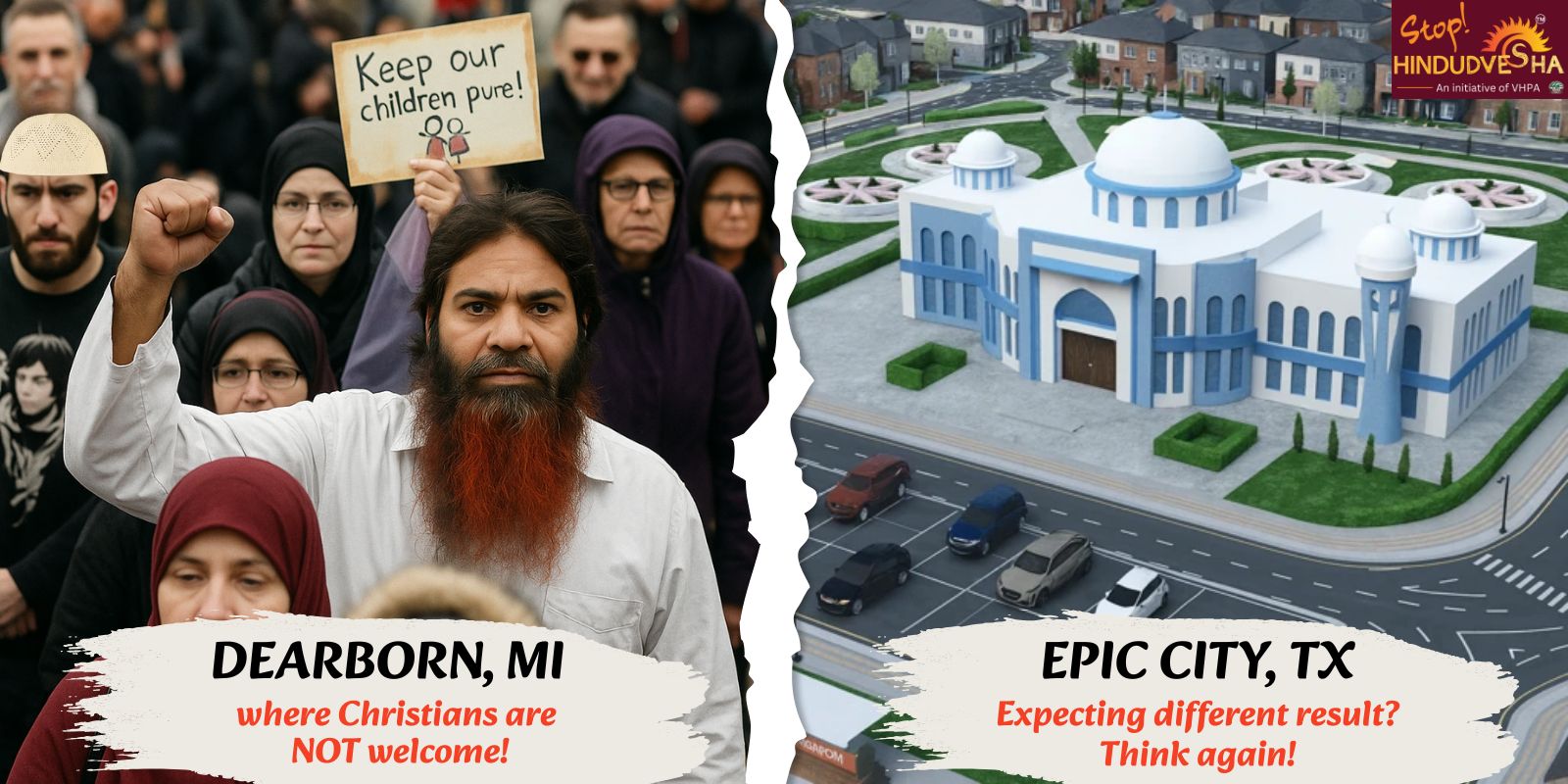
- A 402-acre, mosque-centered housing project near Dallas, originally branded EPIC City and later renamed “The Meadow,” has ignited national debate over whether faith-based Muslim communities promote religious freedom or advance social separation.
- The project’s ideological association with cleric Yasir Qadhi, who has a documented history of extremist rhetoric despite recent moderation claims, has amplified concerns about radicalization and long-term cultural impact.
- Texas political leaders have framed the development as a threat involving “Sharia encroachment,” leading to investigations, lawsuits, and heightened regulatory scrutiny, while federal probes found no actionable discrimination.
- Drawing on European examples and U.S. cases such as Hamtramck and Dearborn, the article argues that concentrated Islamic enclaves risk evolving into parallel societies marked by illiberal norms, political exclusion, and resistance to integration.
- The central dilemma posed is whether America can balance religious liberty with civic cohesion, or whether projects like The Meadow foreshadow deeper fractures in an already polarized society.
In the piney flatlands forty minutes northeast of Dallas, where megachurches outnumber stoplights and Friday-night football still feels like liturgy, a 402-acre patch of former ranchland has become the newest fault line in America’s demographic landscape. Acquired by the East Plano Islamic Center Masjid, one of the largest mosques in North Texas, the idyllic slice of real estate is the site for a faith-based community tailored to Muslim families. Originally dubbed the East Plano Islamic Center (EPIC City), this master-planned enclave envisions a thousand homes, a school, clinics, corner groceries, playgrounds, and — at its spiritual and architectural center — a mosque large enough to hold 5,000 worshippers under one soaring dome.[1]
In November 2025, amid escalating political scrutiny, developers quietly renamed it “The Meadow,” a pastoral moniker intended to evoke serenity rather than separatism. It’s a soft name for a project tied to Yasir Qadhi, an ethnic Pakistani cleric with one of the hardest extremist records in America.
From Salafi Firebrand to Moderate Voice?
Qadhi, who is central to the narrative, has long drawn concern due to a widely-reported and decades-old history of preaching hatred, homophobia, and Holocaust denial. Born in 1975 in Houston to Pakistani parents, Qadhi studied at the Islamic University of Madinah, imbibing Salafi-Wahhabi influences prevalent in Gulf-funded seminaries. In the early 2000s, as a young preacher, he delivered sermons endorsing hudud punishments — Islamic penal codes — as mandated by the caliphate. A 2003 lecture, archived online, stated: “All Muslims agree that the punishment for homosexual intercourse is death… Stoning adulterers… this is our religion. We can’t do this in America, but if we had an Islamic State, we would.”[2]
Recordings show Qadhi promoting extreme ideas, including a claim that Jewish people infiltrated Islamic studies departments at American universities in an effort to “destroy” Muslims. Such rhetoric, voiced in UK tours organized by the East London Mosque, drew condemnation from LGBTQ+ advocates.[3]
These statements from Qadhi led to a media exposé linking him to EPIC City as its ideological architect. The fear is not what the new Islamic city will turn out to be; rather, it’s what many Muslim-majority neighborhoods in the West are known to become — indoctrination centers promoting genital mutilation, apostasy lynchings, and honor-based violence against Westernized daughters, and safe sanctuaries for violent extremists.[4]
But Qadhi is doubling down. His April 2025 sermon at EPIC Masjid defended the Islamic enclave biblically: “True followers of Jesus do not cower before Pharaoh’s tyranny,” invoking Christian resilience against Roman persecution.[5] He positions his city as interfaith dialogue, not isolation — inviting Christians to events and, at least outwardly, condemning terrorism. Nonetheless, his past haunts him; a 2017 Henry Jackson Society report labeled him an “Islamist extremist” for praising the Taliban.[6]
Historical Context: Muslims in the Bible Belt
Texas, nestled in the US South’s Bible Belt, is a paradox for Muslim Americans. Home to over 420,000 Muslims — comprising 1.5 percent of the state’s population — the region has growing Islamic communities in Houston and Dallas-Fort Worth, along with recent political polarization. The Bible Belt’s cultural hegemony, rooted in Protestant evangelicalism, often frames Islam as an existential threat, echoing historical nativist reactions to Catholic immigrants in the 19th century.[7]
But proponents say the EPIC Masjid illustrates this tension. Founded in 2005 and expanded in 2015, it serves a multi-ethnic Islamic congregation of over 5,000 weekly attendees, offering prayers, education, and social services. They say it’s a proposed city stemming from a practical desire: many Muslims, like Orthodox Jews or Amish families, prefer living near places of worship to facilitate daily prayers and access to halal amenities — grocery stores stocking permissible foods and schools incorporating Islamic studies. EPIC City is not unprecedented; it mirrors faith-based developments protected under the Religious Land Use and Institutionalized Persons Act of 2000.[8]
Accusations of Extremism and Sharia Imposition
However, not everyone is buying the idea that an Islamic city in their vicinity will be as invisible, quiet, and non-threatening as an Amish village. Plans for the “Muslim-friendly” community were immediately met with opposition from nearby residents, county leaders, and state leaders who claimed Epic City intended to exclude non-Muslims from buying or renting in the development, violating fair housing laws. Residents packed county commissioners’ meetings, vocalizing concerns and claiming Epic City was an “Islamic compound” that intended to enforce “Sharia law.”
In Texas’ conservative corridors, such initiatives evoke fears of parallel societies. Governor Greg Abbott’s April 2025 directive to halt construction cited unpermitted environmental reviews, but rhetoric escalated to warnings of “Sharia encroachment.” Senator John Cornyn urged DOJ probes into “religious discrimination and Sharia law” in the same month, framing the project as discriminatory against non-Muslims.[9] These accusations parallel European debates over “no-go zones” in Molenbeek or Malmo, where Muslim enclaves have become hotbeds of terrorism.
Funding for the project relies on pre-sales and donations, prompting a March 2025 securities probe by Texas Attorney General Ken Paxton for unregistered offerings. By December 2025, Paxton sued to halt the project, alleging a “radical plot to destroy Texas land” via illegal schemes. Abbott’s administration, fresh from designating CAIR and the Muslim Brotherhood as “terrorist” entities in November 2025, views EPIC as an extension of global Islamist networks. A September 2025 bill, HB 4211 — signed by Abbott — imposed stricter environmental hurdles for “fair housing” but was decried by EPIC as targeted sabotage.[10]
Supporters of the project counter that such scrutiny stifles minority agency. The Texas Workforce Commission resolved discrimination claims in September 2025, finding no bias in hiring or sales. The DOJ’s May-June 2025 probe, spurred by Cornyn, examined Fair Housing Act violations but closed without action, affirming EPIC’s right to “affirmative marketing” to Muslims. CAIR sued Abbott in November 2025 over “defamatory” terrorist labels, alleging First Amendment violations.[11]
Toward Ghettoization? Self-Replicating Models and Extremism Risks
A significant risk of greenlighting the project is that it could lead to a self-replicating model. Enclaves like The Meadow could spawn similar projects in New York, Atlanta, Houston, or Phoenix, causing Islamic ghettoization — socioeconomic isolation breeding extremism, akin to France’s banlieues.[12] Urban sociologists like Saskia Sassen argue that enclaves can entrench inequality, limiting intergroup contact and amplifying radical voices.[13] In Britain, grooming scandals in segregated Muslim areas led to the rise of the far-right.[14]
- Social Isolation and Lack of Integration: Islamic enclaves can foster isolation from the broader society, creating parallel societies where residents have limited interaction with non-Muslims. This segregation may stem from language barriers, discrimination, or self-imposed separation to preserve cultural identity. In such settings, mainstream values like secularism or pluralism may be undermined, making individuals more susceptible to extremist ideologies. For instance, in areas like Molenbeek in Brussels, Belgium — linked to multiple terrorist plots, including the 2015 Paris attacks — poor integration has been cited as a factor allowing radical networks to operate unchecked. Similarly, some UK neighborhoods have seen similar dynamics, where limited social mixing exacerbates grievances and alienation.[15]
- Influence of Radical Ideologies and Networks: Within isolated enclaves, extremist preachers, mosques, or online forums can disseminate Salafist or jihadist views without significant external oversight. Foreign funding from sources in the Middle East has sometimes supported radical institutions, amplifying calls to violence. European security reports highlight how non-violent Islamist groups can inadvertently or indirectly pave the way for terrorism by normalizing separatist attitudes, which then escalate for a minority into active support for attacks. Prisons adjacent to or within these areas also serve as radicalization hubs, where inmates convert or deepen extremist beliefs before reintegrating into the community.[16]
- Reluctance to Report Suspicious Activities: A critical factor is community reluctance to cooperate with authorities, often due to distrust stemming from perceived Islamophobia, heavy-handed policing, or loyalty to fellow community members. This can allow terrorist plots to develop undetected. For example, a 2016 ICM survey conducted for Channel 4 in Britain found that only about one-third (34 percent) of British Muslims polled said they would report to the police if they knew someone who was getting involved with supporting terrorism in Syria, implying that two-thirds would not. This hesitation, whether from fear of reprisal or cultural solidarity, can inadvertently shield radicals and enable breeding grounds for terrorism.[17]
On the issue of violent retaliation for insulting religious figures: 32 percent refused to condemn people who took part in violence against those who mock Muhammad, the prophet of Islam (that is, they either sympathized or declined to condemn).
And that’s not all: 52 percent said homosexuality should be illegal; 47 percent said it is unacceptable for a gay or lesbian person to be a teacher in school; 23 percent said they supported the introduction of Sharia law in parts of Britain; 39 percent agreed with the statement that “wives should always obey their husbands;” 31 percent said it was acceptable for a man to have more than one wife.
You get the picture — an Islamic enclave, even with a pastoral name, is not going to be as bucolic as an Amish village. Those who believe that all the Muslim residents in an Islamic city will be milking cows and baling hay are in for a nasty surprise.
- External and Geopolitical Influences: Enclaves can be influenced by global events, such as conflicts in the Middle East, which fuel anti-Western sentiment. Terrorist groups use social media to target diaspora communities, turning local frustrations into calls for action. In Europe, Moroccan-origin networks have been linked to several attacks, often operating from enclaves where cultural ties facilitate recruitment.[18]
Lessons from Hamtramck: An Islamic City Where America Stops at the Border
In the 99 years since its incorporation, every mayor of Hamtramck, Michigan, had been Polish American. That ended in 2021, Hamtramck’s centenary year, when Amer Ghalib was inaugurated, along with an entirely Muslim city council. Hamtramck, founded by Polish immigrants, became the first city in the US with a government made up entirely of Muslims.
It started in the 1990s when waves of Yemenis, Pakistanis, and Bangladeshis moved in. Some of these new immigrants were the opposite of civic-minded, littering the immaculate streets of Hamtramck and blaring the Islamic call to prayer from the roofs of the mosques.[19]
“The Poles were reduced to an asterisk, strangers in a suddenly strange land where women now walked the streets robed from head to toe in black niqabs, where the signs on the storefronts were now written in scripts foreign to them, where schools replaced Easter vacation with time off at the end of Ramadan, and where the sound of the Islamic call to prayer now competed with the tones of church bells.”[20]
Hamtramck’s image as a symbol of multicultural success was shattered. “A city that once had more bars per capita than any other place in the country was now dominated by a culture that forbids alcohol. What was a hot spot of artists and musicians known for a liberal acceptance of eccentricities and differences, now drew international attention when the Muslim city council voted to ban the gay pride flag from city properties. And what had been a quiet, working-class town suddenly became internationally famous as an example of what sudden demographic change looks like.”
Significantly, the very name of a main street was changed to reflect not just the culture of the newcomers, but also the politics they brought with them. When the all-Muslim City Council voted to rename Holbrook Avenue as Palestine Avenue, in reaction to the Israel-Hamas war, then, in its fourth month, Imam Imran Salha of the Islamic Center of Detroit, declared: “There is power to renaming things. What significance is there to ‘Holbrook’? There’s nothing special about ‘Holbrook.’”
The message was clear — things are now different here; this is a Muslim city, and non-Muslims don’t matter in Hamtramck.
Lessons from Dearborn: An American City Where the Muslim Mayor Says Christians are Not Welcome
In September 2025, a controversy erupted in Dearborn, Michigan — home to the largest Arab-American population in the US — during a City Council meeting. Christian resident and minister Ted Barham criticized honorary street signs on Warren Avenue naming intersections after Osama Siblani, publisher of the Arab American News, whom Barham accused of supporting Hezbollah and Hamas through past statements praising “martyrs” and armed resistance. Barham called the honors provocative, comparing them to naming streets after terror groups.
Muslim Mayor Abdullah Hammoud interrupted, labeling Barham a “bigot,” “racist,” and “Islamophobe,” then stated: “Although you live here, I want you to know as mayor, you are not welcome here. And the day you move out of this city will be the day that I launch a parade celebrating the fact that you moved out.”[21]
The clash drew national attention, highlighting the tensions that inevitably follow when Muslims take over a city and start excluding the original residents. For the “avowed aim of Islam was, and still is, to impose the religion of Muhammad on the world, and convert infidels by persuasion or force and make them pledge allegiance to Allah.”[22]
Conclusion: The Devil Can Quote Scripture, too
Meanwhile, as the dust settles on The Meadow’s rebranded vision, the debate underscores a profound American conundrum: the sacred right to faith-based community versus the specter of isolationist enclaves that could erode the social fabric. Yasir Qadhi’s fiery Salafi rhetoric fuels legitimate fears of radical undertones seeping into impressionable youth. His belated condemnation of terrorism is simply backpedalling to avoid the heat. He’s merely following the Koranic practice of Taqiyya, whereby an individual may be less than fully truthful when such an individual is reasonably afraid that the consequences of being fully truthful may place them at a disadvantage. In other words, if telling the truth is going to put your life or well-being at risk, you can say what you need to survive and stay safe.[23]
In the backdrop of European cautionary tales from Molenbeek’s alleys to Britain’s no-go sharia zones, where two-thirds of surveyed Muslims hesitated to alert authorities on terror sympathies, the East Plano project risks birthing self-reinforcing parallel societies if unchecked. They will be breeding grounds for grievances, foreign-funded ideologies, and the quiet shielding of extremism under the cloak of cultural solidarity.
The path forward demands vigilant integration: robust oversight to enforce bridging ties, incentives for outward engagement, and a collective commitment to bonding. Only then can The Meadow bloom.
Those who ignore the perils are in for bitter disappointment – like Catrina Stackpoole, a lesbian former councilwoman who supported and advocated for the immigrant community, helping Yemenis, Pakistanis, and Bangladeshis to ease their transition into Hamtramck. But as the demographic and political balance shifted, the city’s (now majority-Muslim) council voted unanimously to ban the display of LGBTQ+ “Pride” flags.
In a public council meeting, Stackpoole expressed raw feelings of anger and heartbreak: “We welcomed you. We created nonprofits to help feed, clothe, and find housing. We did everything we could to make your transition here easier — and this is how you repay us? By stabbing us in the back?”[24]
Yes, Catrina, people like you are known as useful idiots, who appease the alligator, hoping it will eat you last.[25]
Citations
[1] KERA News. “East Plano Islamic Center’s EPIC City Project at the Meadow.” November 10, 2025. https://www.keranews.org/business-economy/2025-11-10/east-plano-islamic-center-epic-city-meadow.
[2] Express (UK). “EPIC Muslim City Project Sparks Uproar in the Meadow.” https://www.express.co.uk/news/us/2142030/epic-muslim-city-project-sparks-uproar-the-meadow
[3] Europe Solidaire Sans Frontières. “Islam, Urban Space, and Political Mobilisation.” https://www.europe-solidaire.org/spip.php?article41637
[4] Council of Ex-Muslims of Britain. “East London Mosque Files Formal Complaint Against CEMB Over Pride.” July 2017. https://ex-muslim.org.uk/2017/07/east-london-mosque-has-filed-formal-complaint-about-cemb-to-pride/
[5] Middle East Media Research Institute (MEMRI). “Texas EPIC City: Yasir Qadhi Says Muslims Must Not Cower Down.” https://www.memri.org/tv/texas-epic-city-yasir-qadhi-not-cower-down-true-followers-jesus-god
[6] Henry Jackson Society. Islamist Charity Regulation: Analysis and Policy Recommendations. February 2018. https://henryjacksonsociety.org/wp-content/uploads/2018/02/HJS-Islamist-Charity-Report.pdf
[7] Houston Chronicle. “Abbott Administration Launches Investigations into EPIC City Development.” https://www.houstonchronicle.com/politics/texas/article/epic-city-greg-abbott-investigations-21122753.php
[8] KERA News. “East Plano Islamic Center’s EPIC City Project at the Meadow.” November 10, 2025. https://www.keranews.org/business-economy/2025-11-10/east-plano-islamic-center-epic-city-meadow
[9] U.S. Senator John Cornyn. “Cornyn Calls on DOJ to Investigate EPIC City Following Allegations of Religious Discrimination and Sharia Law.” https://www.cornyn.senate.gov/news/cornyn-calls-on-doj-to-investigate-epic-city-following-accusations-of-religious-discrimination-sharia-law/
[10] Office of the Governor of Texas. “Governor Abbott Announces Texas State Securities Board Investigation into East Plano Islamic Center.” https://gov.texas.gov/news/post/governor-abbott-announces-texas-state-securities-board-investigation-into-east-plano-islamic-center
[11] CBS News Texas. “DOJ Investigation into EPIC City Muslim Community Concludes.” https://www.cbsnews.com/texas/news/epic-city-muslim-community-doj-investigation-ends/
[12] Jamestown Foundation. “Islam, Jihadism, and Depoliticization in the French Banlieues.” https://jamestown.org/islam-jihadism-and-depolitization-in-the-french-banlieues/
[13] Canárias Sostenible. “Interview with Saskia Sassen: Sociology of Global Cities and Urban Space.” https://www.canariassostenible.eu/en/saskia-sassen/
[14] Institute of Race Relations. “Asian Grooming Gangs: Media, the State, and the Far Right.” https://irr.org.uk/article/asian-grooming-gangs-media-state-and-the-far-right/
[15] New York Post. “Muslim Ghettos in Europe Are Hotbeds for Terror.” March 22, 2016. https://nypost.com/2016/03/22/muslim-ghettos-in-europe-are-hotbeds-for-terror/
[16] Combating Terrorism Center at West Point. “The Role of Non-Violent Islamists in Europe.” https://ctc.westpoint.edu/the-role-of-non-violent-islamists-in-europe/
[17] Channel 4 News. “Channel 4 Survey and Documentary Reveal What British Muslims Really Think.” https://www.channel4.com/press/news/c4-survey-and-documentary-reveals-what-british-muslims-really-think
[18] Washington Institute for Near East Policy. “Terrorism in Europe: The Moroccan Connection.” https://www.washingtoninstitute.org/policy-analysis/terrorism-europe-moroccan-connection
[19] CNN. “Michigan City of Hamtramck Elects All-Muslim City Council.” December 18, 2021. https://edition.cnn.com/2021/12/18/us/michigan-hamtramck-all-muslim-council
[20] Carlisle, John. “Hamtramck, Michigan: Immigration, Identity, and Politics.” Detroit Free Press, May 27, 2025. https://www.freep.com/story/news/columnists/john-carlisle/2025/05/27/hamtramck-michigan-wiki-history-immigration/78509953007/
[21] New York Post. “Dearborn Muslim Mayor Tells Christian Resident He’s Not Welcome in City.” September 17, 2025. https://nypost.com/2025/09/17/us-news/dearborn-michigan-muslim-mayor-abdullah-hammoud-tells-christian-resident-hes-not-welcome-in-city/
[22] Institute for the Study of Global Antisemitism and Policy (ISGAP). “Why Is Europe Turning a Blind Eye to Islamic Occupation?” https://isgap.org/flashpoint/why-is-europe-turning-a-blind-eye-to-islamic-occupation/
[23] Carnegie Endowment for International Peace. “Are Muslims Commanded to Deceive? Why Melanie Phillips Should Know Better.” December 2019. https://carnegieendowment.org/posts/2019/12/are-muslims-commanded-to-deceive-why-melanie-phillips-should-know-better?lang=en
[24] The Times of India. “Lesbian Woman’s Outrage Against Muslim Immigrants in the US Goes Viral After Pride Parade Ban.” https://timesofindia.indiatimes.com/world/us/lesbian-womans-outrage-against-muslim-immigrants-in-the-us-goes-viral-after-pride-parade-ban-says-we-helped-you-settle-now-you-ban-us/articleshow/122384576.cms
[25] The Hill. “Socialism and the American Youth Vote.” https://thehill.com/opinion/campaign/5397742-2-socialism-youth-american/

Donate to HINDUDVESHA
Our Mission is to explore and expose Hindudvesha through research analysis, education and response.
SUPPORT US